

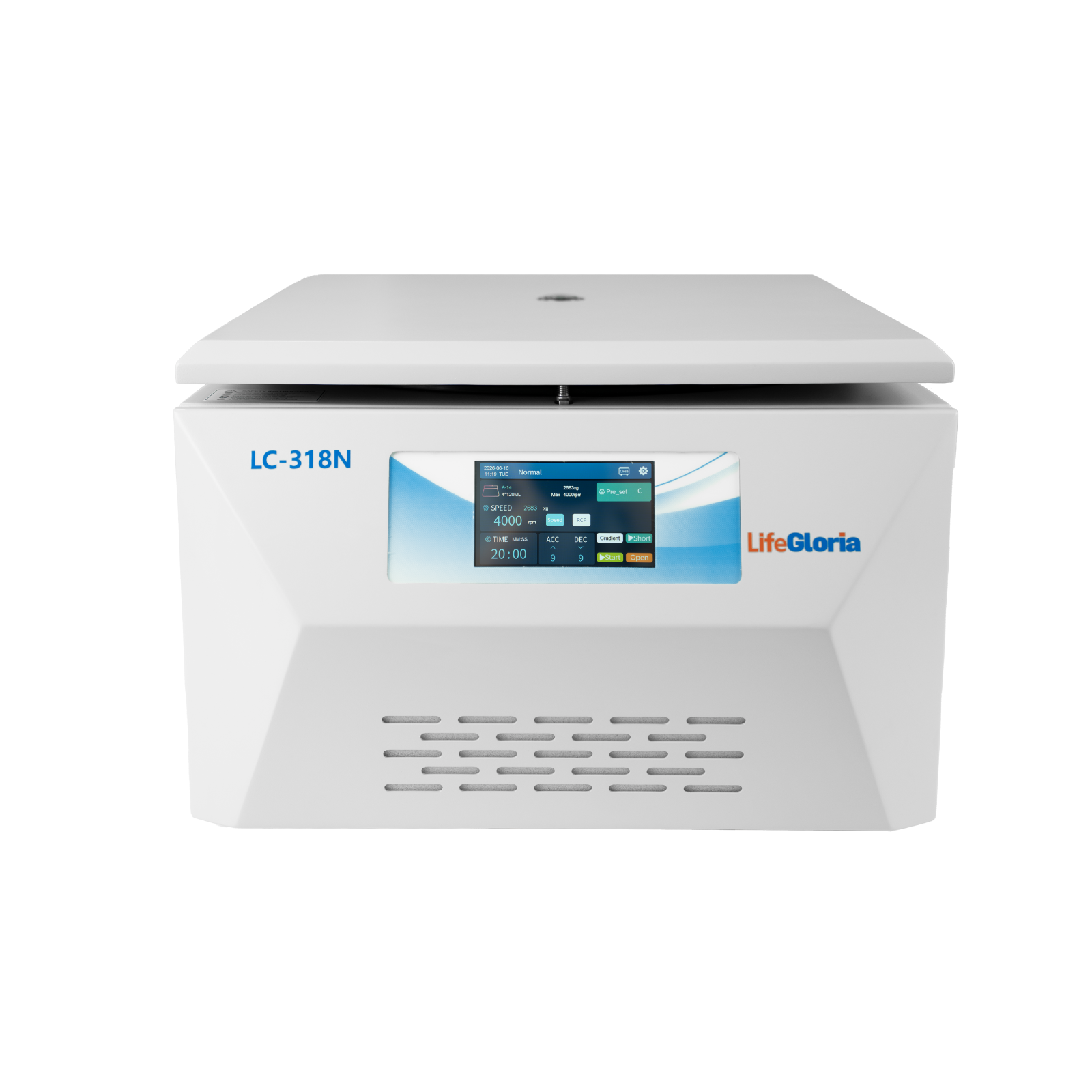
How a Fixed-Angle Rotor Works
Tubes remain at a constant angle, often between roughly 20° and 45° from vertical, while the rotor spins. Particles move outward and strike the outer tube wall before collecting near the lower outer side. The pellet is therefore angled rather than centered on the tube bottom.
- Short sedimentation path
- Commonly supports high rotational speeds
- Well suited to microtubes and rapid pelleting
- Pellet can smear along the outer wall if braking or handling is abrupt
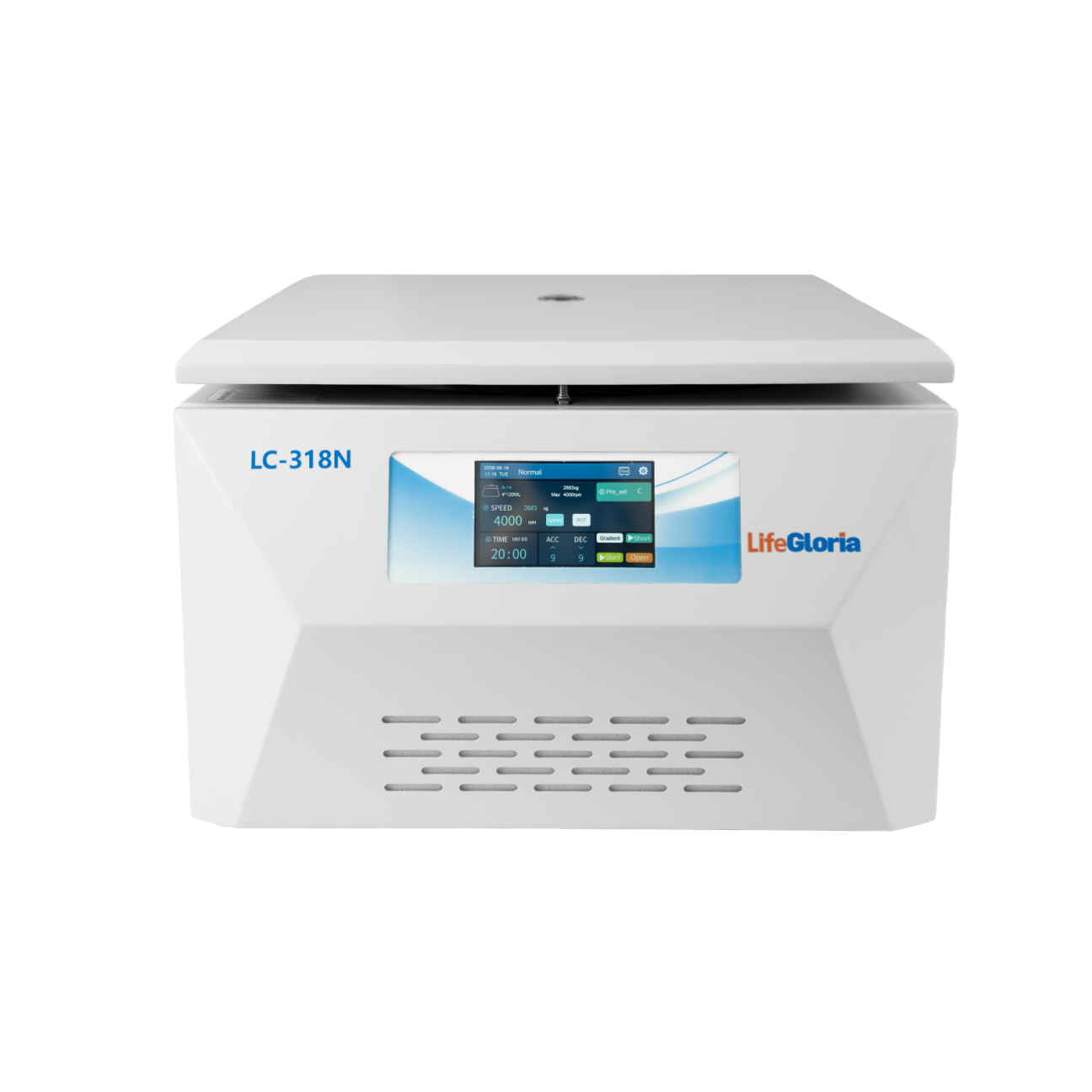
How a Swing-Bucket Rotor Works
Buckets hang vertically at rest and swing outward toward horizontal during rotation. Particles travel along the tube length and collect at the bottom when the bucket is fully horizontal. Interfaces in density gradients form as horizontal layers.
- Flat pellet or horizontal gradient layers
- Useful for conical tubes, blood tubes, bottles, and microplates
- Often provides larger capacity and flexible carriers
- Buckets, pivots, and adapters require inspection and free movement
Fixed-Angle vs Swing-Bucket Comparison
| Factor | Fixed-angle rotor | Swing-bucket rotor |
|---|---|---|
| Tube position during run | Remains angled | Swings toward horizontal |
| Typical strength | Fast pelleting and high speed | Layer separation and flexible capacity |
| Pellet location | Lower outer wall | Tube bottom |
| Sedimentation path | Usually shorter | Usually longer |
| Common vessels | Microtubes and smaller tubes | Tubes, bottles, plates |
| Maintenance focus | Rotor cavity and lid | Buckets, pivots, hangers, adapters |

Choose by Application
- DNA, RNA, protein precipitates, and rapid cell pellets: often fixed-angle
- Blood collection tubes and clinical carriers: often swing-bucket
- Density-gradient separation with distinct horizontal layers: swing-bucket
- Quick spin-down of droplets in microtubes: fixed-angle microcentrifuge rotor
- Microplates or high-capacity bottle workflows: compatible swing-bucket carriers
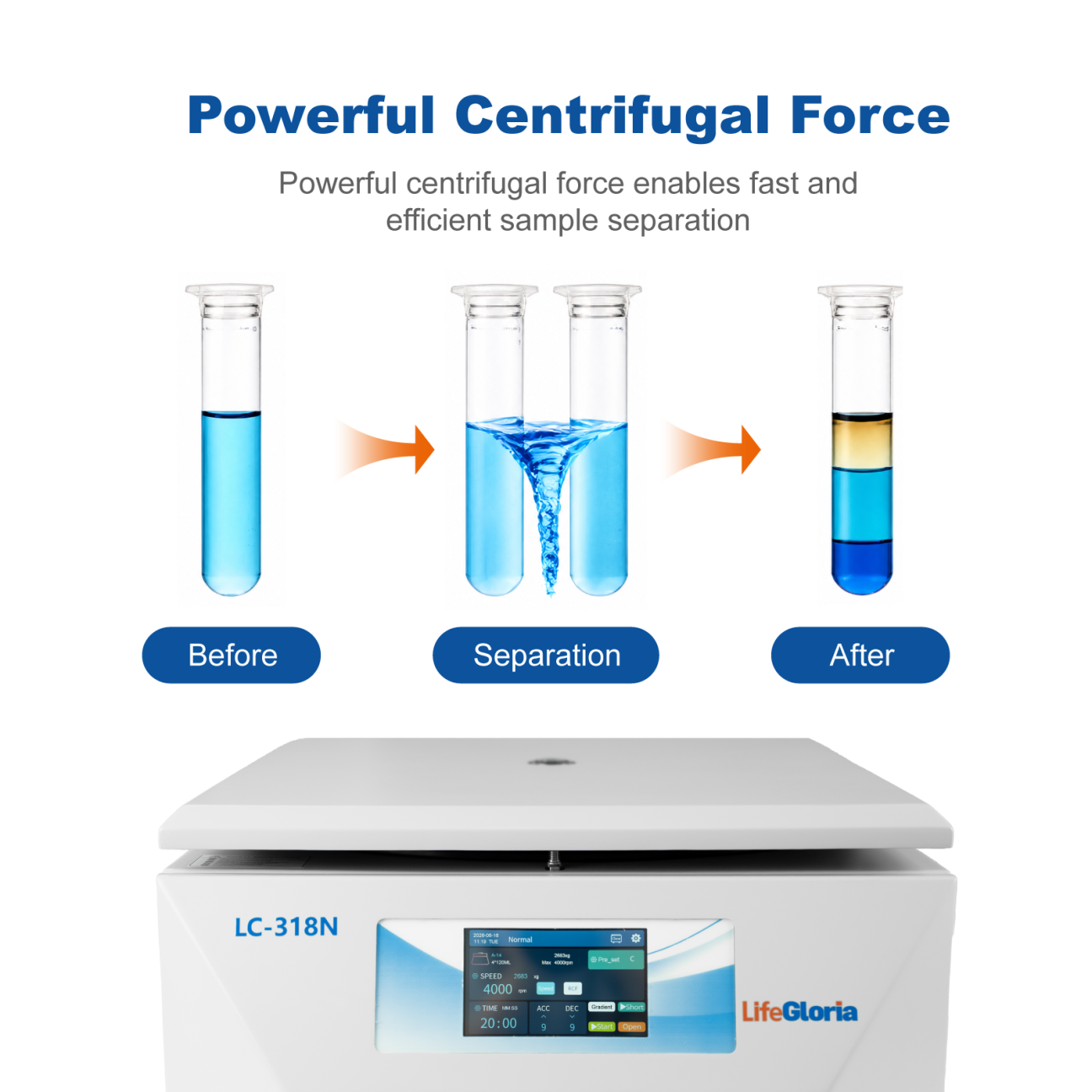
Compare RCF, Capacity, and Tube Limits
A larger rotor does not automatically produce a higher RCF. Compare the exact rotor's maximum RPM, maximum RCF, radius, capacity, adapter requirements, and approved vessel types. The lowest rated component in the assembly sets the operating limit.
Acceleration and Braking Matter
Fast braking saves time but may disturb soft pellets or gradient interfaces. A swing-bucket rotor often benefits from gentle deceleration during gradient work, while a firm pellet in a fixed-angle rotor may tolerate faster braking. Validate acceleration and deceleration settings for the sample.
Rotor Inspection and Care
- Do not use a rotor with corrosion, cracks, deformation, or expired service life
- Clean spills promptly using compatible agents
- Inspect swing-bucket pivots and confirm free movement
- Use only approved buckets, lids, and adapters
- Store rotors dry and follow the inspection schedule
- Record rotor identity and service history
A Centrifuge with Multiple Rotor Options
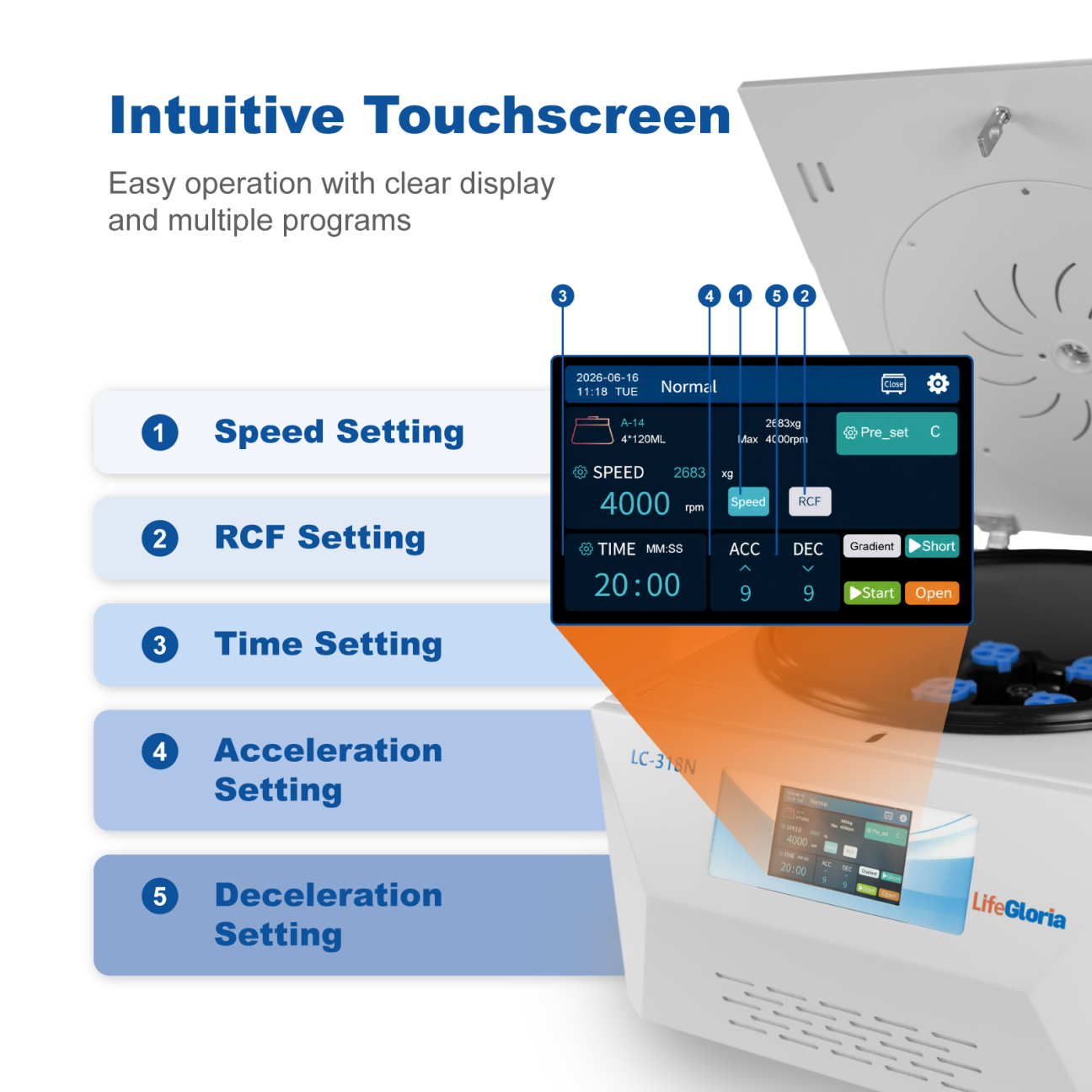
The LifeGloria LC-318N high-speed benchtop centrifuge supports multiple fixed-angle and horizontal rotor configurations. Rotor-specific maximum speed ranges from 4,000 RPM for selected horizontal configurations to 18,500 RPM for a 12-place microtube rotor, so the installed rotor must be selected in the control system and operated within its own rating.
Frequently Asked Questions
Which rotor is better for pelleting cells?
Fixed-angle rotors are commonly chosen for rapid pelleting, but cell type, vessel, RCF, and desired pellet position determine the best option.
Which rotor is better for density gradients?
A swing-bucket rotor usually provides horizontal layers and a longer separation path, making it the common choice.
Can any rotor fit any centrifuge?
No. Use only rotors and accessories approved for the exact centrifuge model.
Why is the maximum RPM lower with some rotors?
Larger mass, radius, bucket mechanics, and structural limits affect the safe speed. Follow each rotor's rating.
Final Thoughts
Choose the rotor from the separation goal backward: vessel, pellet or interface location, required RCF, capacity, and handling needs. Then verify the rotor-specific speed and accessory limits. The best centrifuge is not simply the one with the highest RPM, but the one with the right validated rotor for the workflow.
