What Is RPM?
RPM means revolutions per minute. It tells you how many complete turns the rotor makes in one minute. RPM is easy to measure and display, but it does not state the force applied to the sample.
What Is RCF or ×g?
RCF means relative centrifugal force and is normally written as a multiple of gravitational acceleration, such as 10,000 × g. RCF better describes the physical condition used for separation and is therefore more useful for reproducing a method on another rotor.
RPM to RCF Formula
Use the following relationship:
RCF = 1.118 × 10⁻⁵ × r(cm) × RPM²
Here, r is the distance in centimeters from the center of rotation to the point in the tube specified by the protocol or rotor documentation. For maximum RCF, manufacturers normally use the maximum radius to the bottom of the sample path.
- Example: radius = 8 cm and speed = 10,000 RPM
- RCF = 1.118 × 10⁻⁵ × 8 × 10,000²
- RCF ≈ 8,944 × g
How to Convert RCF Back to RPM
Rearrange the formula as:
RPM = √[RCF ÷ (1.118 × 10⁻⁵ × r)]
Always use the radius for the installed rotor. Copying an RPM value from a different rotor without checking radius may change the force substantially.
RPM vs RCF at a Glance
| Question | RPM | RCF (×g) |
|---|---|---|
| What does it measure? | Rotational speed | Force on the sample |
| Depends on rotor radius? | No | Yes |
| Best for transferring protocols? | Limited | Yes |
| Shown on centrifuge display? | Usually | On many digital models |
| Must respect rotor limit? | Yes | Yes |
Why Rotor Radius Changes the Result
At the same RPM, a sample farther from the center travels in a larger circle and experiences greater centrifugal acceleration. Fixed-angle, swing-bucket, and microtube rotors may therefore produce different RCF values even when the speed display is identical.
Practical Rules for Centrifuge Protocols
- Prefer ×g when writing and sharing protocols
- Record rotor model and radius or rotor code
- Never exceed the lower of the rotor, bucket, adapter, and tube speed limits
- Use the centrifuge's rotor-specific RCF display when available
- Confirm whether the protocol refers to maximum, average, or minimum radius
- Do not estimate radius from the outside of the centrifuge
LifeGloria Centrifuge Examples
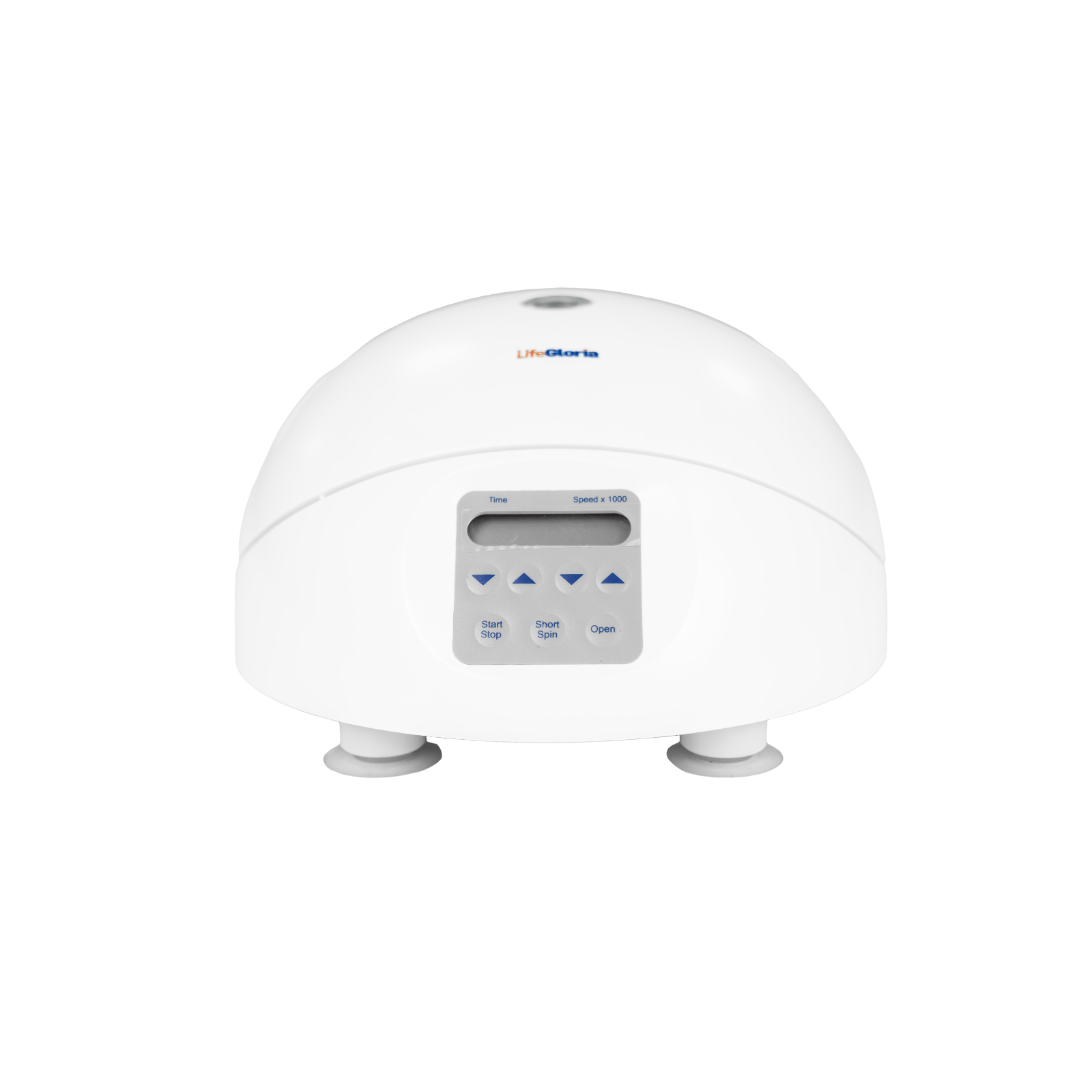
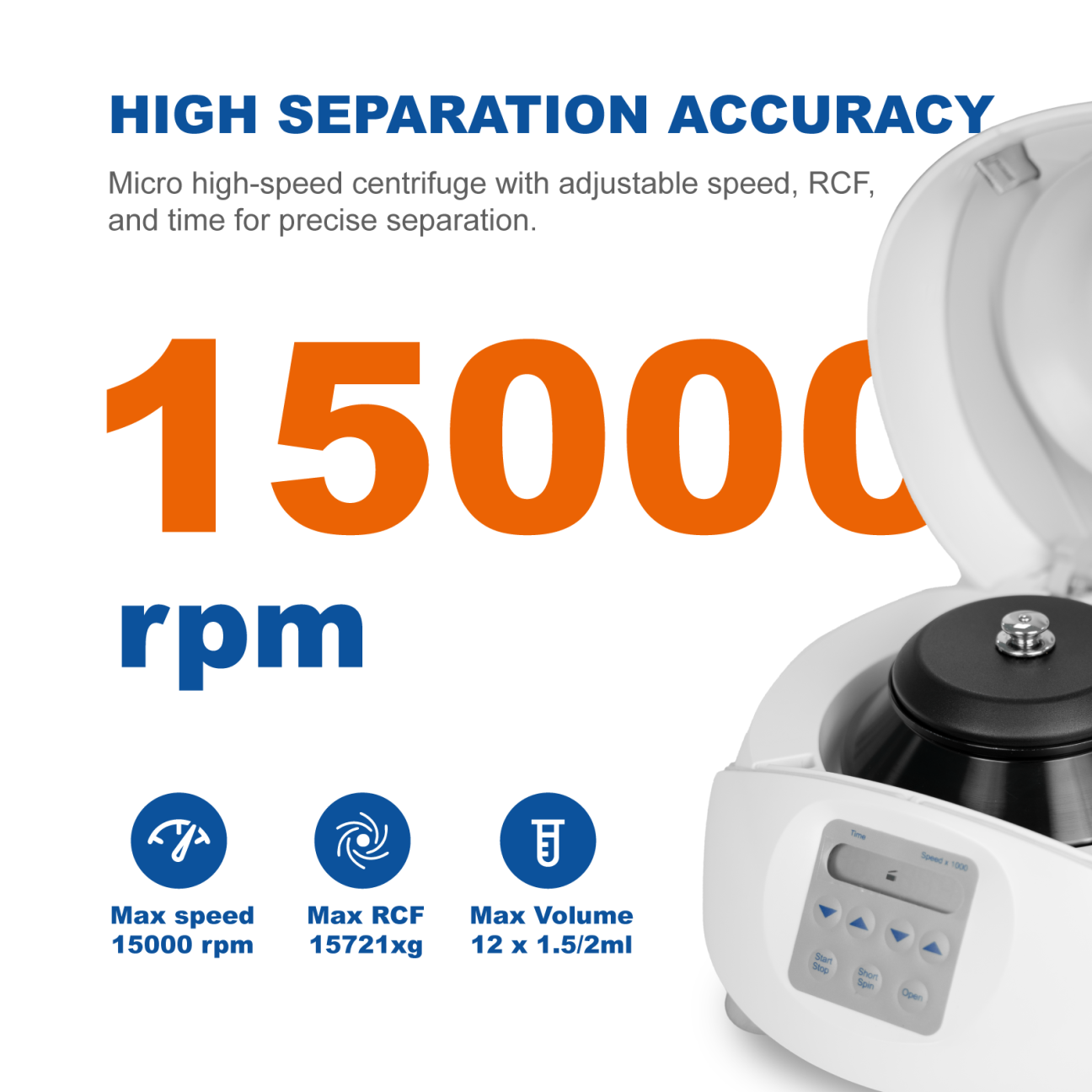
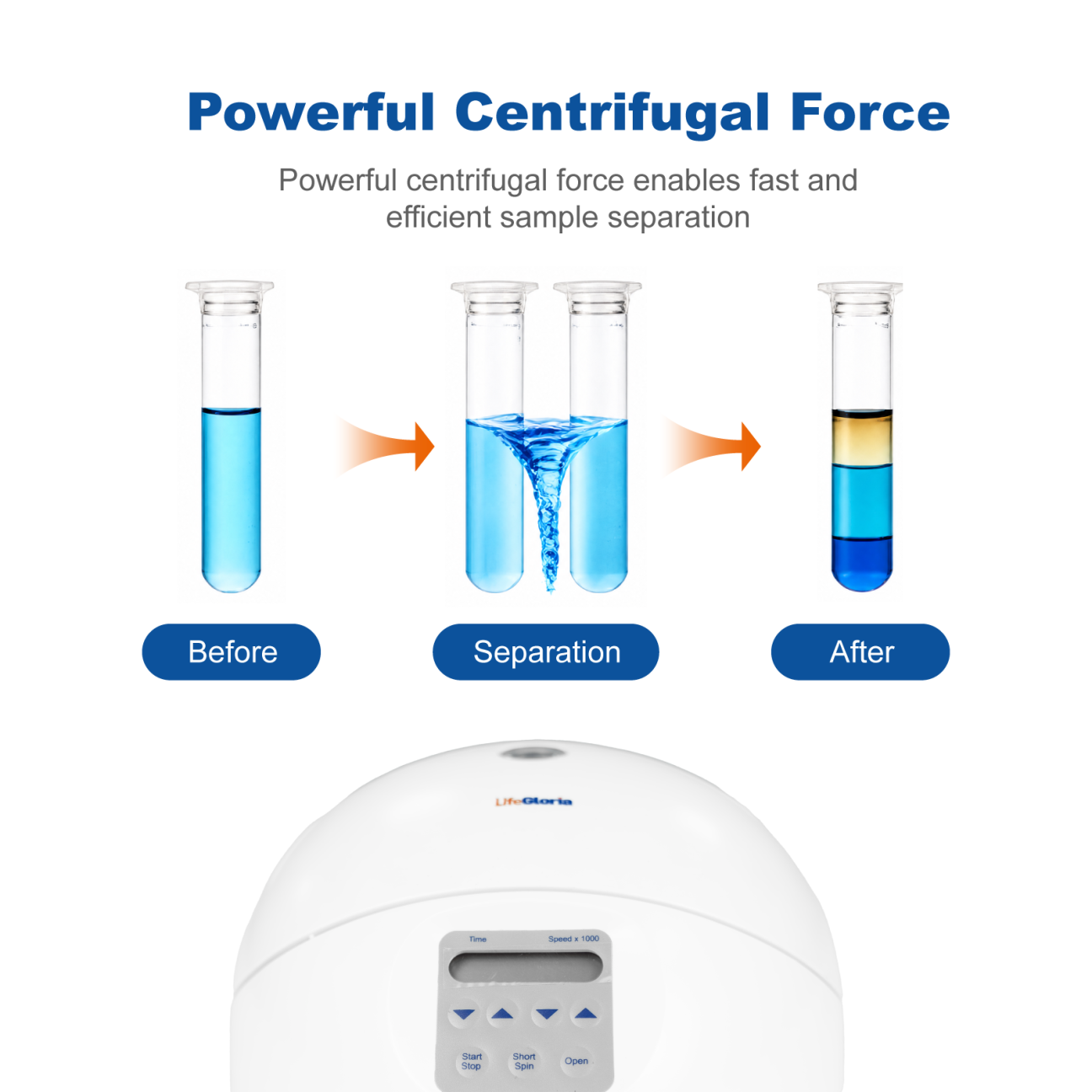
The LifeGloria 15,000 RPM mini microcentrifuge is rated up to 15,721 × g with its 12-place microtube rotor. The LC-318N high-speed benchtop centrifuge supports rotor-specific speed and force limits; its maximum configuration reaches 18,500 RPM and 27,100 × g. These paired ratings show why both the installed rotor and its specified RCF matter.
Frequently Asked Questions
Is 10,000 RPM the same as 10,000 × g?
No. RPM is speed; ×g is force. The corresponding force depends on rotor radius.
Which radius should I use?
Use the radius defined by the rotor manufacturer or protocol. Maximum RCF generally uses the distance to the bottom of the sample path.
Can I run a rotor at the centrifuge's maximum RPM?
Only if that rotor, its accessories, and the tubes are all rated for that speed. The rotor-specific limit controls.
Why does my centrifuge show a different RCF than an online calculator?
The calculator may use a different radius. Check the installed rotor code and the radius definition used by the instrument.
Final Thoughts
RPM describes motion, while RCF describes the force that drives separation. Record ×g and rotor information when possible, calculate with the correct radius, and follow the lowest applicable limit for the rotor, adapter, bucket, and tube.