

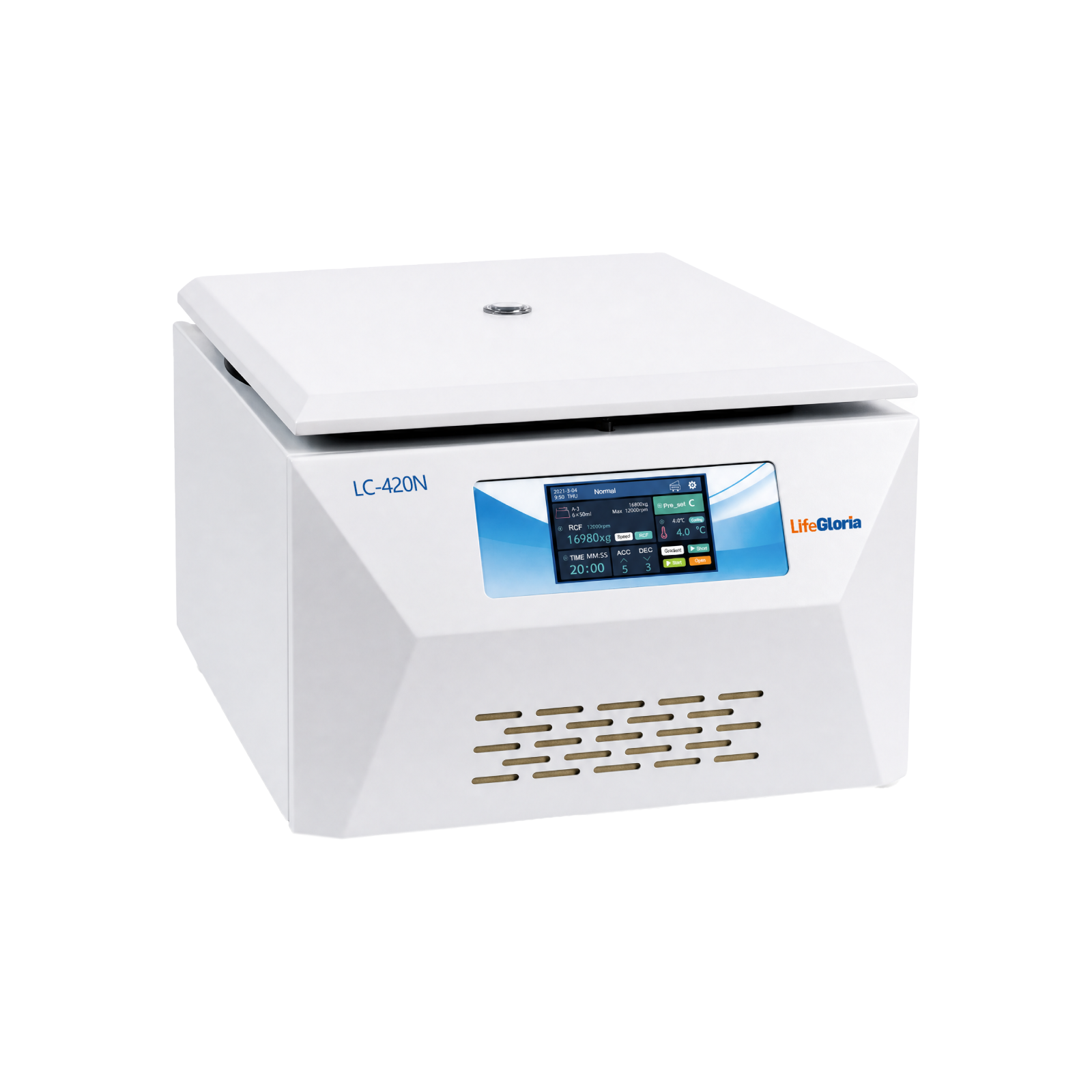
Quick answer: The GC-420N is a 20,000 rpm ambient benchtop centrifuge platform with touchscreen control and multiple rotor options. The useful configuration is determined by the rotor, tube format, target RCF, throughput, and braking needs—not by the top speed alone.
A multi-rotor centrifuge is useful when one laboratory needs to support different sample formats without buying a separate instrument for every workflow.
Before ordering a high-speed centrifuge configuration, define the tubes, batch size, required force, protocol duration, sample density, biosafety needs, and available bench power and space.
In this guide:
- When a multi-rotor platform makes sense
- How rotor choice changes performance
- A routine operating workflow
- Questions for procurement
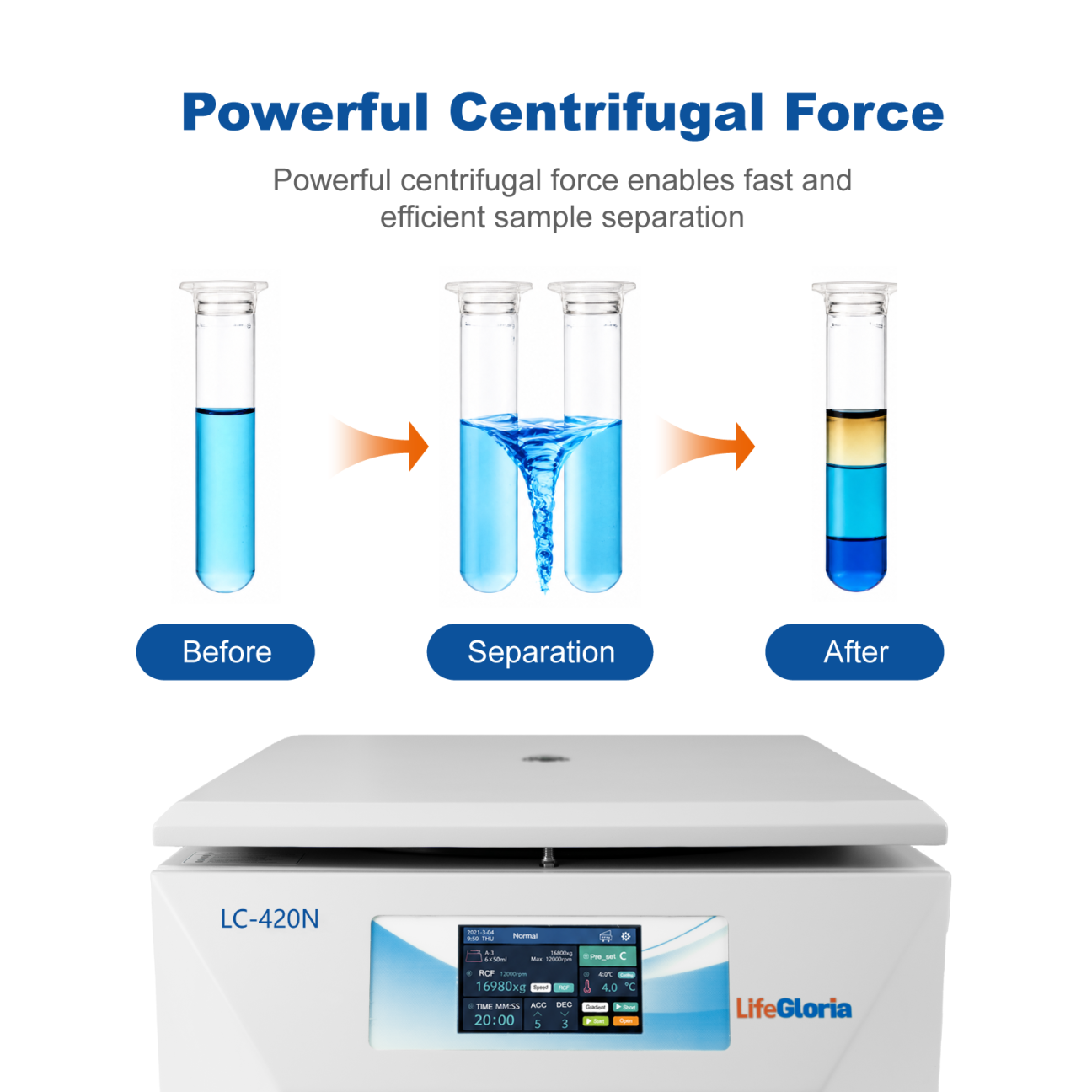
When Does a Multi-Rotor Platform Make Sense?
- One laboratory processes both micro-volume and larger tubes
- Methods require different force and capacity combinations
- Teaching or shared facilities need flexible equipment
- Future protocols may require another approved rotor
Flexibility does not mean every rotor can run at 20,000 rpm. Larger or swinging formats normally have lower rated speeds. Treat the rating printed for the installed rotor as the operating ceiling.
Choose the Rotor Before the Instrument Setting
| Question | Why it matters |
|---|---|
| Which tube or plate? | Determines rotor, adapter, and containment |
| How many samples per batch? | Determines capacity and total turnaround |
| What RCF is required? | Determines whether the rotor can reproduce the method |
| Is gentle braking needed? | Protects loose pellets or gradients |
| Are samples infectious? | May require sealed rotors or safety cups under the laboratory SOP |
Routine Workflow
- Inspect the rotor and accessories
- Install and lock the approved rotor
- Load compatible vessels symmetrically by mass
- Select the correct rotor profile
- Enter RCF/speed, time, and acceleration/deceleration
- Close the lid and start
- After a complete stop, unload, clean, and dry
If the instrument reports a rotor, lid, overspeed, or imbalance fault, do not bypass the protection. Stop, identify the cause, and follow the operating manual.
Procurement Questions
- Which rotors and adapters are included?
- What is the maximum RCF for each rotor?
- How are rotor identity and overspeed controlled?
- Can programs be named and locked?
- What installation voltage, clearance, and service support are required?
Confirm current availability and the exact ordered configuration before publication, quotation, or protocol transfer.
Frequently Asked Questions
Is 20,000 rpm available with every rotor?
No. Maximum speed is rotor-specific. Capacity and rotor geometry usually reduce the permitted maximum.
Is a multi-rotor centrifuge refrigerated?
GC-420N is described as an ambient platform. If temperature control is required, specify a refrigerated model and validate sample temperature.
Can an existing protocol be copied by rpm?
Only if rotor radius is equivalent. Otherwise transfer the protocol using RCF and validate the result.
Key Takeaway
The right GC-420N configuration begins with the method and rotor list; the centrifuge control settings come afterward.
