

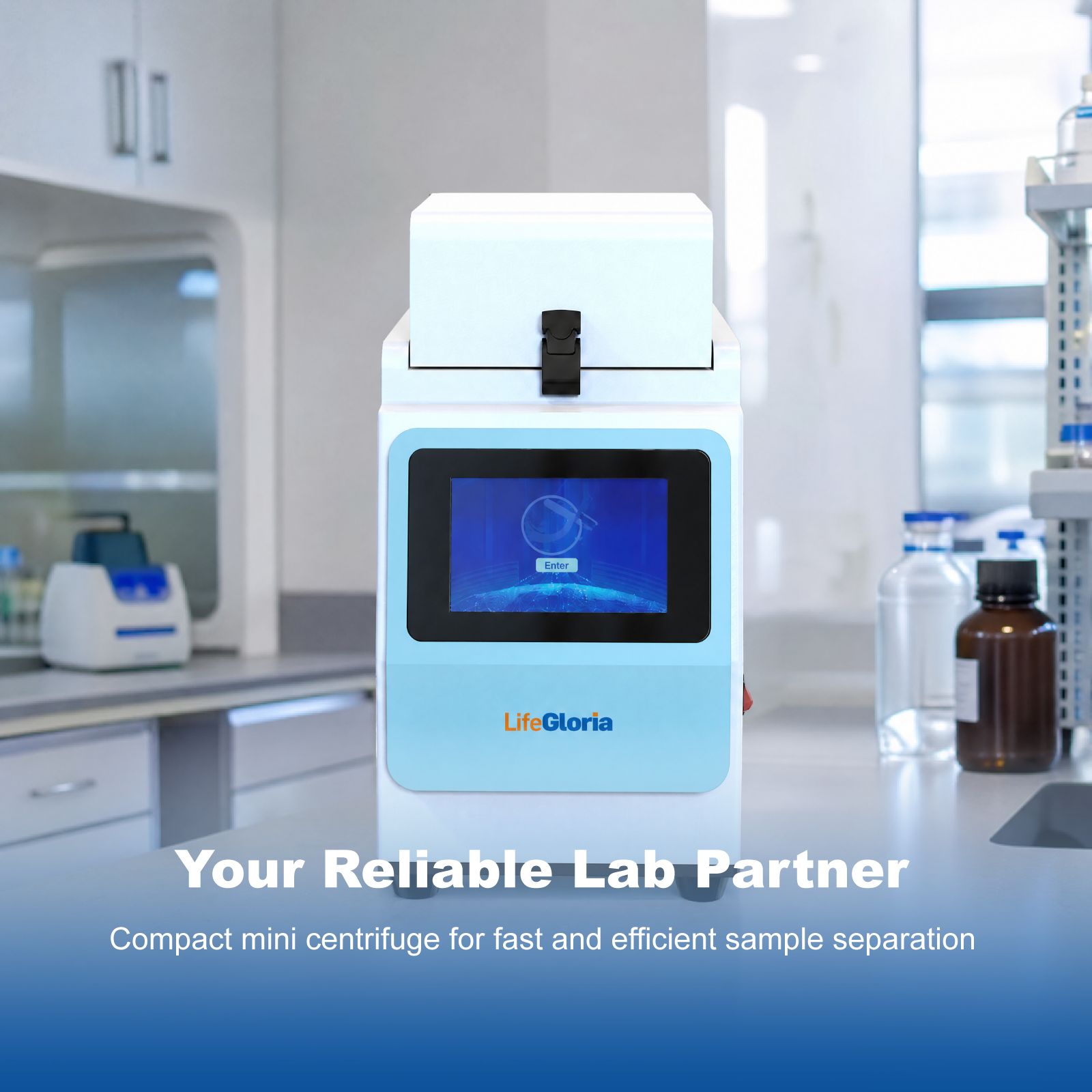
Tissue grinder machine searches in LifeGloria data show demand for practical sample-preparation guidance. The correct system must produce consistent disruption without creating unacceptable heat, cross-contamination, or processing delays.
Selection starts with the biological material and extraction target, then considers vessel, bead, batch size, program control, cleaning, and downstream measurement.
Quick Answer
Choose a tissue grinder by sample hardness, extraction target, vessel and bead system, samples per batch, required repeatability, heat sensitivity, and cleaning controls. Validate a representative sample before committing to a large workflow change.
Send representative samples and throughput requirements
Tell LifeGloria the tissue type, sample mass, tube format, bead material, DNA/RNA/protein target, samples per day, heat sensitivity, program needs, destination, and deadline. We can evaluate the Tiss-24/48 configuration.
Match Homogenization Strategy to the Sample
| Sample or goal | Selection priority | Validation endpoint |
|---|---|---|
| Soft tissue | Controlled complete disruption | Yield and integrity |
| Fibrous or hard tissue | Bead and motion energy | No visible unprocessed fragments |
| RNA extraction | Fast processing with heat control | RNA integrity and reproducibility |
| High-throughput batches | Consistent multi-sample clamping | Between-position variation and cycle time |
Define the Extraction Target First
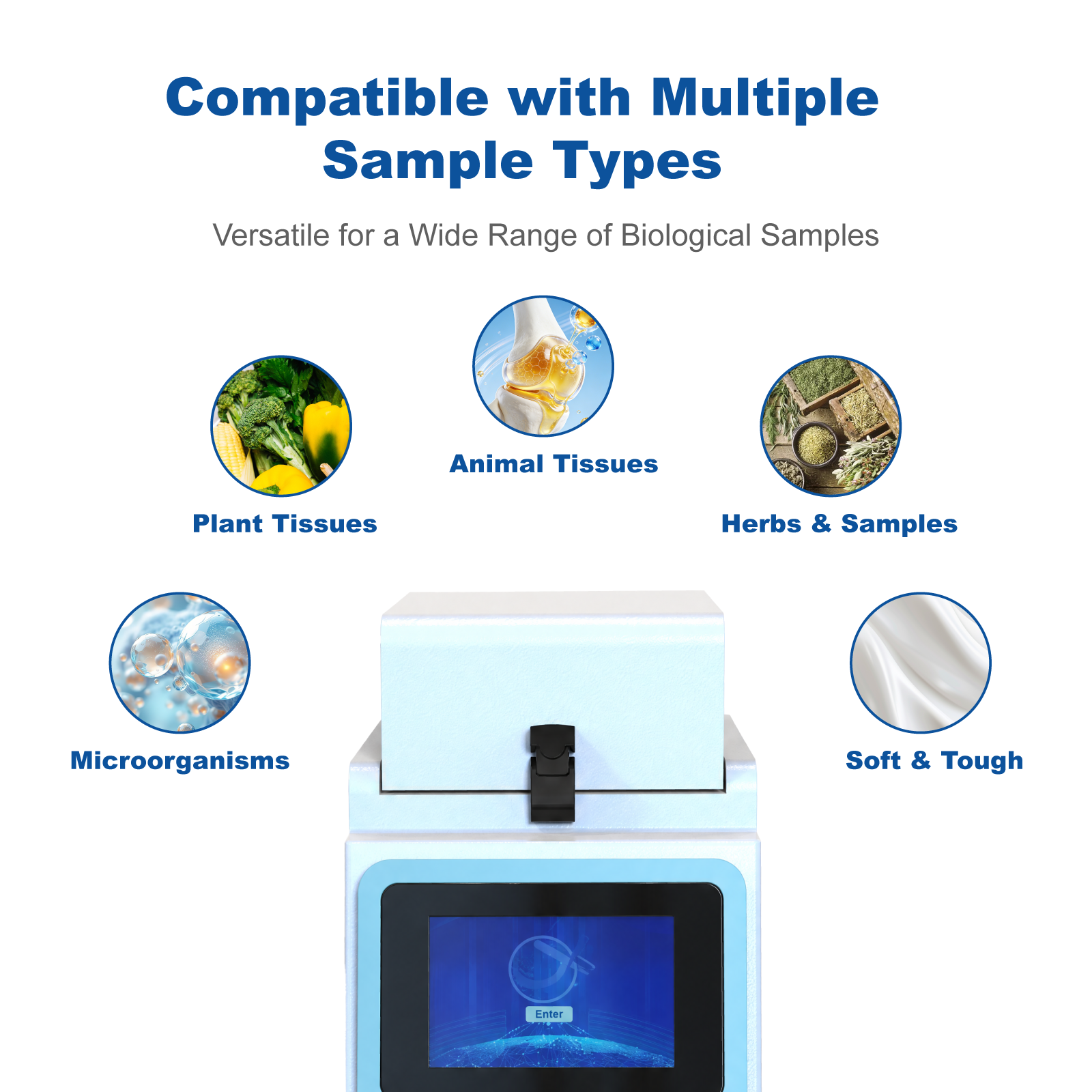
DNA, RNA, protein, metabolites, and microorganisms can require different disruption intensity and temperature control. Write the downstream quality criteria before choosing speed or time so optimization is tied to the result rather than appearance alone.
- Specify target molecule
- Define acceptable yield and integrity
- Record sample mass and moisture
- Identify heat-sensitive analytes
Match Tubes and Beads to the Material
The vessel, cap, bead size, bead material, fill ratio, and sample volume influence collision energy and leakage risk. Use components validated for the instrument and chemistry, and keep lot-to-lot preparation consistent.
- Confirm tube dimensions and closure
- Select bead type for sample hardness
- Leave suitable movement space
- Inspect every vessel before loading
Plan Throughput with Repeatability
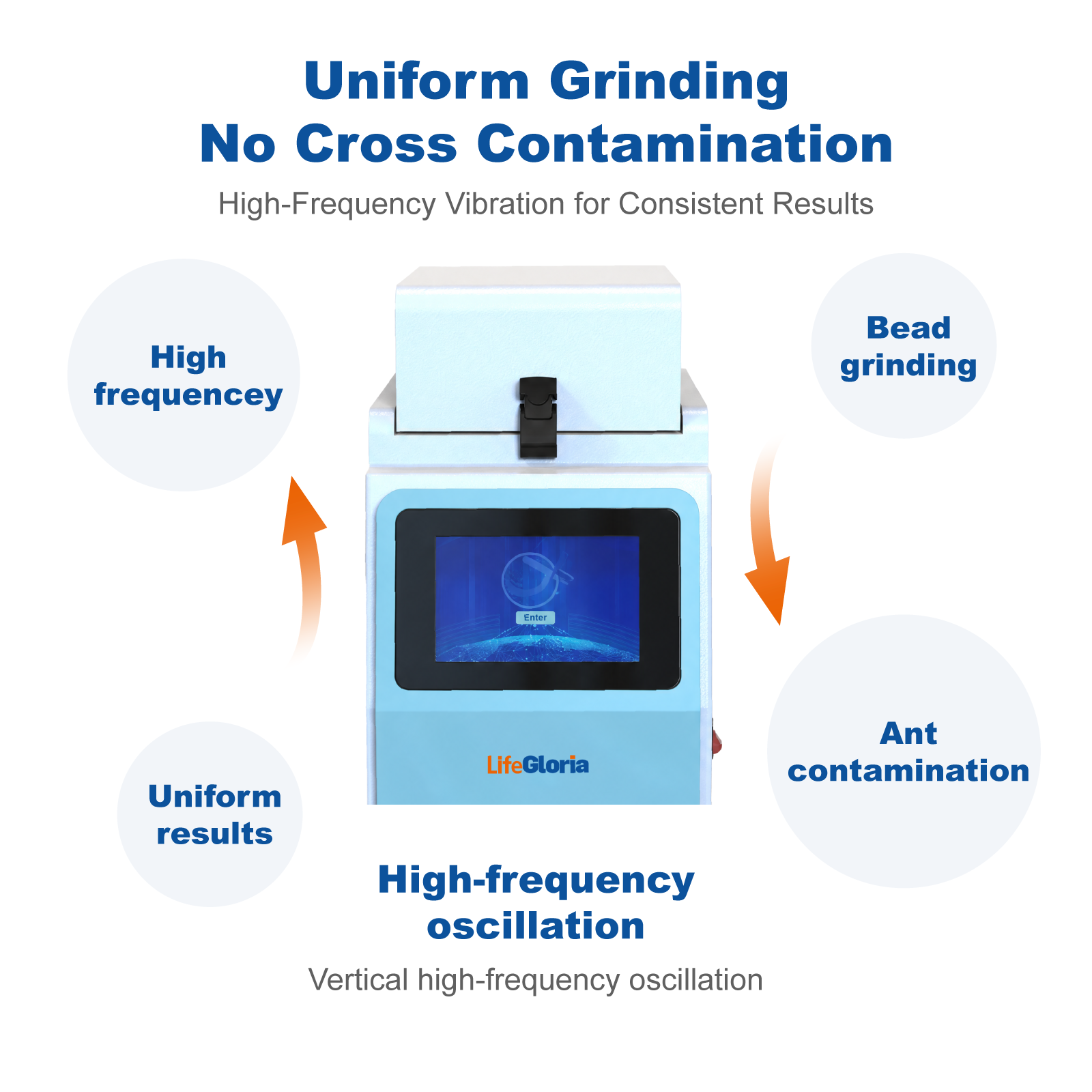
The LifeGloria Tiss-24/48 family is designed for 24- or 48-sample bead-mill processing with programmable operation. Real throughput includes loading, unloading, cooling pauses, extraction handoff, and cleaning, not only the programmed cycle.
- Calculate complete batch time
- Standardize sample mass
- Use saved programs for recurring methods
- Balance holders according to instructions
Control Heat and Cross-Contamination
Excessive cycle energy can warm the sample, while leaking or poorly cleaned vessels can transfer material. Use staged cycles, cooling, sealed tubes, clean loading zones, and appropriate personal protection according to the risk assessment.
- Monitor sample temperature during validation
- Use sealed single-use vessels when appropriate
- Separate pre- and post-extraction areas
- Document cleaning and decontamination
Procurement Checklist
- Sample material and mass
- DNA, RNA, protein, or other target
- Tube and bead format
- Samples per batch and per day
- Speed, time, and saved-program needs
- Cooling and contamination controls
- Voltage, accessories, and documents
- Destination and delivery target
Frequently Asked Questions
Can one grinding program work for every tissue?
No. Tissue hardness, mass, moisture, vessel, bead, and extraction target require method-specific validation.
Does a longer cycle always improve extraction?
No. Excessive processing can add heat or damage selected targets, so optimize against yield and integrity.
What is the difference between 24- and 48-sample systems?
The main difference is batch capacity; actual choice also depends on vessel format, daily workload, and method validation.
What should I send for a Tiss-24/48 quotation?
Provide sample type, mass, target molecule, tube and bead format, daily throughput, program needs, voltage, destination, and deadline.
Final Recommendation
Select the grinder through a representative-sample validation and total workflow calculation. LifeGloria can configure Tiss-24/48 options around the extraction target and batch demand.
Recommended LifeGloria Products
Confirm the final model, selected SKU, compatibility, accessories, certificates, voltage, packaging, freight, storage conditions, local regulations, and application requirements before purchase.
