

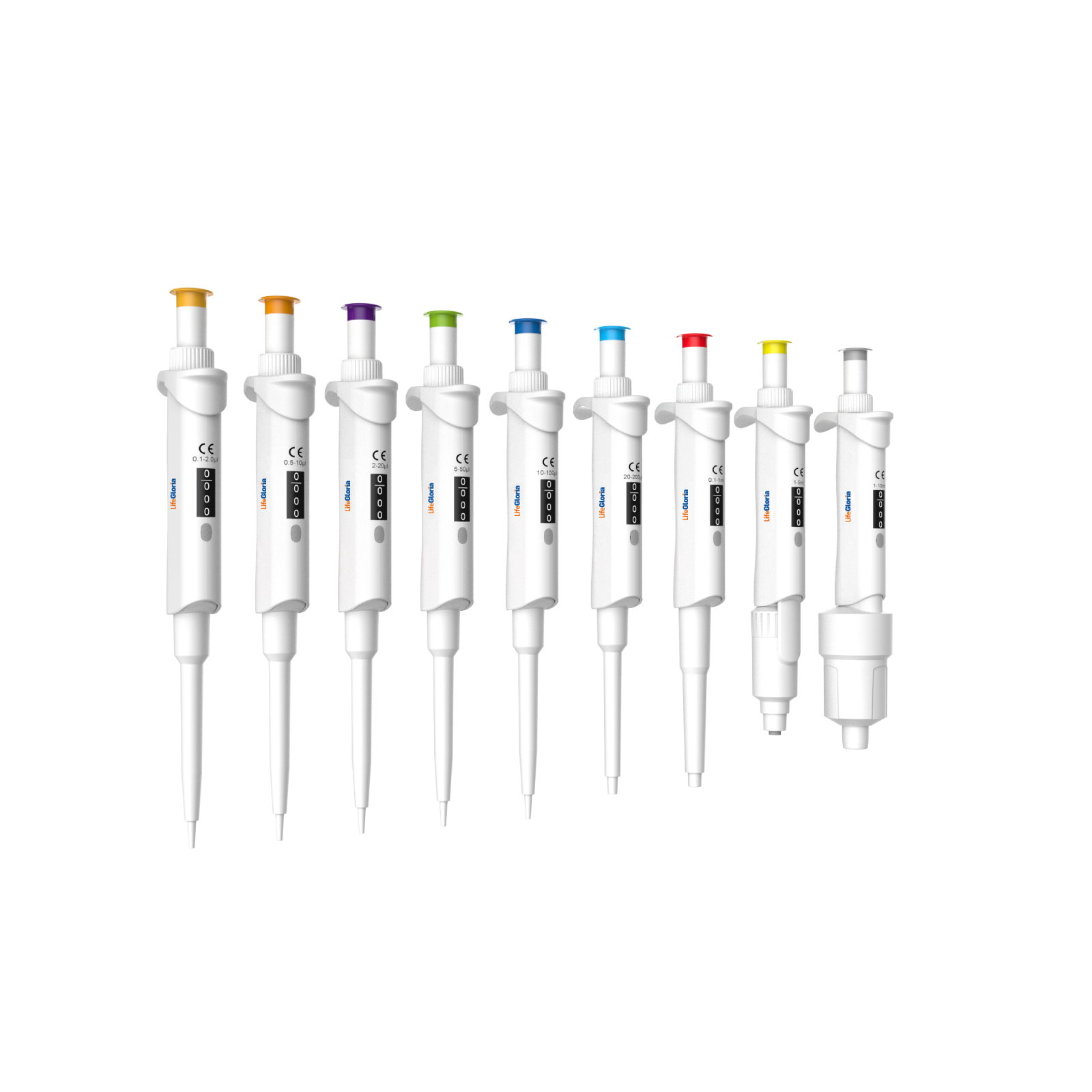
Choosing the right pipette is an important decision for any laboratory. Pipettes are essential tools for accurate liquid handling in molecular biology, cell culture, clinical testing, pharmaceutical research, and biotechnology applications.
Among the most commonly used options are manual micropipettes and electronic pipettes.
Both types are designed to provide accurate liquid transfer, but they differ significantly in operation, cost, maintenance requirements, and suitable applications.
So, which one is better for your laboratory?
The answer depends on your workflow, sample volume, experiment requirements, and budget.
This guide compares:
- Manual micropipettes
- Electronic pipettes
- Accuracy and performance
- Maintenance requirements
- Application scenarios
- Purchasing considerations
What Is a Manual Micropipette?
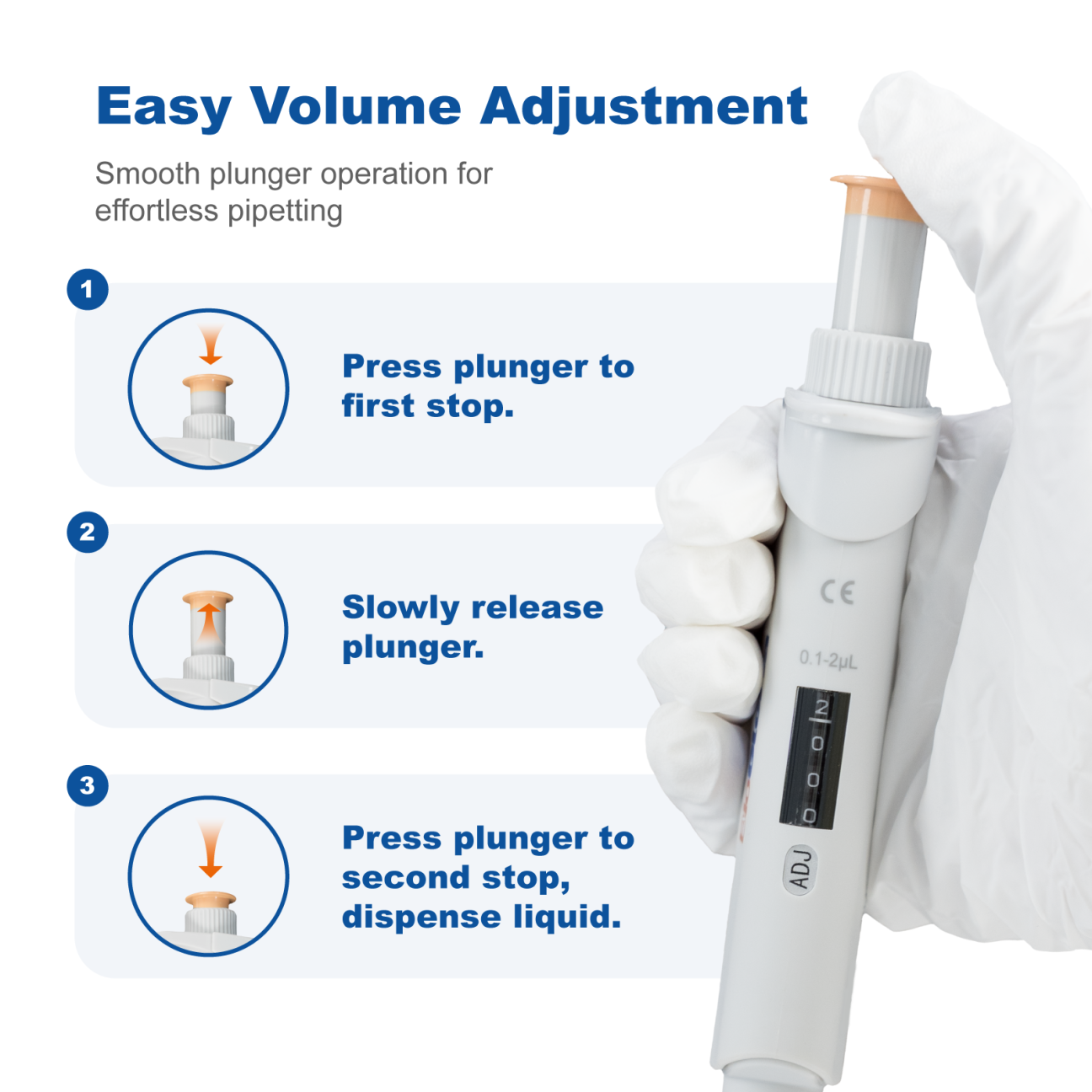
A manual micropipette is a handheld laboratory instrument that uses mechanical operation to aspirate and dispense liquid.
The user controls the pipetting process by manually pressing and releasing the plunger.
Manual micropipettes are widely used because they are:
- simple to operate
- affordable
- easy to maintain
- suitable for most routine laboratory tasks
Common applications include:
- PCR preparation
- DNA/RNA experiments
- Cell culture
- Buffer preparation
- Reagent transfer
- General laboratory research
What Is an Electronic Pipette?
An electronic pipette uses a motor-driven mechanism to control liquid aspiration and dispensing.
Instead of manually pressing the plunger, users operate the pipette through electronic controls.
Electronic pipettes are designed to improve:
- consistency
- operator comfort
- repeatability
- workflow efficiency
They are commonly used in:
- high-throughput laboratories
- pharmaceutical research
- clinical laboratories
- automated workflows
Manual Pipette vs Electronic Pipette Comparison
| Feature | Manual Pipette | Electronic Pipette |
|---|---|---|
| Operation | Manual plunger control | Motor-driven operation |
| Cost | Lower | Higher |
| Maintenance | Simple | More complex |
| Battery | Not required | Required |
| User fatigue | Higher during repetitive work | Lower |
| Accuracy | High with proper technique | High with automated control |
| Learning curve | Easy | Requires training |
| Best for | Routine laboratory work | High-throughput applications |
1. Operation and User Experience
Manual Micropipette
Manual pipettes rely on the user's hand movement.
The operator controls:
- aspiration speed
- dispensing speed
- pipetting rhythm
Experienced users can achieve excellent accuracy with proper technique.
Advantages:
- no charging required
- immediate operation
- simple workflow
However, repetitive pipetting may cause hand fatigue during long experiments.
Electronic Pipette
Electronic pipettes automate the pipetting movement.
The motor controls:
- aspiration
- dispensing
- multi-dispensing functions
This reduces operator workload and improves consistency.
For laboratories performing hundreds or thousands of pipetting steps daily, electronic pipettes can significantly improve efficiency.
2. Accuracy and Precision Comparison
Both manual and electronic pipettes can provide excellent accuracy when properly calibrated.
However, performance depends on different factors.
Manual Pipette Accuracy
Accuracy depends on:
- operator technique
- pipetting speed
- consistency
- calibration status
Experienced technicians can achieve highly reliable results.
Electronic Pipette Accuracy
Electronic pipettes reduce user variation by controlling movement automatically.
Benefits include:
- consistent liquid aspiration
- reduced technique errors
- improved repeatability
For sensitive applications requiring high consistency, electronic pipettes may provide advantages.
3. Cost Considerations
Budget is one of the most important factors when purchasing laboratory equipment.
Manual Pipette Cost
Manual micropipettes are usually more affordable.
Advantages:
- lower purchase cost
- lower maintenance expenses
- no battery replacement
- easy spare part replacement
They are ideal for:
- universities
- teaching laboratories
- research laboratories
- routine experiments
Electronic Pipette Cost
Electronic pipettes generally have a higher initial cost.
Additional considerations include:
- battery maintenance
- electronic components
- charging requirements
- service costs
For laboratories with high sample volumes, the increased efficiency may justify the investment.
4. Maintenance and Service Requirements
Manual Pipette Maintenance
Manual pipettes are relatively easy to maintain.
Routine maintenance includes:
- cleaning external surfaces
- checking seals
- replacing worn components
- regular calibration
Many manual pipettes can be partially or fully autoclaved, making them suitable for contamination-sensitive environments.
Electronic Pipette Maintenance
Electronic pipettes require additional care.
Maintenance may include:
- battery replacement
- electronic system inspection
- motor servicing
- software updates (for advanced models)
5. Which Pipette Is Better for Different Applications?
Universities and Teaching Laboratories
Recommended:
Manual micropipettes
Reasons:
- affordable for multiple users
- easy training
- simple maintenance
- suitable for education purposes
Molecular Biology Laboratories
Recommended:
Both options
Manual pipettes are suitable for:
- routine PCR preparation
- reagent preparation
Electronic pipettes are beneficial for:
- repeated protocols
- high-volume experiments
Clinical and Pharmaceutical Laboratories
Recommended:
Electronic pipettes
Advantages:
- improved consistency
- reduced operator variation
- better workflow efficiency
High-Throughput Research
Recommended:
Electronic pipettes
Especially for:
- 96-well plate preparation
- screening applications
- automated workflows
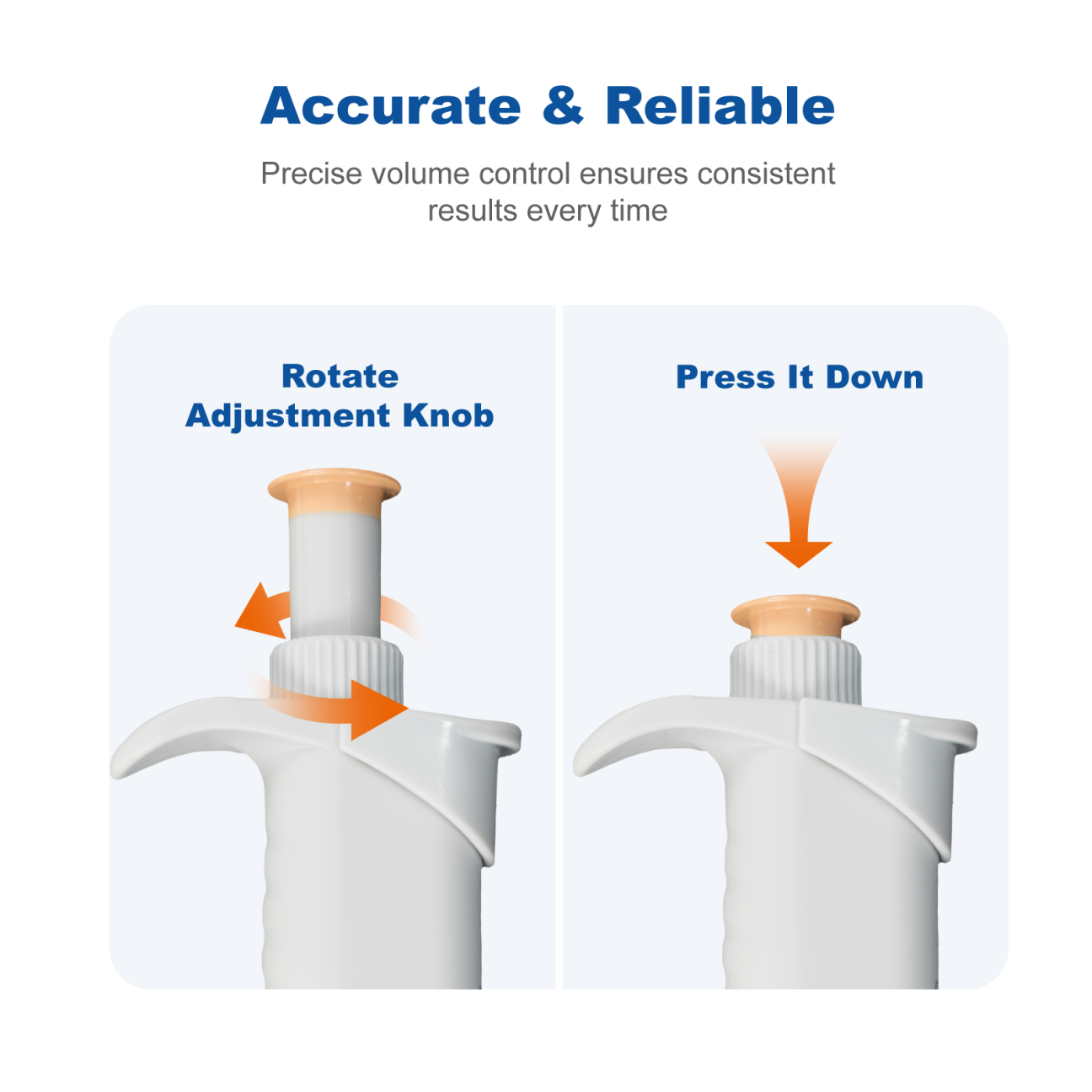
How to Choose the Right Pipette for Your Laboratory?
Before purchasing, consider the following factors:
1. Sample Volume Range
Select pipettes according to your common liquid volumes.
Examples:
- 0.1–10 μL for small-volume molecular experiments
- 10–100 μL for general applications
- 100–1000 μL for larger volume transfer
2. Workload Frequency
Ask:
- How many pipetting steps are performed daily?
- How many users operate the equipment?
- Is repetitive pipetting common?
3. Accuracy Requirements
For sensitive experiments, choose pipettes with:
- reliable calibration
- high precision
- ISO 8655 compliance
4. Total Cost of Ownership
Consider:
- purchase price
- maintenance
- calibration
- replacement parts
- service availability
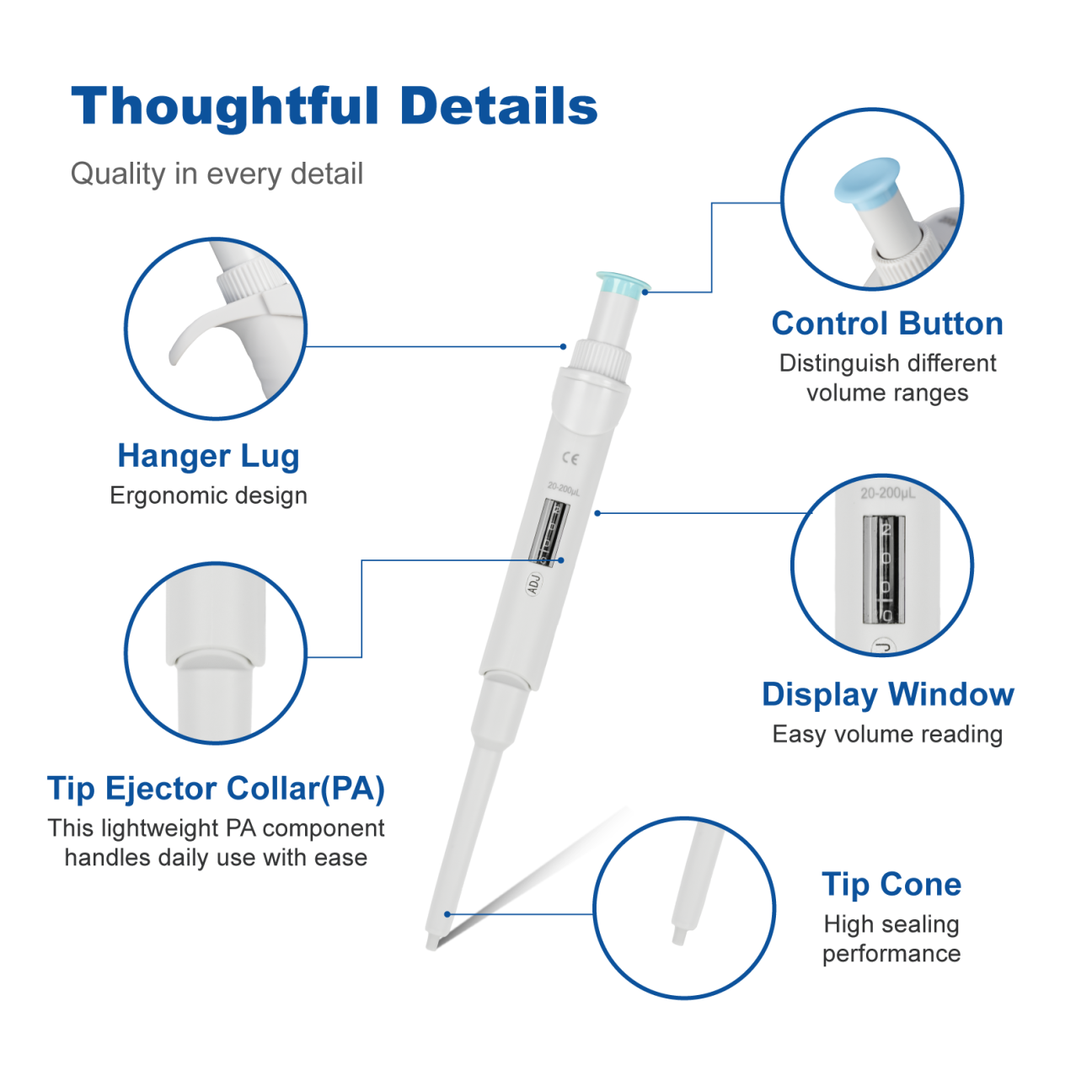
LifeGloria Adjustable Manual Micropipette: Reliable Choice for Everyday Laboratory Work
LifeGloria adjustable micropipettes provide accurate and dependable liquid handling performance for laboratories worldwide.
Designed for research institutions, biotechnology companies, and healthcare laboratories, LifeGloria pipettes combine precision, durability, and ease of operation.
Key features include:
- Adjustable volume range from 0.1 μL to 10 mL
- Single channel configuration
- High accuracy and repeatability
- ISO 8655 calibration
- Ergonomic lightweight design
- Autoclavable lower components
- Suitable for PCR, molecular biology, cell culture, and general laboratory applications
For most research laboratories, a high-quality manual micropipette remains one of the most practical and cost-effective liquid handling solutions.
However, for laboratories requiring maximum automation and high-throughput performance, electronic pipettes may provide additional advantages.
Choosing the right pipette depends on your laboratory workflow, application requirements, and long-term operational goals.
Explore LifeGloria laboratory pipettes for accurate and reliable liquid handling solutions.
