

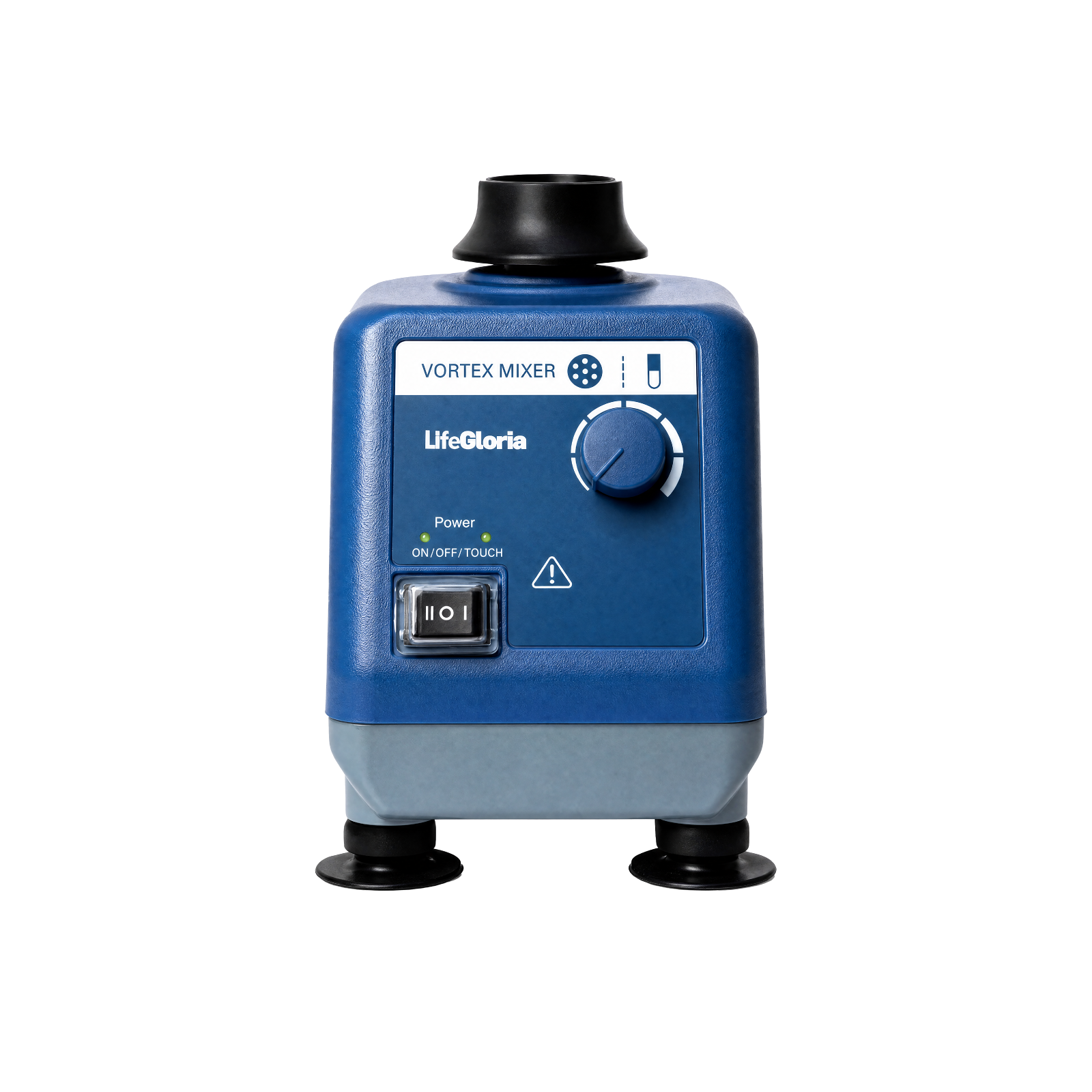
How a Vortex Mixer Works
An eccentric drive moves the cup or attachment in a small circular orbit. When a tube contacts the cup in touch mode, this motion creates a vortex inside the liquid. Continuous mode keeps the attachment moving without the operator holding each tube.
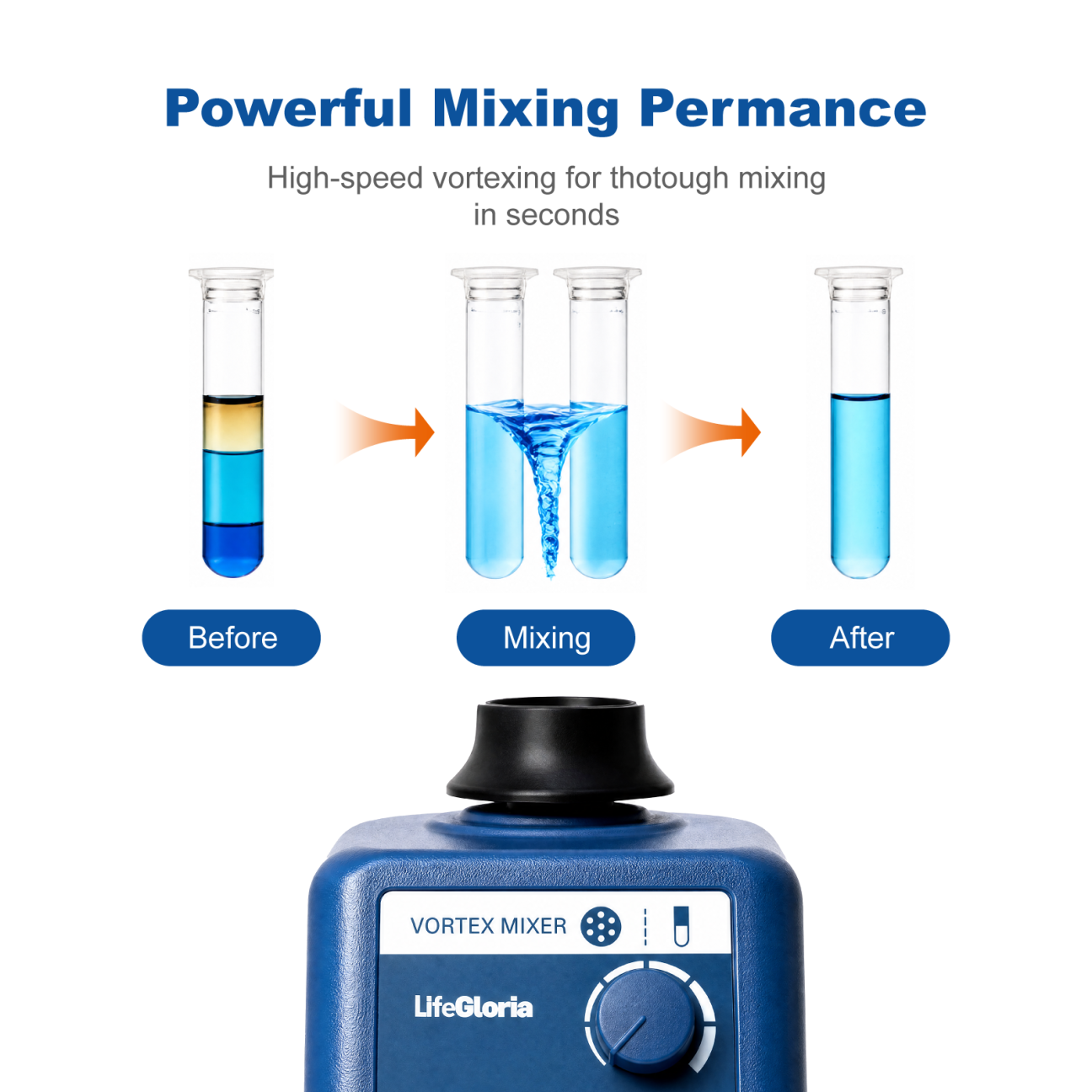
- Fast mixing in seconds
- Ideal for tubes and small vials
- Useful for resuspending pellets and blending reagents
- Touch mode supports quick one-tube work
How an Orbital Shaker Works
An orbital shaker moves an entire platform through a circular path. Flasks, bottles, racks, or plates are secured to the platform and mixed for minutes or hours. Orbit diameter, speed, vessel shape, fill volume, and closure affect liquid movement and oxygen transfer.
- Processes multiple vessels together
- Suitable for longer mixing or incubation
- Common for cell culture flasks and larger volumes
- Can use clamps, racks, or adhesive platforms
Vortex Mixer vs Orbital Shaker Comparison
| Factor | Vortex mixer | Orbital shaker |
|---|---|---|
| Typical vessels | Tubes and small vials | Flasks, bottles, plates, racks |
| Typical duration | Seconds to short periods | Minutes to hours |
| Throughput | One or several with attachment | Many vessels |
| Motion | Small, intense orbit at attachment | Whole platform moves in an orbit |
| Common purpose | Rapid mixing and resuspension | Batch mixing, incubation, aeration |
When to Choose a Vortex Mixer
- Resuspending a pellet in a microtube
- Mixing reagents before a short spin
- Blending samples in test tubes
- Dissolving small amounts of material
- Quick preparation at an individual workstation
When to Choose an Orbital Shaker
- Culturing microorganisms or cells in flasks
- Mixing many vessels for the same period
- Staining or washing on a platform
- Long-duration extraction or dissolution
- Applications requiring controlled, repeatable batch motion
Avoid Overmixing
Higher speed is not automatically better. Excessive vortexing can create foam, aerosols, heat, or shear-sensitive sample damage. Excessive shaker speed may cause vessels to slide, splash, or wet closures. Begin at a low setting, secure vessels, and increase only until the required mixing pattern is achieved.
Touch Mode vs Continuous Mode
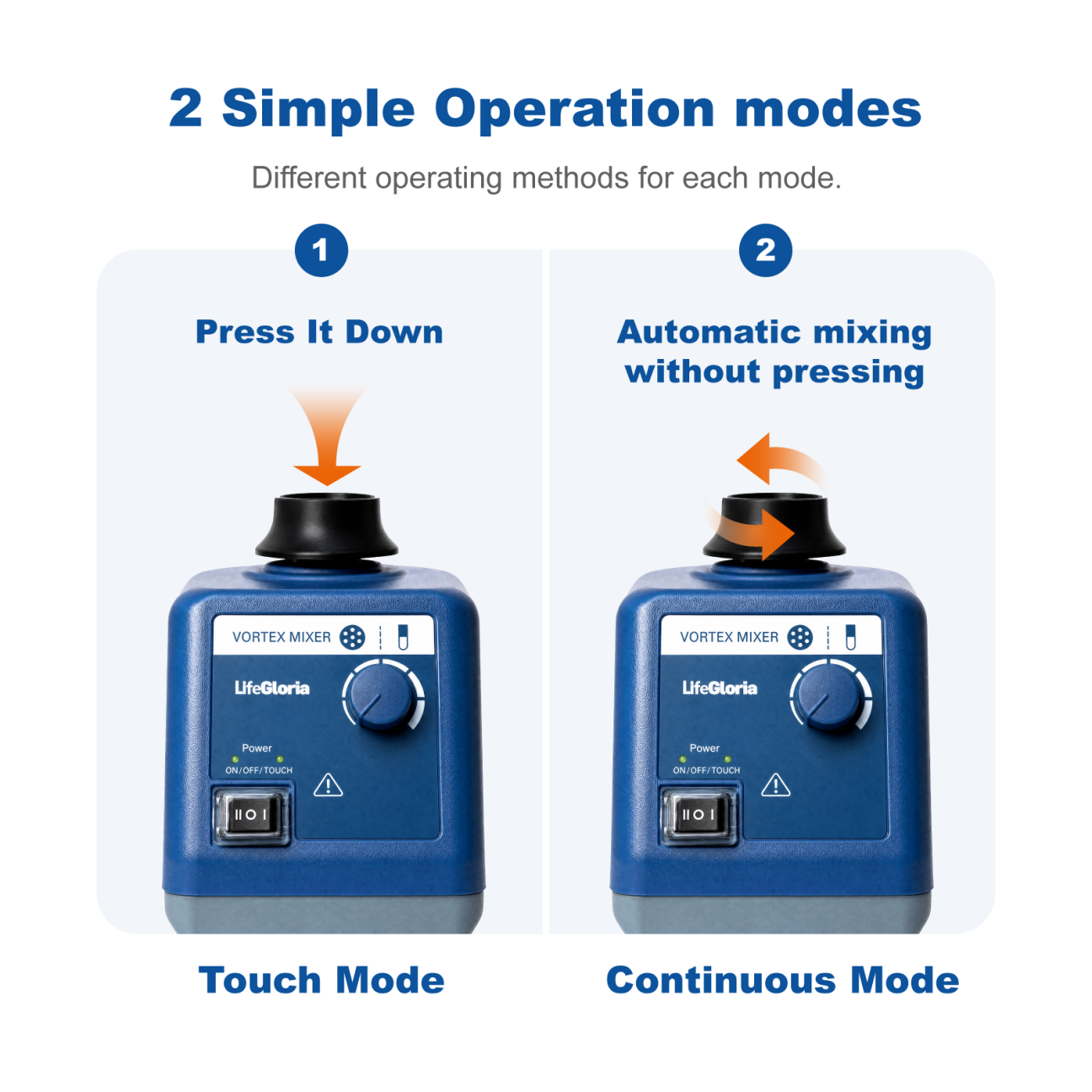
Touch mode activates when the vessel presses the mixing cup and is convenient for quick, one-at-a-time work. Continuous mode is useful with attachments or when a longer mixing period is required. Do not hold vessels by hand in continuous operation when the manual requires an attachment.
LifeGloria Vortex Mixer
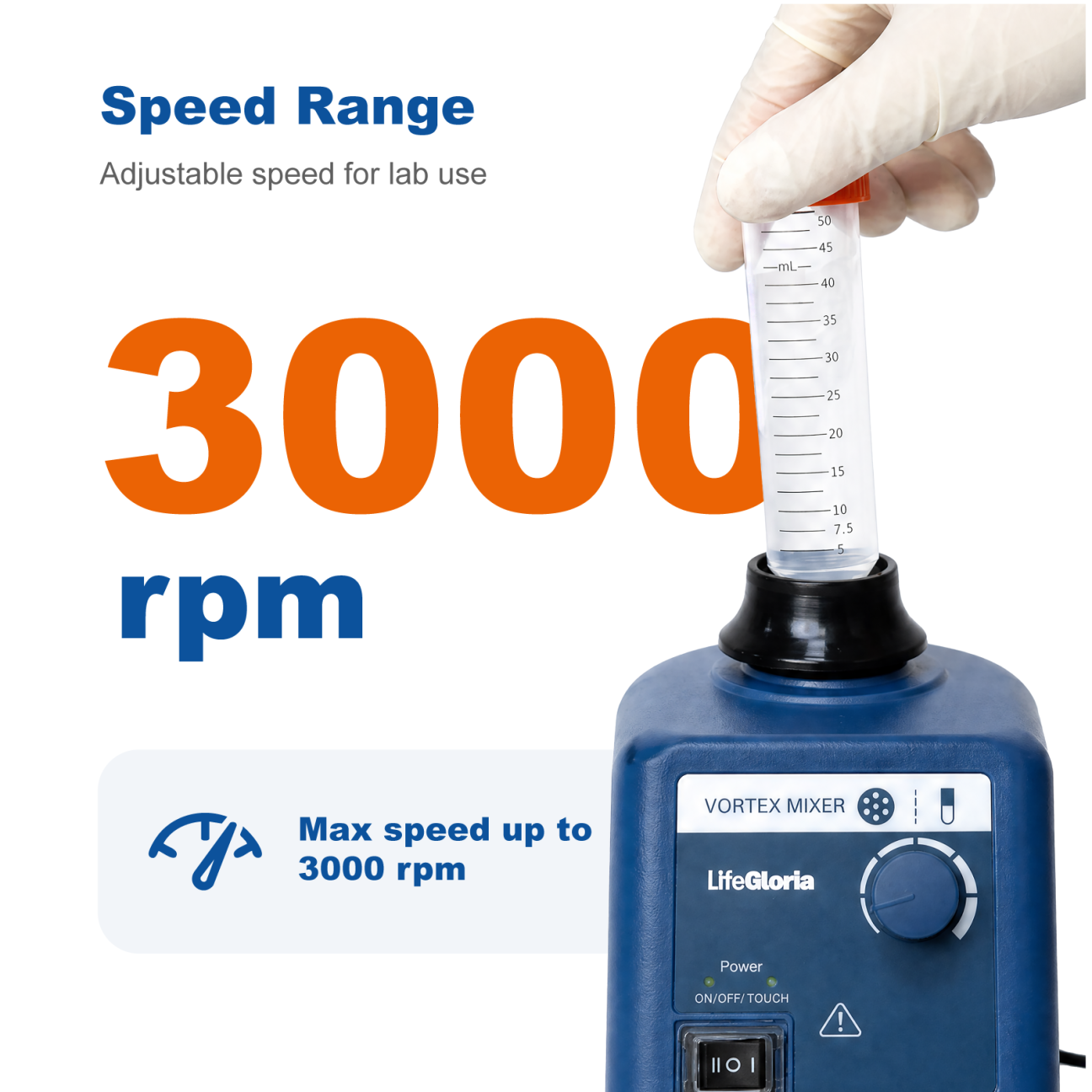
The LifeGloria 0–3000 RPM vortex mixer has a 6 mm orbit and provides both touch and continuous operation. The operating instructions recommend placing the device on a stable, non-slip surface, starting from a low speed, keeping handheld containers as vertical as possible, and reducing speed if the sample splashes or the unit runs unevenly.
Frequently Asked Questions
Can a vortex mixer replace an orbital shaker?
Only for some short, small-volume tasks. It is not a direct replacement for long-duration, multi-flask, or incubation workflows.
Can I vortex every sample at maximum speed?
No. Use the lowest speed that produces adequate mixing and consider foam, aerosols, heat, and shear sensitivity.
What is touch mode?
The mixer runs when a tube presses the cup or attachment, making quick individual mixing easier.
Which device is better for cell culture?
An orbital shaker is generally better for culture flasks and controlled aeration. A vortex mixer is mainly for short tube-scale preparation.
Final Thoughts
A vortex mixer is the fast, focused choice for tubes; an orbital shaker is the scalable choice for multiple vessels and longer processes. Match the instrument to the sample's volume, sensitivity, vessel, throughput, and required mixing time rather than selecting by maximum speed alone.
