

Pipette tips are one of the most frequently used consumables in laboratories. Although they appear simple, choosing the right pipette tip can significantly affect liquid handling accuracy, experimental reproducibility, and contamination control.
In applications such as PCR, cell culture, molecular biology, and clinical testing, even a small difference in pipette tip quality may influence experimental results.
Many laboratory users focus on selecting a high-quality micropipette but overlook the importance of compatible pipette tips.
This guide explains different types of pipette tips, their applications, key selection factors, and best practices for reliable liquid handling.
What Are Pipette Tips?
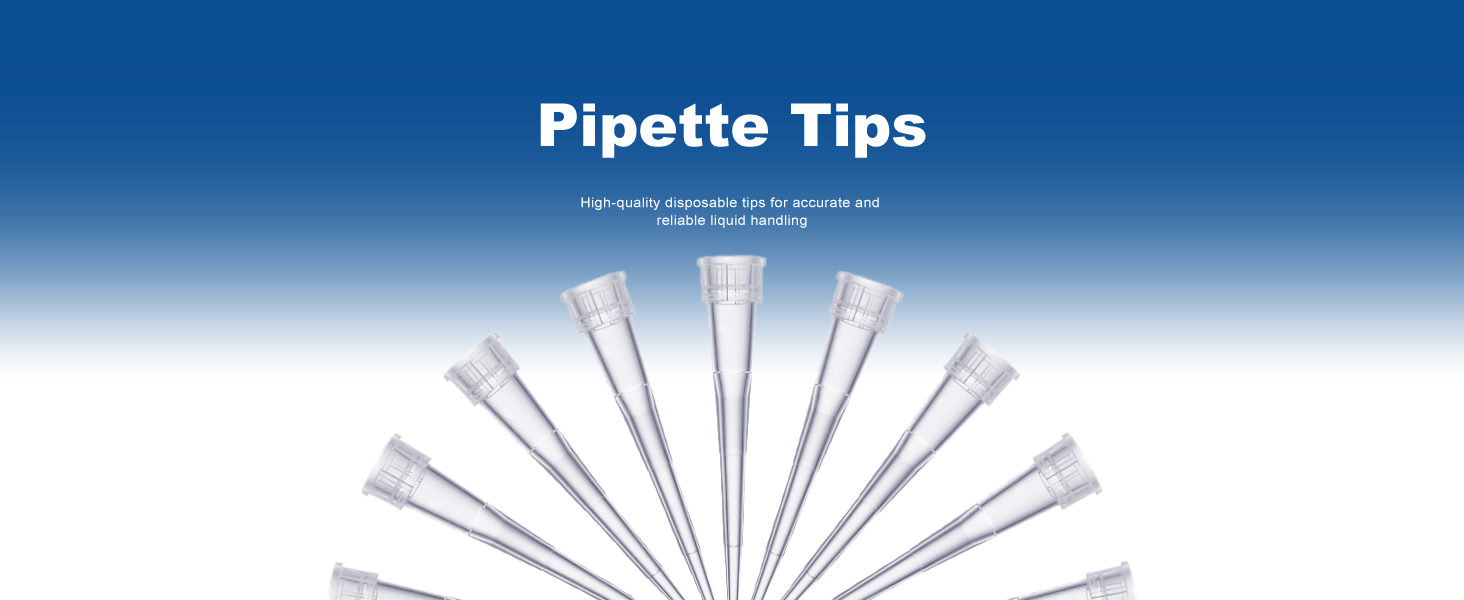
Pipette tips are disposable plastic components attached to micropipettes for transferring liquid samples.
During pipetting, the tip acts as a temporary contact surface between the pipette and the sample.
High-quality pipette tips help ensure:
- Accurate volume transfer
- Reduced contamination risk
- Consistent experimental results
- Better compatibility with pipettes
Because pipette tips directly interact with samples, their quality is essential for laboratory accuracy.
Why Are Pipette Tips Important?
Many researchers assume that pipette accuracy depends only on the instrument.
However, pipette tips also influence performance.
Poor-quality tips may cause:
- Liquid leakage
- Poor sealing
- Sample retention
- Inconsistent dispensing
- Increased contamination risk
For sensitive experiments, such as PCR and cell-based assays, selecting the correct tip is critical.
Types of Pipette Tips
1. Standard Pipette Tips
Standard tips are commonly used for routine laboratory applications.
Applications include:
- General liquid transfer
- Buffer preparation
- Sample dilution
- Educational laboratories
They provide an economical solution for everyday workflows.
2. Filter Pipette Tips
Filter tips contain a barrier that prevents aerosols and liquid contamination from entering the pipette shaft.
They are commonly used in:
- PCR
- Molecular biology
- RNA handling
- Microbiology
Advantages:
- Reduce contamination risk
- Protect pipette components
- Improve workflow reliability
3. Low-Retention Pipette Tips
Low-retention tips use special plastic surface treatments to reduce liquid adhesion.
They are useful for:
- Protein solutions
- DNA/RNA samples
- Viscous liquids
- Expensive reagents
Benefits:
- Higher recovery of samples
- Reduced liquid waste
- Improved consistency
4. Sterile Pipette Tips
Sterile tips are designed for applications requiring contamination control.
Common uses:
- Cell culture
- Clinical testing
- Biotechnology research
How to Choose the Right Pipette Tips
1. Check Pipette Compatibility
Not all tips fit all pipettes.
Always confirm:
- Brand compatibility
- Volume range
- Tip attachment design
A poor fit may cause inaccurate aspiration and dispensing.
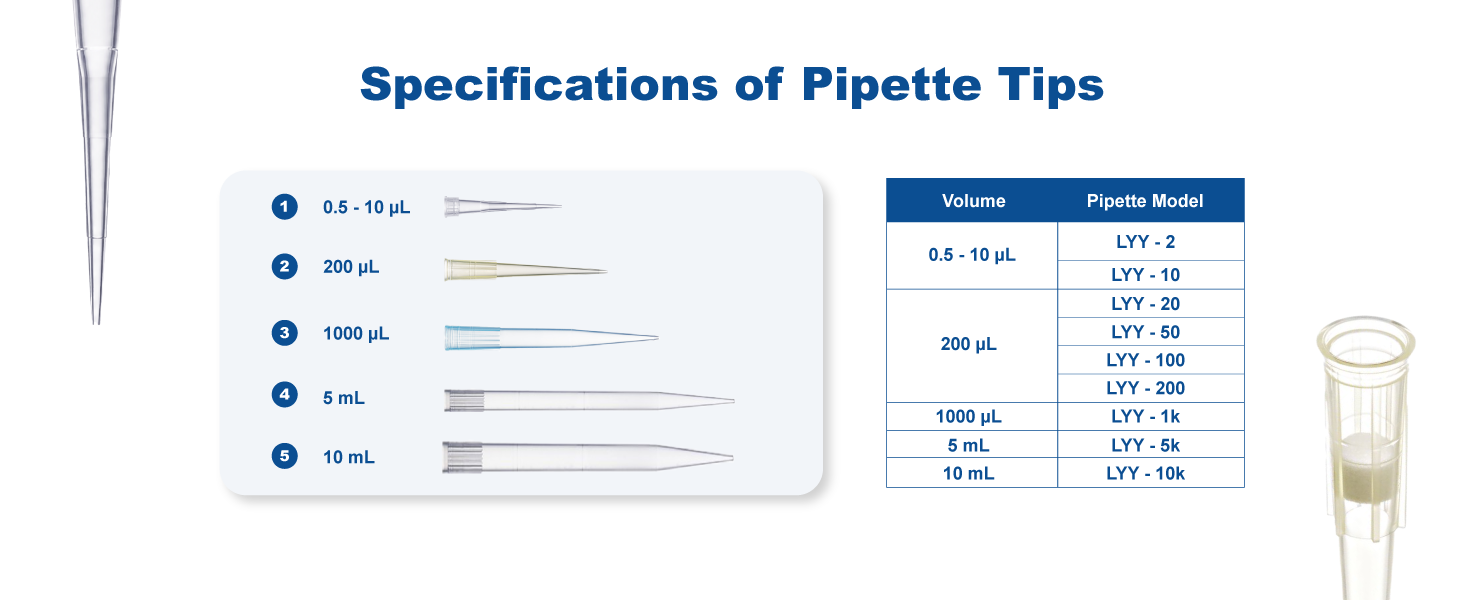
2. Select the Correct Volume Range
Match the tip size with your pipette volume.
Examples:
- 0.1–10 μL → Small volume tips
- 20–200 μL → Standard tips
- 100–1000 μL → Large volume tips
Using the wrong size may reduce accuracy.
3. Consider Sterility Requirements
Choose according to your application:
| Application | Recommended Tip |
|---|---|
| PCR | Filter tips |
| Cell culture | Sterile tips |
| Routine experiments | Standard tips |
| Protein research | Low-retention tips |
4. Choose Quality Materials
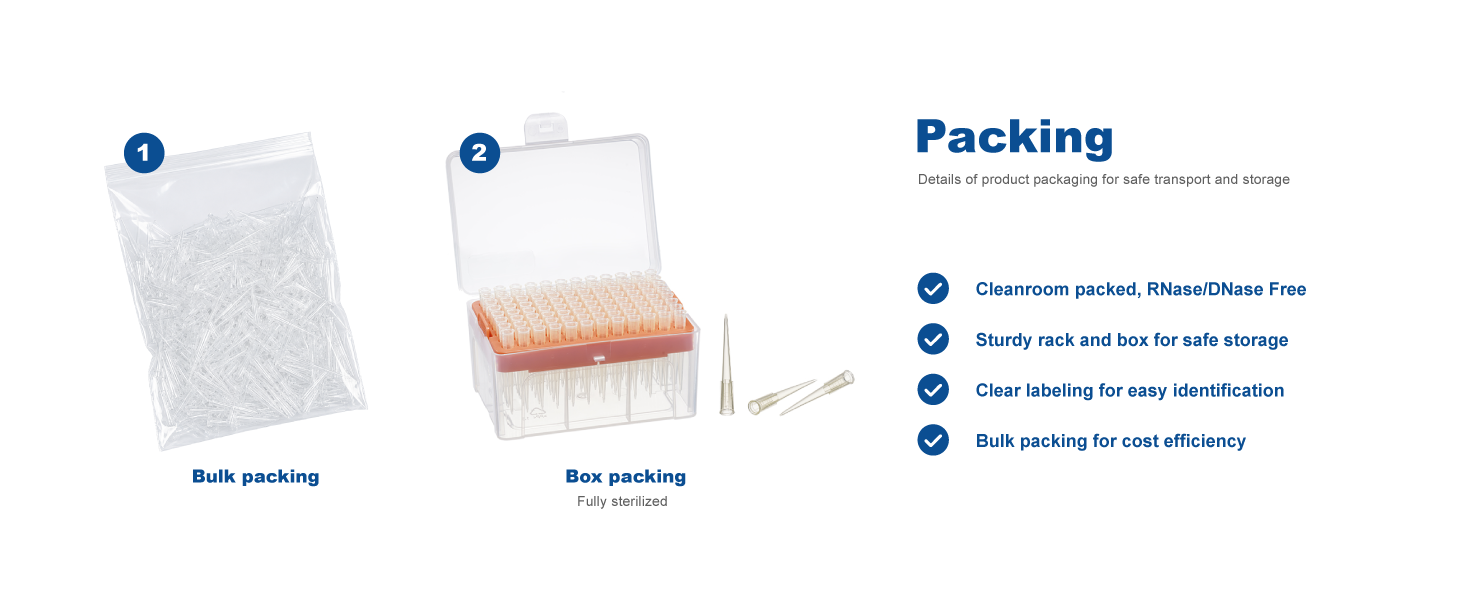
High-quality pipette tips are usually made from medical-grade polypropylene.
Important characteristics:
- Low extractables
- Chemical resistance
- Consistent dimensions
- Smooth inner surface
Common Pipette Tip Mistakes
Using Incompatible Tips
Incorrect tips may create poor sealing and inaccurate results.
Reusing Disposable Tips
Most laboratory applications require single-use tips to prevent contamination.
Ignoring Tip Quality
Cheap tips may increase experimental variability and reagent waste.
Tips for Better Pipetting Performance
Combine high-quality pipette tips with proper technique:
- Use compatible tips
- Avoid touching contaminated surfaces
- Change tips between samples
- Use filter tips for sensitive applications
- Store tips properly
For more information, see:
8 Pipetting Mistakes That Cause Inaccurate Results
Frequently Asked Questions
Are all pipette tips universal?
No. Pipette tips vary in design and compatibility. Always check whether tips match your micropipette model.
Do filter tips improve pipetting accuracy?
Filter tips mainly improve contamination control, but they also help protect pipettes and maintain reliable workflows.
Why do pipette tips retain liquid?
Liquid retention depends on material properties, surface treatment, liquid viscosity, and pipetting technique.
How should pipette tips be stored?
Store tips in clean, dry conditions and avoid exposure to dust or chemicals.

Conclusion
Pipette tips are an essential part of accurate liquid handling. Choosing the correct type of tip improves precision, reduces contamination risks, and helps laboratories achieve more reliable results.
Whether performing PCR, cell culture, molecular research, or routine laboratory procedures, selecting compatible and high-quality pipette tips is an important step toward better experimental performance.
