

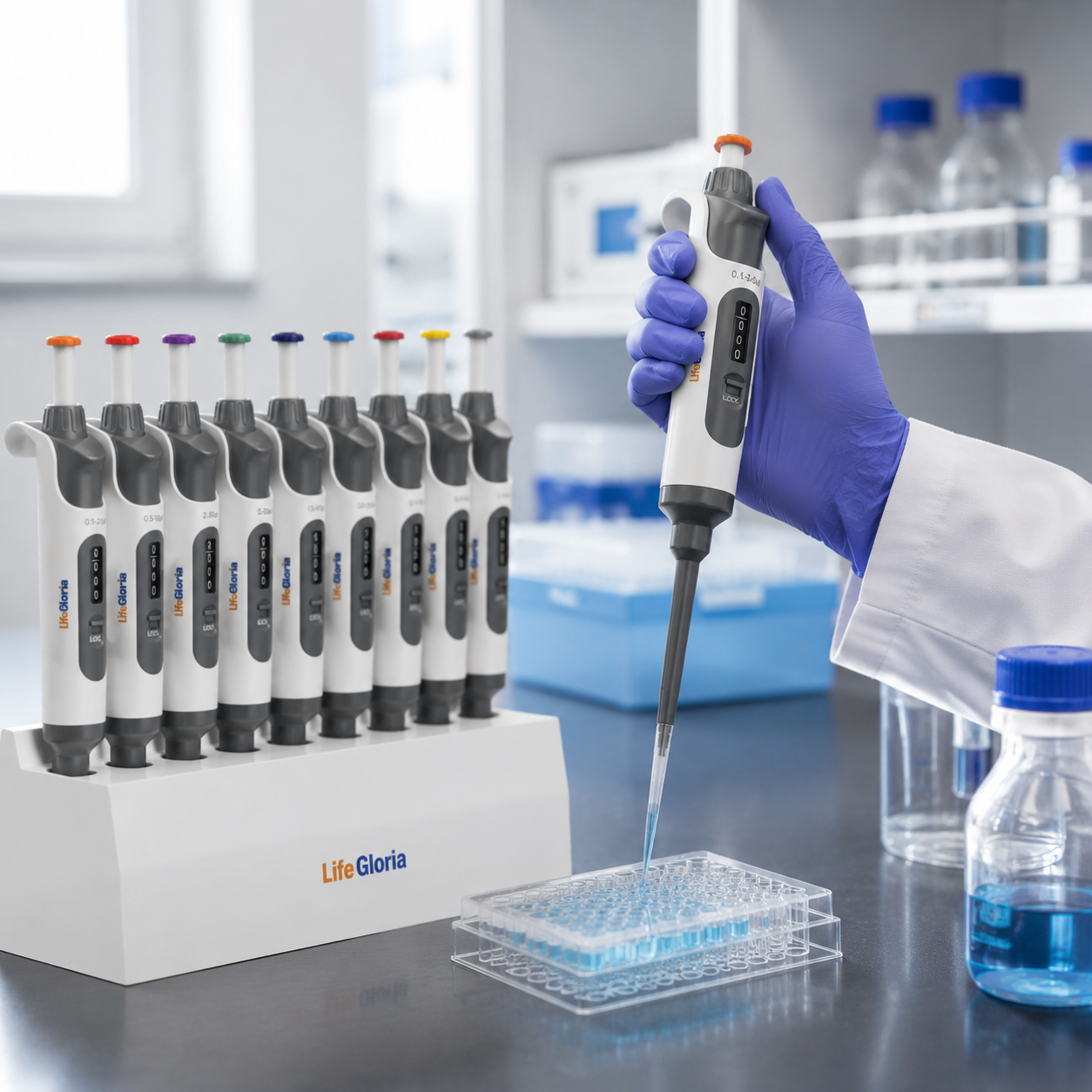
Micropipettes are one of the most essential instruments in modern laboratories. From molecular biology and cell culture to pharmaceutical research and clinical testing, micropipettes enable researchers to accurately transfer small volumes of liquids with high precision and repeatability.
Whether preparing PCR reactions, transferring cell samples, performing ELISA assays, or handling sensitive reagents, the accuracy of liquid handling directly affects experimental reliability.
Choosing the right micropipette and using proper pipetting techniques are critical for achieving consistent results.
In this complete guide, we will explain what a micropipette is, how it works, common applications, different types, key benefits, and important tips for accurate liquid handling.
What Is a Micropipette?
A micropipette is a precision laboratory instrument designed to measure and transfer very small volumes of liquid, usually ranging from less than 1 microliter (μL) to several milliliters (mL).
Unlike traditional measuring tools, micropipettes use a piston-driven mechanism to provide highly accurate volume control.
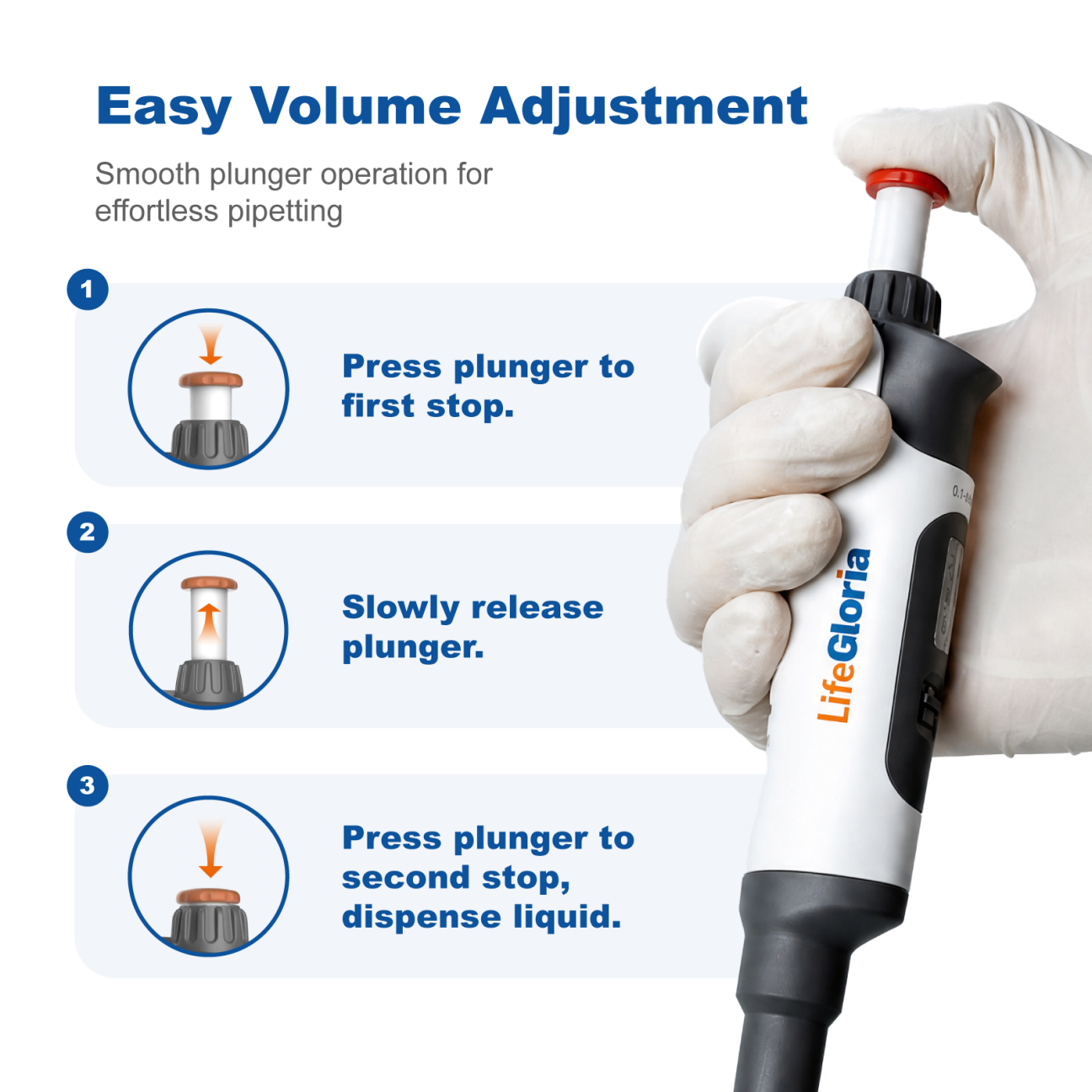
The instrument works by creating air displacement inside the pipette shaft:
- The plunger is pressed down.
- The piston moves and creates pressure changes.
- The liquid is aspirated into a disposable tip.
- The liquid is dispensed by pressing the plunger.
This mechanism allows researchers to handle extremely small volumes with high accuracy.
Why Are Micropipettes Important in Laboratories?
Many biological and chemical experiments depend on precise liquid volumes.
A small volume error can change:
- Reagent concentrations
- Reaction efficiency
- Sample consistency
- Experimental reproducibility
For example, PCR reactions often require precise amounts of DNA templates, primers, and enzymes. Even small pipetting variations can influence amplification results.
Therefore, reliable liquid handling is a foundation of successful laboratory work.
Common Applications of Micropipettes
Micropipettes are widely used across many scientific fields.
1. Molecular Biology
Micropipettes are essential for:
- PCR preparation
- DNA extraction
- RNA analysis
- Gel electrophoresis
- Cloning experiments
Accurate liquid transfer helps maintain consistent reaction conditions.
2. Cell Culture
In cell biology laboratories, micropipettes are used for:
- Cell suspension preparation
- Media transfer
- Reagent addition
- Sample dilution
Precise handling helps maintain cell health and experimental consistency.
3. Clinical and Diagnostic Testing
Micropipettes are commonly used in:
- Blood sample preparation
- Immunoassays
- Diagnostic reagent handling
- Laboratory testing workflows
Accuracy is especially important when working with limited sample volumes.
4. Pharmaceutical Research
Drug development laboratories use micropipettes for:
- Compound preparation
- Screening assays
- Formulation testing
- Analytical experiments
Reliable pipetting improves research efficiency and reduces reagent waste.
Types of Micropipettes
Micropipettes are available in different configurations depending on laboratory requirements.
1. Adjustable Volume Micropipettes
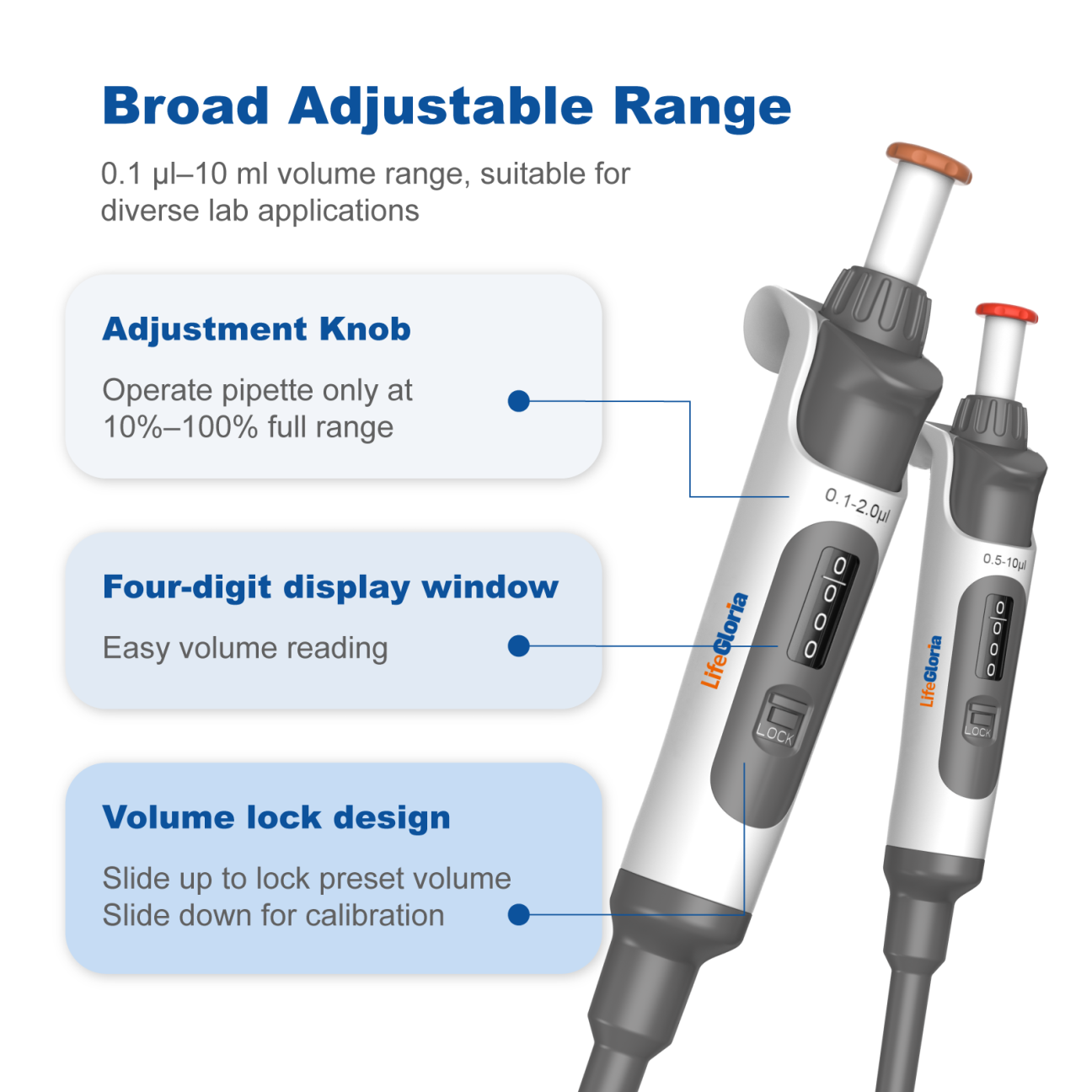
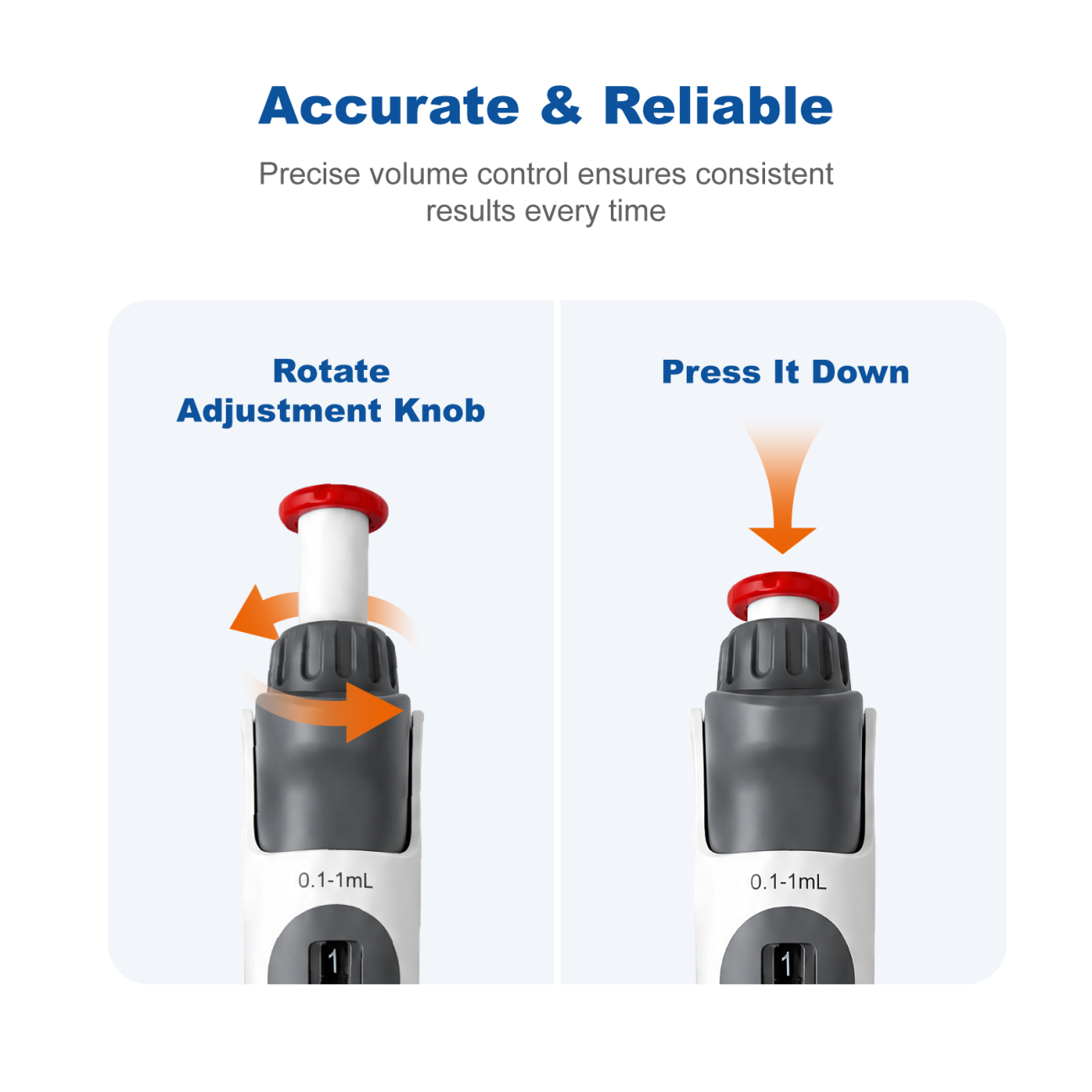
Adjustable micropipettes allow users to set different volumes within a specific range.
Examples:
- 0.1–10 μL
- 2–20 μL
- 20–200 μL
- 100–1000 μL
Advantages
- Flexible
- Suitable for different experiments
- Reduces the need for multiple instruments
These are the most commonly used micropipettes in research laboratories.
2. Fixed Volume Micropipettes
Fixed volume pipettes deliver only one specific volume.
Example:
- 100 μL pipette
Advantages
- Simple operation
- High repeatability
- Suitable for routine procedures
3. Single Channel Micropipettes
Single channel pipettes transfer liquid from one container at a time.
Common applications:
- PCR tube preparation
- Sample transfer
- General laboratory work
4. Multichannel Micropipettes
Multichannel micropipettes allow simultaneous transfer of multiple samples.
Commonly used for:
- 96-well plates
- ELISA
- High-throughput screening
They significantly improve efficiency when processing large sample numbers.
5. Electronic Micropipettes
Electronic pipettes use motor-driven systems to control aspiration and dispensing.
Benefits include:
- Reduced hand fatigue
- Improved consistency
- Programmable operation
They are often used in laboratories with repetitive pipetting workflows.
Key Benefits of Using a High-Quality Micropipette
Improved Accuracy
High-quality micropipettes provide precise volume control, helping researchers obtain reliable results.
Better Repeatability
Consistent pipetting reduces variation between samples and experiments.
Reduced Reagent Waste
Accurate liquid handling prevents unnecessary reagent consumption, especially when working with expensive materials.
Improved Laboratory Efficiency
Ergonomic designs reduce fatigue during long experiments involving hundreds of pipetting steps.
Better Experimental Reproducibility
Reliable pipetting techniques help different researchers achieve comparable results.
How to Choose the Right Micropipette
Selecting the correct micropipette depends on your application.
Consider these factors:
1. Volume Range
Choose a pipette that matches your required volume.
For example:
| Volume Range | Recommended Pipette |
|---|---|
| 0.1–10 μL | P10 |
| 2–20 μL | P20 |
| 20–200 μL | P200 |
| 100–1000 μL | P1000 |
Using the correct range improves accuracy.
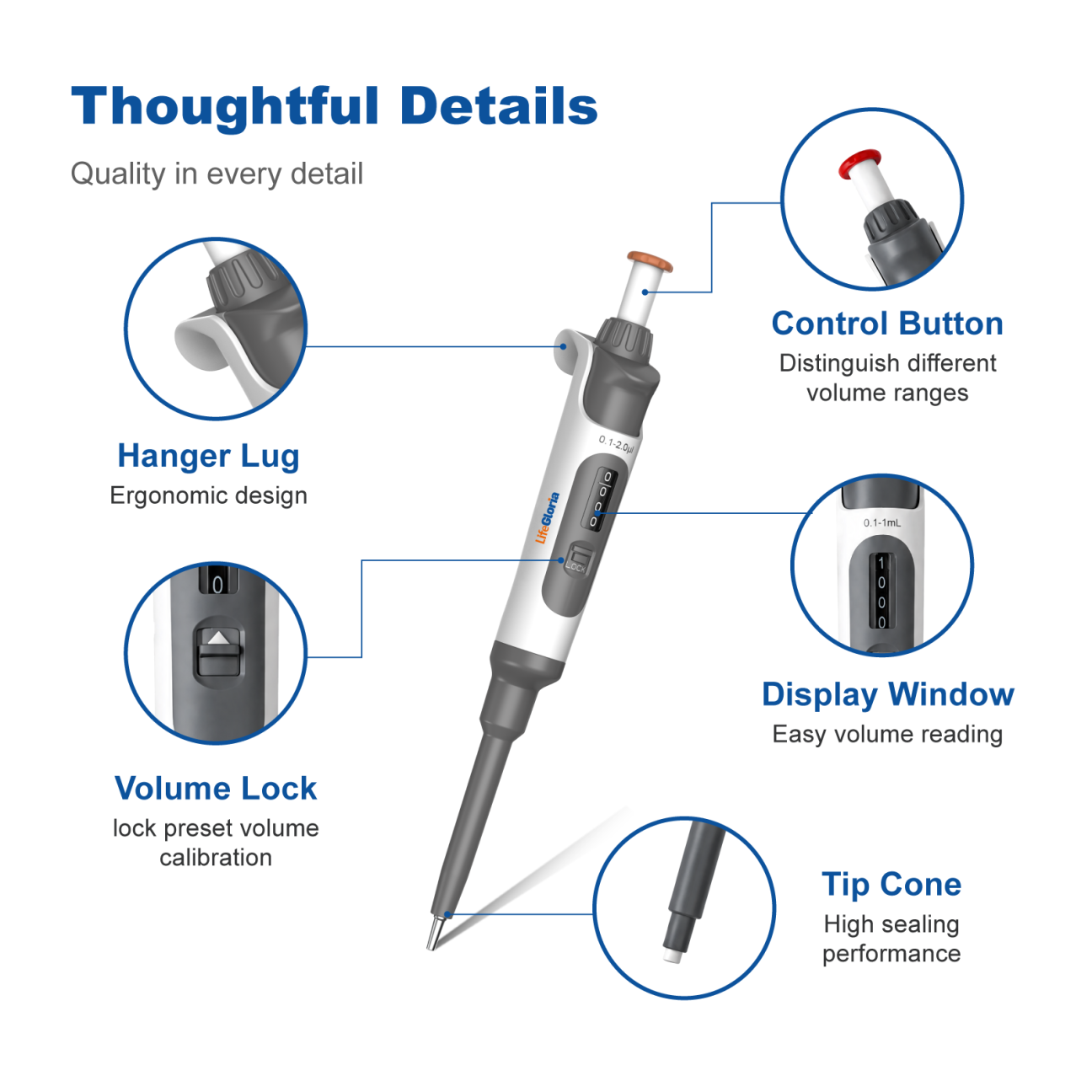
2. Ergonomic Design
Researchers often perform hundreds of pipetting operations daily.
Important features include:
- Comfortable grip
- Low plunger force
- Lightweight construction
- Smooth operation
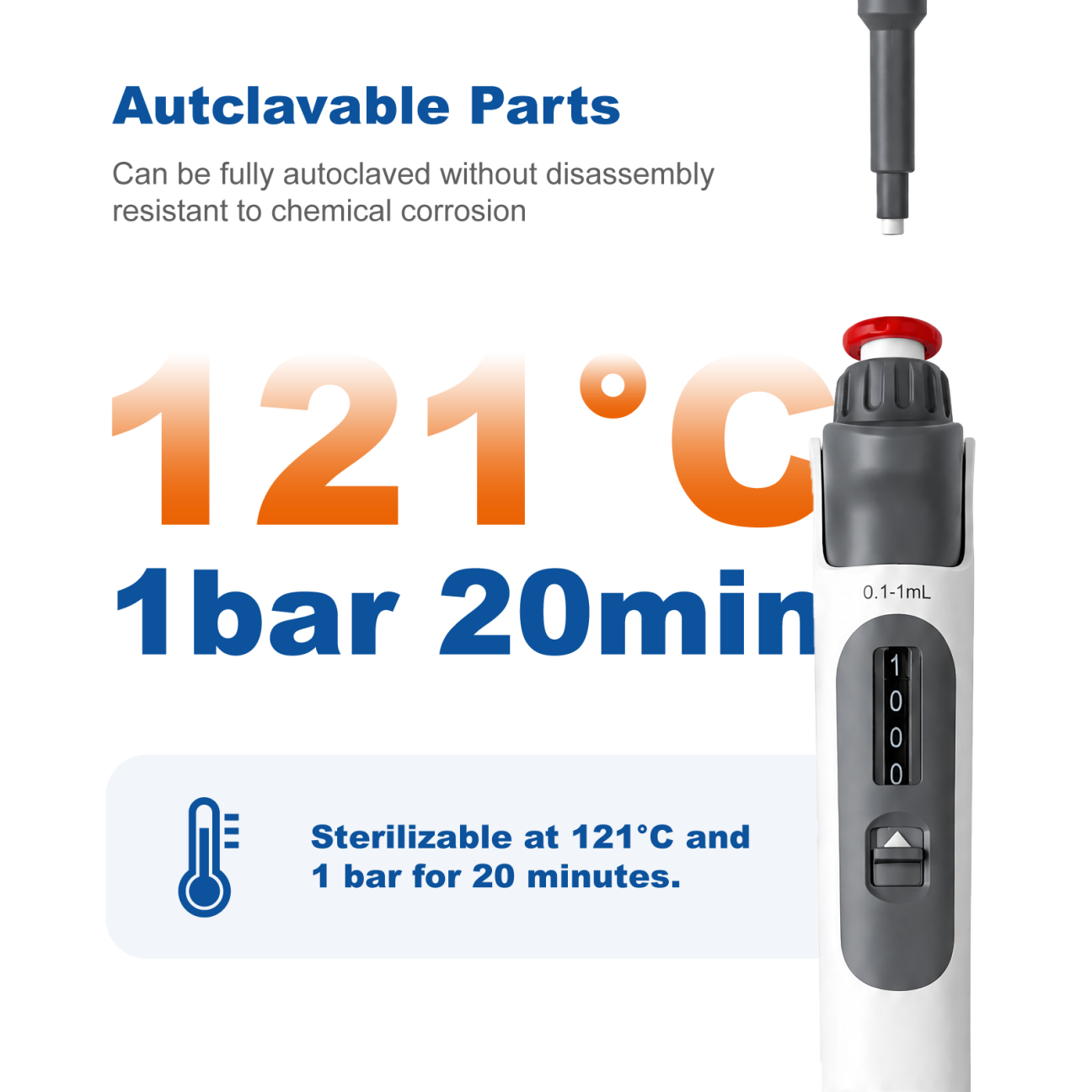
3. Autoclavable Components
For applications requiring strict contamination control, autoclavable pipettes help maintain laboratory hygiene.
4. Calibration and Maintenance
A good micropipette should support:
- Easy calibration
- Simple maintenance
- Replacement parts availability
Regular calibration ensures long-term accuracy.
Tips for Accurate Liquid Handling
Even with a high-quality micropipette, proper technique is essential.
Follow these practices:
Use Compatible Pipette Tips
Poor-quality tips may affect accuracy and sealing.
Keep the Pipette Vertical During Aspiration
Maintaining the correct angle improves consistency.
Control Pipetting Speed
Slow and steady movement reduces bubbles and liquid retention.
Avoid Touching Contaminated Surfaces
Prevent cross-contamination by changing tips between samples.
Calibrate Regularly
Routine calibration maintains accuracy over time.
Micropipette Maintenance Checklist
To extend pipette lifespan:
✓ Clean the exterior regularly
✓ Check for liquid leakage
✓ Replace damaged tips immediately
✓ Store pipettes properly
✓ Perform routine calibration
✓ Follow manufacturer maintenance guidelines
Frequently Asked Questions
What is the difference between a pipette and a micropipette?
A micropipette is specifically designed for transferring very small liquid volumes, usually measured in microliters. Traditional pipettes may handle larger volumes.
How accurate are micropipettes?
Accuracy depends on the model, volume range, calibration condition, and user technique. High-quality micropipettes can achieve very high precision when properly maintained.
How often should a micropipette be calibrated?
Most laboratories calibrate micropipettes every 6–12 months, depending on usage frequency and quality requirements.
Can micropipettes be autoclaved?
Some micropipettes are fully autoclavable, while others only allow specific components to be sterilized. Always follow manufacturer instructions.
Why are micropipette tips important?
Pipette tips directly contact samples. Compatible, high-quality tips improve sealing, reduce contamination risks, and improve accuracy.
Conclusion
Micropipettes are essential tools that support accurate and reliable laboratory workflows. Understanding different types, applications, and proper handling techniques allows researchers to improve experimental quality and efficiency.
From molecular biology and cell culture to pharmaceutical research and diagnostics, selecting the right micropipette can significantly improve laboratory performance.
By combining a reliable instrument with proper technique, maintenance, and calibration, laboratories can achieve more consistent and reproducible results.
