


A drop forming at the end of a pipette tip does not always mean that the instrument is broken. A loose tip, worn seal, temperature difference, or volatile liquid can produce similar symptoms. Replacing the entire pipette before identifying the cause can leave the same problem on the bench.
Quick Answer
Start with a fresh compatible tip and a leak check using a suitable reference liquid. If water is stable but ethanol drips, investigate evaporation and liquid-handling technique rather than assuming seal failure. LifeGloria can help buyers select a pipette range and compatible consumables; uncertain chemical applications still require specific compatibility confirmation.
The LifeGloria Option
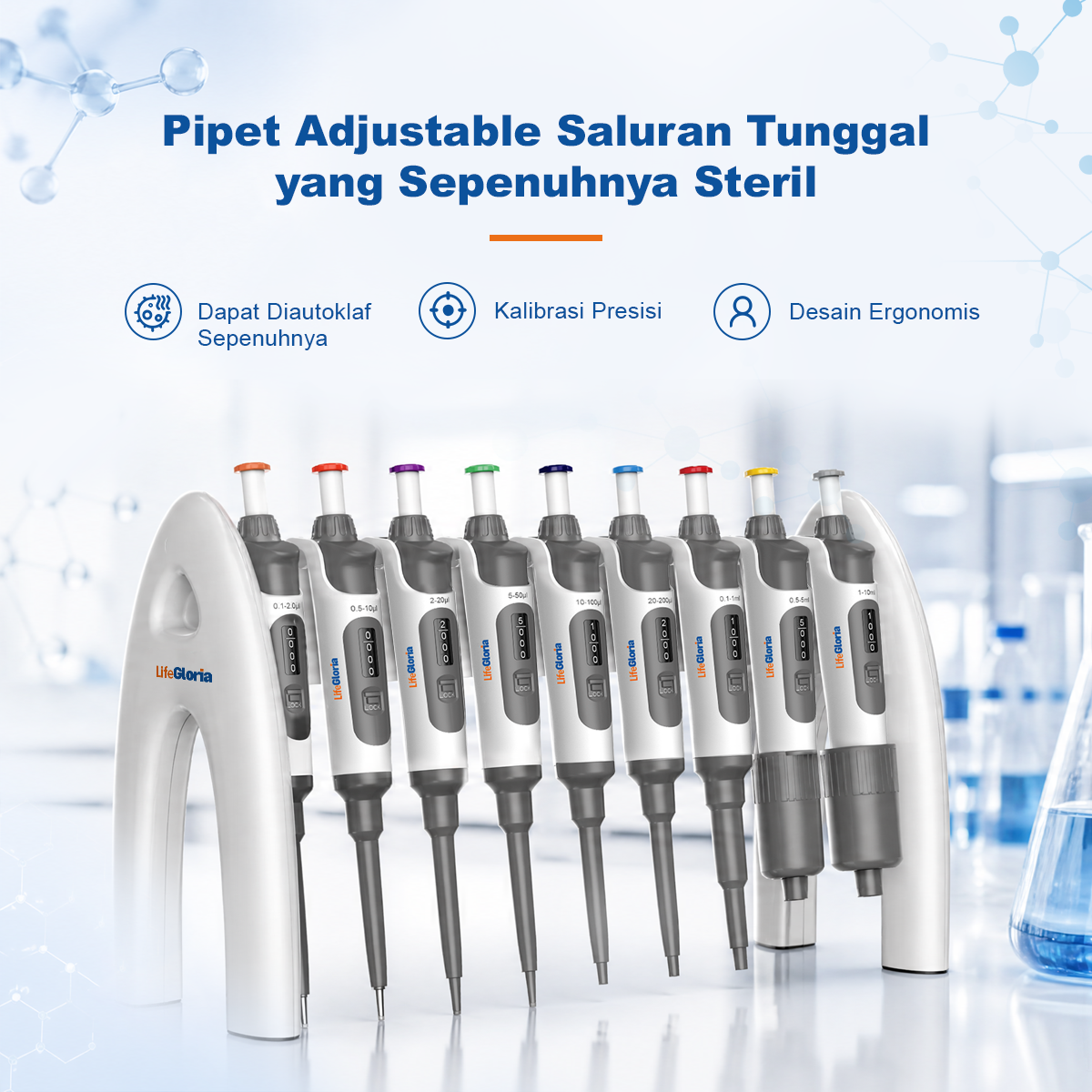
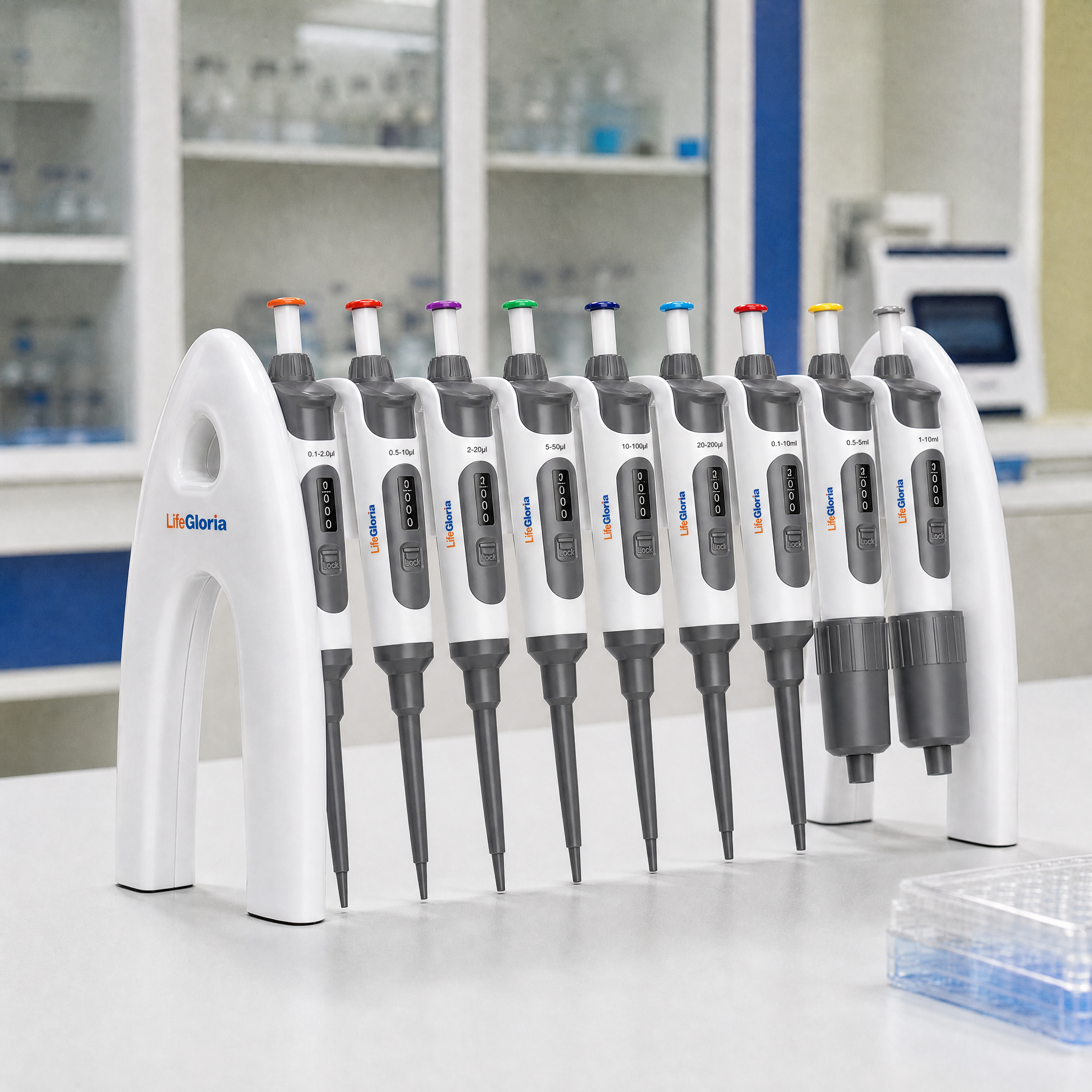
For routine aqueous work, shortlist LifeGloria fully autoclavable adjustable pipettes and matched tips together. The range family covers 0.1 µL to 10 mL; each individual model has its own limits. Clear volume reading and a volume lock support consistent setup, while correct tip fit remains essential.
Explore Product Options · Request a Quote
First Separate a Leak from an Outside Droplet
A droplet clinging to the outside after deep immersion is different from liquid falling out of the tip opening. Watch where the drop forms, inspect the tip for damage, and repeat with a new tip. Use the same working volume and holding time so the comparison is meaningful.
- Never test a suspected leak over valuable samples.
- Keep the pipette upright while it contains liquid.
- Record the liquid, volume, tip code, and observed symptom.
Use a Simple Diagnostic Sequence
| Observation | Likely area to investigate | Next check |
|---|---|---|
| Water leaks with one tip type | Tip sealing or damaged tip | Try the approved tip and inspect the cone |
| Water leaks with several fresh tips | Cone, seal, or piston condition | Remove from critical work and inspect under the manual |
| Ethanol drips but water does not | Vapor pressure and air cushion | Validate pre-wetting or a different dispensing system |
| A drop appears on the outside | Immersion or withdrawal technique | Use the prescribed depth and controlled withdrawal |
Treat Volatile Liquids as a Separate Application
Evaporation into an air-displacement pipette's air cushion can change its pressure and drive liquid out. Consistent pre-wetting can help in an approved method, but it does not prove chemical compatibility. For difficult solvents, evaluate a chemically compatible positive-displacement system rather than claiming every air-displacement pipette is suitable.
Check Temperature Before Adjusting Calibration
A pipette warmed by prolonged handling, a chilled sample, and a warm room can create an unstable measurement system. Follow the method's temperature requirements; never warm a sensitive reagent simply to make pipetting easier. Compare results under documented conditions before changing calibration.
Know When to Stop and Service the Pipette
Persistent water leakage, rough plunger movement, a damaged cone, or liquid inside the lower assembly justifies removing the instrument from critical use. Clean or replace components only as the manual permits, then verify performance. Do not compensate for a mechanical fault by changing the displayed volume.
Build Your LifeGloria Inquiry
- Liquid and temperature
- target volumes
- tip type
- observed leakage
- monthly tip use
- quantity and destination
Frequently Asked Questions
Does dripping always mean a worn seal?
No. Tip fit, damaged tips, outside wetting, temperature and evaporation can produce similar symptoms.
Can I solve ethanol dripping by pressing the tip harder?
Not reliably. Excess force may damage components and does not address vapor-pressure effects.
Should I recalibrate immediately?
First identify leakage or technique problems. Calibration adjustment is not a substitute for repairing a defective seal.
What should I send LifeGloria for matching?
Provide liquid type, target volume, pipette model, tip code, symptom, required documents and order quantity.
Recommended Next Step
Build a more reliable liquid-handling system with a LifeGloria pipette and verified tips. Send the actual application before ordering so our team can distinguish a routine aqueous setup from an application needing additional chemical or dispensing validation.
Confirm the exact model, compatibility, certificates, operating limits and delivery terms before purchase. Use the manufacturer's instructions and your validated laboratory procedure.
