

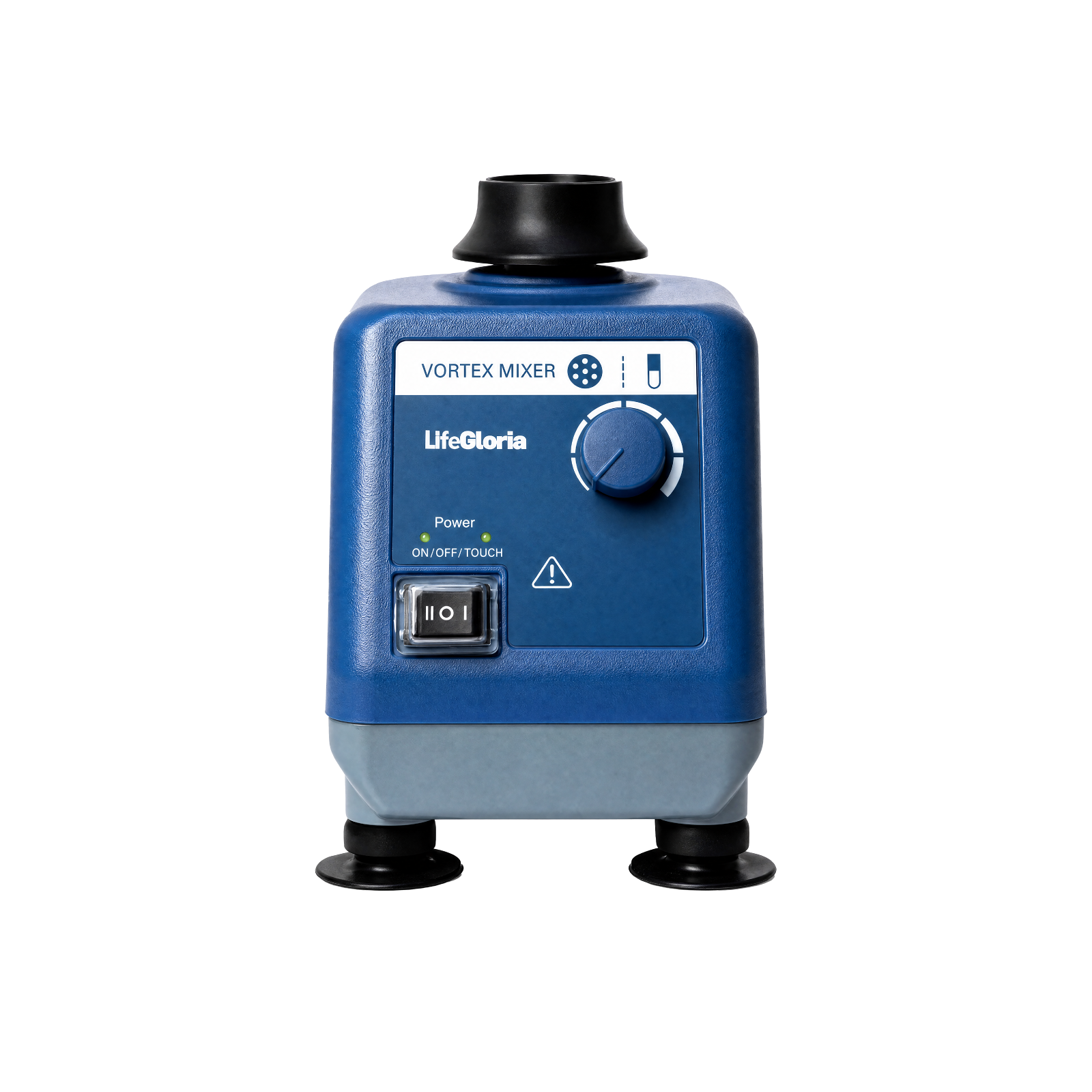
A vortex mixer should create rapid, controlled orbital motion without excessive walking, splashing, or unstable speed. Poor mixing may be caused by mode selection, speed setting, vessel contact, attachment installation, load, bench stability, or a device fault.
The following checks cover common operator-level problems. Disconnect power before installing attachments or performing cleaning steps required by the manual.
Quick Answer
Confirm the power supply, select the correct touch or continuous mode, start at low speed, place the vessel centrally on the mixing head, and increase speed gradually. If the mixer walks, splashes, overheats, smells unusual, or makes mechanical noise, stop it and check the load, attachment, vessel, bench, ventilation, and rated voltage before further use.
How a Vortex Mixer Creates Mixing
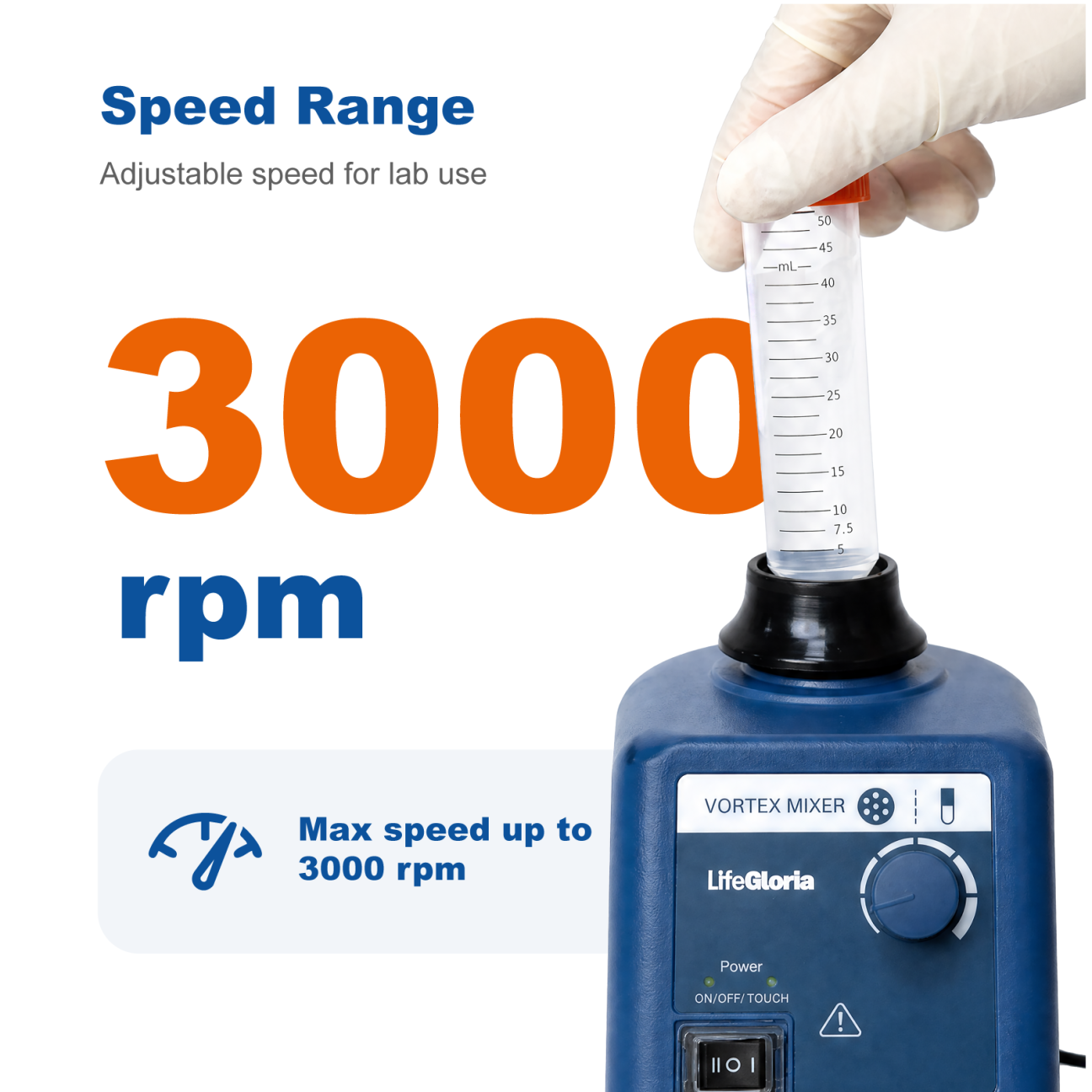
An electric motor drives a small orbital motion. When a tube touches the cup head, that motion forms a vortex in the liquid. Mixing quality depends on orbital diameter, speed, vessel shape, fill level, viscosity, contact position, and mixing time.
- The LifeGloria vortex mixer provides 0-3000 RPM adjustable speed
- Its orbital diameter is 6 mm
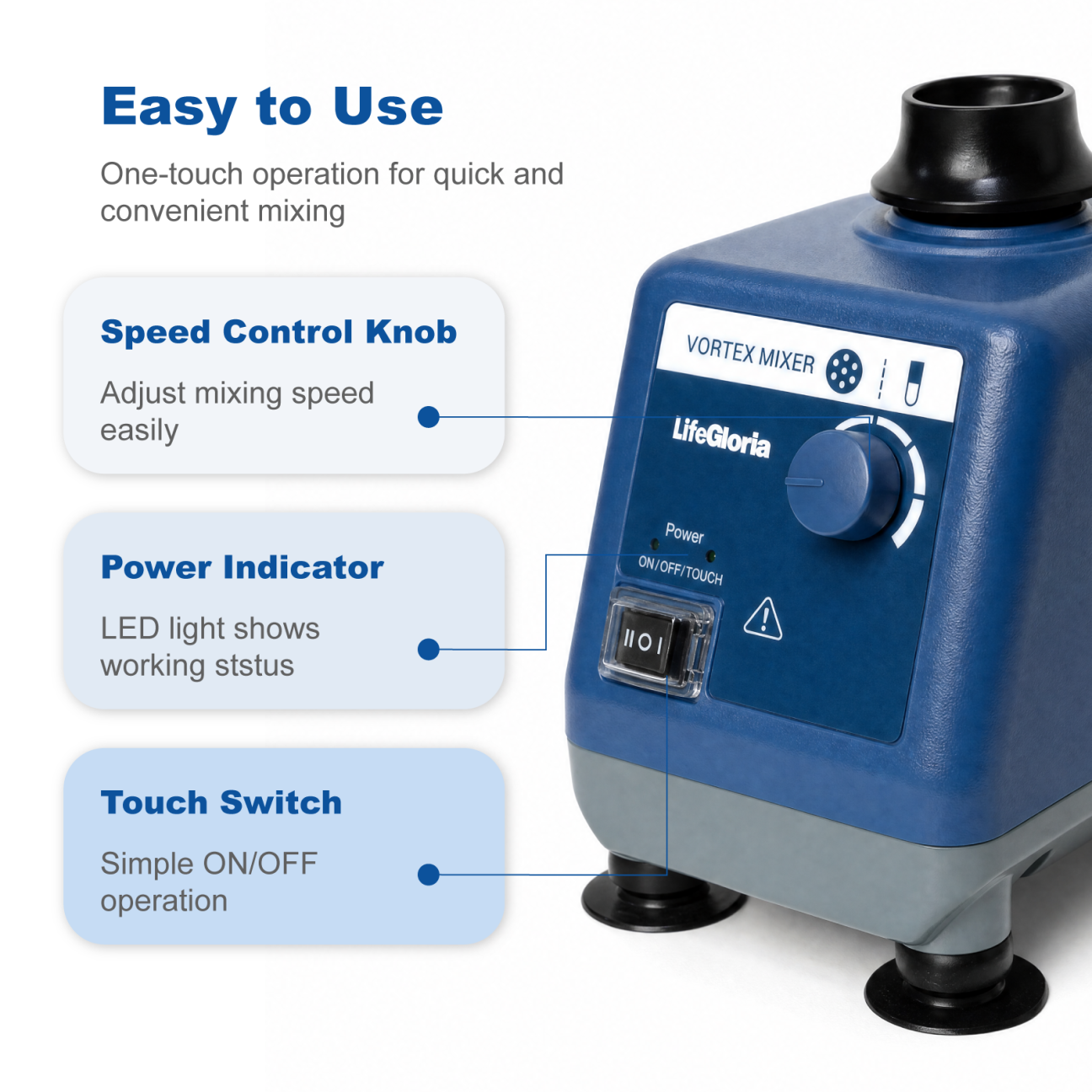
- It supports touch and continuous operation
- Attachments must match the intended vessel and load
Problem 1: The Vortex Mixer Does Not Start
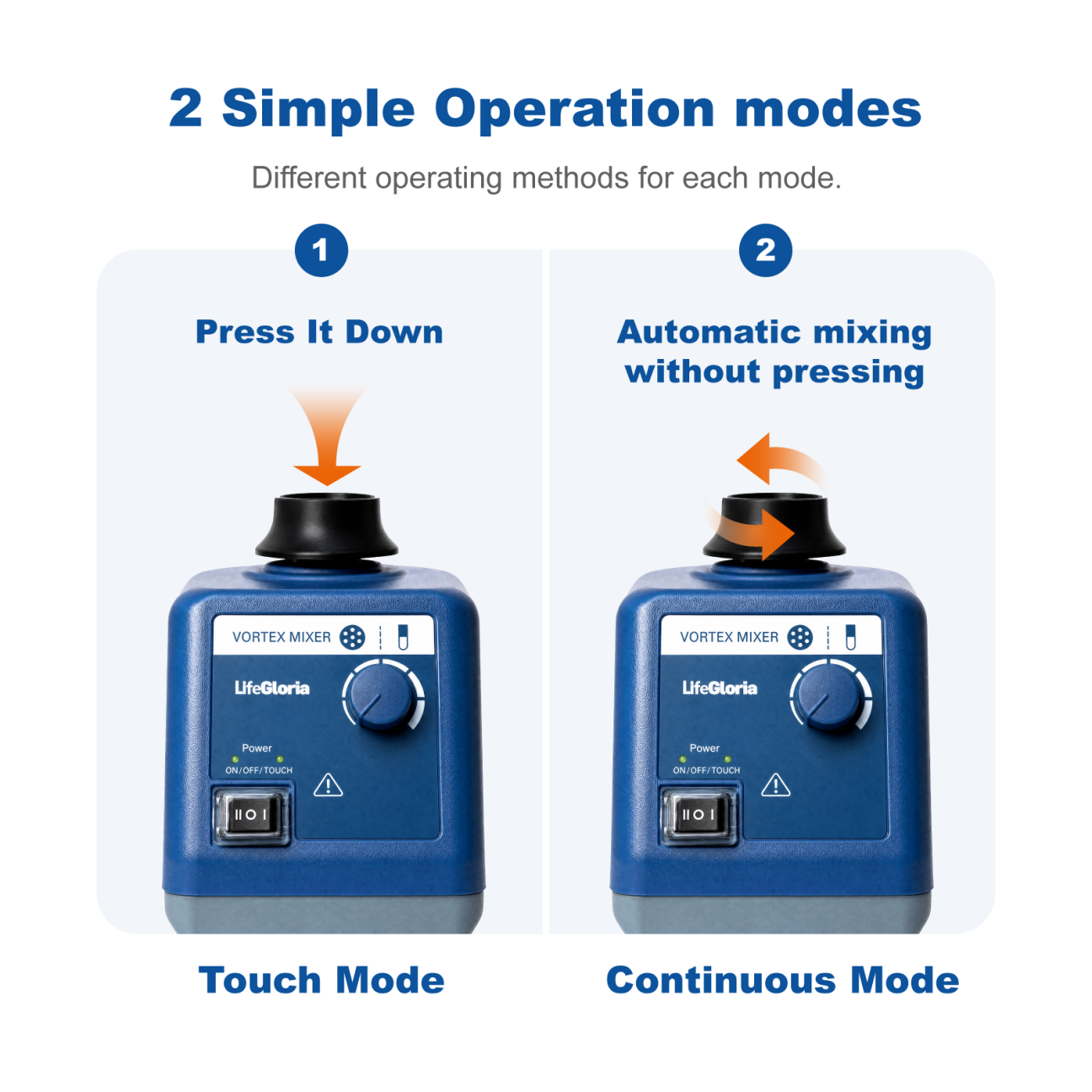
Check that the mains voltage matches the nameplate, the plug and outlet are functional, the power switch is on, and the correct operating mode is selected. In touch mode, the motor runs only when sufficient pressure is applied to the mixing head.
- Try the approved touch action with an empty compatible tube
- Switch to continuous mode only according to the manual
- Do not open the housing or bypass a switch
- Stop if the cord, plug, or enclosure is damaged
Problem 2: The Sample Does Not Mix Completely
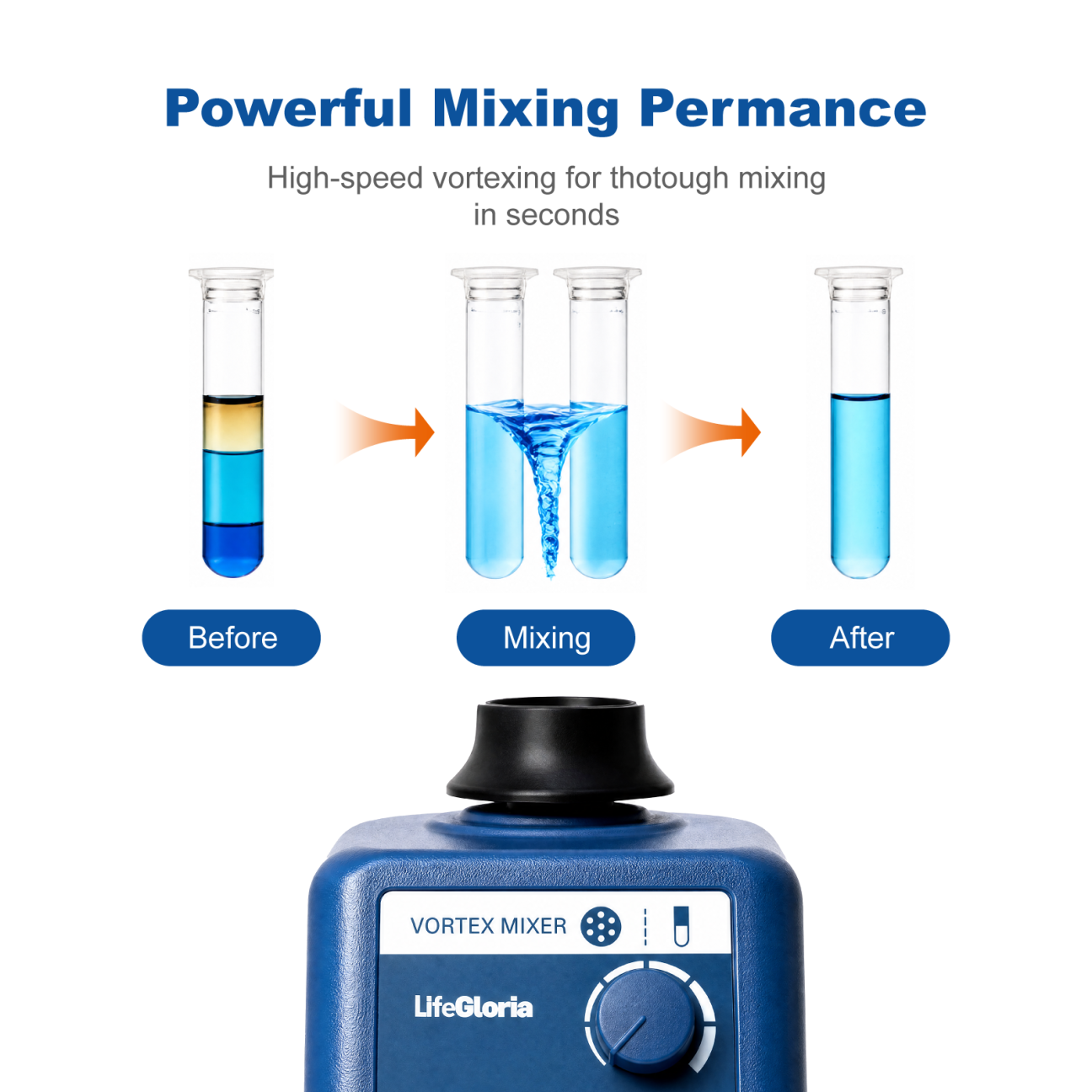
The speed may be too low, the tube may not contact the center of the head, the fill volume may be too high, or the sample may be too viscous for the selected setup.
- Start low and increase gradually
- Hold the tube securely and centrally
- Use a vessel and attachment suitable for the volume
- Increase mixing time before using extreme speed
- For sensitive samples, use a validated gentler method
Problem 3: Liquid Splashes or Foams
Excessive speed, an overfilled vessel, a loose cap, or a foaming formulation can create splashing. Lower the speed immediately and confirm that the vessel is closed and compatible with mechanical shaking.
- Do not vortex open tubes containing hazardous material
- Leave appropriate headspace
- Use brief pulses for foaming liquids
- Follow sample-specific biosafety and aerosol controls
Problem 4: The Mixer Walks Across the Bench
A mixer can move when the bench is uneven, the feet are dirty or damaged, the attachment is off-center, the load is excessive, or speed passes slowly through a resonance zone.
- Place the unit on a clean, dry, level, rigid surface
- Check that all feet contact the bench
- Install the attachment firmly
- Reduce the load or speed
- Pass through the critical speed range promptly as directed by the manual
Problem 5: Unusual Noise or Strong Mechanical Vibration
Stop the unit and inspect the accessible attachment and vessel. Loose accessories, a damaged container, or an unbalanced multi-sample load may produce impact noise. Persistent internal noise requires qualified service.
- Never hold cracked glassware on the mixer
- Secure multi-sample accessories and vessels
- Do not operate with a visibly damaged head
- Keep hands, hair, and loose items away from moving parts
Problem 6: Speed Feels Unstable
Confirm that the speed knob remains at the selected position and that the load is within the attachment's capability. Very heavy, flexible, or poorly centered vessels can change the observed motion.
If unloaded speed surges, stalls, or changes without adjustment, stop use and request service rather than continuing at a higher setting.
Problem 7: The Unit Becomes Hot or Smells Unusual
Some warmth during operation can be normal, but excessive heat, smoke, a burning smell, repeated stopping, or discoloration is not. Switch off, disconnect power, allow the unit to cool, and keep it out of service until inspected.
- Keep ventilation openings clear
- Respect the permissible ambient temperature
- Avoid continuous heavy loading beyond the manual
- Do not clean or spray liquid into the motor housing
Touch Mode vs Continuous Mode Checks
| Symptom | Touch mode check | Continuous mode check |
|---|---|---|
| No movement | Press the tube centrally with controlled force | Confirm continuous mode is selected |
| Intermittent movement | Keep contact pressure consistent | Check load and speed setting |
| Too much splashing | Use shorter pulses and lower speed | Reduce speed and run time |
| Operator fatigue | Use only for quick single-tube work | Use an approved attachment for longer runs |
Cleaning and Preventive Care
Switch off and unplug before cleaning. Wipe the exterior and mixing head with a method compatible with the material and contaminant. Do not immerse the instrument or allow liquid into openings.
- Inspect the power cord and plug
- Check feet and attachments
- Remove spills promptly
- Store attachments clean and dry
- Record unusual sound, heat, or speed behavior
Frequently Asked Questions
Why does my vortex mixer move on the bench?
Check the bench, feet, attachment, load centering, and speed. Excessive load or resonance can make the unit walk.
Why is there no vortex in the tube?
The speed may be too low, the fill level too high, the liquid too viscous, or the tube contact position incorrect.
Can I vortex glass tubes?
Only when the vessel and attachment are approved and undamaged. Mechanical shaking can break unsuitable glassware.
How long should I run a vortex mixer?
Use the shortest validated time that produces uniform mixing without unacceptable heating, foaming, aerosol formation, or sample damage.

Final Thoughts
Most vortex-mixing problems can be traced to mode, speed, contact, vessel, load, or bench setup. Start slowly, keep the vessel controlled, use approved attachments, and stop immediately for abnormal movement, heat, smell, or noise. Persistent electrical or mechanical symptoms require qualified service.
Related LifeGloria Resources
Need help choosing laboratory equipment? Contact LifeGloria.
Important: Follow the instrument manual, laboratory SOP, tube and rotor ratings, and local safety requirements.
