

High speed and high capacity solve different bottlenecks. A high-speed instrument supports protocols that need greater force, while a high-capacity system reduces the number of batches for larger tubes or more samples.
LifeGloria search data contains queries for both high-speed and high-capacity centrifuges. The best purchase depends on the protocol, not the larger number on a specification sheet.
Quick Answer
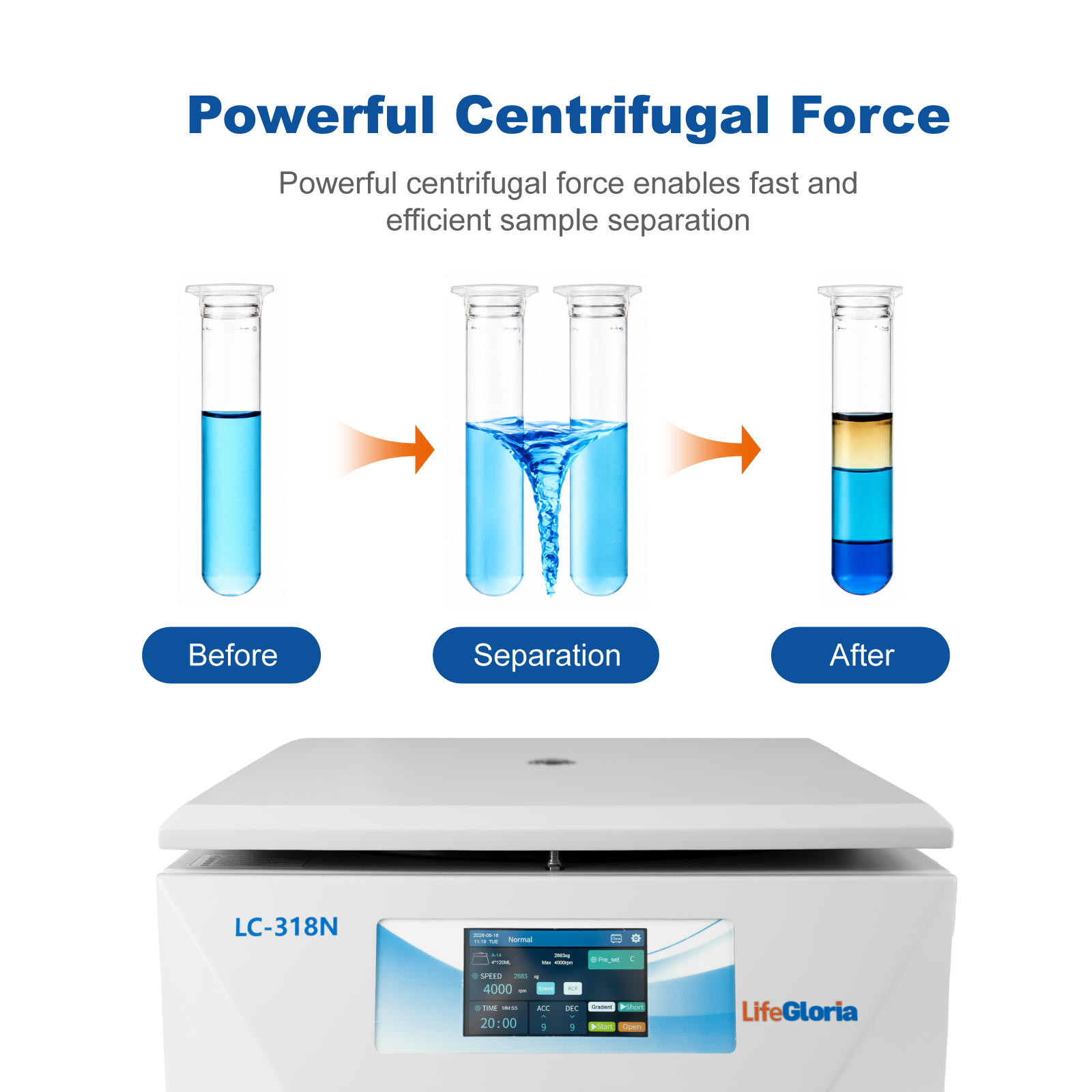
Choose high speed when the protocol requires greater RCF in compatible small tubes. Choose higher capacity when throughput, larger tubes, or fewer batches is the priority. Compare the exact rotor, tube and adapter combination because maximum instrument speed does not apply to every rotor.
Let the sample list define the centrifuge
Send LifeGloria the tube formats, sample volume, required RCF, samples per day, temperature needs, rotor preference, bench space, voltage, and destination. We can compare mini, LC-318N, and broader-capacity options.
High Speed and High Capacity Serve Different Goals
| Decision factor | High-speed priority | High-capacity priority |
|---|---|---|
| Main objective | Reach protocol RCF | Process more or larger vessels per run |
| Typical bottleneck | Insufficient force | Too many batches |
| Key specification | RCF with the selected rotor | Usable rotor capacity and adapters |
| Cost question | Can the protocol use the rotor safely? | How much operator time is saved per day? |
Translate the Protocol into RCF and Tube Requirements
Record required RCF, time, temperature, sample volume, tube material, and number of samples. RPM alone is incomplete because force changes with rotor radius. Confirm the maximum RCF for the exact rotor and tube combination.
- Use the protocol RCF
- Identify tube dimensions and rating
- Count samples per run
- Define temperature control needs
Compare Capacity Using Daily Throughput
A rotor with more positions can reduce batches, but loading, acceleration, deceleration, cleaning, and sample handoff also affect throughput. Calculate complete cycle time and operator involvement rather than comparing capacity in isolation.
- Estimate runs per day
- Include loading and unloading time
- Plan peak workload, not only average demand
- Check whether several smaller instruments improve resilience
Understand the LifeGloria Options
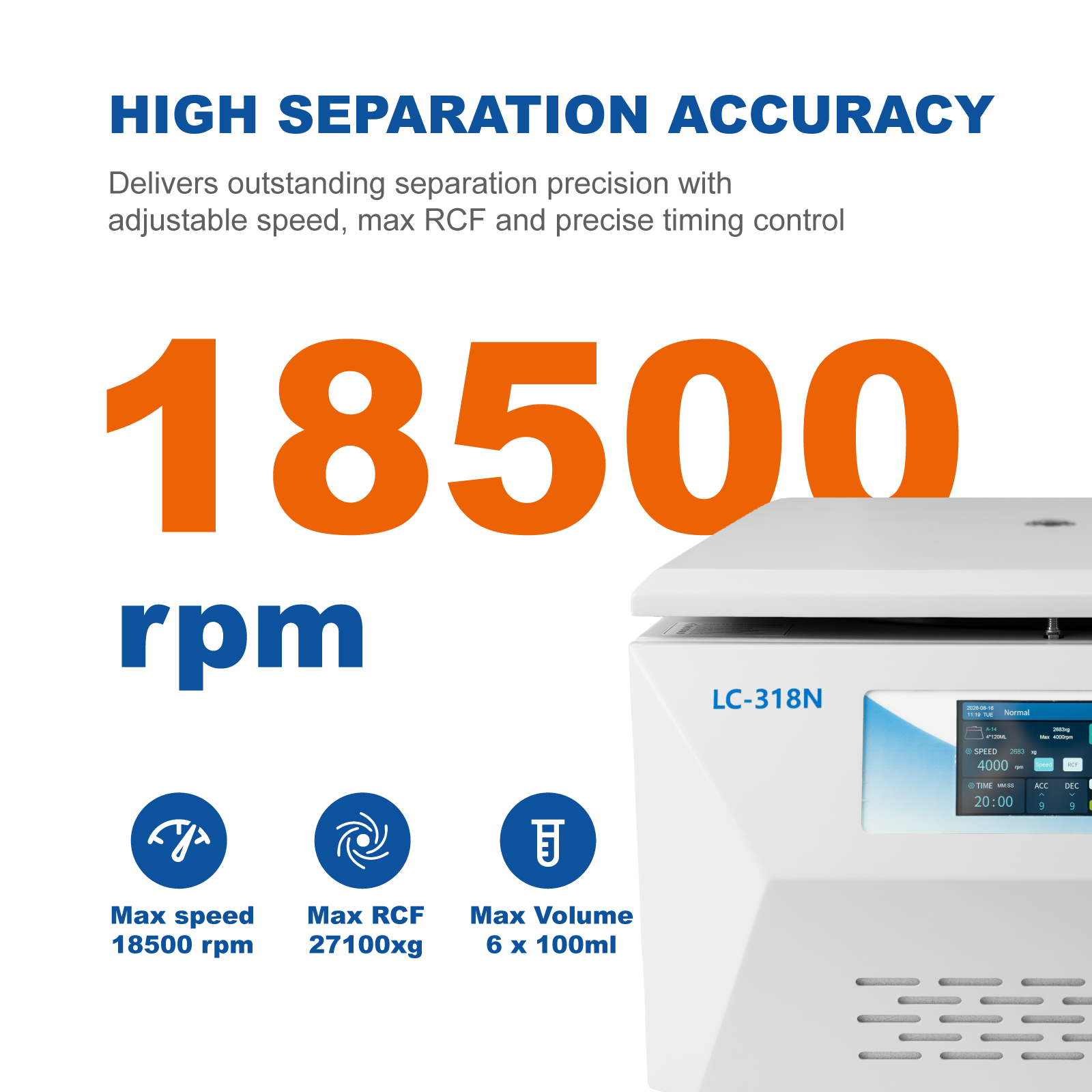
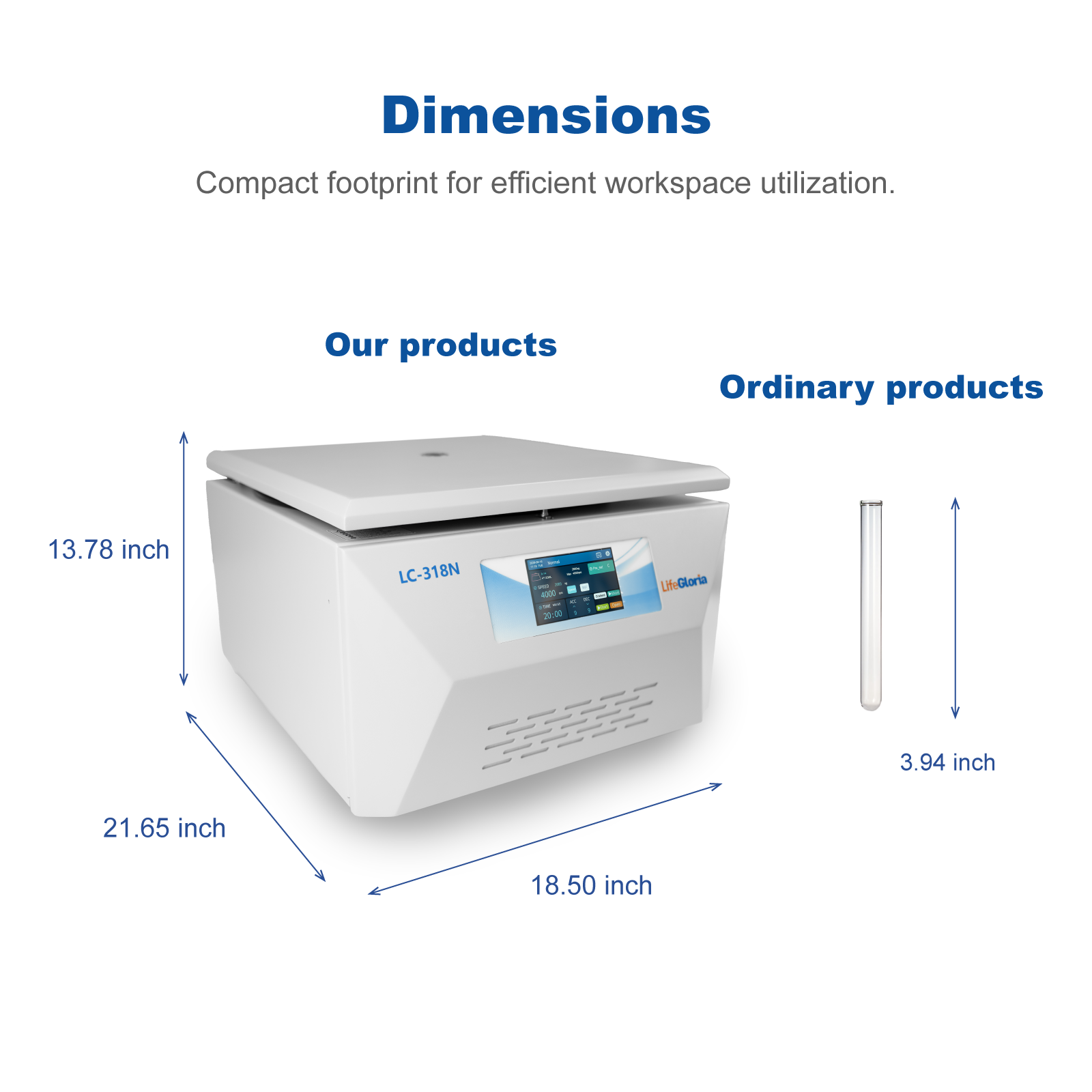
The compact LifeGloria mini centrifuge provides a 12 × 1.5 mL fixed-angle rotor, 100-15,000 rpm, and up to 15,721 ×g. The LC-318N reaches up to 18,500 rpm and 27,100 ×g with its applicable 12 × 1.5/2 mL rotor; other rotors have their own lower limits.
- Mini centrifuge for routine microtube spin-down
- LC-318N for flexible high-speed work
- Broader-capacity models for larger or more numerous tubes
- Rotor and adapter confirmation before purchase
Evaluate Ownership Cost and Safety
Include rotor and adapter cost, service access, cleaning time, energy, bench space, spare capacity, and training. Samples must be balanced symmetrically, the rotor must be secured, and the lid must remain closed until complete stop.
- Request the complete rotor package price
- Confirm voltage and installation space
- Review warranty and service route
- Train users on balance and inspection
Procurement Checklist
- Application and sample type
- Tube size and material
- Required RCF, time, and temperature
- Samples per run and per day
- Rotor and adapter requirements
- Bench space and voltage
- Safety, service, and documents
- Destination and delivery target
Frequently Asked Questions
Is a high-speed centrifuge always better?
No. It is useful only when the protocol and compatible rotor-tube combination require the additional force.
Does a larger rotor always improve throughput?
Not necessarily. Complete cycle time, loading, acceleration, cleaning, and workflow handoffs determine real throughput.
Can every LC-318N rotor run at 18,500 rpm?
No. That maximum applies to the relevant rotor; every rotor has its own stated limit.
What should I provide for model selection?
Provide tube formats, sample volume, RCF, run time, temperature, daily throughput, rotor preference, voltage, destination, and documents.
Final Recommendation
Select high speed for force and high capacity for throughput, then verify the exact rotor-tube system. LifeGloria can compare suitable configurations and provide an application-based quotation.
Recommended LifeGloria Products
Confirm the final model, selected SKU, compatibility, accessories, certificates, voltage, packaging, freight, storage conditions, local regulations, and application requirements before purchase.
