

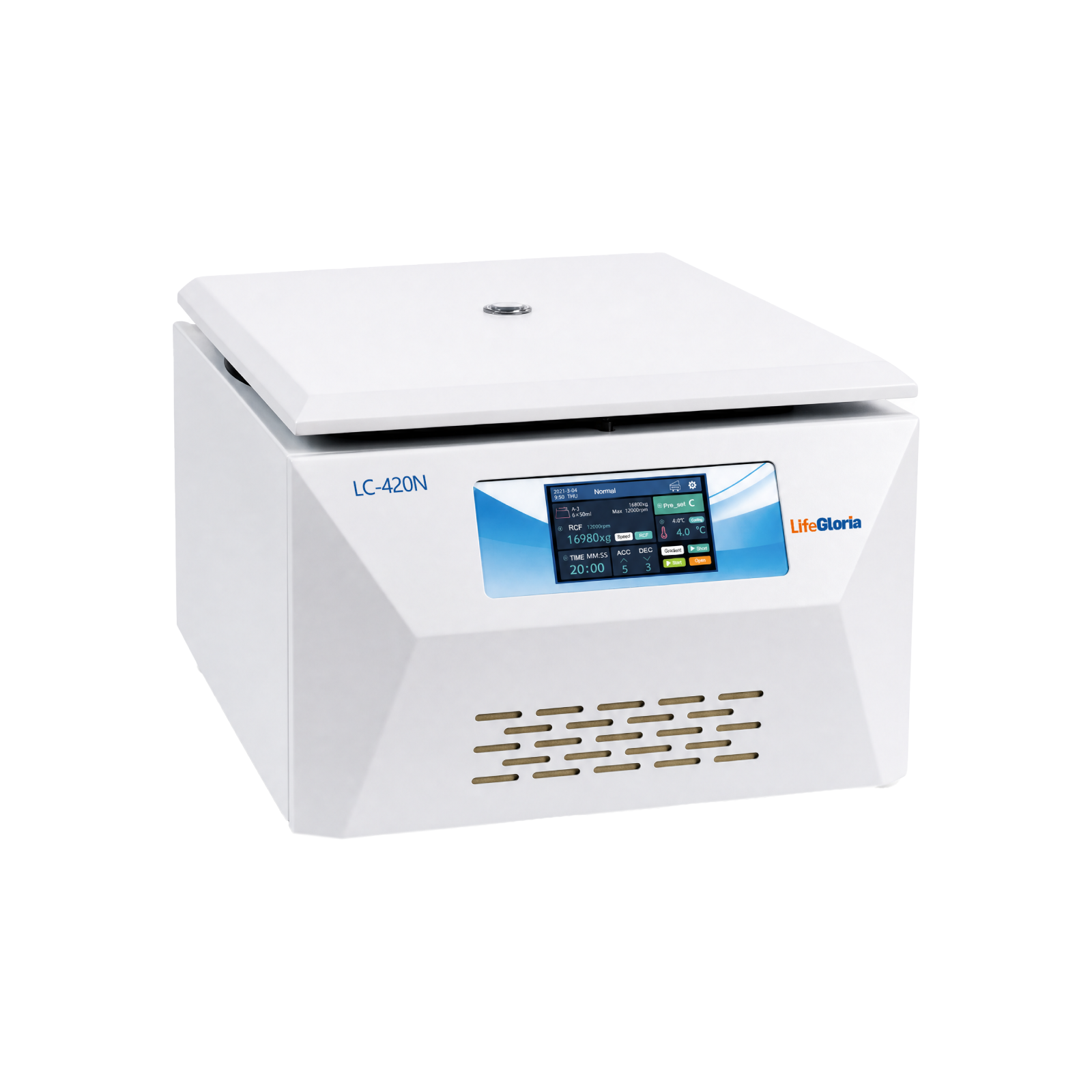
A centrifuge cannot be selected reliably from maximum RPM and price alone. Rotor radius determines RCF; every rotor has its own speed and capacity limit; tubes and adapters add further constraints.
Use this ten-factor framework to convert a sample-preparation workflow into a specification that suppliers can quote accurately.
Quick Answer
Start with the target RCF, sample type, tube or plate, volume per run, and daily throughput. Then choose an approved rotor, refrigeration requirement, acceleration/deceleration profile, safety features, facility fit, and support plan. Only compare price after every quotation includes the necessary rotor, adapters, buckets, lids, installation, and warranty.
1. Define the Separation Result
Record the required RCF, time, temperature, pellet or layer quality, and acceptable recovery. If a protocol gives only RPM, identify the original rotor radius before transferring it to another instrument.
2. List Every Sample Container
- 0.2 mL PCR strips or tubes
- 0.5, 1.5, or 2.0 mL microtubes
- Blood collection tubes
- 15 or 50 mL conical tubes
- Bottles, plates, or specialty vessels
- Maximum fill mass and chemical compatibility
3. Select the Rotor Type
| Rotor | Strength | Typical consideration |
|---|---|---|
| Fixed-angle | Fast pelleting and high RCF | Pellet forms on outer wall/bottom |
| Swing-bucket | Horizontal separation and flexible carriers | Lower speed, more moving parts |
| Plate rotor | Microplate processing | Confirm plate height, mass, and seal |
| Specialty rotor | Application-specific performance | Availability and replacement cost |
4. Calculate Capacity and Throughput
Maximum capacity is not daily throughput. Include loading, acceleration, run, deceleration, unloading, cleaning, and queue time. A smaller fast unit near the workstation may outperform one shared large centrifuge for short microtube spins.
5. Decide Whether Refrigeration Is Necessary
Temperature-sensitive samples may require a refrigerated chamber, pre-cooling, and a validated temperature profile. A displayed setpoint does not prove the sample stayed at that temperature throughout acceleration and high-speed running.
6-8. Control, Safety, and Facility Fit
- Acceleration and deceleration profiles that protect the sample
- Lid interlock, imbalance, overspeed, overtemperature, and rotor recognition where applicable
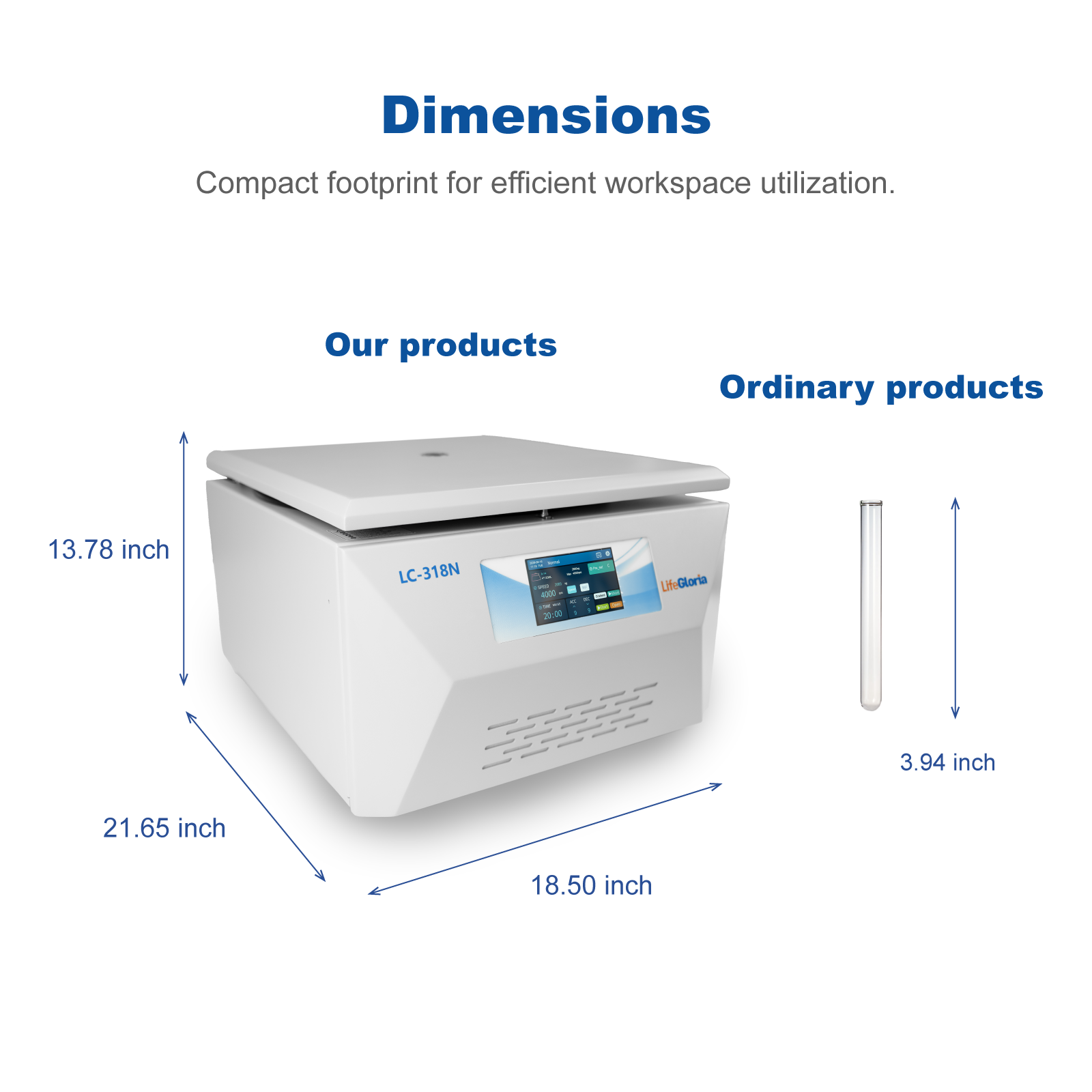
- Noise, footprint, door clearance, bench load, ventilation, and 30 cm safety zone where required
- Correct voltage, frequency, grounding, and available circuit
9. Check the Full Configuration
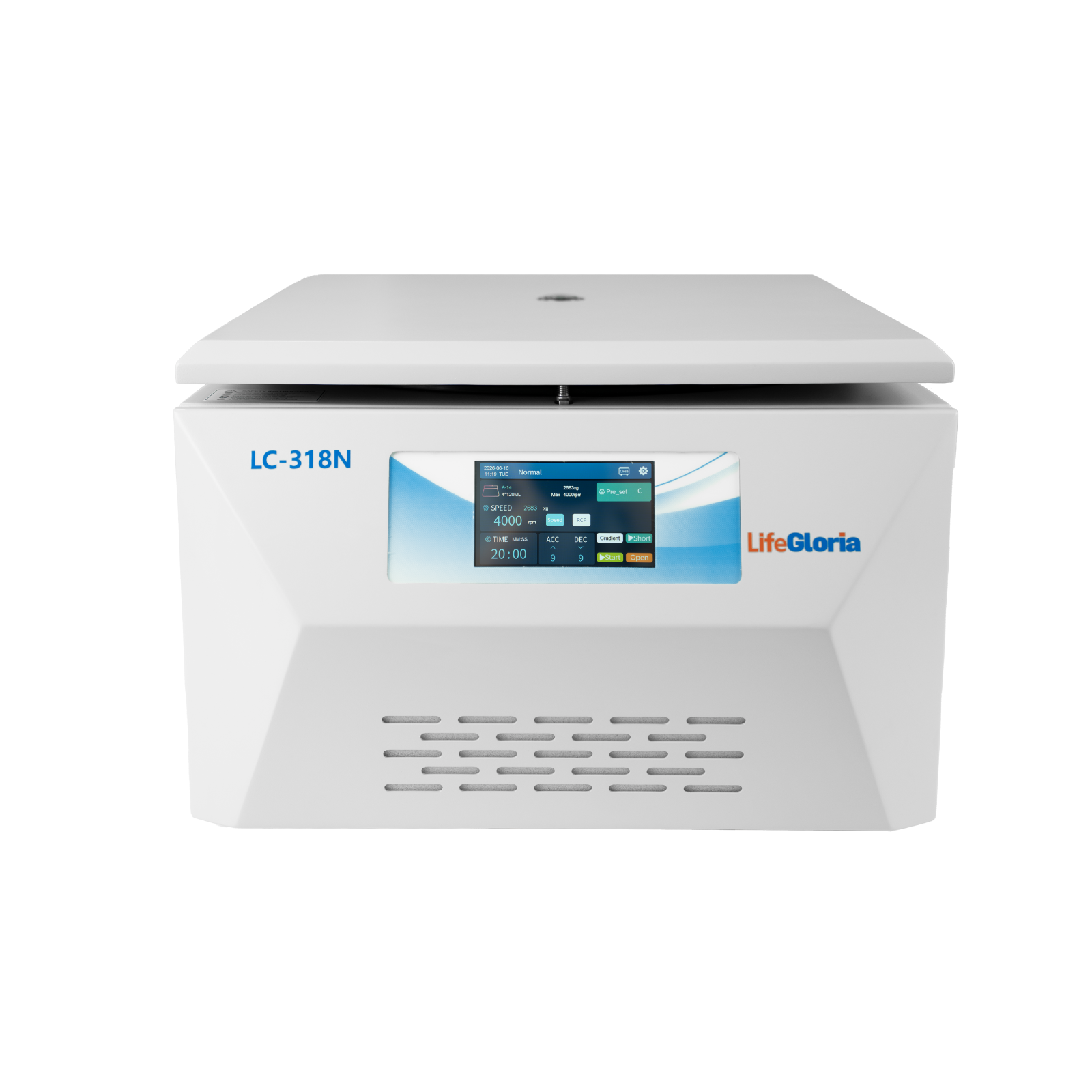
LifeGloria's mini centrifuge supports 12 microtubes and reaches 15,721 × g. The LC-318N offers multiple rotors; its headline 18,500 RPM and 27,100 × g apply to the 12 × 1.5/2 mL rotor, while larger rotors have lower maximum speeds. This illustrates why every quote must identify the exact rotor.
| LifeGloria example | Maximum configuration fact |
|---|---|
| Mini centrifuge | 100-15,000 RPM; up to 15,721 × g; 12-place rotor |
| LC-318N | Up to 18,500 RPM / 27,100 × g; rotor-dependent; up to 6 × 100 mL capacity |
| GC-420N | Up to 20,000 RPM with multiple rotor options; confirm selected configuration |
10. Evaluate Service and Ownership Cost
- Installation and operator training
- Warranty response and regional technician access
- Preventive maintenance schedule
- Replacement rotor life and tracking
- Availability of buckets, adapters, lids, seals, and tubes
- Freight, tax, commissioning, and downtime
Frequently Asked Questions
What centrifuge speed do I need?
Use the RCF required by the method, then select a rotor and speed that can safely produce it with the intended tubes.
Should I buy refrigerated?
Choose refrigeration when sample temperature affects integrity or reproducibility, and validate the real sample temperature during the run.
Can one centrifuge handle every tube?
Only if approved rotors and adapters cover the containers and required RCF. Never improvise compatibility.
What must be included in a quotation?
Instrument, exact rotor, buckets or lids, adapters, installation, training, warranty, freight, tax, and recommended service items.
Final Thoughts
A good centrifuge specification begins with the sample and ends with a serviceable, safe configuration. Define the workflow first, then compare complete quotations on the same basis.
Related LifeGloria Resources
Need help choosing equipment? Contact LifeGloria.
Important: Confirm specifications, tube and rotor ratings, chemical compatibility, local service, and your laboratory SOP before purchase or use.
