

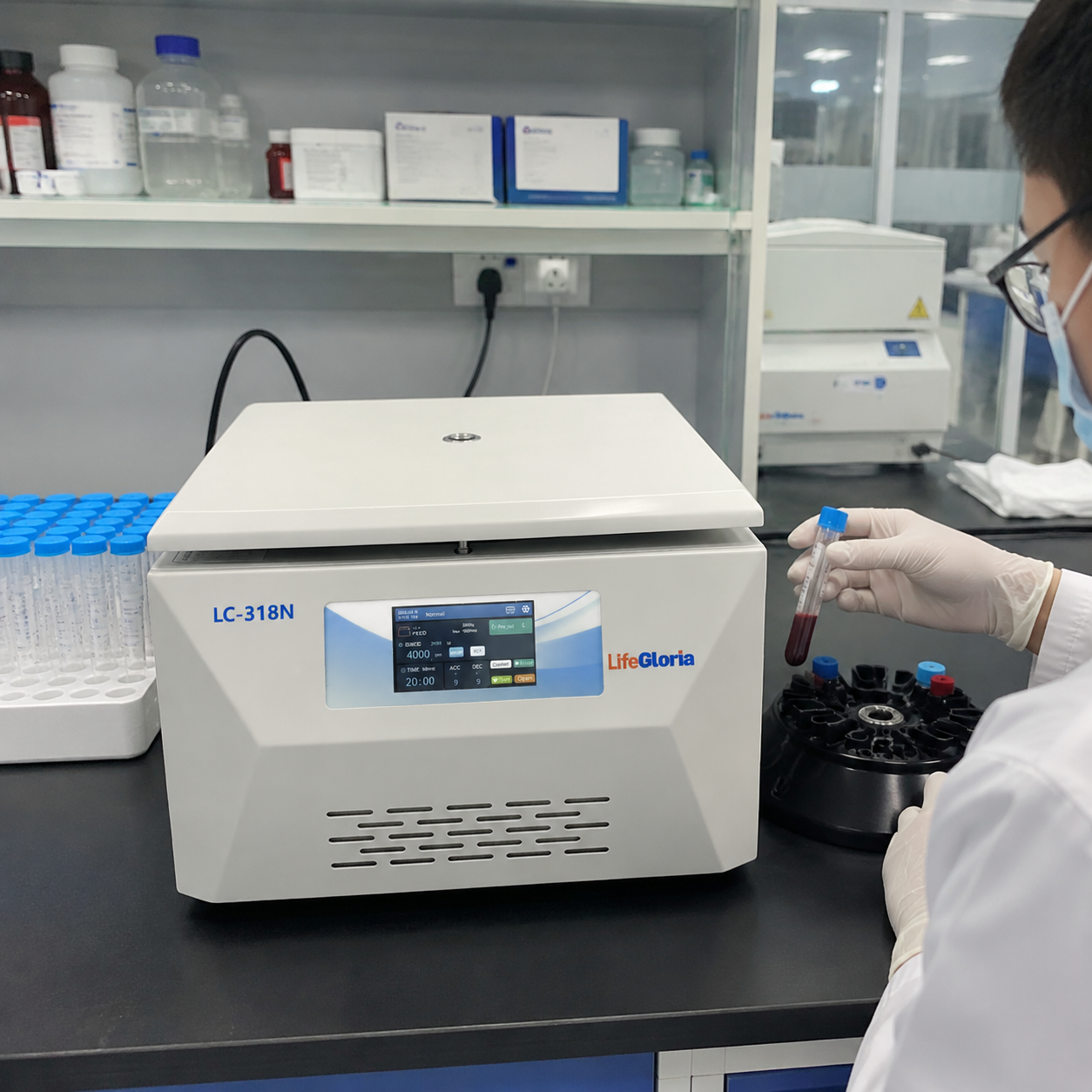
A laboratory centrifuge is one of the most commonly used instruments in research, clinical, and biotechnology laboratories. It separates samples by applying centrifugal force, allowing researchers to isolate cells, proteins, nucleic acids, and other biological components.
However, incorrect centrifuge operation can lead to damaged samples, inaccurate results, equipment failure, and even safety risks.
Many centrifuge problems are caused not by equipment quality, but by small operational mistakes.
In this guide, we will discuss the most common centrifuge mistakes and explain how to avoid them.

Why Proper Centrifuge Operation Matters
Centrifugation affects sample integrity through:
- Relative centrifugal force (RCF)
- Rotation speed
- Temperature control
- Balance accuracy
- Rotor condition
Incorrect settings may cause:
- Sample degradation
- Cell damage
- Tube breakage
- Poor separation efficiency
- Experimental inconsistency
Proper centrifuge practices are essential for reliable laboratory workflows.
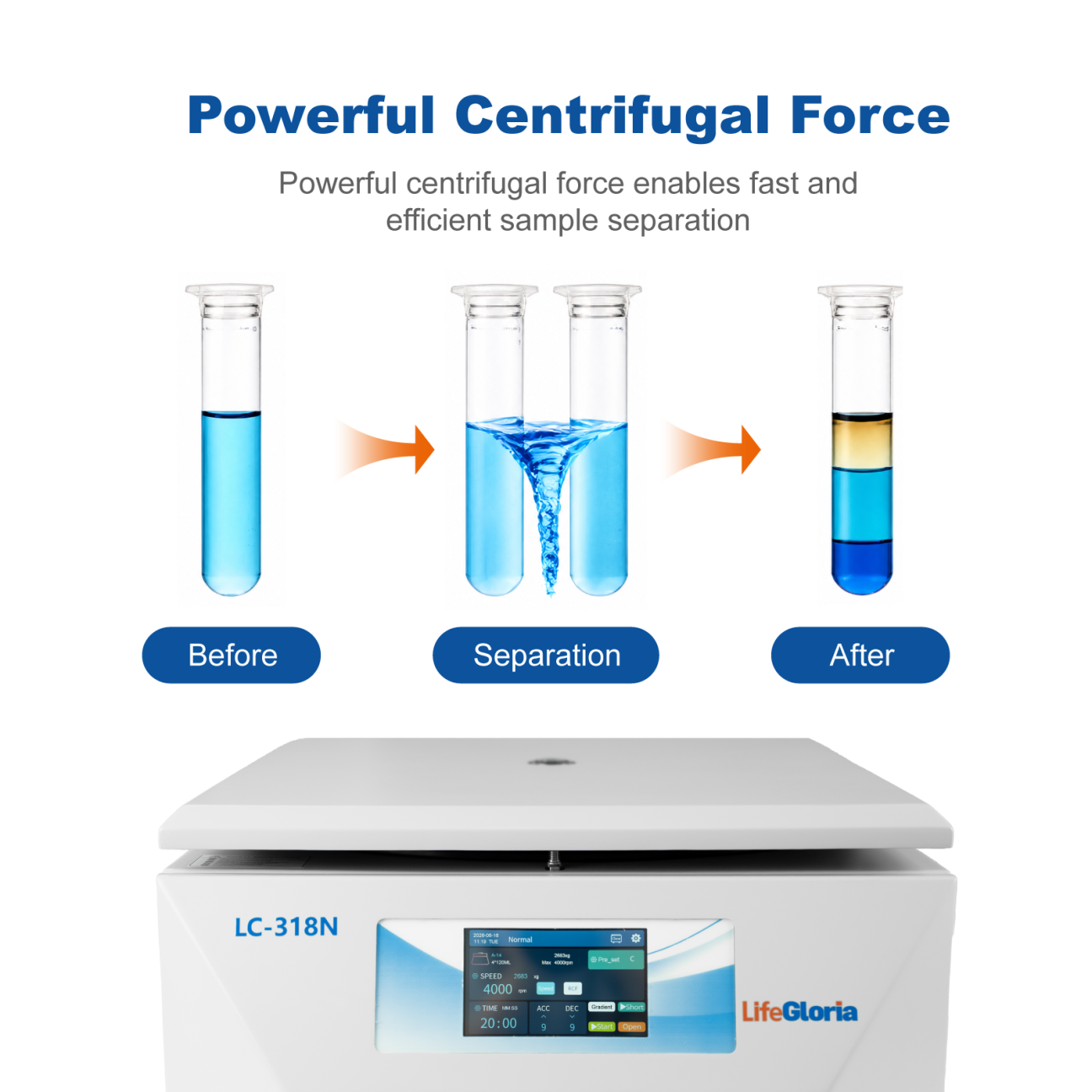
Mistake 1: Not Balancing Centrifuge Tubes Correctly
This is the most common centrifuge mistake.
An unbalanced rotor creates vibration and uneven forces.
Possible consequences:
- Tube breakage
- Rotor damage
- Increased noise
- Poor separation
Best Practice
Always balance tubes by:
- Matching tube volume
- Matching tube weight
- Placing tubes opposite each other
Mistake 2: Using the Wrong Centrifuge Speed
Many users focus only on RPM.
However, RCF (×g) is the actual force applied to samples.
Different rotors generate different centrifugal forces at the same RPM.
Recommendation
Always check:
- Required RCF
- Rotor specifications
- Sample requirements
Mistake 3: Exceeding Maximum Rotor Speed
Every rotor has a maximum rated speed.
Running above this limit may cause:
- Rotor deformation
- Mechanical failure
- Safety hazards
Always follow manufacturer specifications.
Mistake 4: Using Damaged Tubes
Cracked or deformed tubes may fail during centrifugation.
Before every run:
✓ Check tube condition
✓ Confirm compatibility
✓ Avoid overfilling tubes
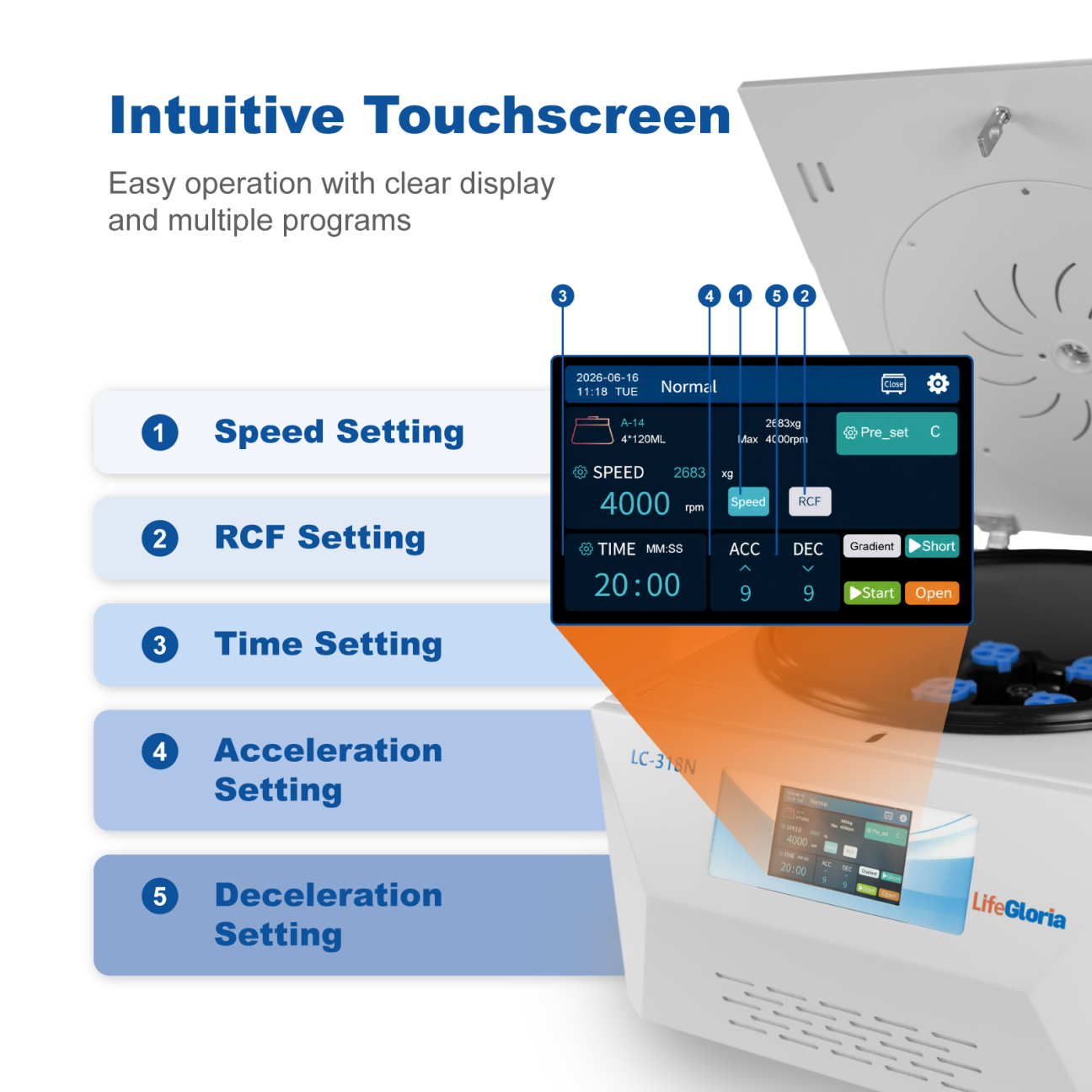
Mistake 5: Opening the Lid Before Complete Stop
Never force open a centrifuge before the rotor completely stops.
Modern centrifuges include safety locks for protection.
Mistake 6: Ignoring Rotor Maintenance
Rotors require regular inspection.
Check for:
- Corrosion
- Scratches
- Chemical damage
- Residue buildup
Mistake 7: Incorrect Temperature Settings
Temperature-sensitive samples require proper cooling.
Examples:
- Proteins
- RNA samples
- Biological materials
Incorrect temperature can affect sample stability.
Mistake 8: Overloading the Centrifuge
Too many tubes or excessive sample volume can affect separation efficiency.
Always follow rotor capacity limits.
Mistake 9: Not Cleaning After Use
Sample residue may cause contamination or corrosion.
Clean:
- Rotor chamber
- Tube holders
- Rotor surface
Mistake 10: Using Wrong Rotor Accessories
Different applications require different rotors and adapters.
Examples:
- Microtube rotor
- PCR strip rotor
- High-volume rotor
Mistake 11: Ignoring Abnormal Noise or Vibration
Unexpected vibration often indicates:
- Imbalance
- Rotor problems
- Mechanical issues
Stop operation and inspect immediately.
Mistake 12: Skipping Regular Maintenance
Preventive maintenance improves:
- Equipment lifespan
- Safety
- Experimental consistency
Centrifuge Safety Checklist
Before every run:
✓ Check rotor condition
✓ Balance samples
✓ Confirm speed settings
✓ Confirm temperature
✓ Close lid securely
✓ Check tube compatibility
FAQ
What causes centrifuge vibration?
Usually caused by unbalanced tubes, damaged rotors, or incorrect installation.
What is the difference between RPM and RCF?
RPM measures rotation speed, while RCF measures the actual centrifugal force applied to samples.
How often should a centrifuge be maintained?
Maintenance frequency depends on usage, but regular inspection is recommended.
Conclusion
A centrifuge is a powerful laboratory tool, but correct operation is essential for protecting samples and ensuring reliable results.
By avoiding these common mistakes, laboratories can improve safety, reduce failures, and extend equipment lifespan.
