

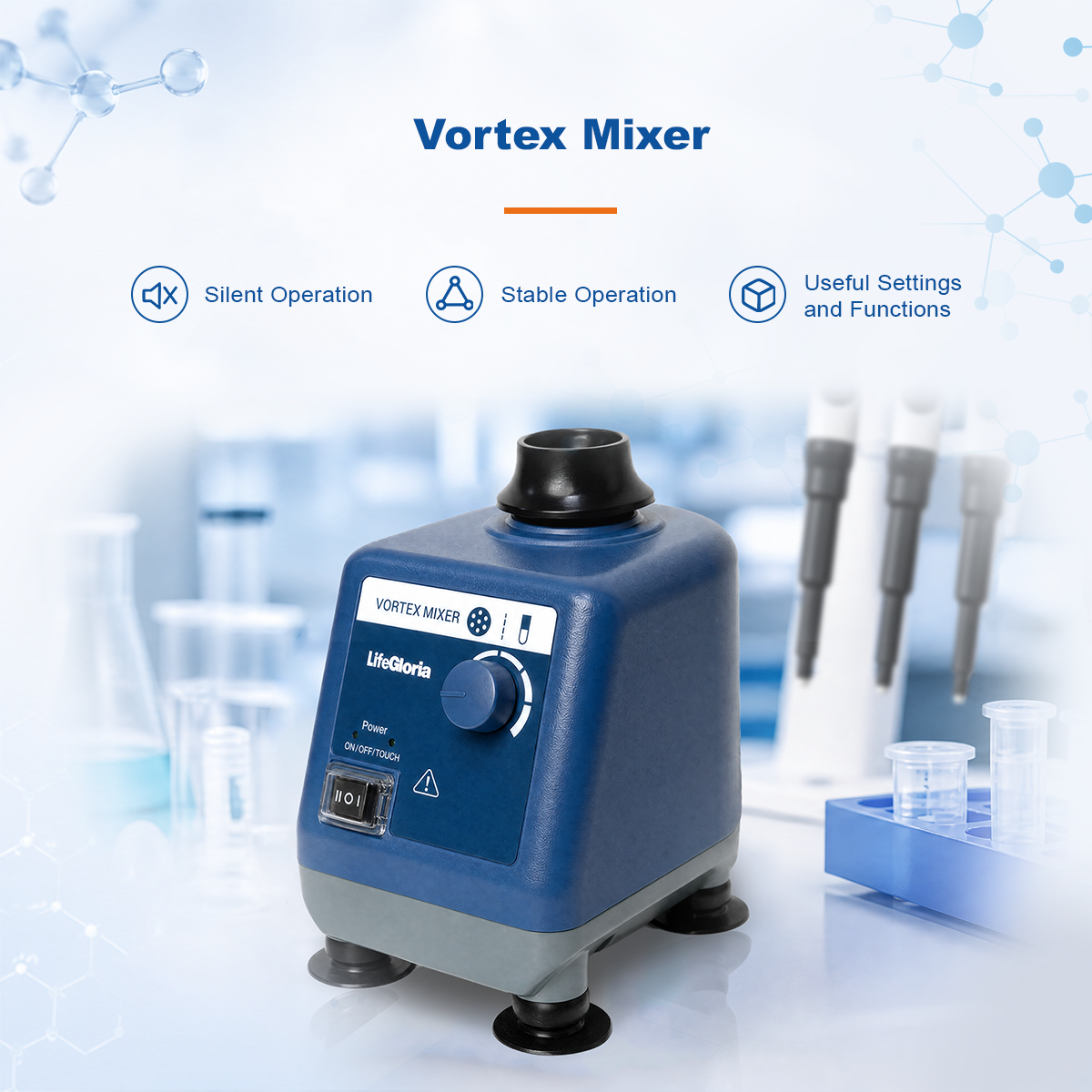
In modern laboratories, efficient sample mixing is essential for obtaining reliable experimental results.
From molecular biology and microbiology to clinical testing and pharmaceutical research, many workflows require rapid and uniform mixing of liquid samples.
A vortex mixer is one of the most commonly used laboratory instruments for this purpose.
By creating a rapid circular motion, vortex mixers quickly combine liquids inside tubes, helping researchers prepare samples efficiently and consistently.
This guide explains:
- What a vortex mixer is
- How a vortex mixer works
- Common laboratory applications
- Different types of vortex mixers
- Vortex mixer vs shaker differences
- Important factors when choosing a laboratory vortex mixer
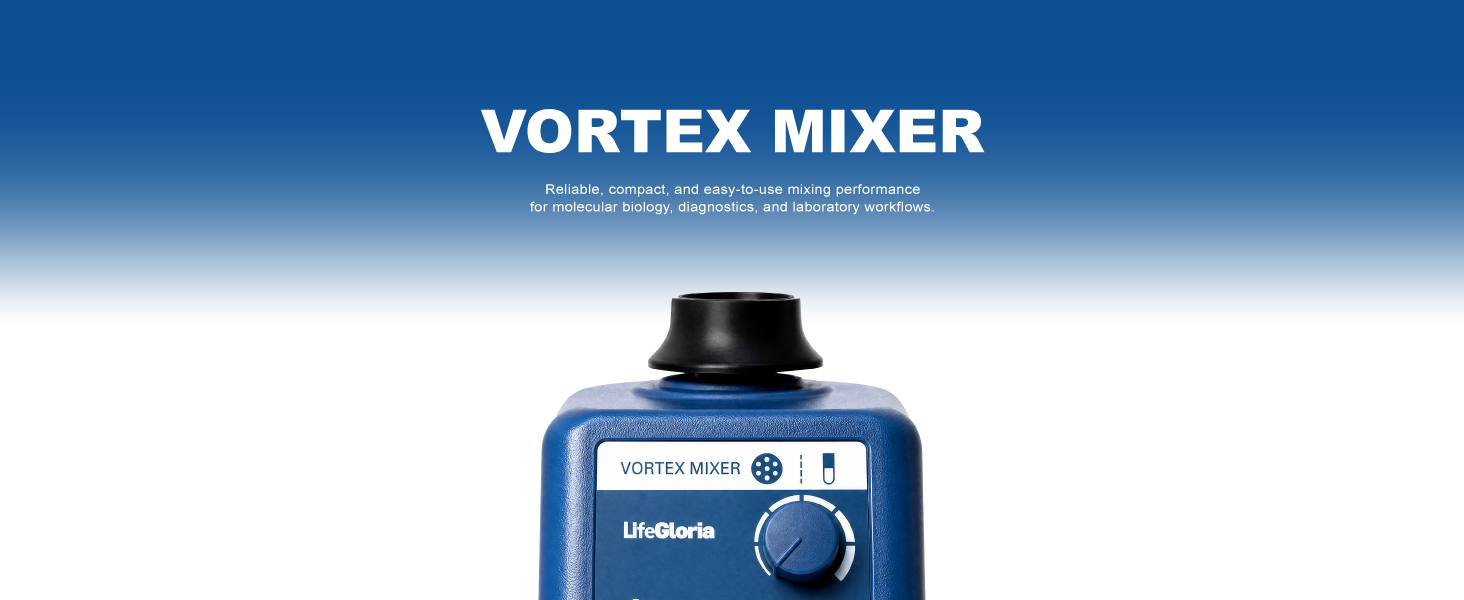
What Is a Vortex Mixer?
A vortex mixer is a laboratory mixing device designed to rapidly mix liquid samples inside containers such as:
- microcentrifuge tubes
- test tubes
- sample tubes
- small flasks
The instrument uses a motor-driven eccentric mechanism to create a circular shaking movement.
When a tube is placed on the mixing platform, the liquid inside forms a vortex motion, allowing rapid and uniform sample mixing.
Vortex mixers are widely used in:
- biology laboratories
- chemistry laboratories
- medical laboratories
- biotechnology research
- pharmaceutical testing
How Does a Laboratory Vortex Mixer Work?
A vortex mixer works through a simple mechanical principle.
The internal motor drives an eccentric rotating mechanism, creating a small orbital movement.
This movement causes the liquid inside the container to rotate rapidly, producing a vortex effect.
Key performance factors include:
- mixing speed
- orbital diameter
- motor stability
- vibration control
A high-quality vortex mixer provides:
- fast mixing
- consistent results
- low noise operation
- stable performance
Common Uses of Vortex Mixers in Laboratories
Vortex mixers are versatile instruments used across many laboratory applications.
1. Cell Biology and Molecular Biology
In molecular biology workflows, vortex mixers are commonly used for:
- DNA/RNA sample preparation
- reagent mixing
- buffer preparation
- sample resuspension
They help ensure samples are evenly mixed before analysis.
2. Microbiology Applications
Microbiology laboratories use vortex mixers for:
- bacterial sample preparation
- culture mixing
- suspension preparation
Uniform mixing improves sample consistency.
3. Clinical Laboratory Testing
Clinical laboratories use vortex mixers for:
- blood sample mixing
- reagent preparation
- diagnostic testing workflows
Fast and consistent mixing helps improve laboratory efficiency.
4. Chemistry and Pharmaceutical Research
Common uses include:
- dissolving compounds
- mixing chemical solutions
- preparing experimental samples
Types of Laboratory Vortex Mixers
Different laboratories may require different vortex mixer designs.
1. Basic Touch-Operation Vortex Mixer
A touch vortex mixer starts mixing when the tube is pressed onto the mixing head.
Advantages:
- simple operation
- fast sample processing
- convenient for daily laboratory use
Suitable for:
- routine mixing
- occasional sample preparation
2. Continuous Operation Vortex Mixer
A continuous vortex mixer operates continuously after activation.
Advantages:
- hands-free operation
- suitable for multiple samples
- convenient for repeated workflows
Suitable for:
- busy laboratories
- high-frequency mixing tasks
3. Variable Speed Vortex Mixer
Variable speed models allow users to adjust mixing intensity.
Typical speed ranges:
- low speed for gentle mixing
- high speed for rapid vortexing
Advantages:
- better control
- suitable for different sample types
- improved experimental flexibility
Vortex Mixer vs Shaker: What Is the Difference?
Many laboratories compare vortex mixers and laboratory shakers.
Although both instruments mix samples, their applications are different.
| Feature | Vortex Mixer | Laboratory Shaker |
|---|---|---|
| Motion | Circular vortex motion | Back-and-forth or orbital movement |
| Mixing speed | High speed | Lower speed |
| Sample type | Small tubes | Flasks and larger containers |
| Mixing time | Seconds | Minutes to hours |
| Main purpose | Rapid mixing | Long-term agitation |
When Should You Use a Vortex Mixer?
Choose a vortex mixer when you need:
- quick tube mixing
- sample resuspension
- reagent blending
- small-volume liquid mixing
Examples:
- PCR preparation
- enzyme reactions
- sample dilution
- reagent mixing
When Should You Use a Shaker?
A shaker is better for:
- cell culture agitation
- protein expression
- microbial growth
- long-term incubation mixing
Shakers are designed for continuous movement over longer periods.
Key Factors When Choosing a Vortex Mixer
Before purchasing a laboratory vortex mixer, consider the following factors.
1. Speed Range
Speed determines mixing intensity.
Higher speeds provide:
- faster mixing
- stronger vortex formation
Adjustable speed allows laboratories to handle different sample requirements.
2. Operation Mode
Common options include:
Touch Mode
Benefits:
- quick activation
- easy operation
- ideal for occasional samples
Continuous Mode
Benefits:
- hands-free operation
- suitable for repeated workflows
A good vortex mixer may provide both modes for maximum flexibility.
3. Motor Performance
A reliable motor ensures:
- stable speed control
- consistent mixing
- longer service life
Important specifications include:
- maximum speed
- vibration stability
- noise level
4. Noise and Vibration Control
Laboratory instruments should operate smoothly.
Low-noise vortex mixers provide:
- better working environment
- reduced disturbance
- improved user comfort
Stable construction also prevents movement during operation.
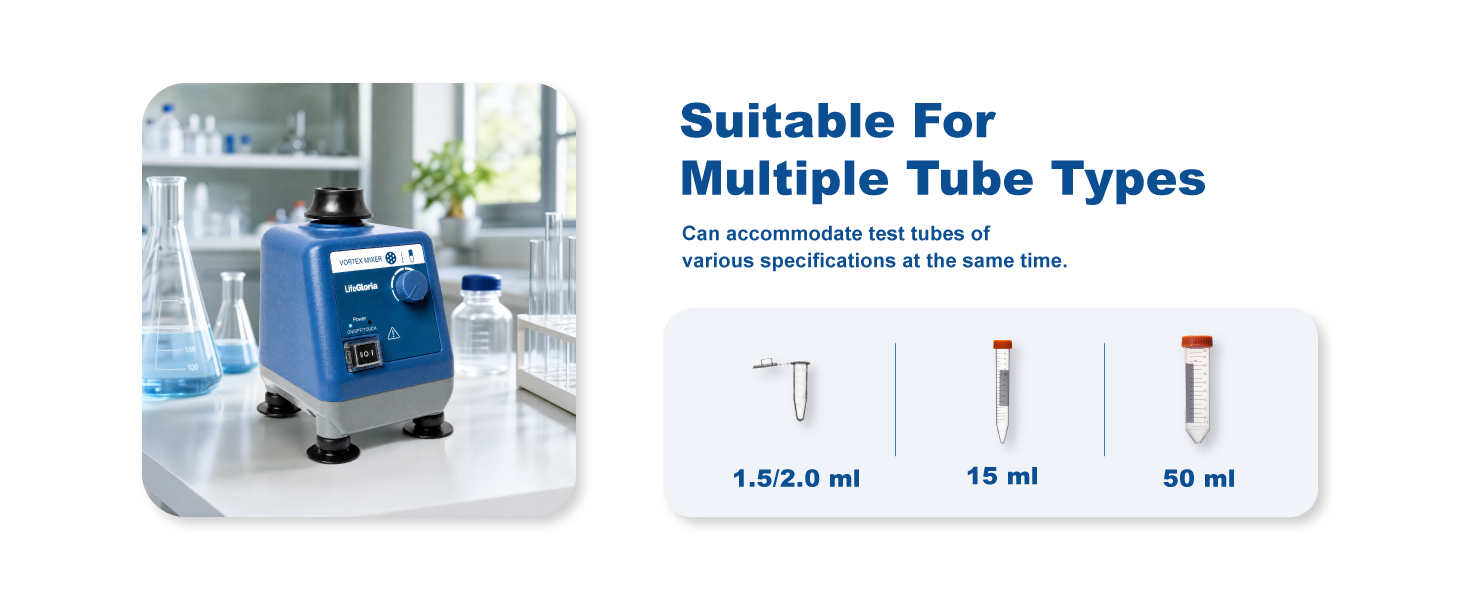
5. Compatibility With Different Tubes
Consider whether the vortex mixer supports:
- microcentrifuge tubes
- test tubes
- multiple tube adapters
Different accessories improve application flexibility.
6. Safety and Durability
A professional laboratory vortex mixer should have:
- stable housing
- reliable electrical protection
- durable components
- easy cleaning surface
Common Mistakes When Buying a Vortex Mixer
Choosing Only Based on Maximum Speed
Higher speed does not always mean better performance.
Different applications require different mixing intensity.
Ignoring Operating Mode
Laboratories with frequent mixing tasks may benefit from continuous operation mode.
Selecting an Unstable Instrument
Poor vibration control may affect:
- user experience
- sample handling
- instrument lifespan
LifeGloria Laboratory Vortex Mixer: Reliable Sample Mixing Solution
LifeGloria provides laboratory vortex mixers designed for efficient and consistent sample preparation.
Our vortex mixer solutions are suitable for:
- research laboratories
- universities
- biotechnology companies
- healthcare facilities
Key features include:
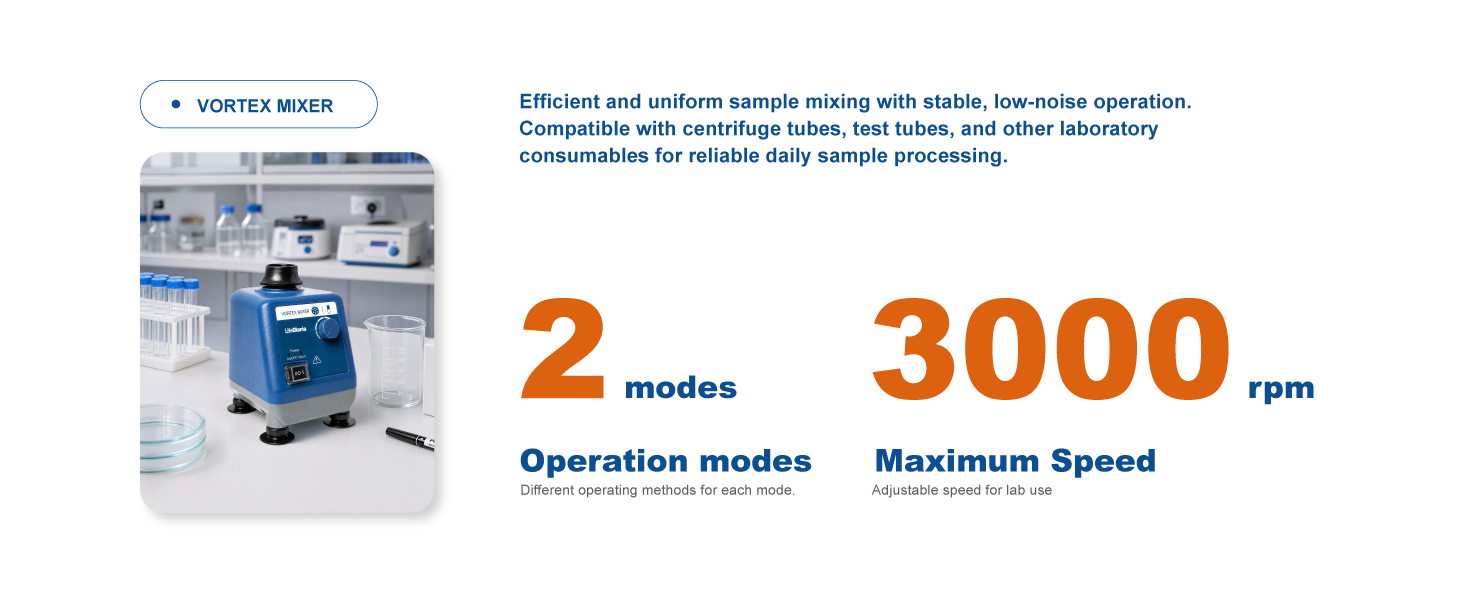
- Variable speed control up to 3000 rpm
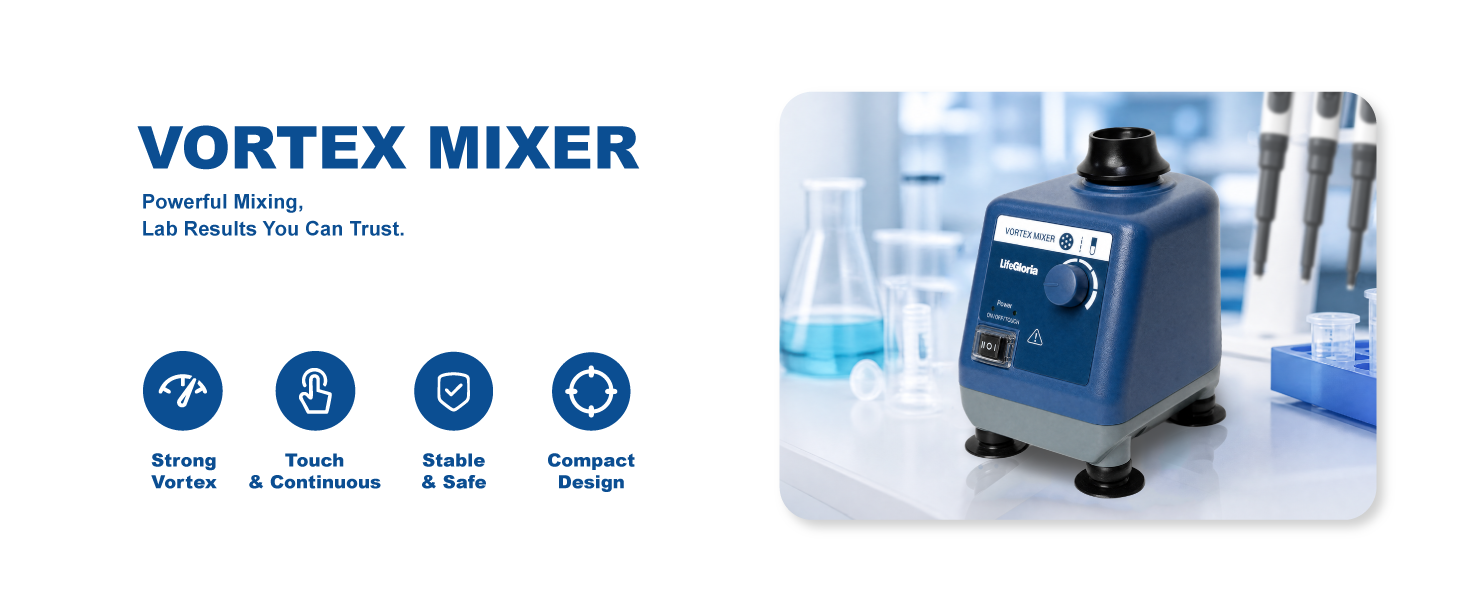
- Touch and continuous operation modes
- Low noise and stable vibration performance
- 6 mm orbital motion
- Compact benchtop design
- Wide voltage compatibility (100–240V)
- Suitable for tubes and small laboratory containers
Whether used for molecular biology, clinical testing, or routine laboratory workflows, a reliable vortex mixer helps improve efficiency and maintain consistent sample preparation.
Choose LifeGloria laboratory equipment for dependable mix
