

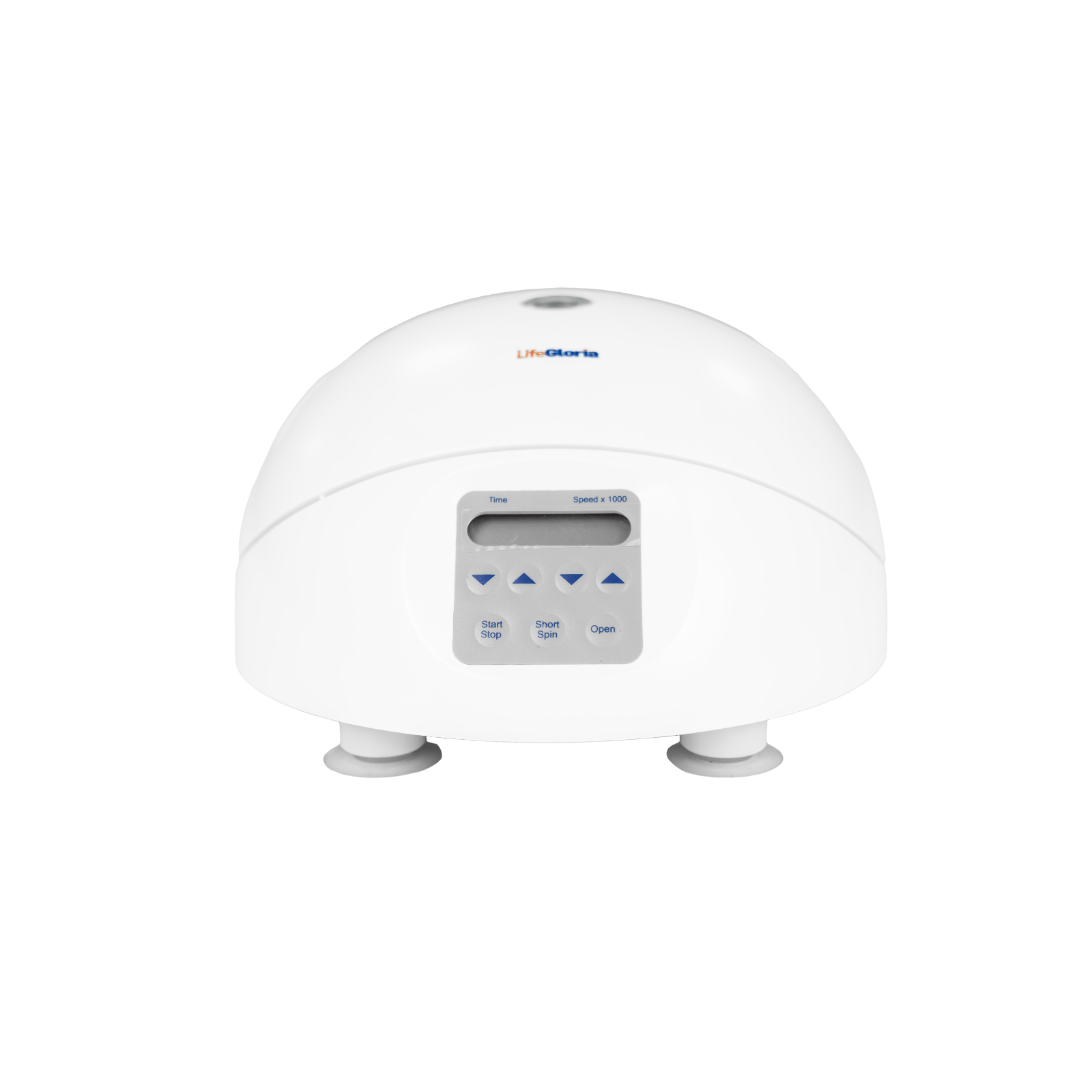
Quick answer: A 15,000 rpm mini centrifuge is designed for small-volume tubes and rapid bench workflows. Match the tube and adapter, balance equal loads opposite each other, close the rotor lid and chamber lid, then select either a timed run or a short spin.
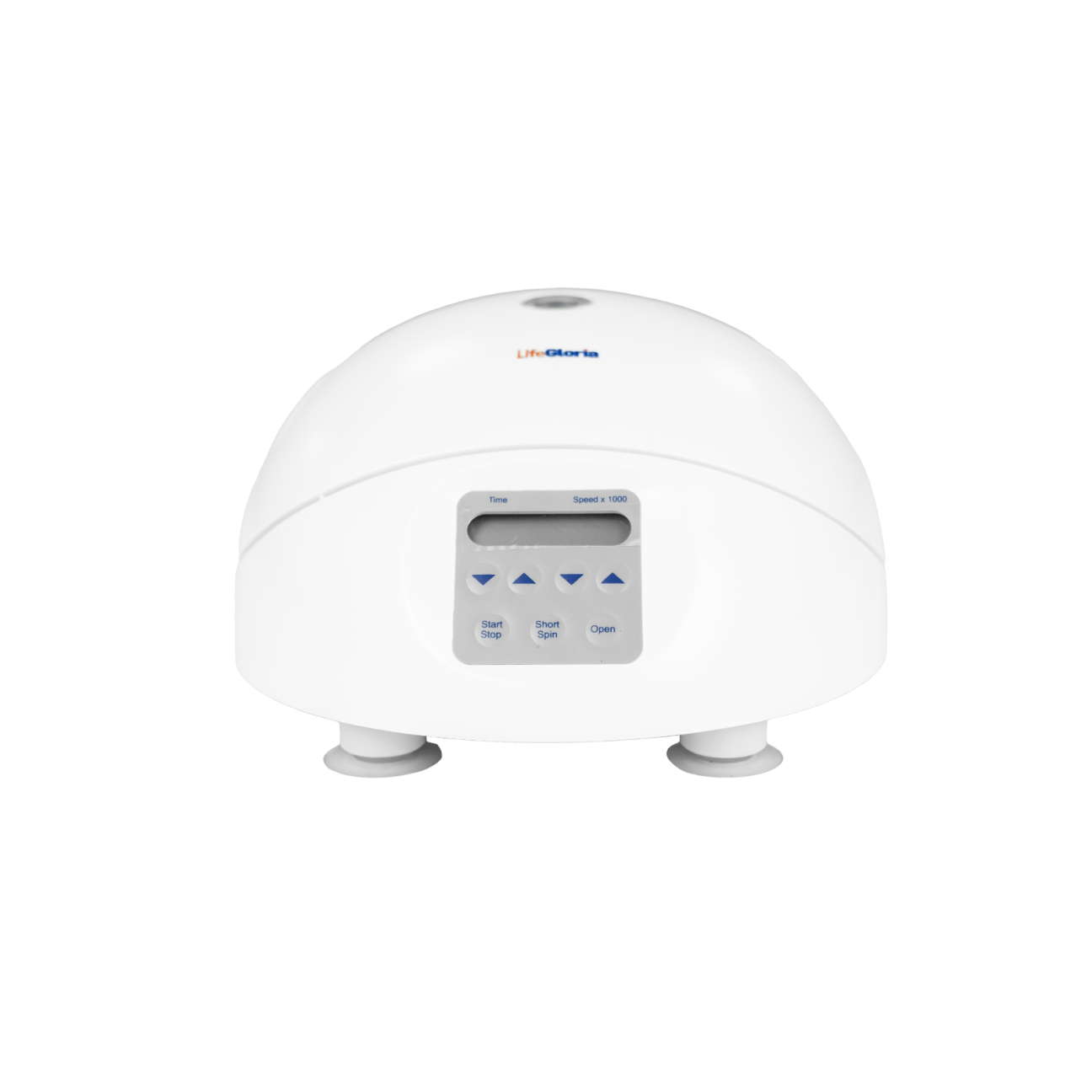
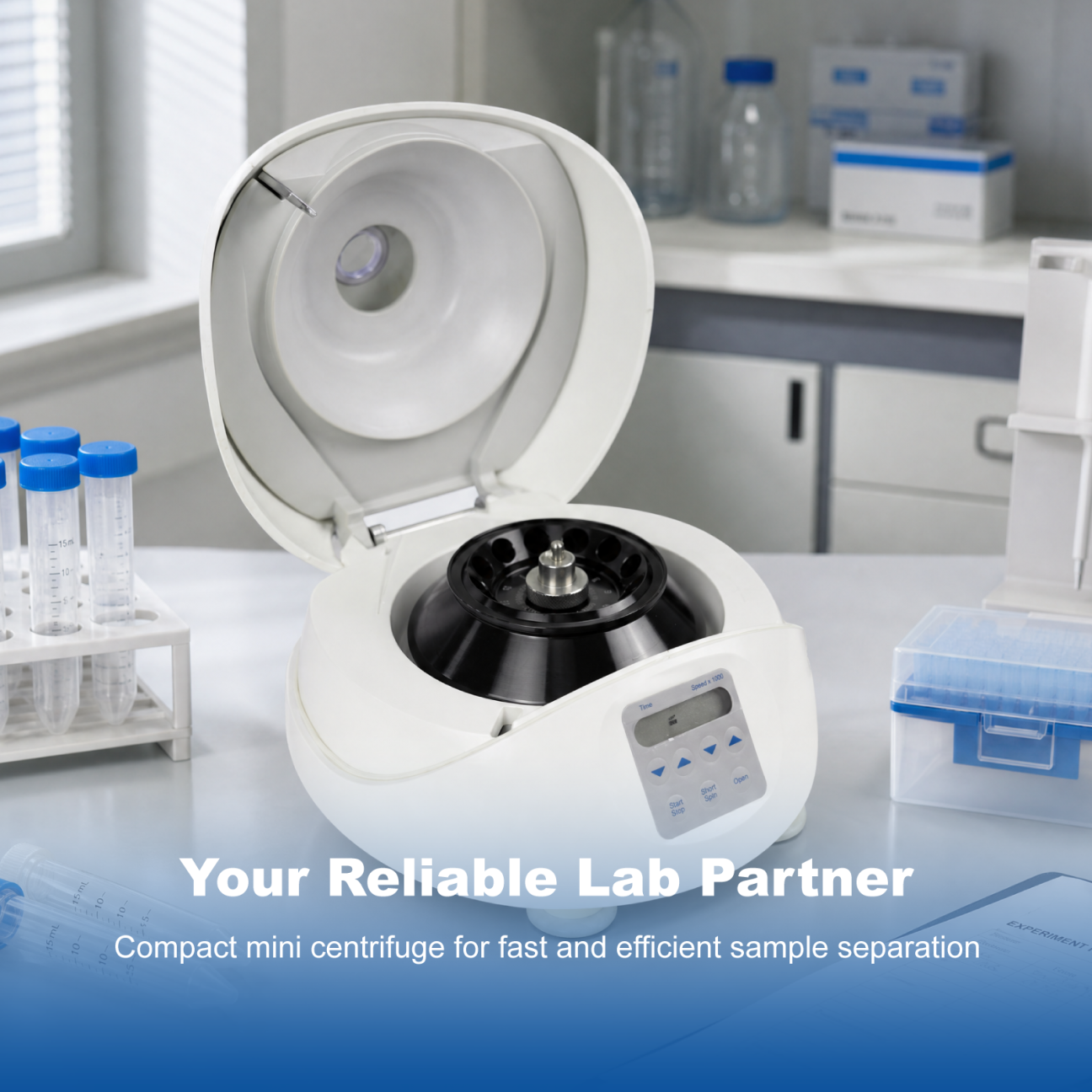
The LifeGloria 15,000 rpm mini centrifuge combines a compact footprint with a 12-place rotor for 0.2, 0.5, 1.5, and 2.0 mL tubes when the correct adapters are used.
Its adjustable range is 100–15,000 rpm, with a maximum RCF of 15,721 × g. The appropriate setting must come from the validated method rather than from the maximum specification.
In this guide:
- Suitable sample-preparation tasks
- Correct balancing and tube selection
- Timed run vs short spin
- Cleaning and daily inspection
Where a Mini Centrifuge Fits
- PCR tube spin-downs
- DNA or RNA sample preparation
- Small cell or microbial pellets
- Serum or supernatant separation when the validated tube and method are compatible
A mini centrifuge saves bench space and reduces the need to use a larger instrument for routine micro-volume work. It is not a substitute for a larger-capacity rotor when the method requires 15 mL, 50 mL, or higher-volume vessels.
Safe Loading and Balancing
- Inspect tubes, adapters, rotor, and rotor lid. Do not use cracked, leaking, or incompatible parts.
- Use tubes of the same type, material, nominal volume, and mass in opposing positions.
- If sample volumes differ, prepare a compatible balance tube with equal mass.
- Confirm that the rotor nut and rotor lid are locked, then close the chamber lid.
- Stop and investigate immediately if vibration or unusual noise appears.
Balance by mass, not by appearance alone. Equal liquid levels in different tube types may not have equal weight.
Timed Run or Short Spin?
| Function | Use it when | Practical example |
|---|---|---|
| Timed run | The method specifies speed/RCF and duration | Pelleting or phase separation |
| Short spin | Liquid only needs to move to the tube bottom | After vortexing PCR reagents |
For reproducibility, record RCF and time whenever the protocol provides them. RPM alone does not describe the same force across rotors with different radii.
After the Run
- Wait until the rotor stops completely
- Remove samples promptly
- Wipe spills with a compatible laboratory cleaner
- Leave the chamber dry
- Inspect the rotor regularly for corrosion, scratches, or damage
Compare compact options in the LifeGloria mini centrifuge collection.
Frequently Asked Questions
Can I run only one sample tube?
Do not run an unbalanced rotor. Add a compatible balance tube of equal mass in the opposite position.
What is the difference between 15,000 rpm and 15,721 × g?
RPM is rotational speed; × g is relative centrifugal force. RCF also depends on rotor radius and is usually better for transferring a protocol.
Can I open the lid during a short spin?
No. Release the control and wait until the rotor has stopped before opening the lid.
Key Takeaway
Use the smallest centrifuge that safely supports the required tube, RCF, capacity, and validated method.
