

A laboratory centrifuge is an essential instrument for separating sample components through centrifugal force. It is widely used in clinical laboratories, biotechnology research, molecular biology, and life science applications.
However, choosing the right centrifuge requires more than comparing maximum speeds. You should also consider rotor compatibility, sample capacity, operating conditions, and safety features.
This guide explains the key factors to consider before purchasing a laboratory centrifuge.
1. Understand Your Laboratory Applications
Start by identifying your daily laboratory requirements.
Different applications require different centrifuge configurations. For example:
-
Clinical laboratories may process blood and other biological samples.
-
Molecular biology laboratories often work with microtubes.
-
Cell culture laboratories may require larger tube capacities.
-
Research laboratories may need different rotor options.
Consider your sample volume, tube dimensions, and expected processing frequency before selecting a model.
2. Understand RPM and RCF
RPM and RCF are two important specifications when comparing centrifuges.
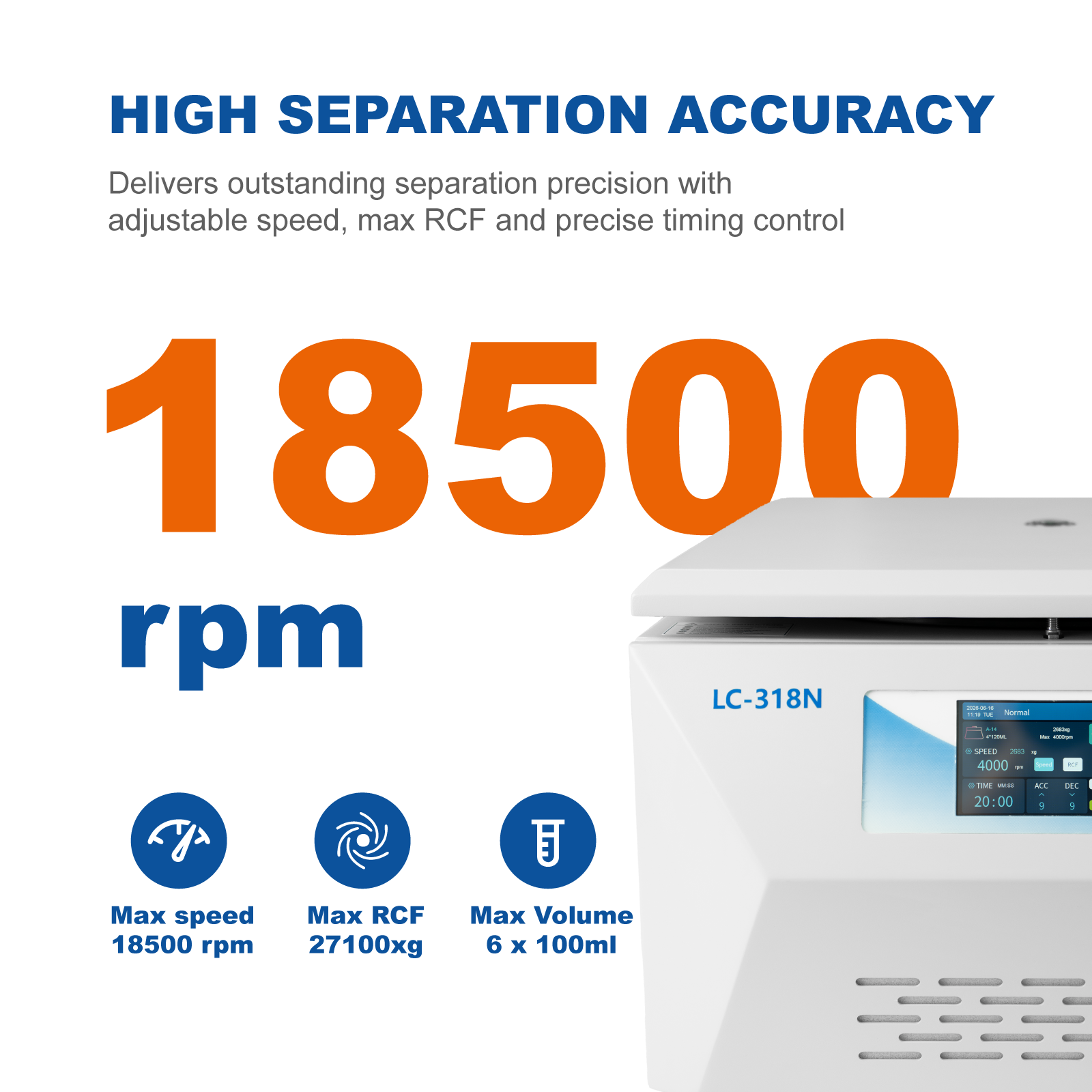
RPM means revolutions per minute. It measures how fast the rotor spins.
RCF means relative centrifugal force. It describes the force applied to the sample relative to gravity.
These values are related, but they are not interchangeable. Rotor radius also affects the resulting RCF.
Therefore, always check the maximum RCF supported by the specific rotor.
3. Choose the Right Rotor and Capacity
Rotor design directly affects centrifuge compatibility and laboratory efficiency.
Fixed-angle rotors hold tubes at a specific angle. They are commonly used for routine sample separation.
Swing-out rotors allow tubes to move toward a horizontal position during operation. They are useful for certain separation procedures.
Before purchasing, check:
-
Number of tubes supported per run
-
Compatible tube dimensions
-
Maximum rotor speed
-
Maximum RCF
-
Required adapters
Never assume that all rotors support the same tube sizes.
4. Check Safety and Operating Features
A reliable centrifuge should include suitable safety functions.
Depending on the model, these may include:
-
Lid locking systems
-
Imbalance detection
-
Overspeed protection
-
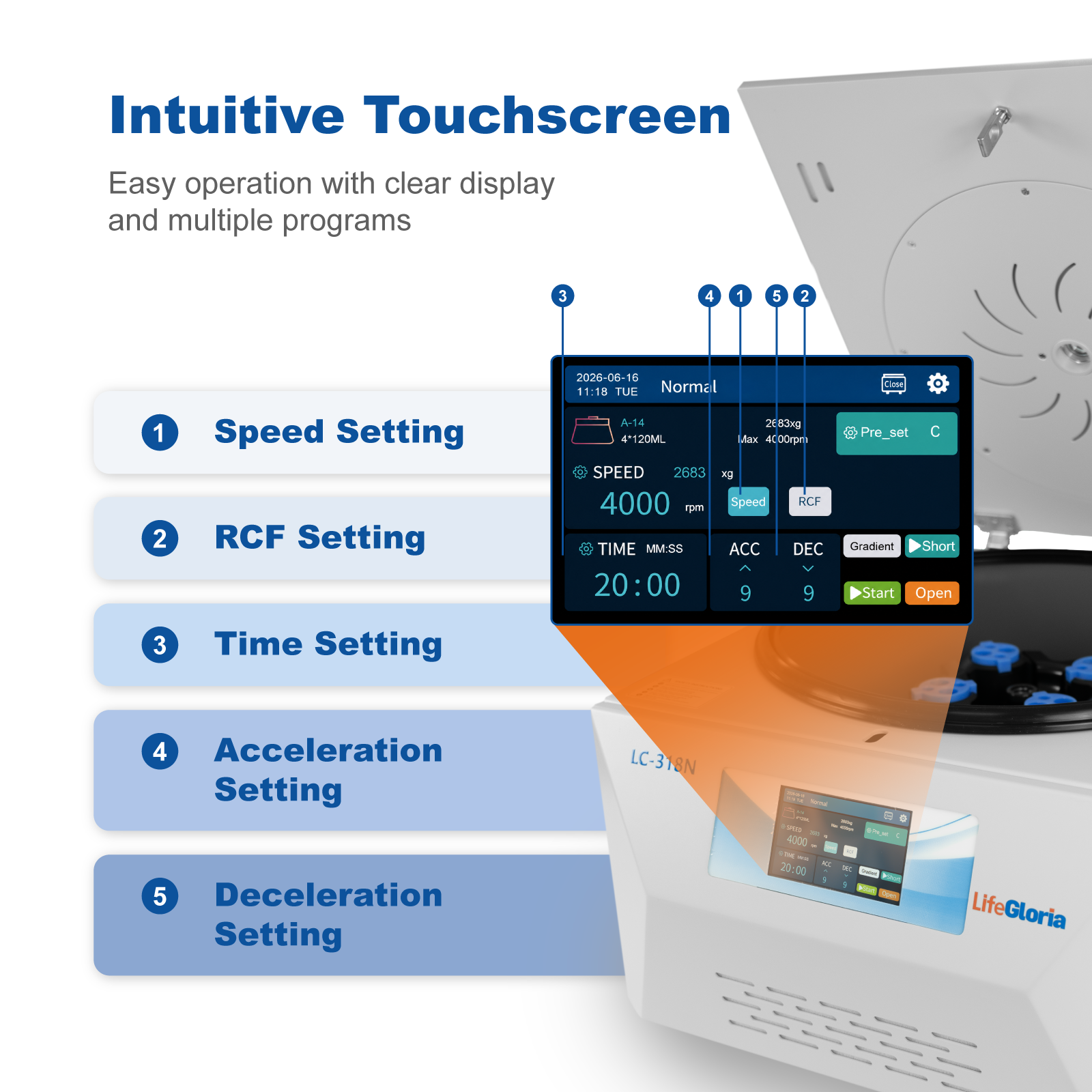
Digital speed and time controls
-
Programmable operating settings
You should also consider noise, power requirements, and available laboratory space.
5. Explore LifeGloria Laboratory Centrifuges
LifeGloria provides laboratory centrifuges for different research and routine laboratory applications.
The LC-318N benchtop centrifuge supports a maximum speed of 18,500 RPM and a maximum RCF of 27,100 × g.
For smaller sample preparation tasks, LifeGloria also offers a mini centrifuge with a maximum speed of 15,000 RPM.
The right model depends on your rotor configuration, tube requirements, and experimental procedures.
Conclusion
Choosing a laboratory centrifuge involves evaluating more than speed. Rotor compatibility, RCF, sample capacity, and safety features all matter.
Compare the specifications carefully before making a purchasing decision.
Looking for laboratory centrifuges?
Explore LifeGloria's laboratory equipment collection or contact our team for product specifications, catalogs, and quotations.
Website: https://lifegloria.com/
Email: contact@lifegloria.com
