

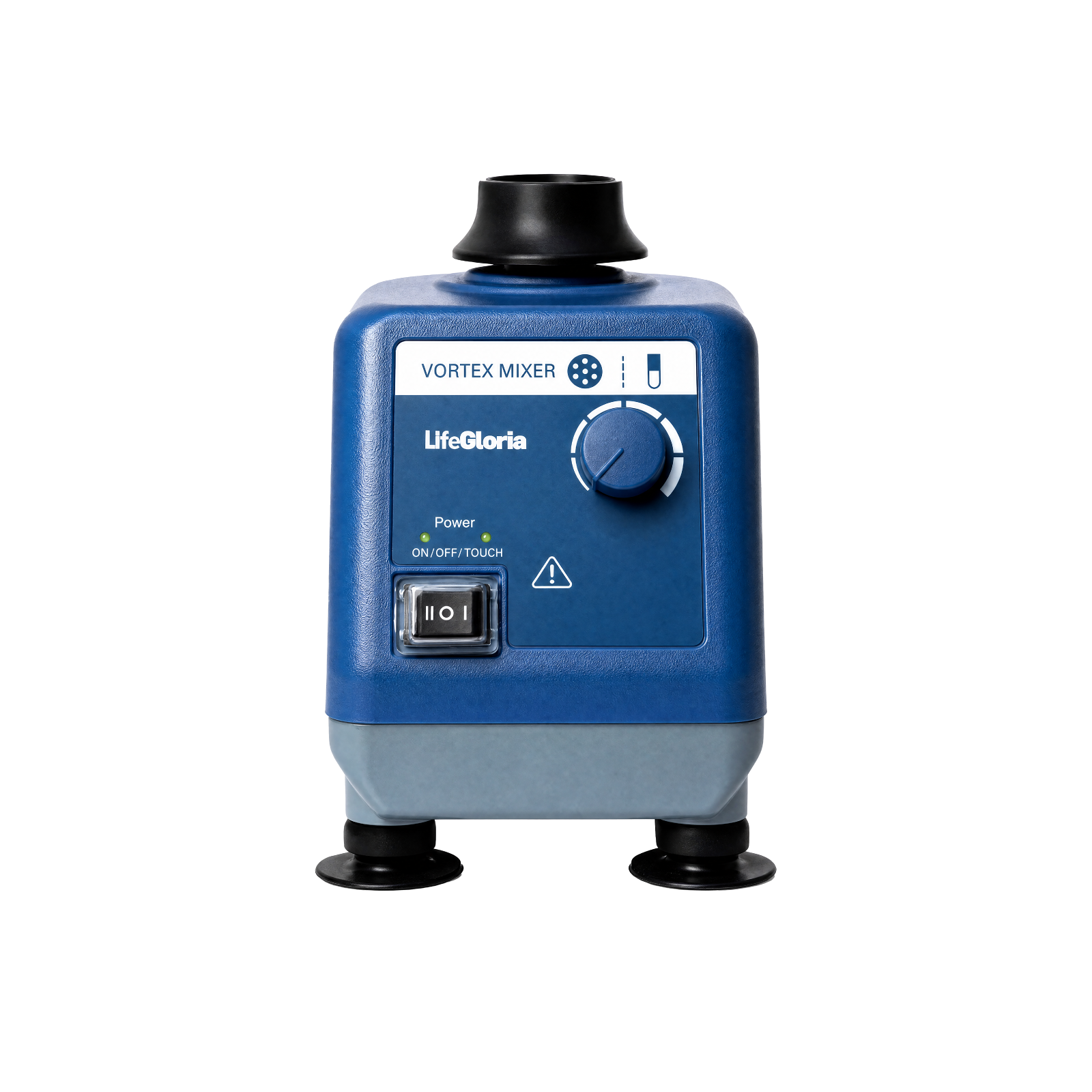
Quick answer: Use touch mode for quick, one-tube mixing and continuous mode for longer or repeated workflows. Start at low speed, increase gradually, and reduce speed if liquid splashes, the vessel moves, or vibration becomes unstable.
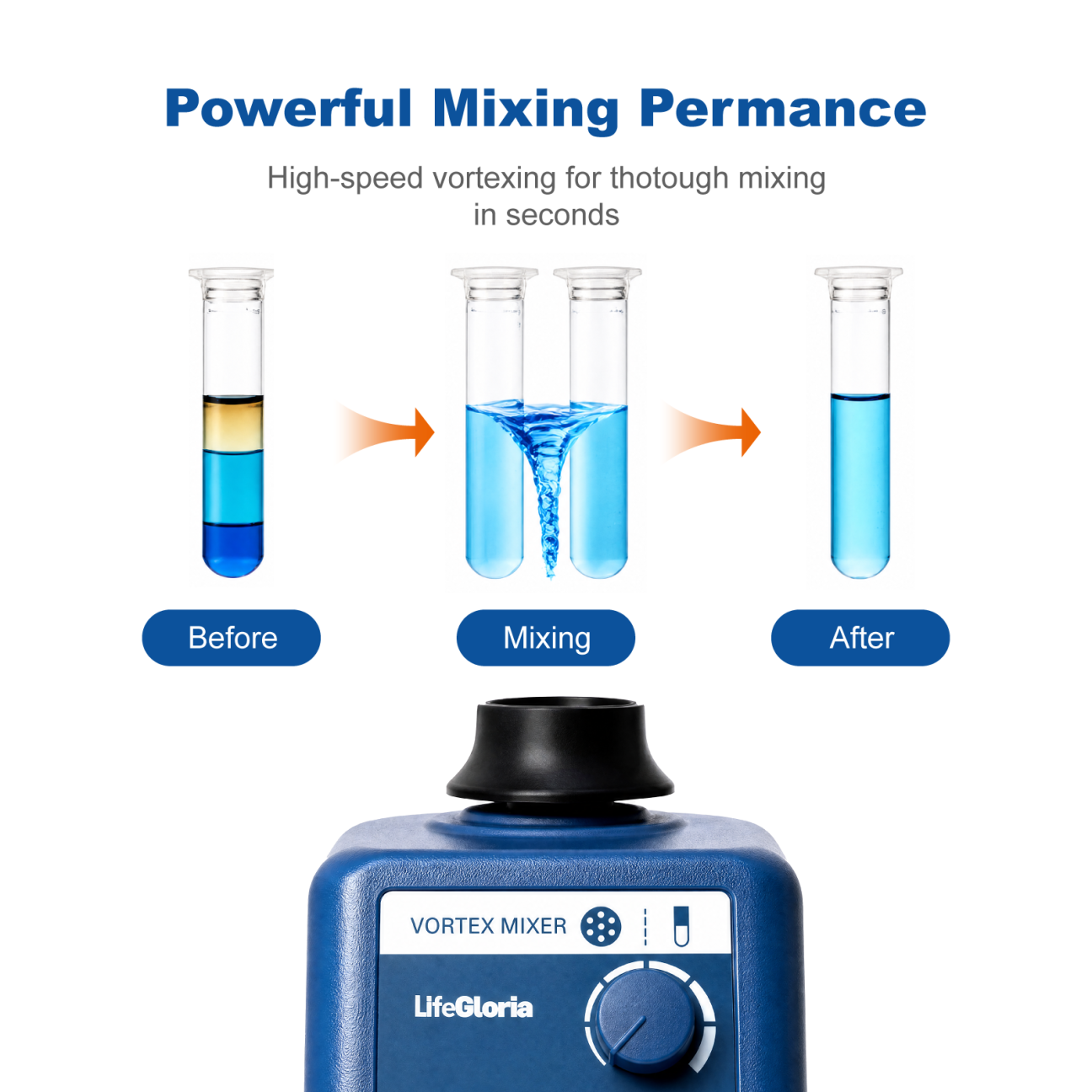
A vortex mixer creates a small orbital motion that forms a vortex inside a tube. It is useful for resuspending pellets, blending reagents, preparing suspensions, and quickly homogenizing small liquid samples.
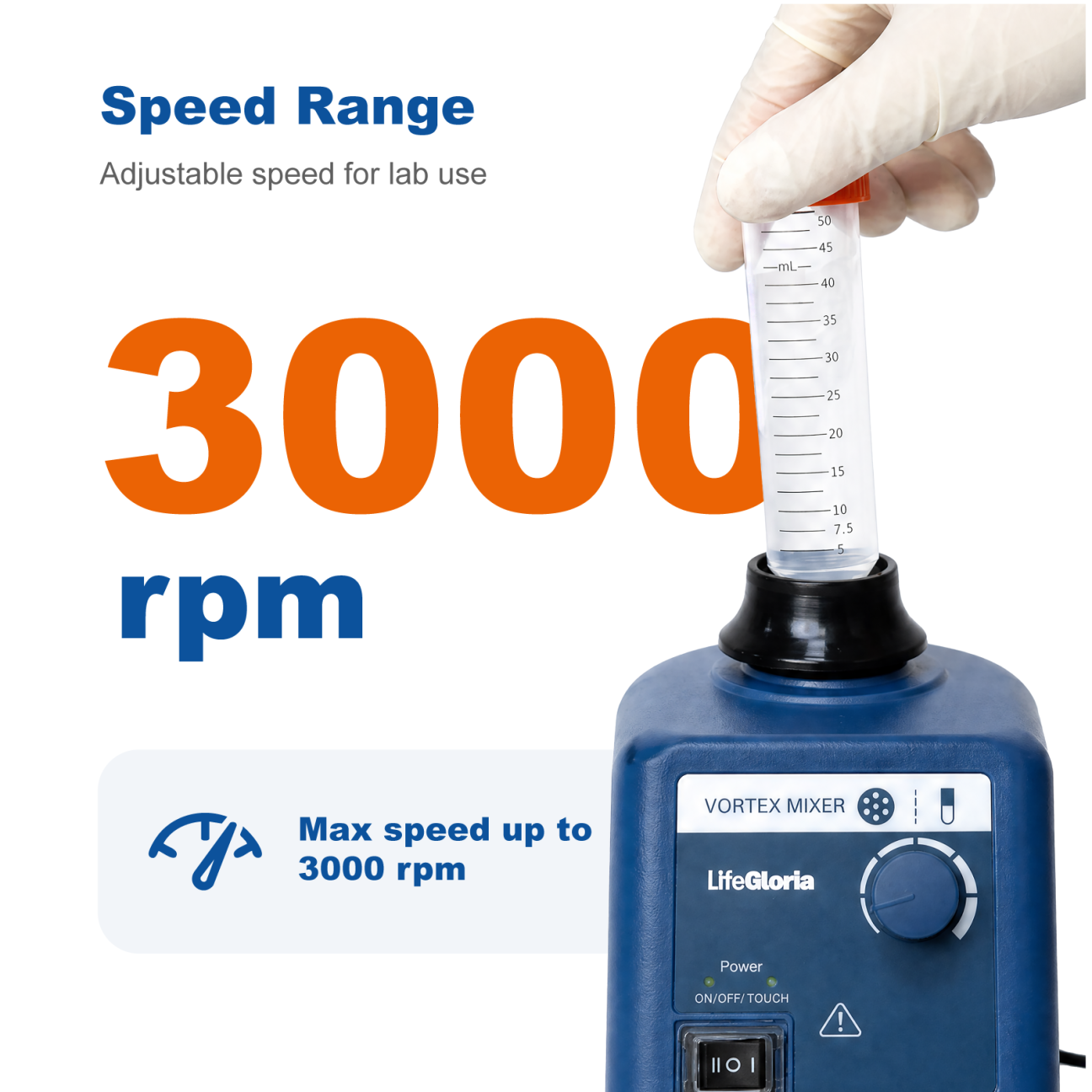
The LifeGloria vortex mixer provides a 0–3000 rpm range, a 6 mm orbit, and touch and continuous operating modes. The correct setting depends on the vessel, sample volume, viscosity, and the result required by the laboratory method.
In this guide:
- What touch and continuous modes are designed for
- A safe operating sequence
- How to choose an initial speed
- Common mistakes and practical corrections
Touch Mode vs Continuous Mode
| Mode | Best for | Operator action | Main advantage |
|---|---|---|---|
| Touch | One tube; short mixing | Press the tube onto the attachment | Fast start and stop |
| Continuous | Longer or repeated mixing | Select the mode and use Run/Stop | More consistent timed work |
Touch mode is usually the simplest option when a tube needs only a few seconds of mixing. Continuous mode is more suitable when the method requires a longer mixing interval or an accessory designed for one or several vessels.
Step-by-Step Operating Sequence
- Place the mixer on a stable, dry, level bench and confirm that the installed attachment suits the vessel.
- Turn the speed knob to its lowest position before switching on the instrument.
- Select touch or continuous mode.
- Secure the cap. In touch mode, hold the upper part of the tube and press it vertically onto the attachment.
- Increase speed gradually until a controlled vortex reaches the required depth.
- Stop mixing before removing a vessel from continuous operation, then return the speed to low and switch off the mixer.
How Much Speed Should You Use?
There is no single correct rpm for every sample. Begin low and use the minimum speed that produces the required mixing. High speed may be useful for rapid resuspension, while a lower setting can reduce foaming, aerosol formation, splashing, or damage to sensitive material.
Important: Reduce speed immediately if the vessel moves on the attachment, liquid approaches the cap, or the instrument passes through a strong resonance point.
Common Uses in Routine Laboratories
- Resuspending a cell or reagent pellet
- Mixing buffers, dyes, standards, or controls
- Preparing microbial suspensions
- Blending material before pipetting or analysis
For long-term agitation of flasks or culture vessels, a laboratory shaker is usually more appropriate than a vortex mixer.
Common Mistakes to Avoid
- Starting at maximum speed
- Using a damaged, open, or poorly capped tube
- Holding the vessel too low or at an unstable angle
- Using an incompatible attachment
- Assuming more foam means better mixing
Frequently Asked Questions
Can a vortex mixer be used for PCR tubes?
Yes, if the attachment and tube format are compatible. Use a controlled setting and perform a brief spin-down afterward when the workflow requires all liquid at the bottom.
Is touch mode better than continuous mode?
Neither mode is universally better. Touch mode favors quick individual samples; continuous mode favors longer or repeated mixing.
Why does my vortex mixer move on the bench?
The speed may be too high, the load may be unstable, or the feet and bench may be wet or uneven. Stop the unit and correct the condition before continuing.
