


Quick answer: Select the LC-318N rotor from the sample vessel, required capacity, and target RCF—not from maximum speed alone. Every rotor has its own rated limit, so confirm the installed rotor and its permitted settings before each protocol.
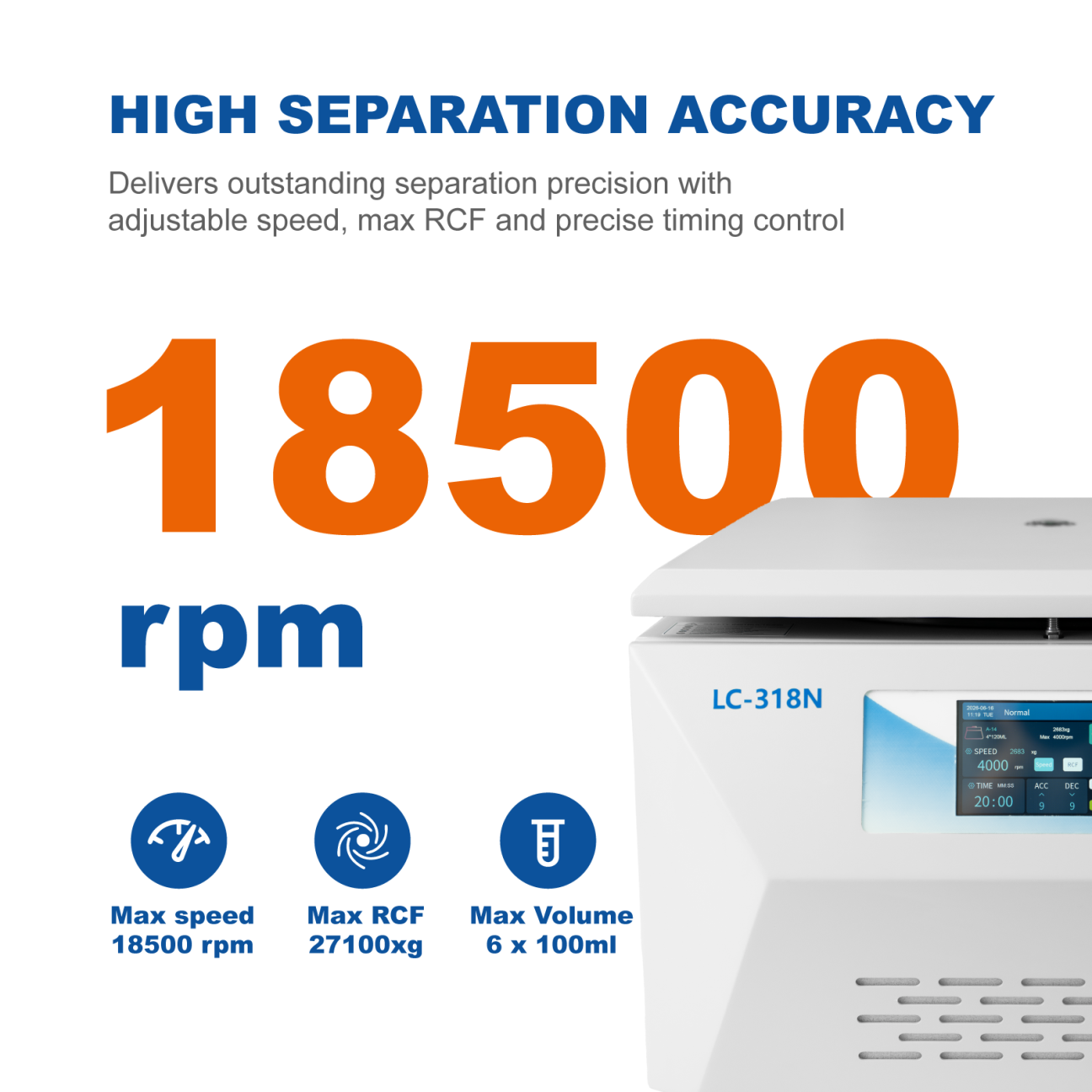
The LC-318N high-speed benchtop centrifuge reaches up to 18,500 rpm and 27,100 × g with the applicable microtube rotor. Other rotor configurations trade maximum speed for more tubes, larger vessels, or microplates.
A touchscreen, stored programs, acceleration/deceleration control, rotor recognition, imbalance protection, and a lid interlock support repeatable routine work when the instrument is loaded and maintained correctly.
In this guide:
- Representative rotor configurations
- A pre-run checklist
- Programming for repeatability
- Cleaning and rotor care
Representative Rotor Configurations
| Capacity | Maximum speed | Maximum RCF | Typical role |
|---|---|---|---|
| 12 × 1.5/2 mL | 18,500 rpm | 27,100 × g | High-force microtube work |
| 24 × 1.5/2 mL | 15,000 rpm | 22,387 × g | Higher microtube throughput |
| 6 × 50 mL | 12,000 rpm | 17,146 × g | Medium-volume processing |
| 6 × 100 mL | 11,000 rpm | 15,354 × g | Larger-volume separation |
| 2 × 2 × 96-well plate | 4,000 rpm | 2,300 × g | Microplate workflows |
Available rotors and ratings can vary by ordered configuration. Confirm the rotor label, current manual, and supplied accessories before using any value.
Pre-Run Checklist
- Inspect the chamber, rotor, lid, O-rings, adapters, and tubes for debris, corrosion, cracks, or wear.
- Install and secure the rotor with the specified locking hardware.
- Load compatible vessels symmetrically and balance opposing positions by mass.
- Fit the rotor lid where required and close the chamber lid.
- Set RCF or rpm, time, and acceleration/deceleration according to the validated method and rotor limit.
Programming Repeatable Methods
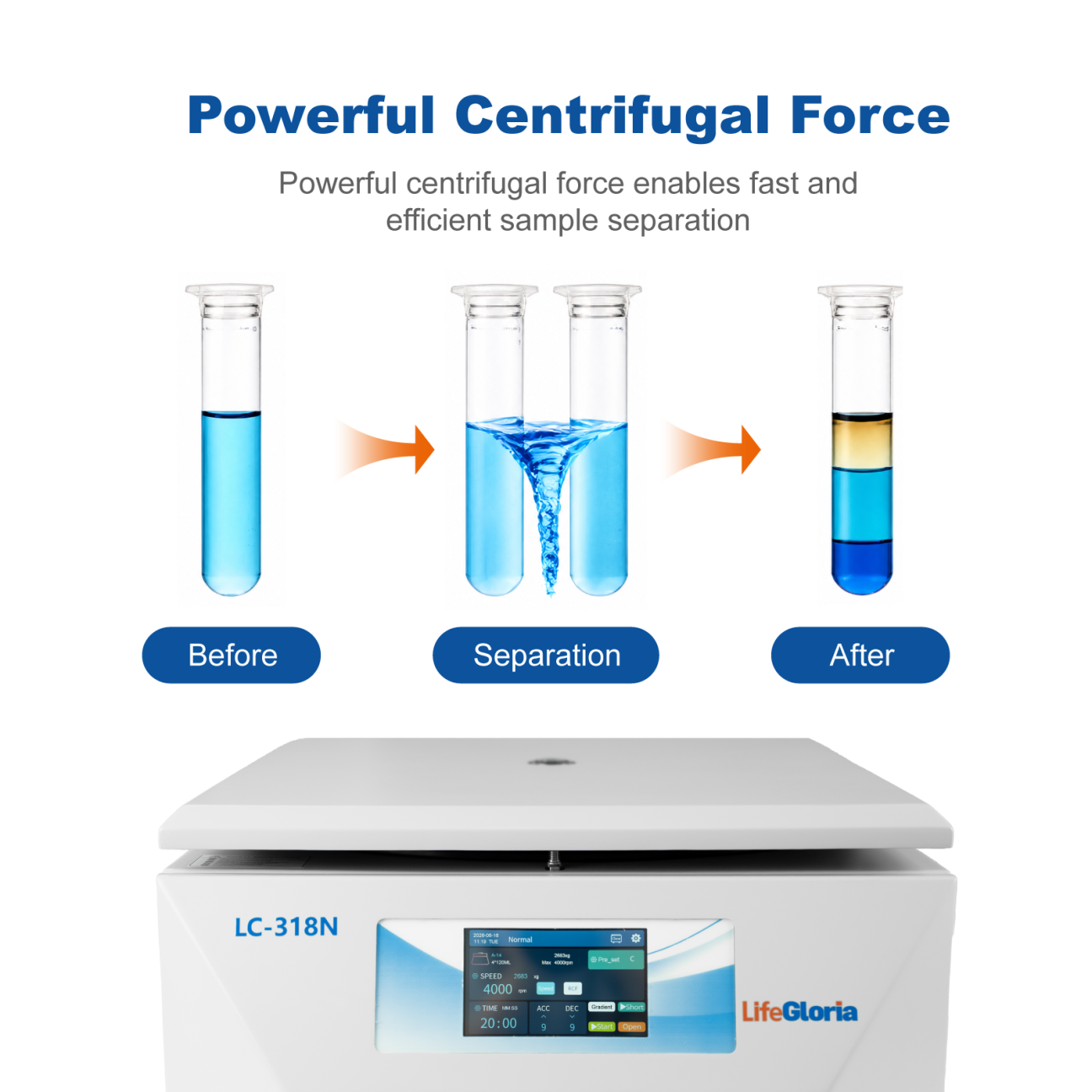
For recurring workflows, save a clearly named program containing the force or speed, time, and acceleration/deceleration profile. Recording RCF helps a method remain comparable when rotor radius changes.
Sensitive pellets may benefit from gentler deceleration. A fast brake can disturb a loose pellet or density gradient even if the separation force was correct.
Cleaning and Rotor Care
- Switch off and disconnect power before maintenance
- Remove spills promptly using materials compatible with the rotor and chamber
- Rinse or wipe away corrosive residues
- Dry the chamber and rotor thoroughly
- Keep the lid open after use when appropriate so residual moisture can escape
Do not run a corroded, cracked, expired, or unidentified rotor. Maintenance and repair beyond routine cleaning should be performed by qualified personnel.

Frequently Asked Questions
Does the 18,500 rpm limit apply to every LC-318N rotor?
No. It applies only to a rotor rated for that speed. Larger-capacity configurations have lower maximum speeds and RCF values.
Should I program rpm or RCF?
Use the parameter specified by the validated method. RCF is often easier to reproduce across different rotor radii.
Can an odd number of samples be centrifuged?
Yes only if the rotor can still be balanced with compatible balance tubes placed according to the rotor layout. Never operate with an unbalanced load.
Key Takeaway
Match rotor, vessel, mass balance, RCF, time, and braking profile as one complete method rather than treating maximum rpm as the main selection criterion.
