

A PCR laboratory needs more than a thermal cycler. Reliable amplification depends on accurate liquid handling, contamination control, tube spin-down, mixing, temperature programming, sample quality, and a clear separation between pre- and post-amplification activities.
This 2026 checklist organizes the equipment by workflow so a new laboratory, distributor, university, or purchasing team can request a coordinated package rather than unrelated product quotations.
Quick Answer
A practical PCR setup includes dedicated micropipettes, sterile filter tips, a compact microcentrifuge, a vortex mixer, a compatible 96-well or tube-format thermal cycler, and a suitable method for checking nucleic-acid concentration and purity. Separate clean preparation from amplified-product handling.
Request a coordinated PCR equipment package
Send LifeGloria the assay type, sample number, reaction format, throughput, gradient requirement, pipette ranges, centrifuge needs, quality-control method, voltage, destination, and budget. We can organize a product and consumable quotation by workflow.
PCR Workflow and Required Equipment
| Workflow stage | Core equipment | Purchasing focus |
|---|---|---|
| Reagent preparation | Dedicated micropipettes and sterile filter tips | Range, accuracy, fit, contamination control |
| Mixing and spin-down | Vortex mixer and mini centrifuge | Tube format, speed, balance, mixing intensity |
| Amplification | Gradient PCR thermal cycler | Block format, gradient zones, accuracy, ramp rate, heated lid |
| Quality control | Micro-volume UV-Vis spectrophotometer | Sample volume, wavelength, concentration range, reporting |
Liquid Handling and Contamination Control
Use separate pipettes for reagent preparation, template addition, and post-amplification work. Choose tips by volume and compatibility, then confirm whether sterile, filtered, low-retention, or other specifications are required for the selected protocol.
- Label pipettes by work zone
- Use fresh tips for every sample and reagent transfer
- Keep pre-PCR and post-PCR materials separate
- Include routine cleaning and calibration in the SOP
- Order enough consumables for the planned throughput
Mixing and Microtube Spin-Down
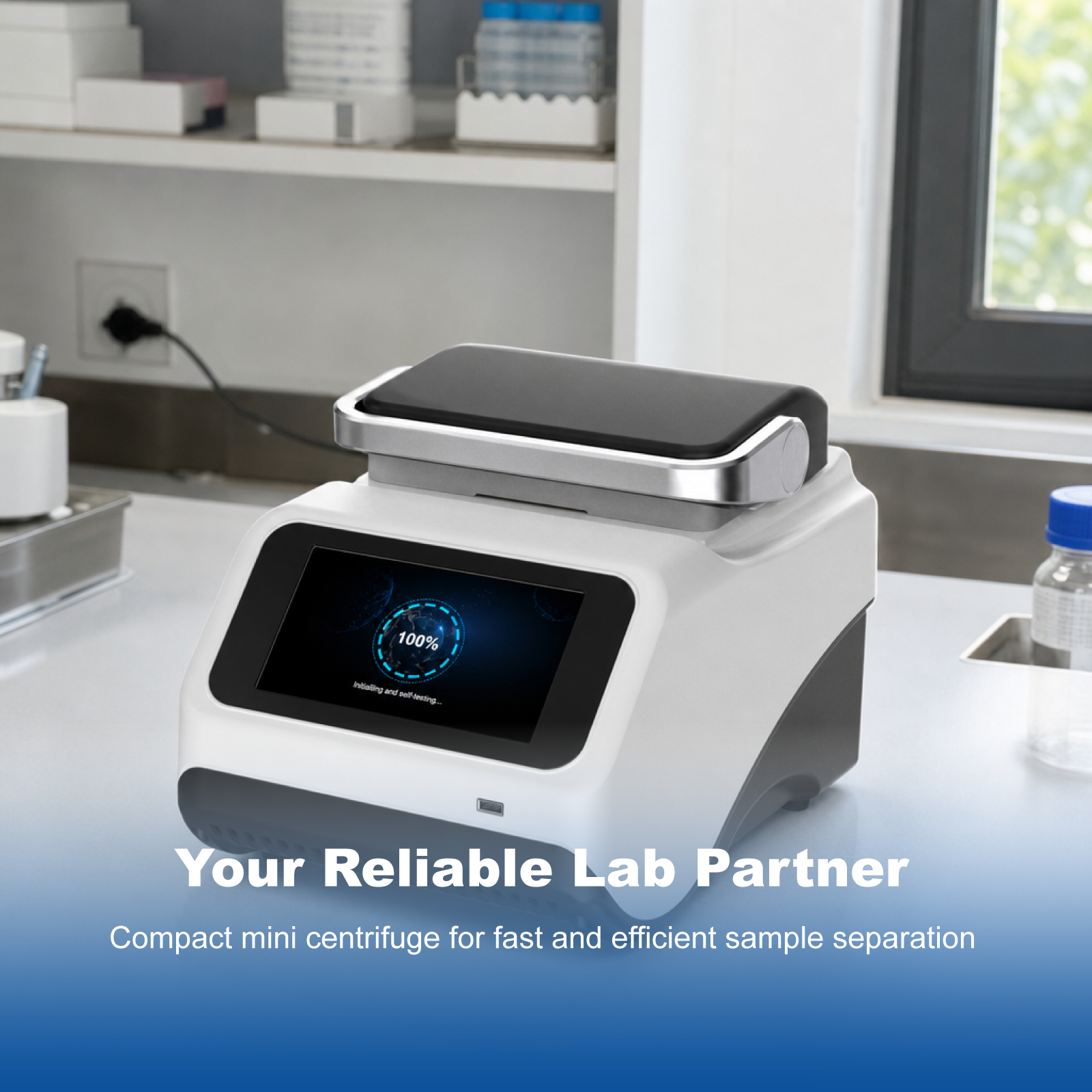
A vortex mixer helps combine reagents where the method permits vigorous mixing, while a mini centrifuge collects droplets from tube walls and caps. The LifeGloria digital mini centrifuge operates from 100 to 15,000 rpm and supports a 12-place microtube rotor for appropriate PCR and DNA sample preparation workflows.
- Confirm tube compatibility
- Balance opposite positions
- Use short spin-down rather than unnecessary high force
- Avoid vortexing shear-sensitive material
- Keep both instruments in the appropriate clean zone
Thermal Cycler Features That Affect Daily Work
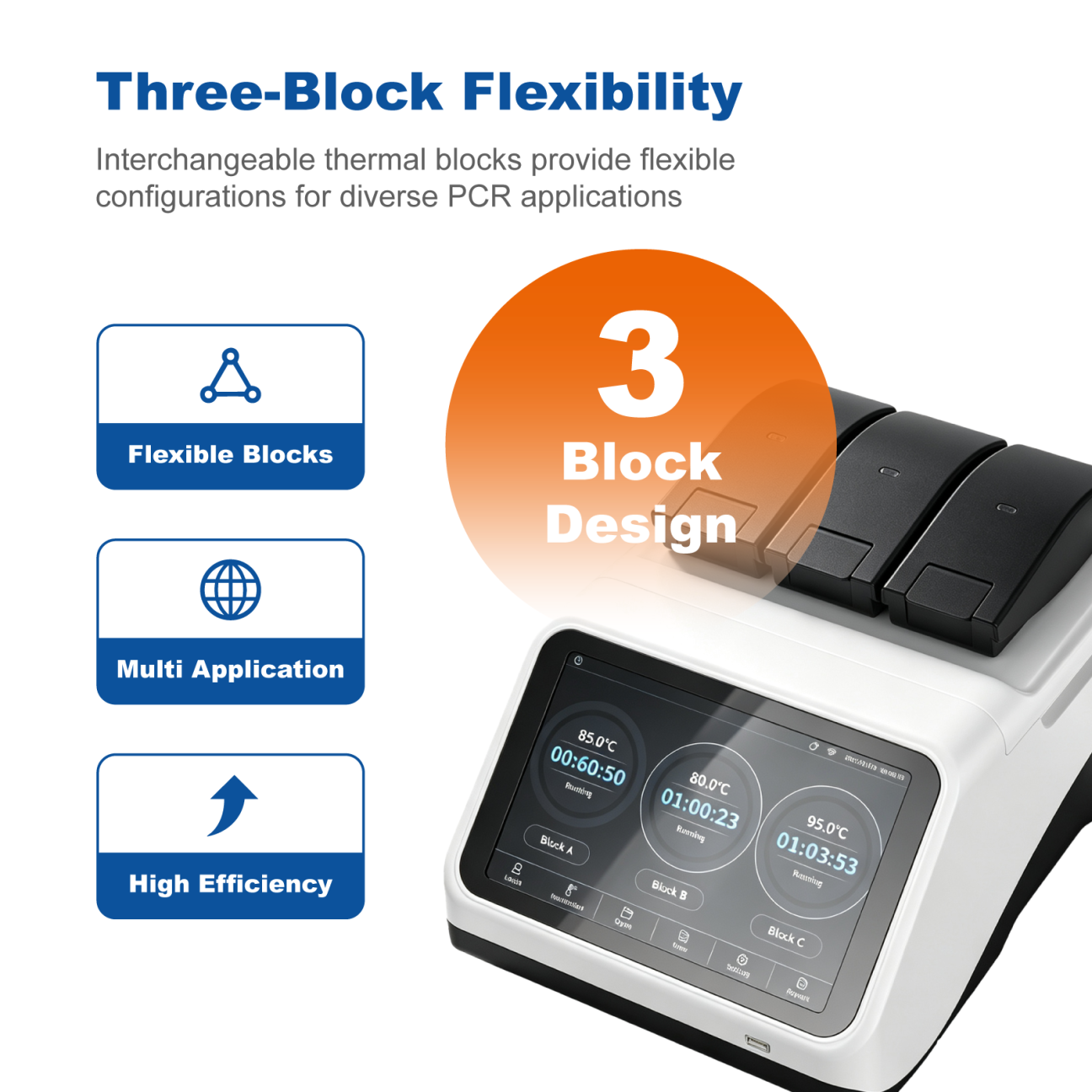
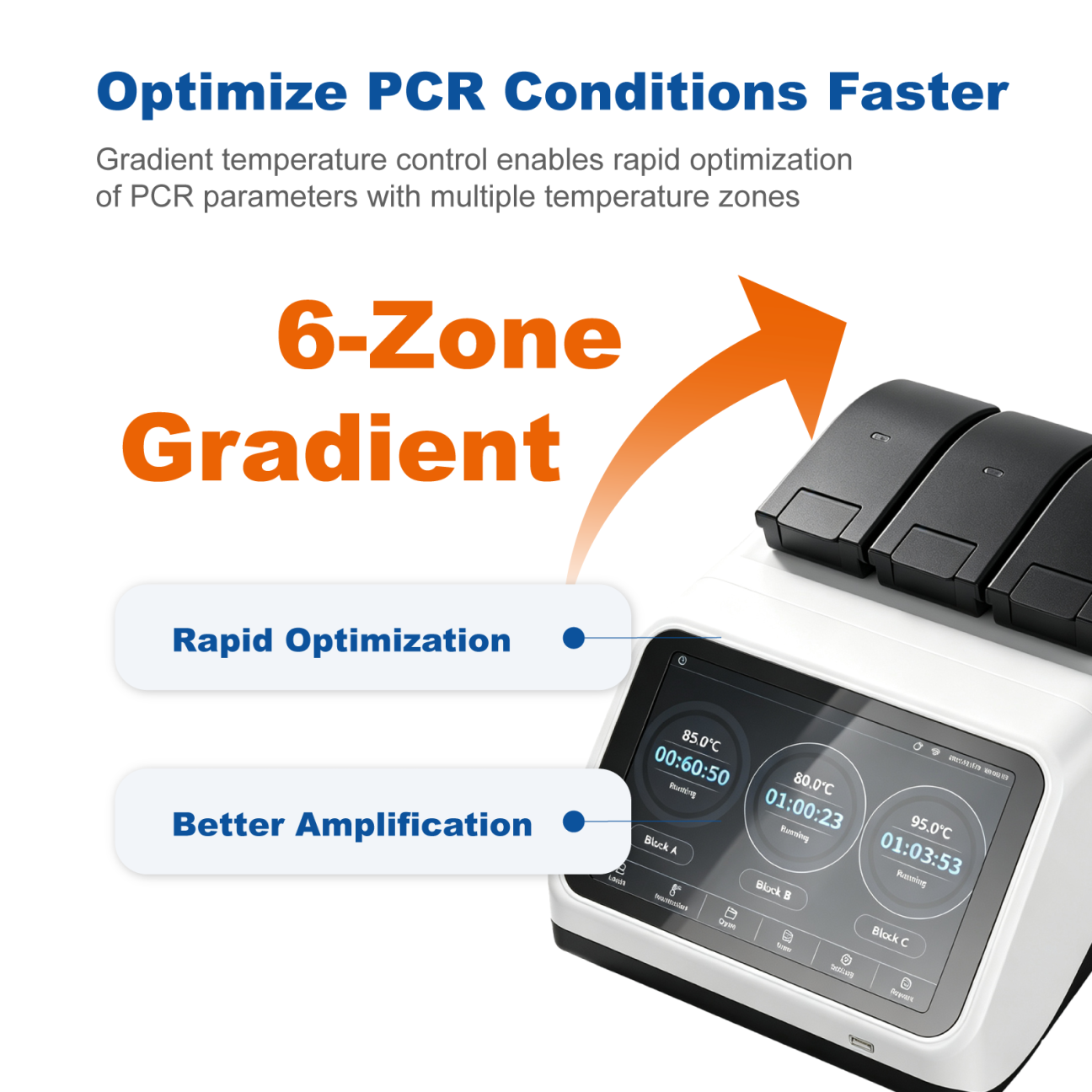
The LifeGloria gradient PCR thermal cycler uses a 96-well block with six gradient zones, temperature accuracy of ±0.25°C, uniformity below 0.5°C, heating up to 5°C/s, cooling up to 4°C/s, and an adjustable heated lid. It supports 0.2 mL tubes, eight-tube strips, and standard 96-well PCR plates.
- Gradient capability for annealing optimization
- Heated-lid range and consumable compatibility
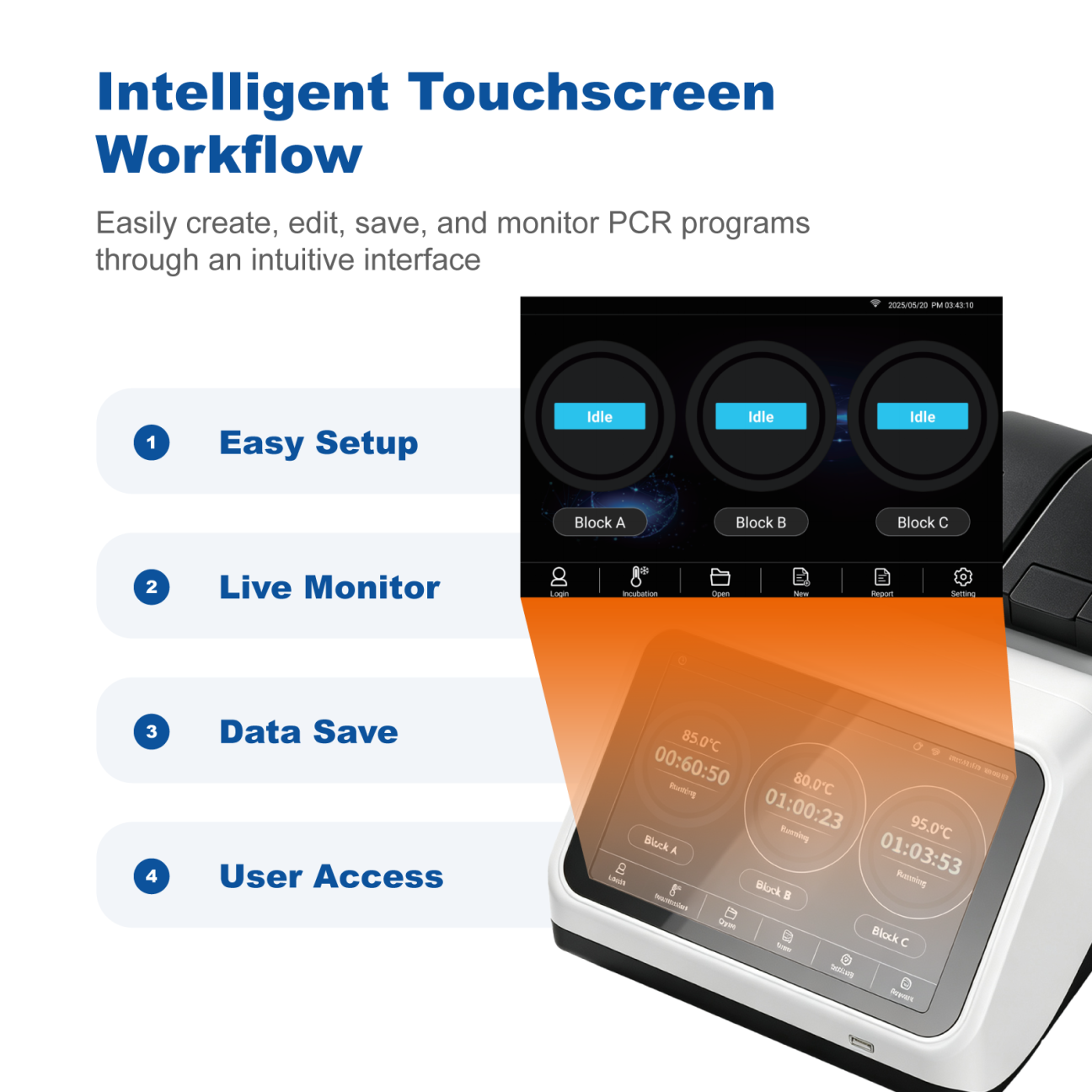
- Program storage and USB data transfer
- User permissions and reporting
- Voltage, warranty, training, and support
Nucleic-Acid Quantity and Purity Check
A micro-volume UV-Vis spectrophotometer can measure DNA, RNA, and protein using small sample volumes. LifeGloria offers a 190-800 nm system using 0.5-2 µL samples, with multiple optical path lengths and a 7-inch touchscreen. Confirm whether absorbance alone is sufficient or whether an optional fluorescence function is needed.
- Define expected concentration range
- Confirm sample volume
- Plan blanking and cleaning
- Set acceptance criteria for purity ratios
- Export and retain measurement records
Procurement Checklist
- PCR type and sample throughput
- Pre-PCR and post-PCR room separation
- Pipette ranges and quantities
- Filter tip sizes, sterility, and monthly consumption
- Tube, strip, or 96-well plate format
- Gradient and temperature-control requirements
- Mini centrifuge and vortex mixer needs
- Quality-control method, voltage, training, destination, and budget
Frequently Asked Questions
Is a thermal cycler enough to start PCR testing?
No. You also need controlled liquid handling, compatible consumables, mixing and spin-down equipment, contamination controls, and a complete validated method.
Why use a gradient thermal cycler?
A gradient block allows several annealing temperatures to be evaluated in one run, which can speed protocol optimization.
Do all PCR steps need filter tips?
Filter tips are commonly used where aerosol carryover would be harmful, but the laboratory should define the requirement by risk assessment and protocol.
Can LifeGloria quote a complete PCR setup?
Yes. Provide the workflow, format, throughput, specifications, voltage, destination, documents, and budget so suitable instruments and consumables can be grouped.
Final Recommendation
Plan PCR as a controlled workflow from pipetting through amplification and quality control. LifeGloria can prepare a coordinated quotation that reduces compatibility gaps between instruments and consumables.
Recommended LifeGloria Products
Confirm the final model, selected SKU, compatibility, accessories, certificates, voltage, packaging, freight, storage conditions, local regulations, and application requirements before purchase.
