

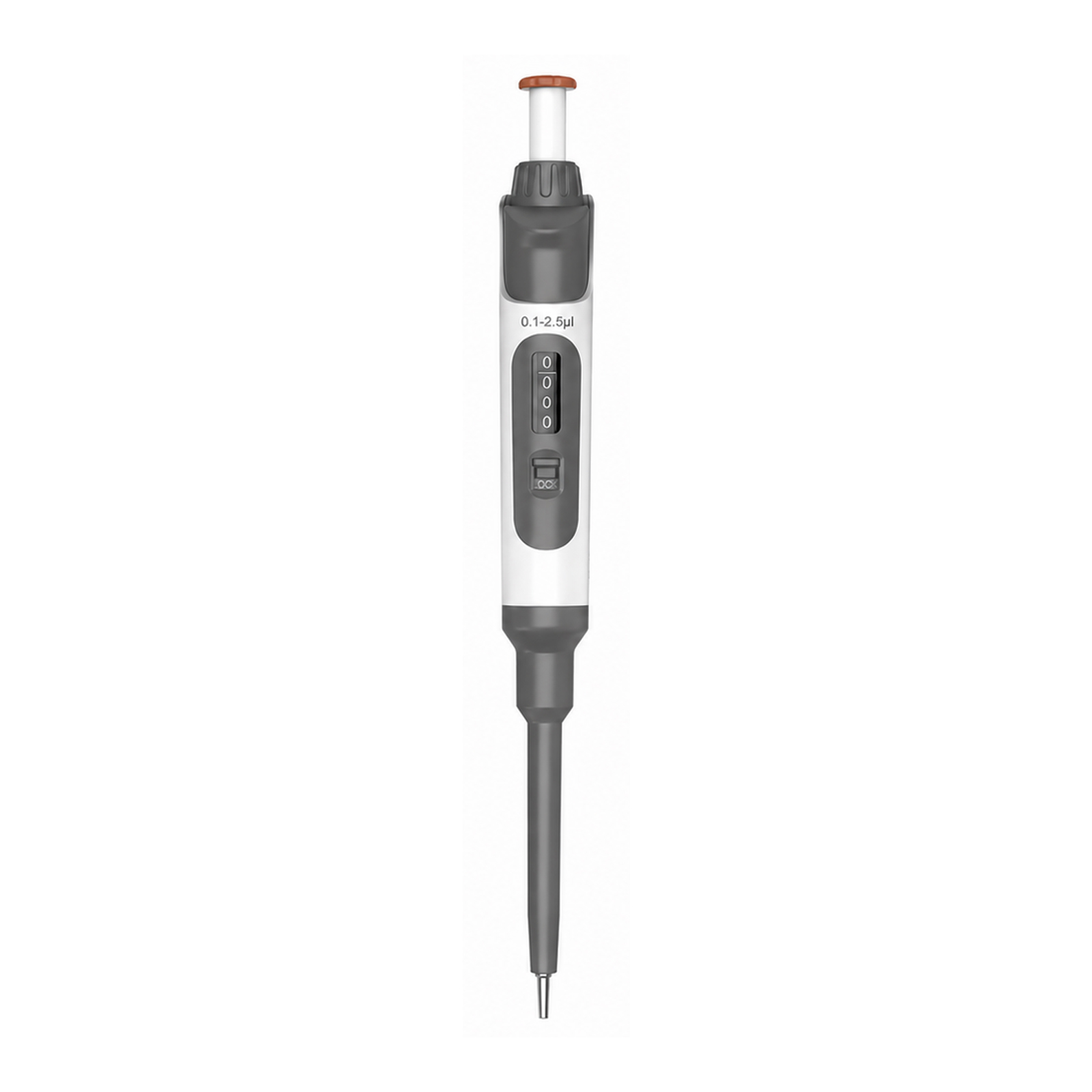
Most routine micropipettes are air-displacement instruments. They work well for water-like samples, but the air cushion between piston and liquid responds to temperature, vapor pressure, density, and viscosity.
Positive-displacement pipettes place the piston inside the disposable capillary or tip, reducing the air gap. This changes both liquid-handling behavior and consumable cost.
Quick Answer
Use an air-displacement pipette for routine aqueous liquids when the correct range, tip, and technique are available. Consider positive displacement for volatile, viscous, dense, foaming, hot or cold, hazardous, or very small samples that perform poorly with an air cushion. Validate the method; the mechanism alone does not guarantee accuracy.
How Air-Displacement Pipettes Work
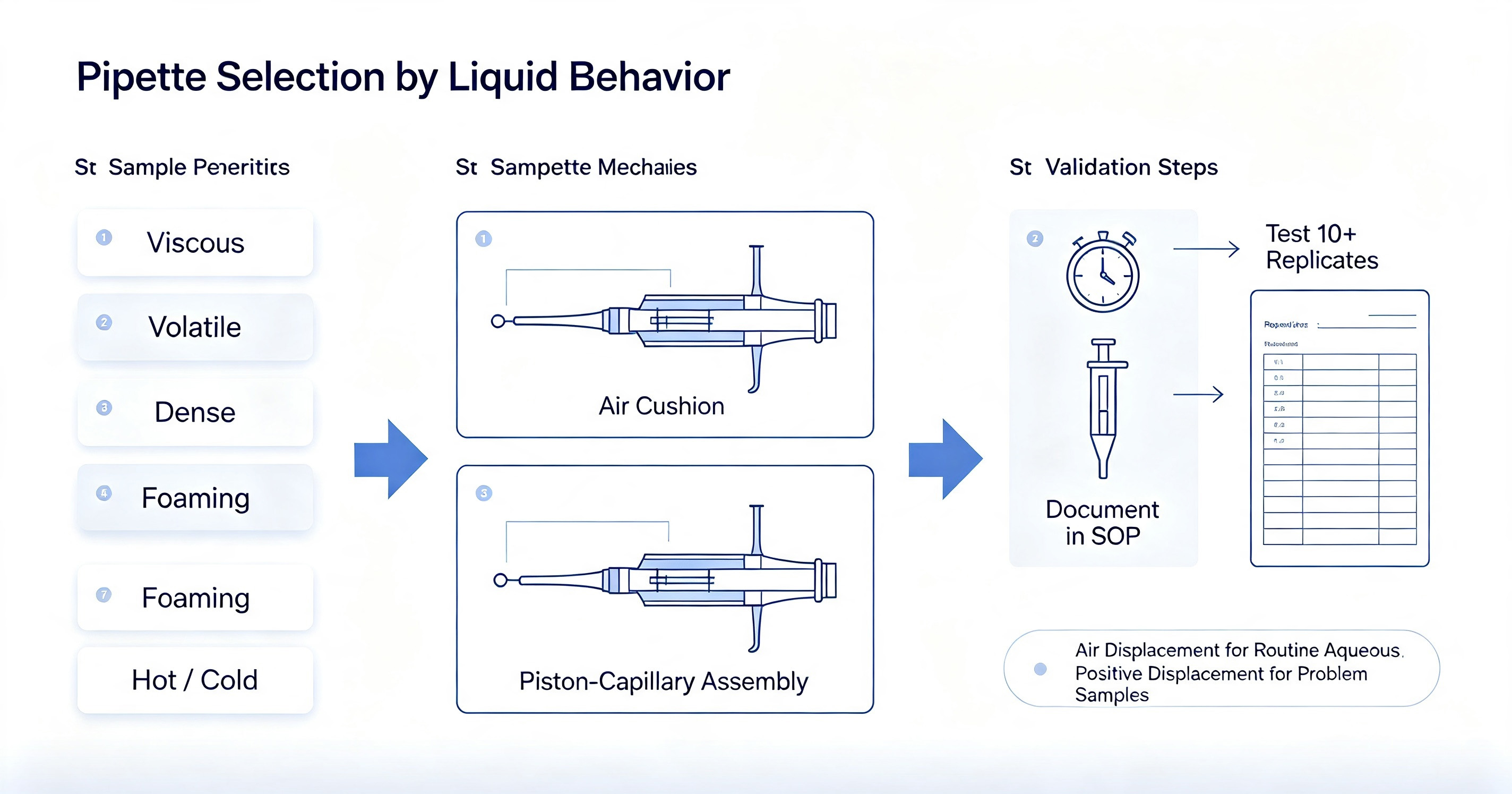
The piston moves inside the pipette body and changes the volume of an air cushion above the liquid in a disposable tip. Because the air is compressible, environmental and liquid properties can change aspiration and delivery.
How Positive-Displacement Pipettes Work
A disposable piston contacts the liquid inside a capillary or specialized tip. The smaller or absent air cushion reduces effects from vapor pressure, viscosity, and temperature. The piston-capillary assembly also helps isolate the instrument from aerosols and liquid.
Direct Comparison
| Factor | Air displacement | Positive displacement |
|---|---|---|
| Typical liquid | Aqueous, water-like | Viscous, volatile, dense, foaming, difficult |
| Disposable | Standard pipette tip | Piston-capillary or specialized tip |
| Air cushion | Yes | Minimal or absent |
| Consumable cost | Usually lower | Usually higher |
| Contamination barrier | Filter tip may help | Disposable piston separates sample from instrument |
| Technique | Forward/reverse and pre-wetting | Manufacturer-specific piston operation |
Liquids That May Need Positive Displacement
- Glycerol and other viscous solutions
- Alcohols and volatile solvents
- Dense or concentrated solutions
- Detergent-rich or foaming samples
- Hot or cold liquids that differ from room temperature
- Hazardous or contamination-sensitive samples where instrument isolation matters
Can Reverse Pipetting Solve the Problem?
Reverse pipetting with an air-displacement pipette can improve delivery of some viscous or foaming liquids by retaining excess liquid in the tip. It is not a universal substitute for positive displacement, especially when evaporation or temperature effects dominate.
Selection Checklist
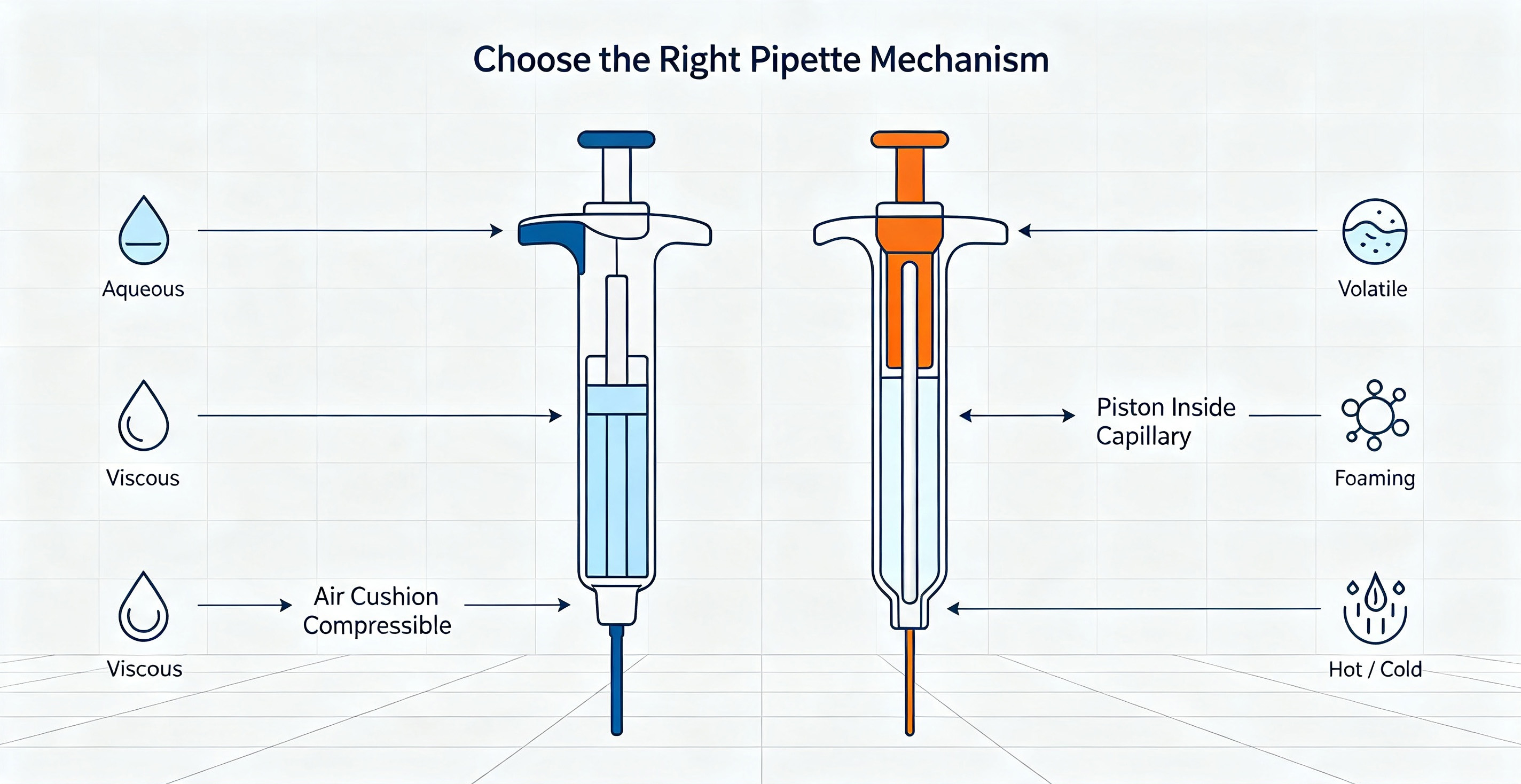
- Define liquid viscosity, volatility, density, and temperature
- Set the target volume and acceptable error
- Estimate sample value and disposable cost
- Assess aerosol and contamination risks
- Test at least ten replicates under actual conditions
- Document the selected mechanism and technique in the SOP
Using a LifeGloria Micropipette
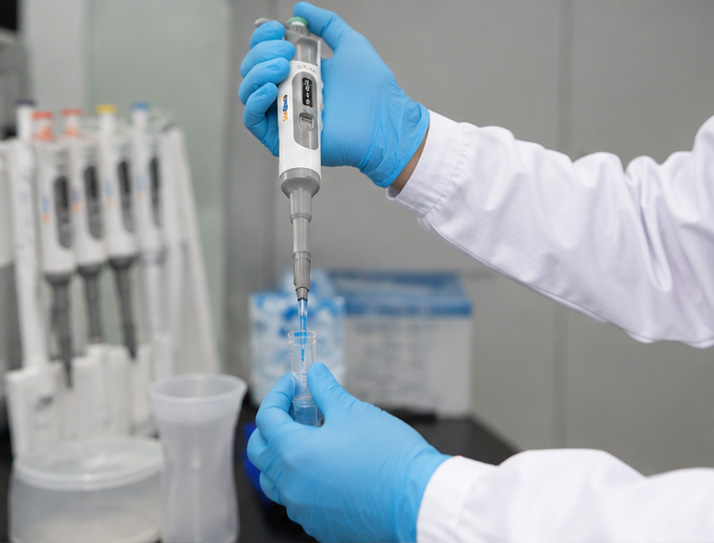
The LifeGloria adjustable micropipette is an air-displacement, single-channel instrument intended for routine precision liquid handling. For water-like samples it can be used with compatible tips across its specified range. Difficult liquids should be validated with pre-wetting, reverse pipetting, slower motion, or a dedicated positive-displacement instrument as appropriate.
Common Mistakes
- Assuming all liquids behave like water
- Using a large pipette near its minimum range
- Skipping pre-wetting when the method needs it
- Pipetting a volatile liquid too slowly
- Using standard tips where low-retention or special capillaries are required
- Changing technique without updating the validated SOP
Frequently Asked Questions
Is a micropipette air displacement?
Most common piston micropipettes are air displacement, but positive-displacement models are also available.
Which pipette is best for glycerol?
Positive displacement is often preferred for very viscous glycerol solutions; reverse pipetting may work for some validated air-displacement methods.
Which is best for ethanol?
A volatile-liquid method may benefit from positive displacement. If air displacement is used, pre-wetting, speed, and timing require careful control.
Are positive-displacement tips reusable?
Follow the manufacturer. Piston-capillary assemblies are commonly disposable and should not be reused unless explicitly designed and validated for reuse.
Final Thoughts
Air displacement is the economical standard for routine aqueous work; positive displacement is a problem-solving tool for liquids that disturb the air cushion. Select by liquid behavior and validation data, not habit.
Related LifeGloria Resources
Need help choosing equipment? Contact LifeGloria.
Important: Confirm specifications, tube and rotor ratings, chemical compatibility, local service, and your laboratory SOP before purchase or use.
