

Laboratory centrifuges separate sample components by applying centrifugal force, but the word centrifuge covers instruments with very different speed, capacity, rotor, temperature, and containment capabilities.
The correct choice begins with the sample and protocol, not the highest RPM on a product page. This guide compares the main centrifuge types and explains which specifications matter.
Quick Answer
Mini centrifuges handle quick spin-downs; microcentrifuges process small tubes at controlled speed; clinical centrifuges support routine blood and urine workflows; multipurpose benchtop centrifuges accept several rotors; high-speed centrifuges generate stronger RCF for molecular and cell applications; refrigerated models control sample temperature; ultracentrifuges serve specialized very-high-force separations.
How Does a Laboratory Centrifuge Work?
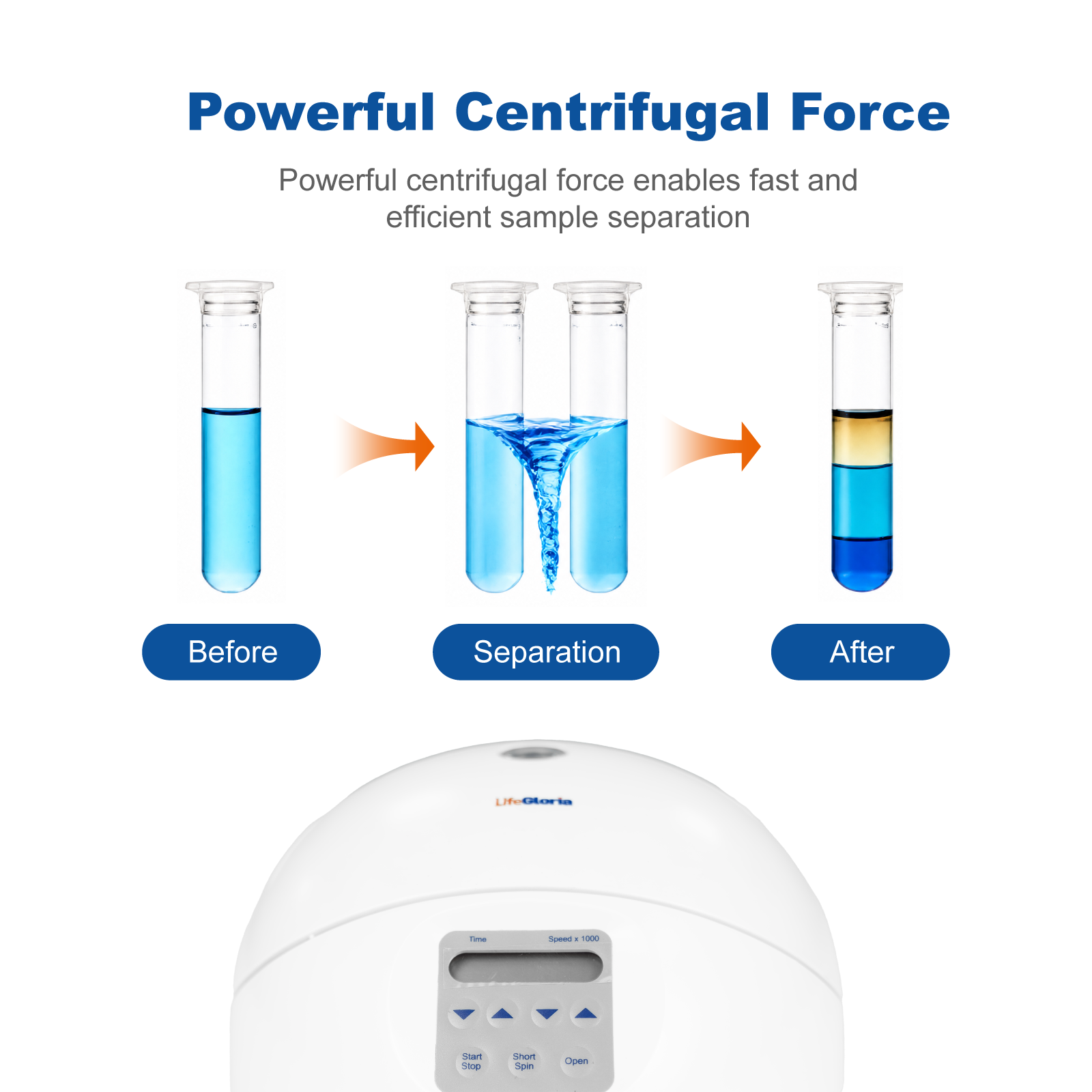
A rotor spins tubes around a central axis. Particles move according to the applied force, density difference, size, shape, and properties of the liquid. Heavier or denser components generally move outward faster than lighter components.
Protocols should specify relative centrifugal force (×g) where possible because RCF reflects both rotor speed and radius. The same RPM can produce different force in different rotors.
1. Mini Centrifuge
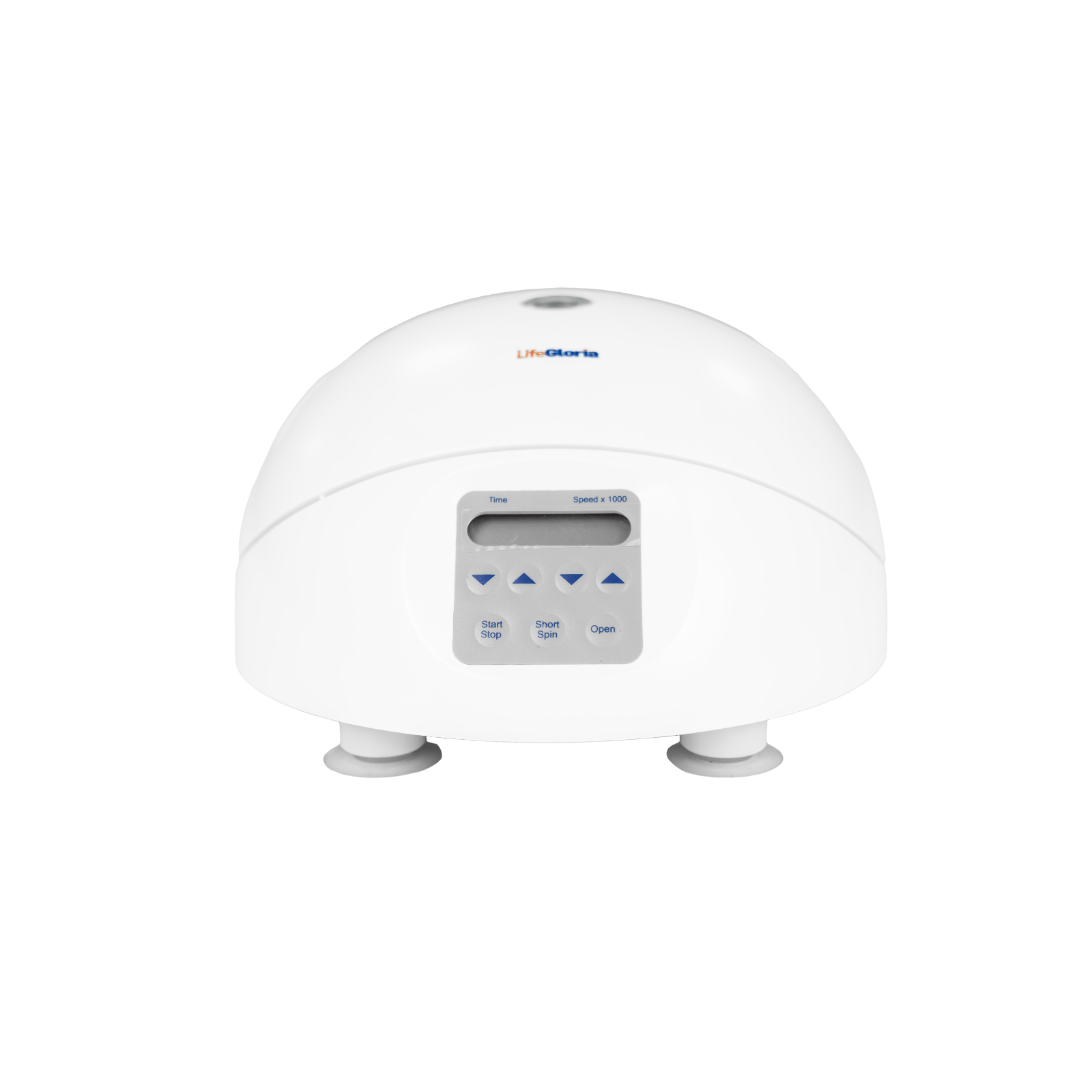
A mini centrifuge is compact and intended for quick spin-downs, bringing droplets from tube walls or caps to the bottom. Simple low-speed models may start when the lid closes, while digital high-speed mini or microcentrifuges offer adjustable time and force.
- PCR tube spin-down
- Quick collection after vortexing
- Small teaching or personal bench workflows
- Low-to-moderate throughput sample preparation
2. Microcentrifuge
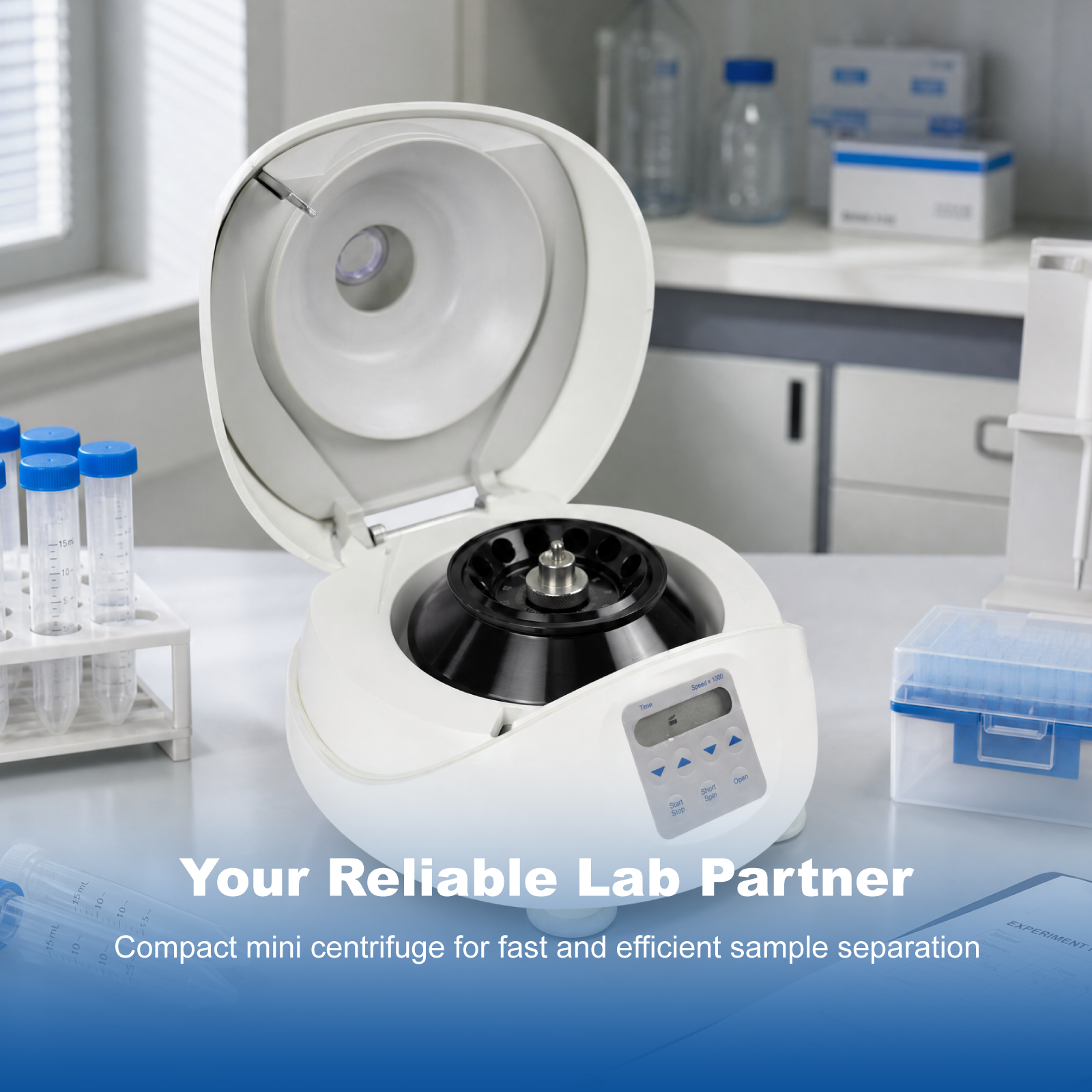
A microcentrifuge typically handles 0.2-2.0 mL tubes and provides controlled speed, time, and often RCF display. The LifeGloria 15,000 RPM digital microcentrifuge reaches 15,721 × g with a 12-place fixed-angle rotor.
- DNA and RNA extraction
- Protein and nucleic-acid precipitation
- Micro-volume cell separation
- PCR and molecular biology preparation
3. Clinical Centrifuge
Clinical centrifuges are configured for routine diagnostic sample types such as blood collection tubes and urine tubes. Capacity, adapters, easy cleaning, traceable programs, and safety are often more important than extreme top speed.
4. Multipurpose Benchtop Centrifuge
A multipurpose centrifuge accepts different rotor capacities and tube formats. It is useful when one laboratory processes microtubes, conical tubes, bottles, or plates at different times.
Confirm each rotor's independent maximum speed and RCF. The maximum stated for the instrument may apply only to a specific rotor.
5. High-Speed Centrifuge
High-speed centrifuges support stronger separations for molecular biology, cell pelleting, protein work, and research workflows. The LC-318N high-speed benchtop centrifuge reaches 18,500 RPM and 27,100 × g with the corresponding microtube rotor and supports multiple other rotor configurations.
- Nucleic-acid and protein processing
- Cell pelleting
- Serum or plasma preparation when the validated method permits
- Research sample fractionation
6. Refrigerated Centrifuge
Refrigeration controls chamber temperature during runs that generate heat or involve temperature-sensitive samples. It does not guarantee that the sample instantly reaches the set temperature. Pre-cooling, rotor mass, run time, and load all affect actual sample conditions.
7. Ultracentrifuge
Ultracentrifuges generate extremely high forces for specialized separations such as viruses, membranes, organelles, lipoproteins, and macromolecules. They require dedicated rotors, tubes, training, maintenance, and facility planning and should not be grouped with routine benchtop centrifuges.
Centrifuge Type Comparison
| Type | Typical sample scale | Main strength | Common application |
|---|---|---|---|
| Mini | PCR strips and microtubes | Fast spin-down | Droplet collection |
| Microcentrifuge | 0.2-2.0 mL tubes | Controlled high-force small-volume work | DNA/RNA and protein prep |
| Clinical | Blood and urine tubes | Routine tube handling | Diagnostics |
| Multipurpose | Multiple tube and bottle formats | Rotor flexibility | Shared core laboratory |
| High-speed | Microtubes to larger rotors | Higher RCF | Research separation |
| Refrigerated | Application dependent | Temperature control | Sensitive samples |
| Ultracentrifuge | Specialized tubes | Very high force | Advanced fractionation |
How to Choose the Right Centrifuge
- Start with required RCF, not only RPM
- List tube sizes, working volumes, and samples per run
- Choose fixed-angle or swing-bucket behavior for the method
- Check temperature-control needs
- Confirm rotor, adapter, and tube ratings
- Evaluate lid interlock, imbalance detection, and overspeed protection
- Plan cleaning, inspection, service, and operator training
Frequently Asked Questions
What is the most common laboratory centrifuge?
Microcentrifuges and general benchtop centrifuges are common in research labs, while clinical labs often use tube-oriented clinical centrifuges.
Is higher RPM always better?
No. The required RCF, sample type, rotor, capacity, temperature, and tube rating determine the correct instrument.
What is the difference between a refrigerated and non-refrigerated centrifuge?
A refrigerated model actively controls chamber temperature. A non-refrigerated model may experience temperature rise during operation.
Can one centrifuge use every rotor?
No. Use only rotors and accessories approved for the exact model, and follow each rotor's speed and load limits.
Final Thoughts
Centrifuge categories describe different jobs, not a simple performance ranking. Define the protocol force, tube format, batch size, rotor behavior, temperature, and safety needs first; then select the smallest platform that meets those requirements with approved accessories.
Related LifeGloria Resources
Need help choosing laboratory equipment? Contact LifeGloria.
Important: Follow the instrument manual, laboratory SOP, tube and rotor ratings, and local safety requirements.
