

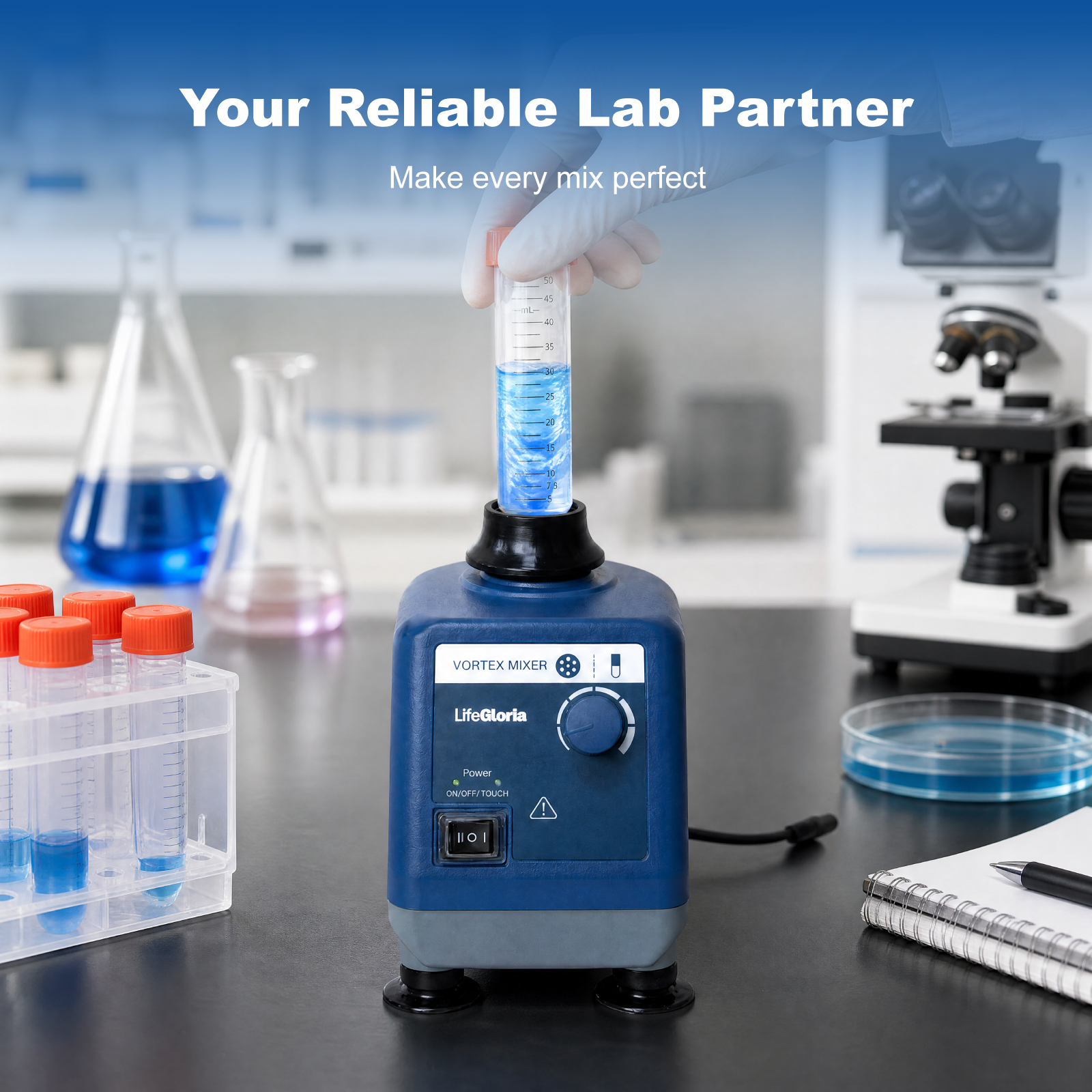
The motor speed is only one part of a vortex mixer purchase. The attachment determines which vessel can be held, how many samples can be processed, and whether the motion reaches the complete liquid volume without spilling or foaming.
This guide helps laboratories choose between a standard single-tube head, multi-tube accessories, and plate-compatible platforms while keeping the workflow safe and repeatable.
Quick Answer
Use a standard cup head and touch mode for quick single-tube mixing. Choose a compatible multi-tube or plate attachment with continuous operation for batches. Confirm vessel dimensions, load, orbit, speed range, attachment limit, and mixing endpoint before purchase.
Match the mixer and attachment to your vessel list
Send LifeGloria the tube or plate format, dimensions, number of samples, liquid volume, viscosity, desired operating mode, voltage, and destination. We can recommend a practical mixer configuration and quotation.
Attachment Selection by Workflow
| Workflow | Suitable setup | Main check |
|---|---|---|
| One microtube or test tube | Cup head with touch operation | Tube contact, hand pressure, mixing time |
| Repeated single tubes | Cup head with touch or short continuous runs | Operator ergonomics and heat buildup |
| Multiple tubes | Approved multi-tube attachment | Tube diameter, count, balance, speed limit |
| Microplate or small vessel | Compatible platform attachment | Plate retention, orbit, load, spill risk |
Touch Mode for Fast Single-Tube Mixing
Touch mode starts mixing when the vessel presses the cup head. It is efficient for quick resuspension and reagent mixing because the operator controls the contact time. The tube should be held securely and positioned so that the vortex develops without the cap leaking.
- Begin at a lower speed
- Keep the cap completely closed
- Use a consistent tube angle and contact pressure
- Stop if the vessel becomes unstable
- Avoid excessive mixing of shear-sensitive samples
Continuous Mode for Longer or Batch Work
Continuous operation is useful when the attachment holds the vessel and the method requires a defined mixing interval. It reduces repetitive hand contact, but the load must remain secure and within the attachment rating.
- Confirm maximum attachment speed
- Distribute multiple vessels evenly
- Use a timer or validated endpoint
- Monitor temperature-sensitive samples
- Inspect the platform and fasteners before each run
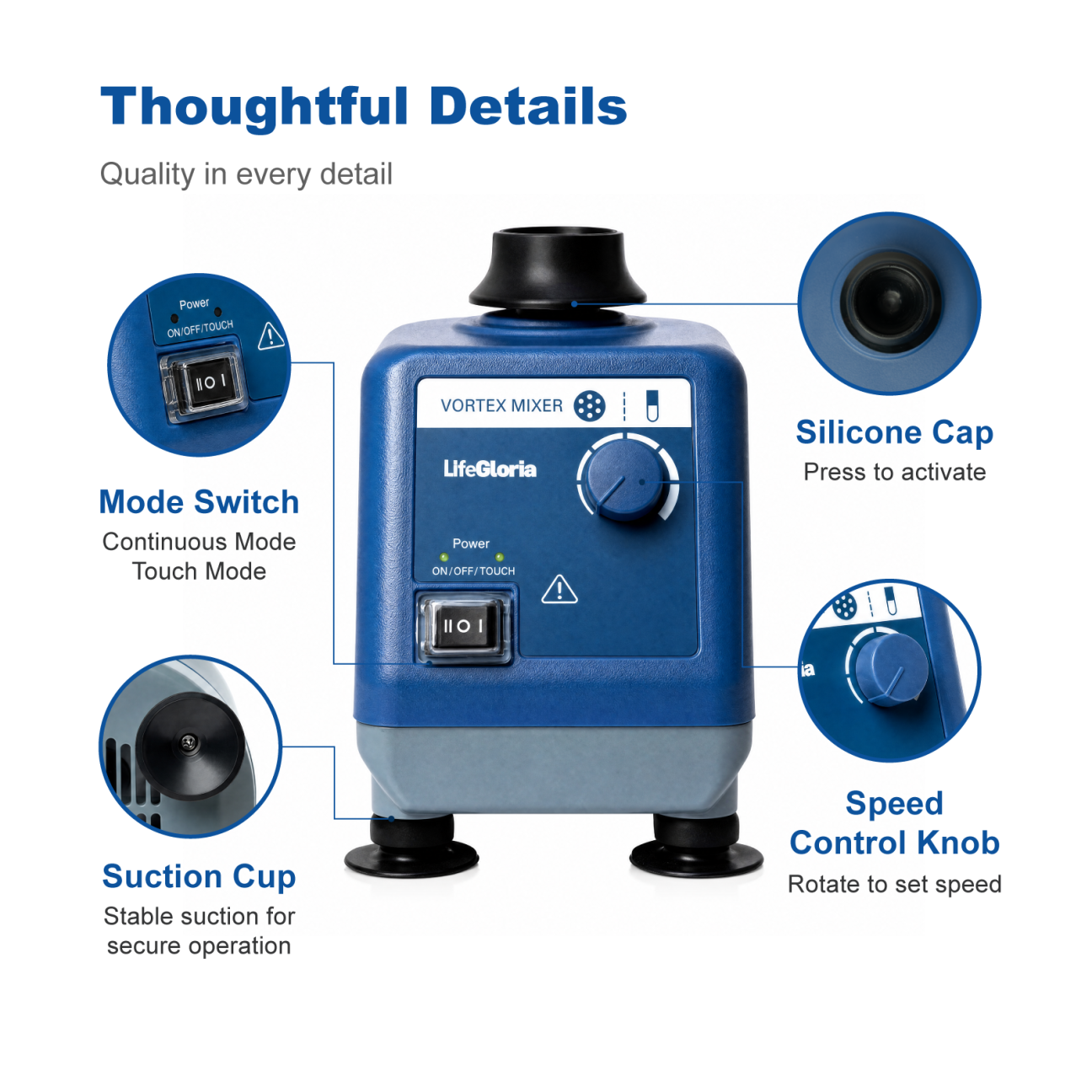
LifeGloria Vortex Mixer Reference Specifications
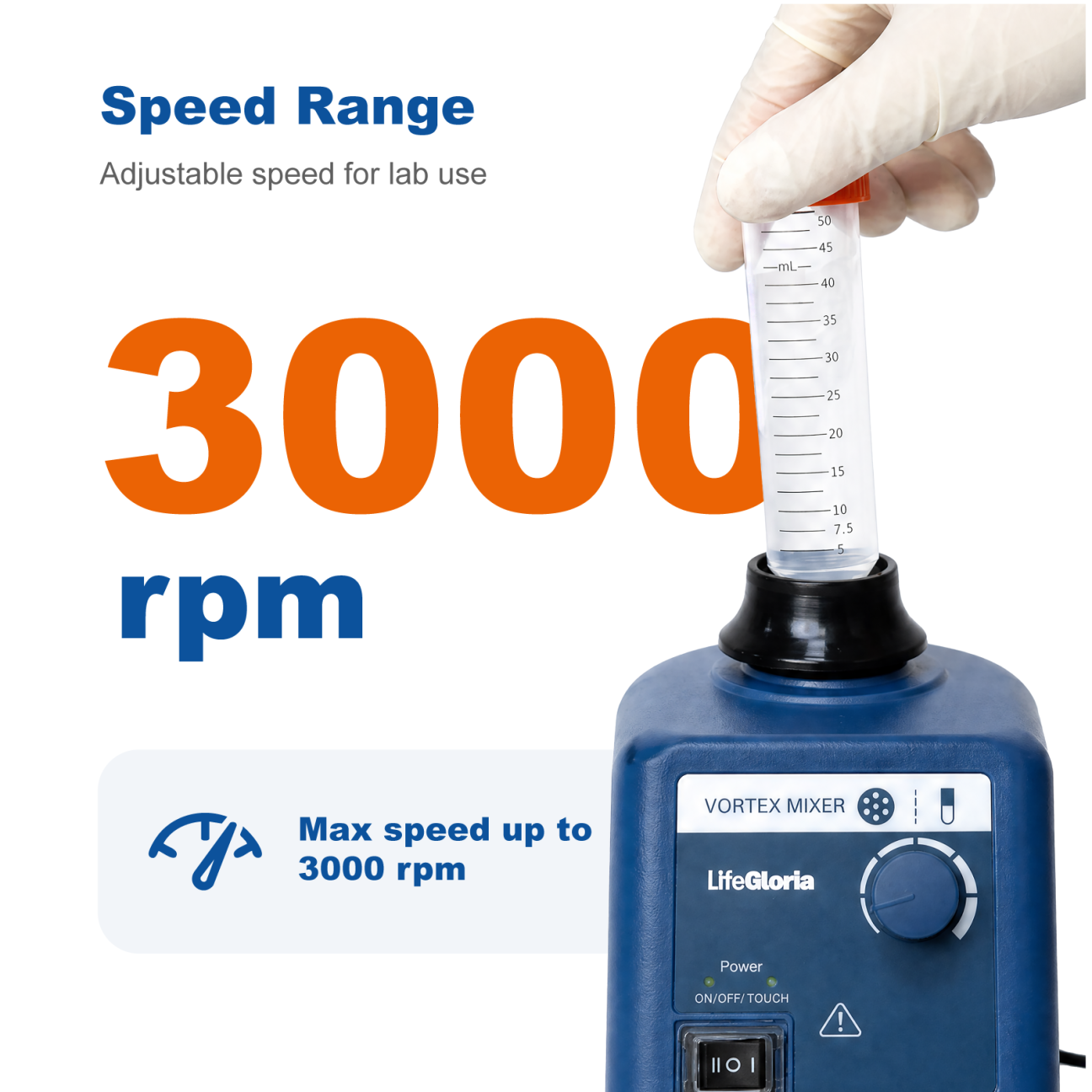
The LifeGloria vortex mixer provides adjustable operation from 0 to 3000 rpm, a 6 mm orbit, and touch and continuous modes. These specifications support routine tube mixing, but the final usable speed depends on the installed attachment, vessel, load, and sample behavior.
- Wide-voltage configuration for international purchasing
- Compact benchtop design
- Touch mode for responsive single-tube work
- Continuous mode for supported accessories
- Attachment confirmation before ordering
Prevent Foaming, Aerosols, and Sample Loss
More speed is not always better. High vortex intensity may create foam, aerosols, heat, cap wetting, or damage to sensitive material. Define the required endpoint, then use the lowest speed and shortest duration that produces adequate mixing.
- Check cap integrity
- Leave suitable headspace
- Reduce speed for foaming liquids
- Use containment controls for hazardous samples
- Clean the head or platform after a spill
Procurement Checklist
- Tube, plate, bottle, or vessel dimensions
- Samples per batch
- Liquid volume and viscosity
- Touch or continuous operation
- Required speed and orbit
- Attachment type and maximum load
- Voltage, plug, bench space, and duty cycle
- Quantity, destination, warranty, and delivery requirement
Frequently Asked Questions
Can a standard vortex mixer hold a microplate?
Only with a compatible plate attachment designed for the mixer and within the specified load and speed limits.
Is 3000 rpm necessary for every sample?
No. Select speed according to the vessel and mixing endpoint. Many samples require a lower setting.
Should I use touch or continuous mode?
Use touch mode for quick individual tubes and continuous mode for supported longer or batch mixing.
What information is needed for an attachment quotation?
Provide vessel type, dimensions, count, volume, sample behavior, operating mode, voltage, quantity, and destination.
Final Recommendation
Choose the attachment before deciding that a mixer is suitable. LifeGloria can quote the vortex mixer and available vessel-handling configuration when you provide the complete sample list.
Recommended LifeGloria Products
Confirm the final model, selected SKU, compatibility, accessories, certificates, voltage, packaging, freight, storage conditions, local regulations, and application requirements before purchase.
