

When selecting a laboratory centrifuge, you will often see two specifications: RPM and RCF.
Both describe centrifuge performance, but they measure different things.
Understanding the difference helps laboratory professionals select the correct equipment and reproduce experimental conditions more consistently.

1. What Does RPM Mean?
RPM stands for revolutions per minute.
It measures how many times the centrifuge rotor completes a full rotation in one minute.
A higher RPM generally means faster rotor rotation. However, it does not directly tell you how much centrifugal force reaches the sample.
This is why RPM alone is not enough when comparing different centrifuge models.
2. What Is RCF in Centrifugation?
RCF stands for relative centrifugal force.
It describes the acceleration experienced by a sample relative to standard gravitational acceleration.
RCF is usually expressed as × g.
For laboratory applications, RCF is often more useful than RPM because it describes the force applied to the sample.
3. Why Does Rotor Radius Matter?
Rotor radius is an important factor in centrifugal force.
Two centrifuges operating at the same RPM may produce different RCF values if their rotor radii differ.
A larger effective radius can generate greater centrifugal force at the same rotational speed.
This means that you should always consider the rotor when comparing centrifuge specifications.
4. How to Compare Centrifuge Specifications
When evaluating centrifuge models, review the following information:
-
Maximum RPM
-
Maximum RCF
-
Rotor type
-
Rotor radius
-
Tube capacity
-
Compatible adapters
Also confirm whether the listed specifications apply to the standard rotor or an optional configuration.
5. Selecting the Right Centrifuge for Your Workflow
A high-speed benchtop centrifuge may be suitable for applications requiring higher centrifugal force.
A mini centrifuge is often more convenient for quick processing of small microtubes.
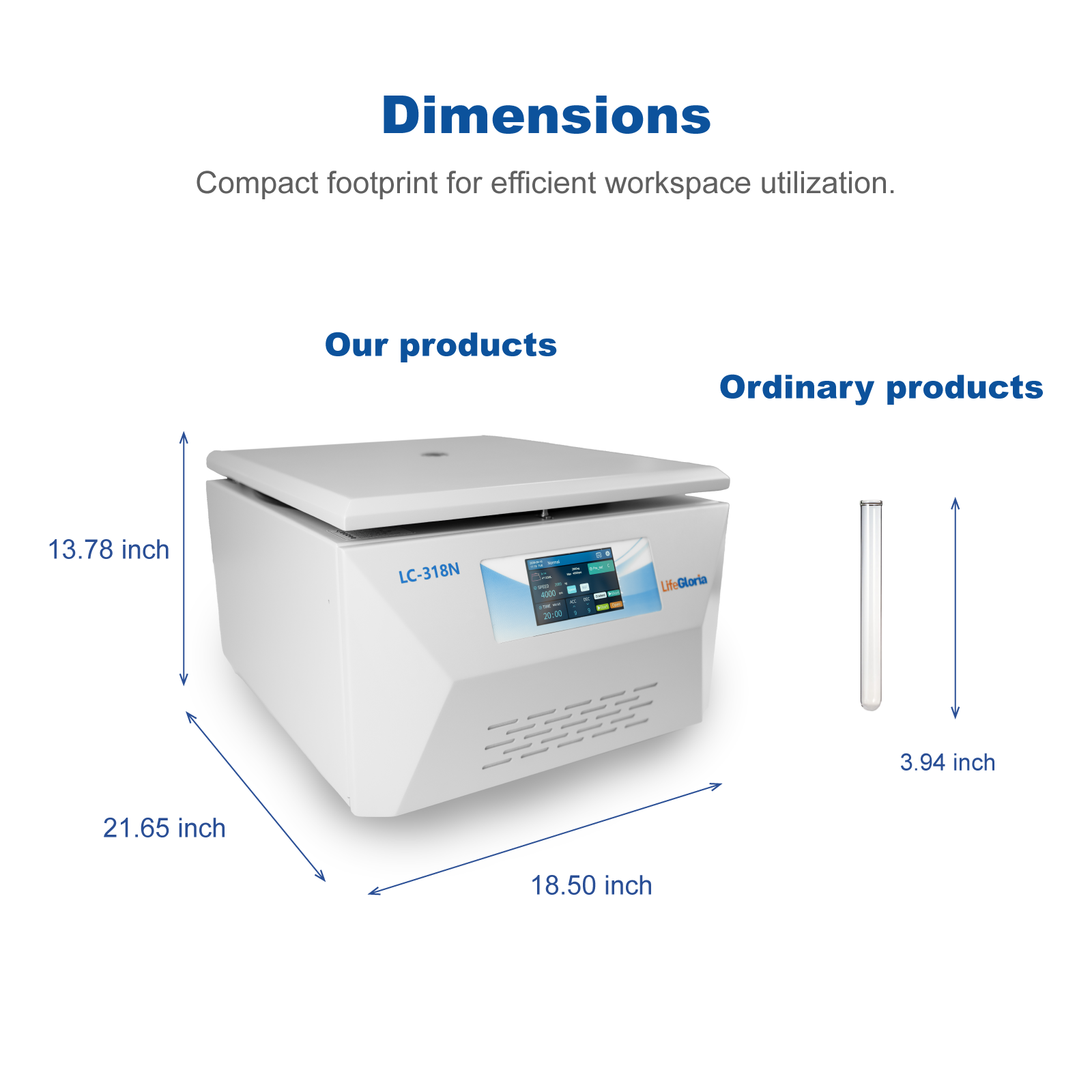
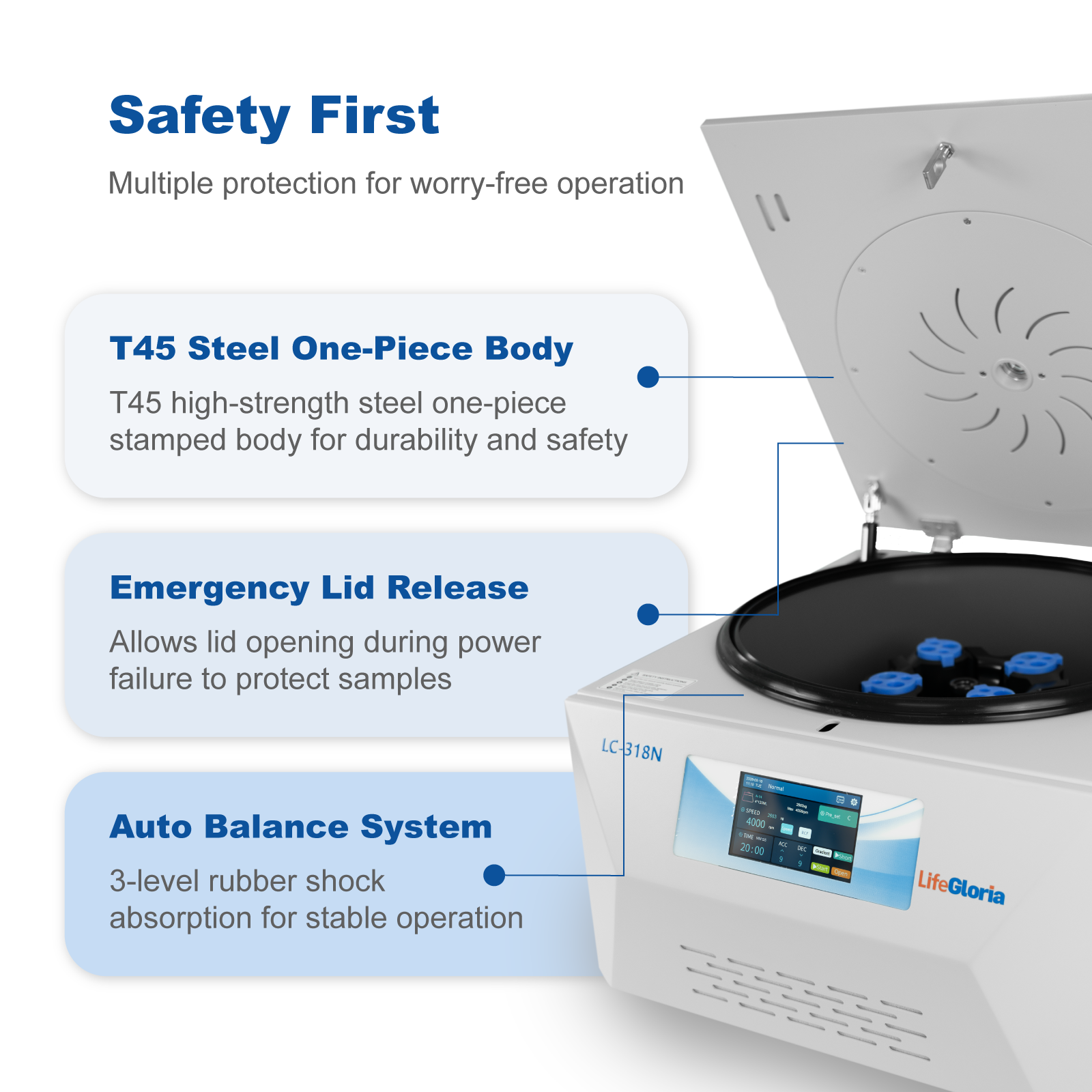
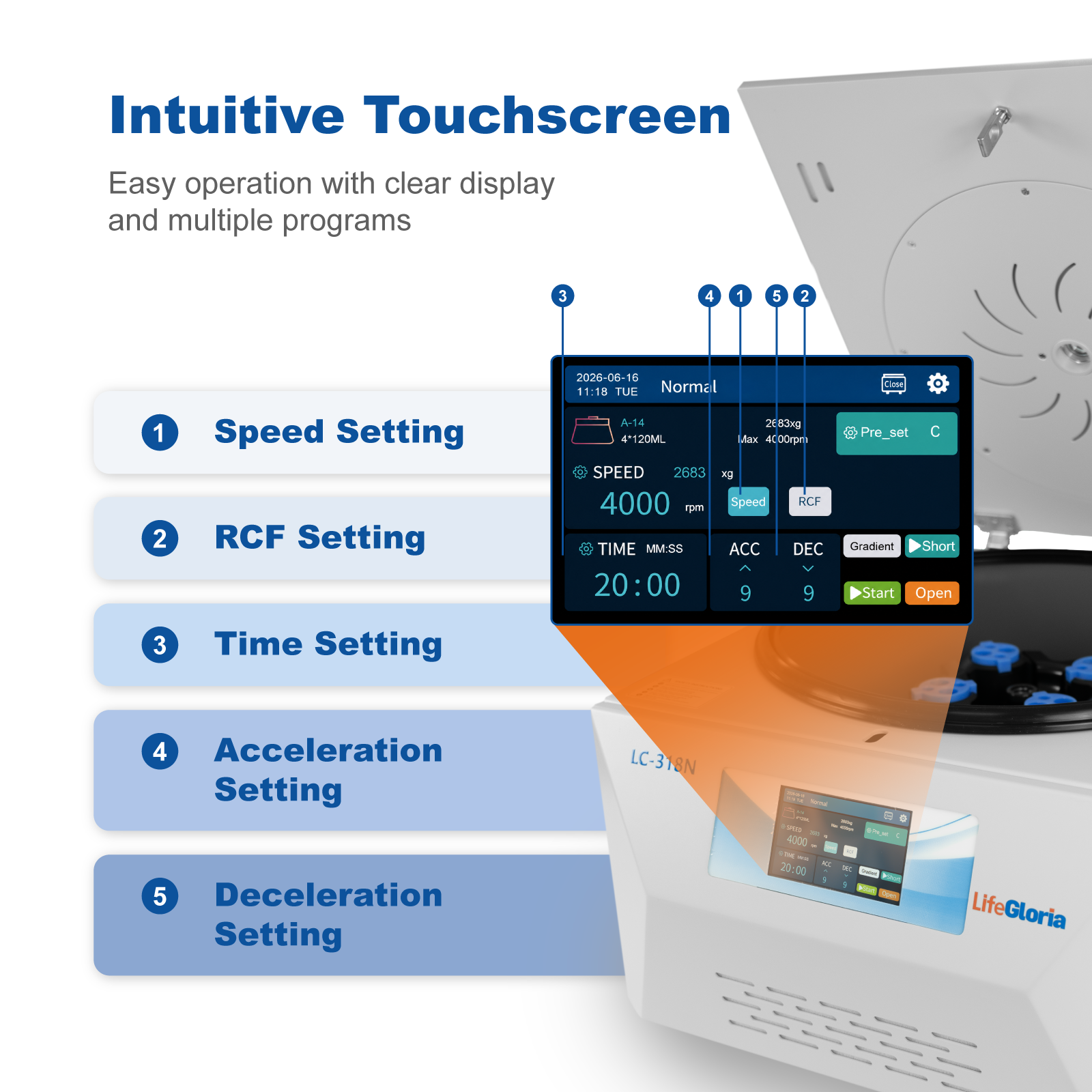
LifeGloria offers centrifuge options for different laboratory requirements. Its LC-318N model supports up to 18,500 RPM and 27,100 × g.
Always check the exact rotor specifications before selecting a centrifuge.
Conclusion
RPM measures rotational speed, while RCF describes the relative force applied to a sample.
Both values are important. However, RCF and rotor compatibility should receive particular attention when reproducing laboratory protocols.
Need help selecting a centrifuge?
Contact LifeGloria for model specifications, rotor information, and quotations.
Email: contact@lifegloria.com
