

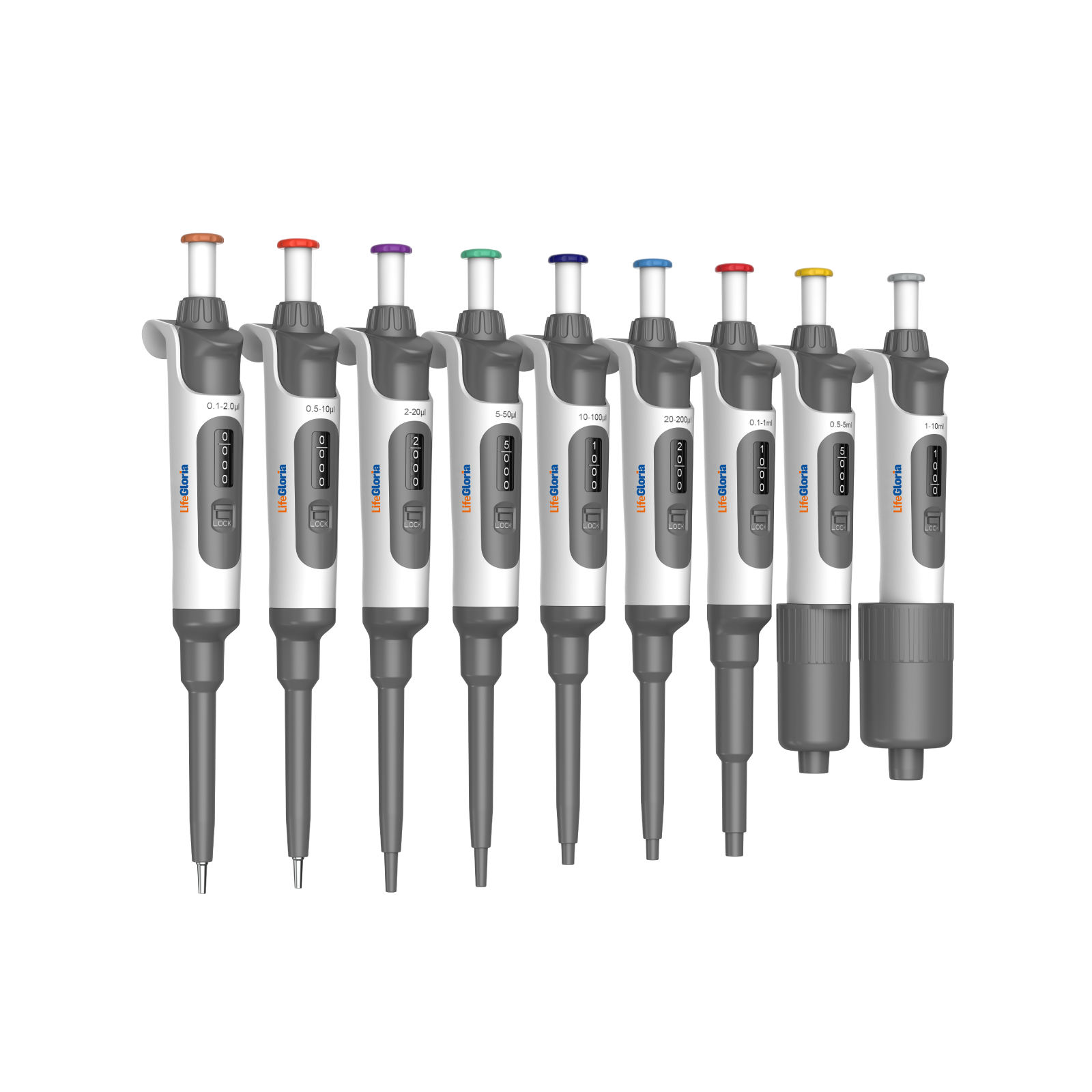
Micropipette size is a frequent search topic because laboratories often buy one broad range and later discover that routine transfers sit too close to its limits. A better set is designed from the protocol volumes upward.
This guide explains how to group working volumes, reduce range overlap, plan spare units, and include calibration and sterilization requirements in a purchase request.
Quick Answer
List the minimum, routine, and maximum volumes in every protocol, then choose pipettes that keep frequent transfers near the middle of a suitable range. Use narrower low-volume ranges for critical microliter work and broader ranges for routine preparation. Add a spare for high-use ranges.
Request a volume-range plan instead of guessing the set
Send LifeGloria your protocol volumes, sample types, users, daily transfers, sterilization policy, desired certificates, and order quantity. We can recommend a practical combination across the 0.1 µL to 10 mL portfolio.
Example Range Planning by Application
| Working need | Selection principle | Typical purchasing question |
|---|---|---|
| Sub-microliter work | Choose a dedicated low-volume range | Is the protocol stable below 1 µL? |
| Routine 2-20 µL work | Keep frequent volumes away from the lower limit | How many users prepare PCR reactions? |
| Hundreds of microliters | Choose a range that avoids repeated transfers | Are viscous or foaming liquids involved? |
| Milliliter transfer | Use a larger pipette or serological system | Is exact measurement or rapid dispensing more important? |
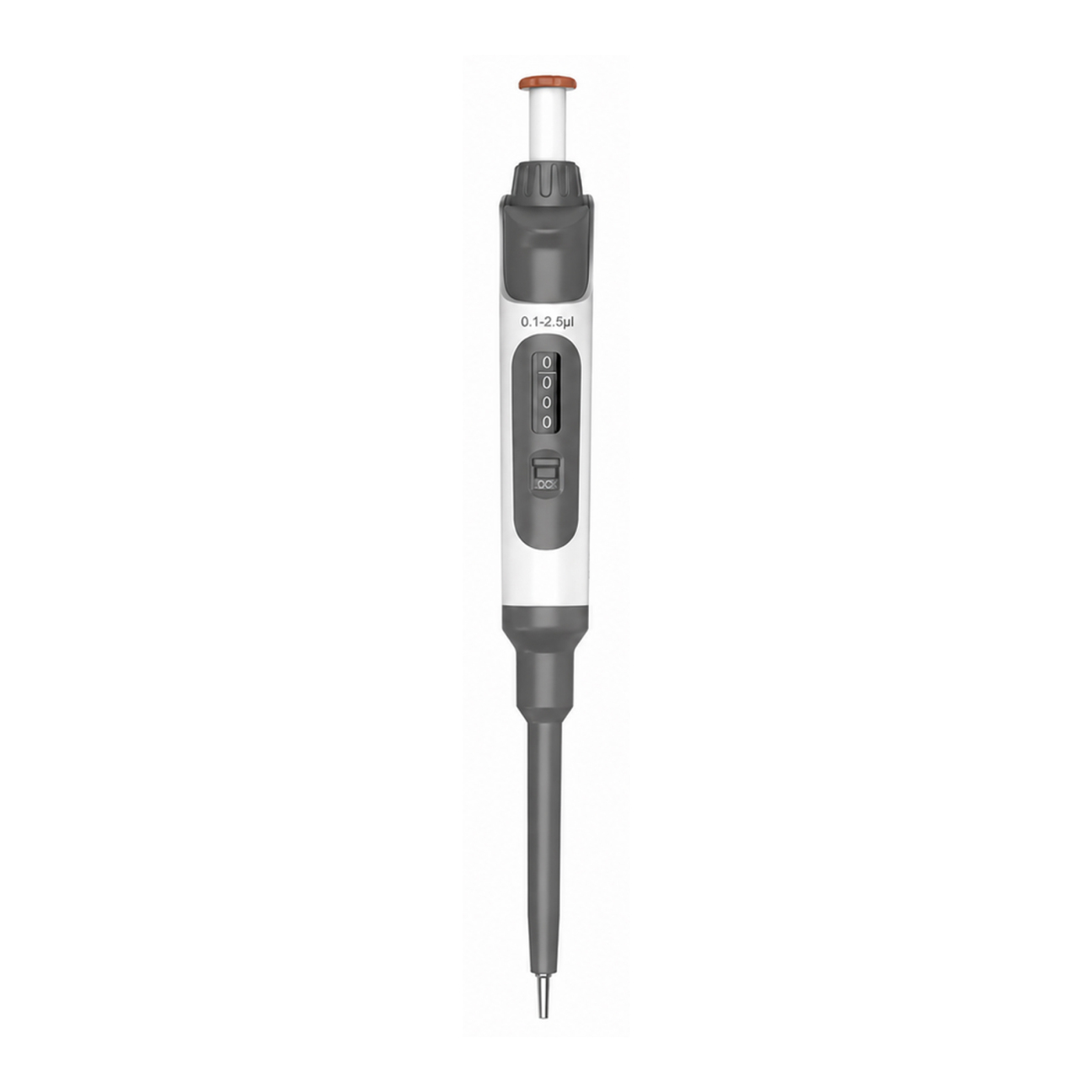
Map Volumes Before Selecting Models
Create a simple table of every transfer, its frequency, accuracy requirement, and liquid type. Group repeated volumes and identify critical steps. This exposes where a dedicated range adds value and where one instrument can cover several low-risk tasks.
- Record minimum, routine, and maximum volumes
- Mark critical quantitative steps
- Count transfers per day
- Identify viscous, volatile, foaming, or hazardous liquids
Avoid Living at the Extreme Ends of a Range
A pipette can display a volume near its lower limit without making that point ideal for frequent critical work. Operator technique, tip fit, and evaporation have a larger relative effect at very small volumes. Select a smaller range when accuracy and reproducibility matter.
- Prefer the smallest suitable range
- Do not exceed stated limits
- Use one consistent aspiration technique
- Check performance with the actual liquid when necessary
Plan Sterilization, Calibration, and Spares
LifeGloria fully autoclavable pipettes can be sterilized at 121°C for 20 minutes according to the product instructions. Calibration status, service access, identification labels, spare parts, and backup instruments should be included in the procurement plan.
- Define the autoclave cycle and cooling procedure
- Set calibration intervals by risk and policy
- Keep one spare for high-use ranges
- Record instrument IDs and service history
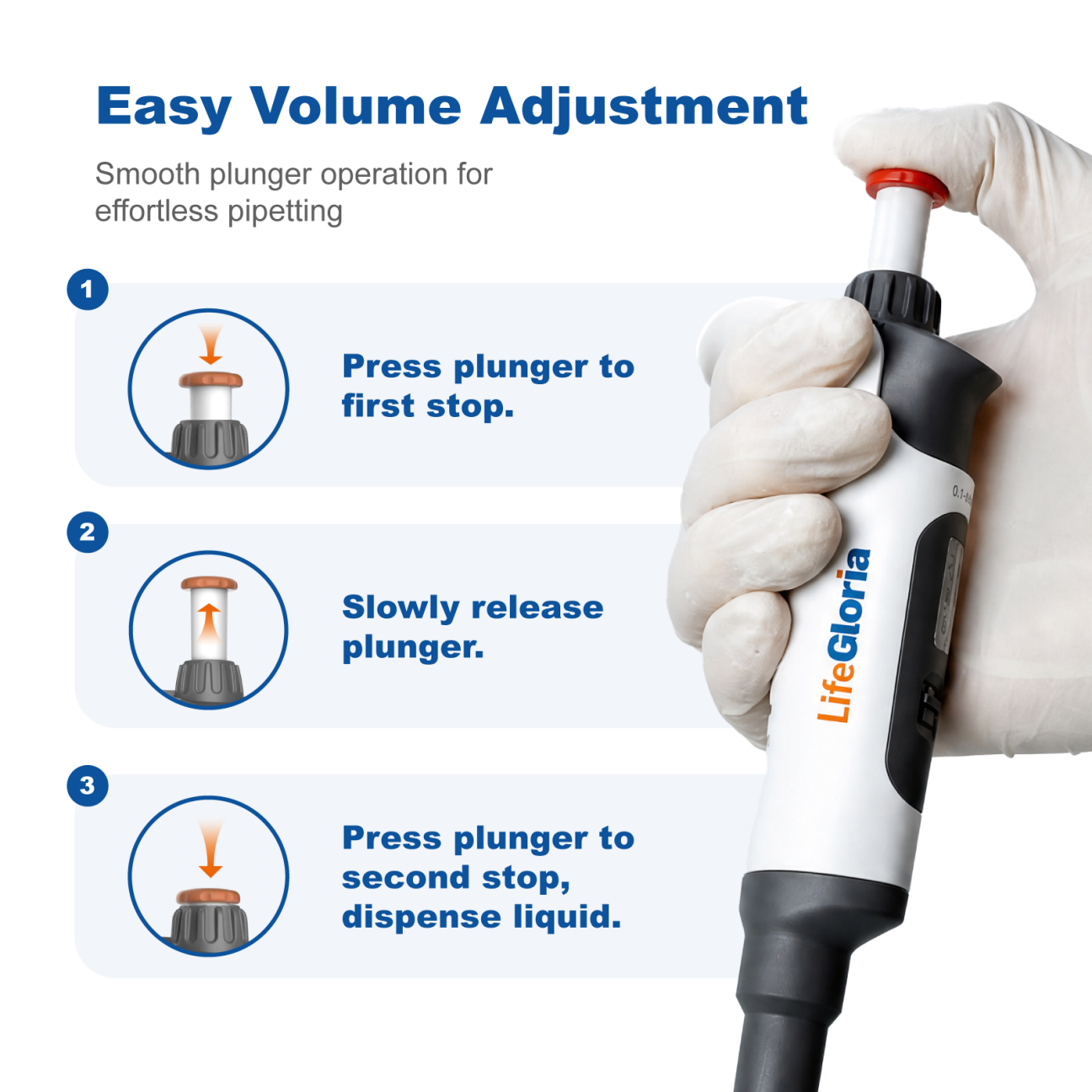
Match Tips Before Approving the Set
The selected volume range is useful only when a compatible tip seals, ejects, and dispenses consistently. Confirm universal or model-specific fit, filter requirements, sterile status, rack format, and recurring supply before the pipette order is finalized.
- Test representative tip samples
- Confirm usable tip volume
- Evaluate ejection force
- Quote recurring tip consumption with the instruments
Procurement Checklist
- All protocol volumes
- Critical accuracy points
- Sample and liquid types
- Users and daily workload
- Required pipette ranges and quantities
- Full-autoclave requirement
- Calibration documents and service plan
- Compatible tips, destination, and delivery target
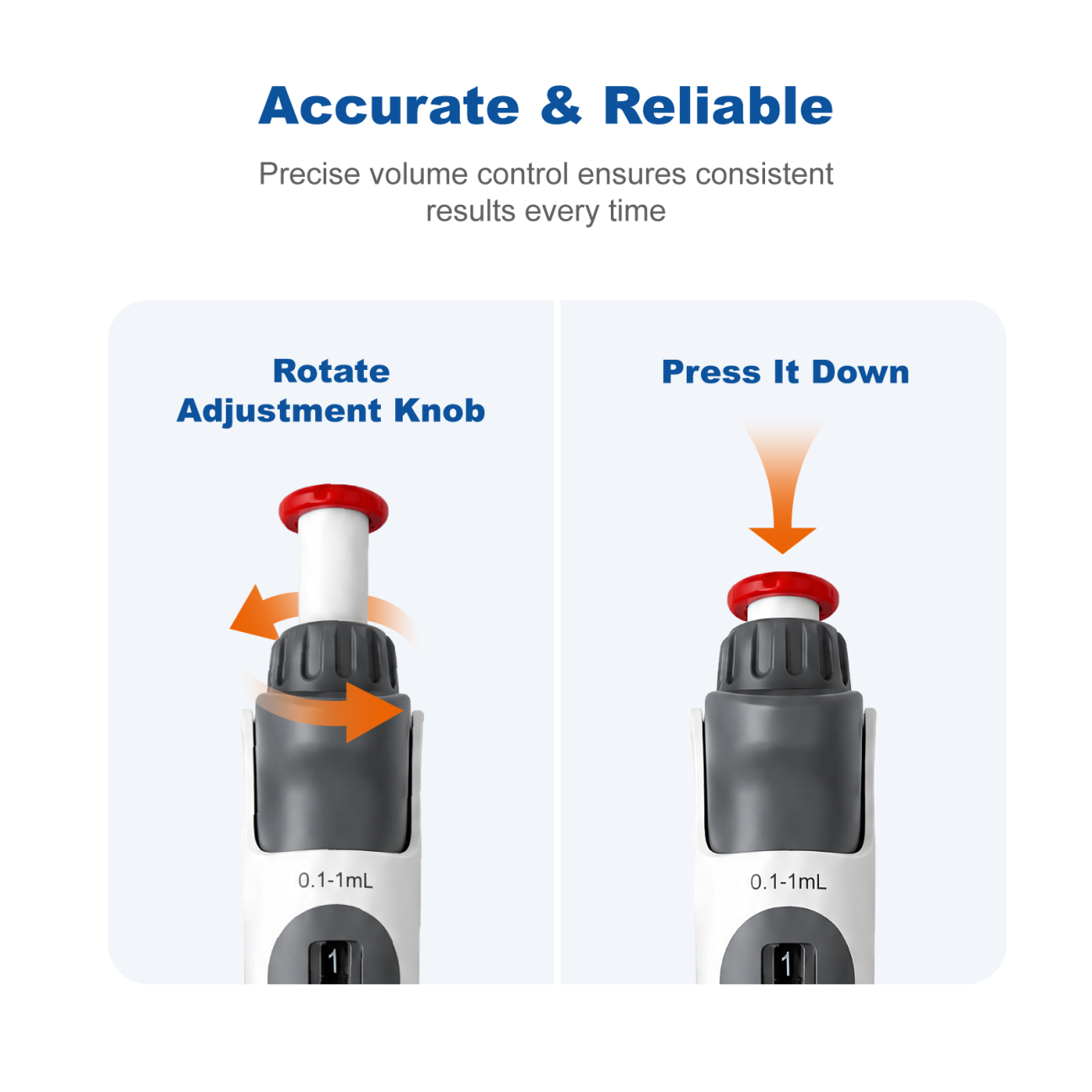
Frequently Asked Questions
Can one 10-1000 µL pipette replace several ranges?
A broad range may cover some routine transfers, but critical low-volume work is usually better served by a smaller suitable range.
How many micropipettes does a new laboratory need?
The answer depends on protocols, users, contamination zoning, throughput, and backup needs rather than a fixed number.
Should every range have a spare?
Prioritize spares for the ranges used most frequently or for steps that cannot wait for service.
What information should I send LifeGloria?
Send the volume map, sample types, number of users, daily workload, sterilization policy, certificates, quantity, destination, and deadline.
Final Recommendation
Choose pipette ranges from real protocol volumes and operating risk. LifeGloria can help build a right-sized set with compatible tips, calibration documentation, and a clear recurring-supply plan.
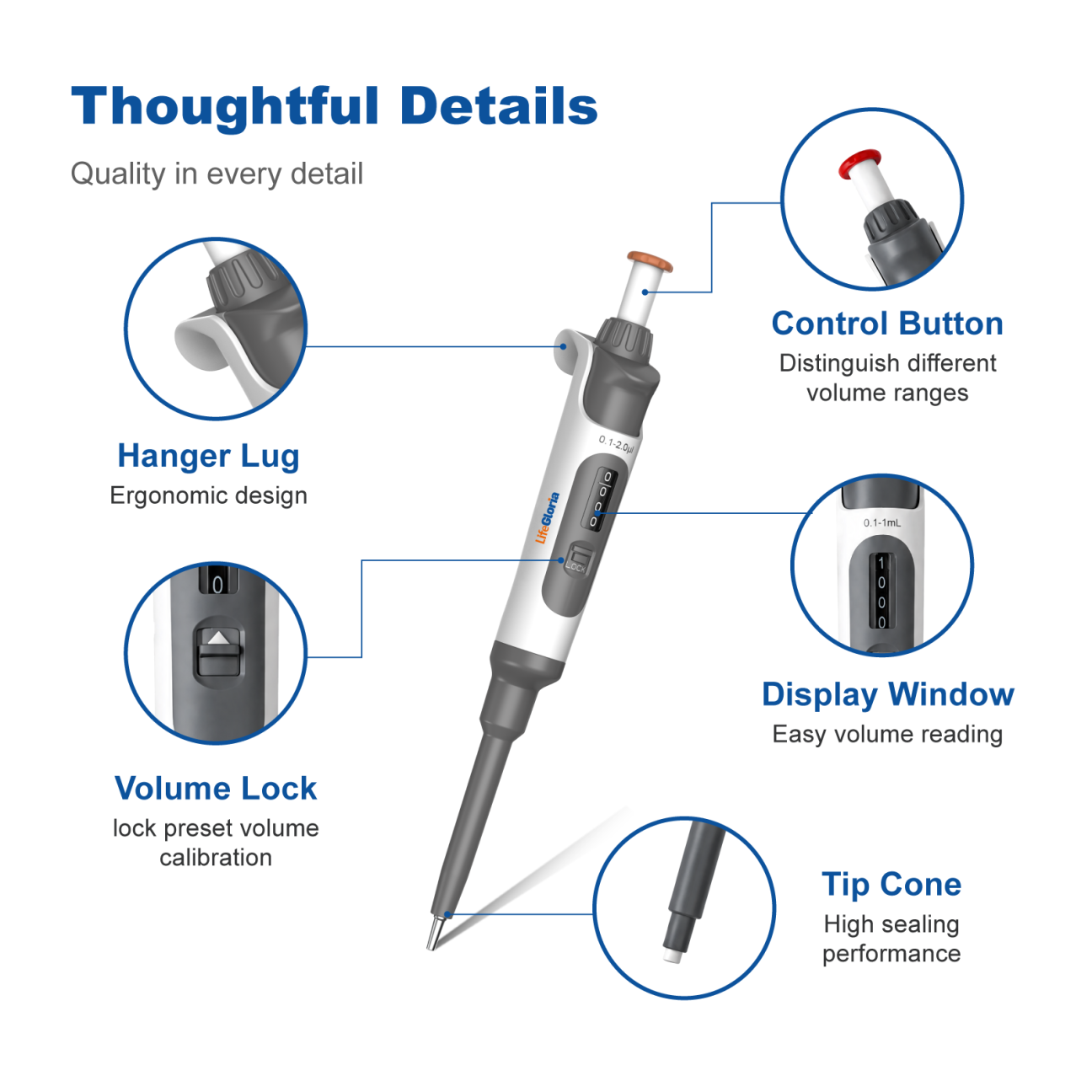
Recommended LifeGloria Products
Confirm the final model, selected SKU, compatibility, accessories, certificates, voltage, packaging, freight, storage conditions, local regulations, and application requirements before purchase.
