

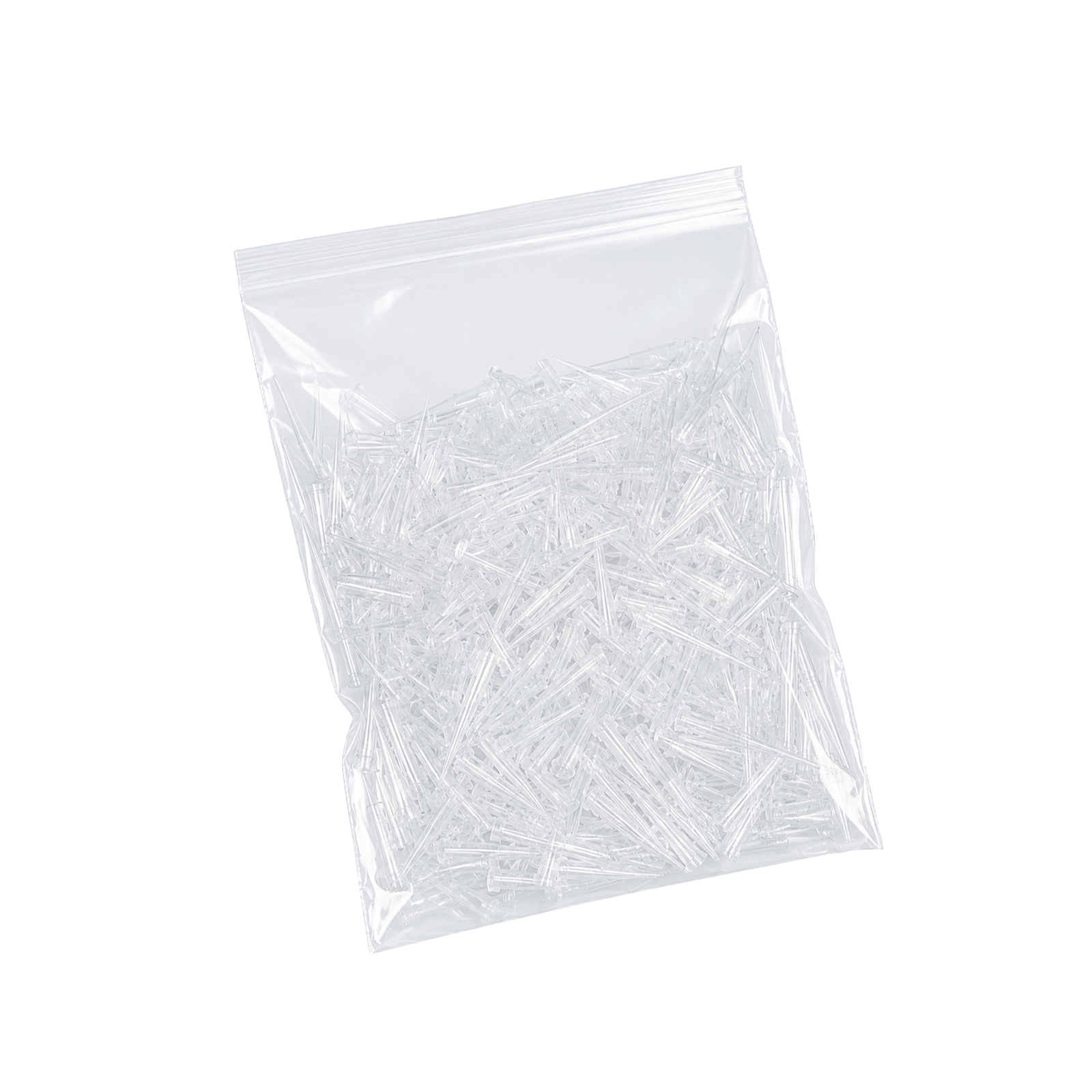
A high-quality micropipette can still deliver inconsistent results when the tip leaks, retains liquid, or does not match the volume range. Pipette tips are part of the measuring system, not just disposable plastic accessories.
This guide compares filtered and non-filtered tips, sterile and non-sterile formats, standard and low-retention surfaces, common sizes, and packaging options.
Quick Answer
Choose a tip that forms an airtight seal, covers the pipette's volume range, and matches the sample risk. Use filtered tips to reduce aerosol transfer into the pipette, sterile tips for contamination-controlled work, and low-retention tips when valuable or viscous liquids cling to standard polypropylene. Verify both fit and performance before routine use.
Why Pipette Tip Fit Matters
An imperfect seal changes the air cushion inside an air-displacement pipette. The result may be leakage, bubbles, incomplete aspiration, or variable delivery. A tip that feels attached is not necessarily sealed correctly.
- Use tips specified as compatible with the pipette model
- Check that the tip sits straight and does not wobble
- Look for droplets or falling liquid after aspiration
- Avoid excessive attachment force
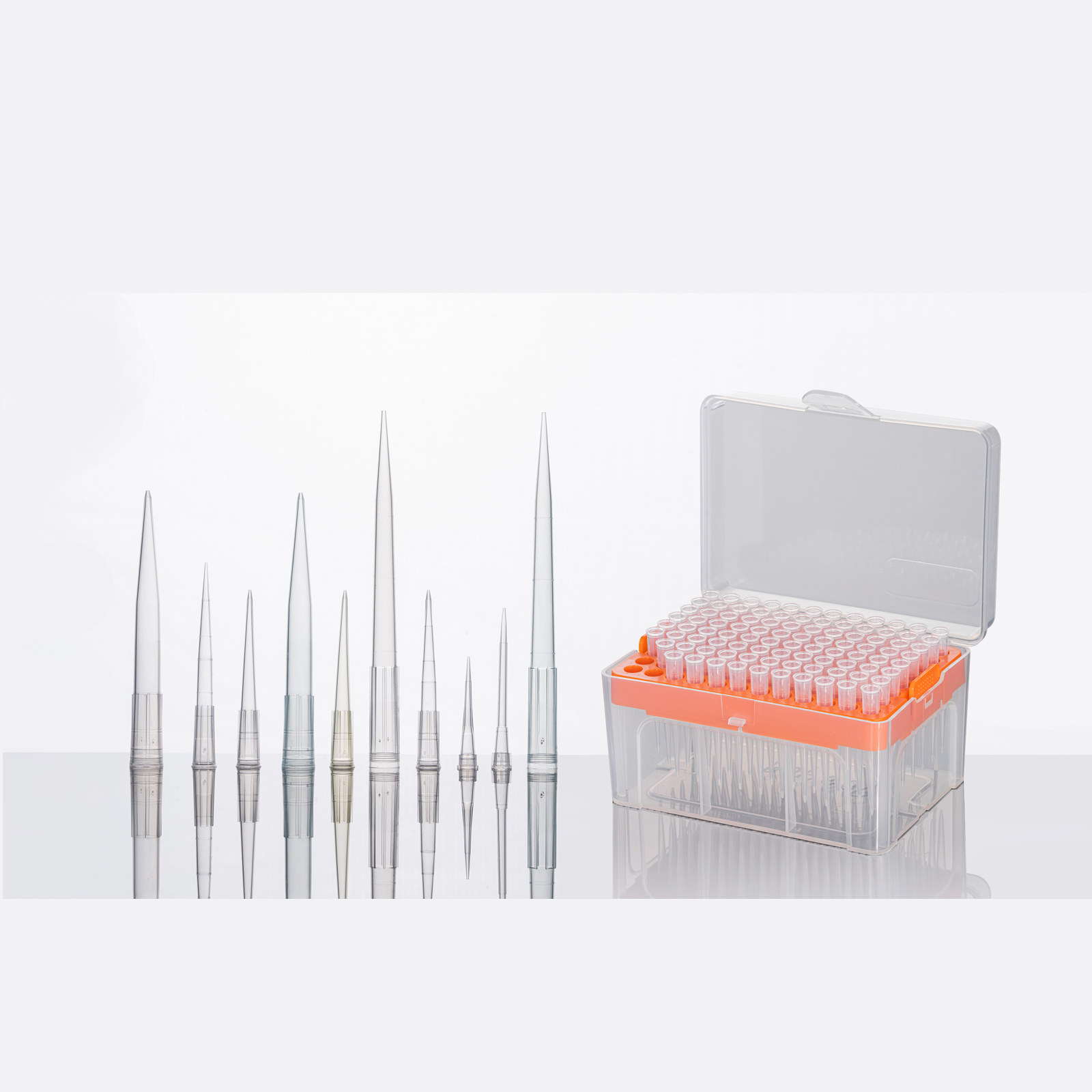
Common Pipette Tip Sizes
| Nominal tip size | Typical pipette range | Common use |
|---|---|---|
| 10 µL | Sub-microliter to 10 µL, model dependent | PCR primers, enzymes, very small samples |
| 200 µL | Approximately 2-200 µL, model dependent | Routine molecular biology and assays |
| 1000 µL | Approximately 100-1000 µL | Buffers, dilutions, sample preparation |
| 5 mL | Milliliter-range pipettes | Media, buffers, larger transfers |
| 10 mL | Large-volume manual pipettes | Bulk reagent and solution transfer |
Filtered vs Non-Filtered Pipette Tips
A filter tip contains a porous barrier between the liquid space and the pipette shaft. It helps limit aerosols and accidental splash from reaching the internal mechanism. It does not make poor aseptic technique safe and should not be treated as a universal biological containment device.
- Use filtered tips for PCR and nucleic-acid workflows
- Consider them for volatile, infectious, radioactive, or high-value samples according to your risk assessment
- Use non-filtered tips for lower-risk routine work when contamination control allows
- Never aspirate liquid into the filter
Sterile vs Non-Sterile Tips
Sterile tips are processed and packaged to a defined sterility claim. They are useful for cell culture, microbiology, clinical workflows, and other procedures where introduction of viable microorganisms must be controlled.
DNase-free, RNase-free, pyrogen-free, and sterile are different claims. Confirm the exact certificate or specification needed by your method instead of assuming one claim includes all others.
Standard vs Low-Retention Tips
Standard polypropylene can retain a visible or invisible film, especially with detergents, proteins, viscous liquids, and small volumes. Low-retention surfaces reduce liquid adhesion and may improve recovery and consistency.
Use low-retention tips when reagent loss is costly or when standard tips show droplets after dispensing. Validate them with the actual sample because surface treatments and liquid behavior vary.
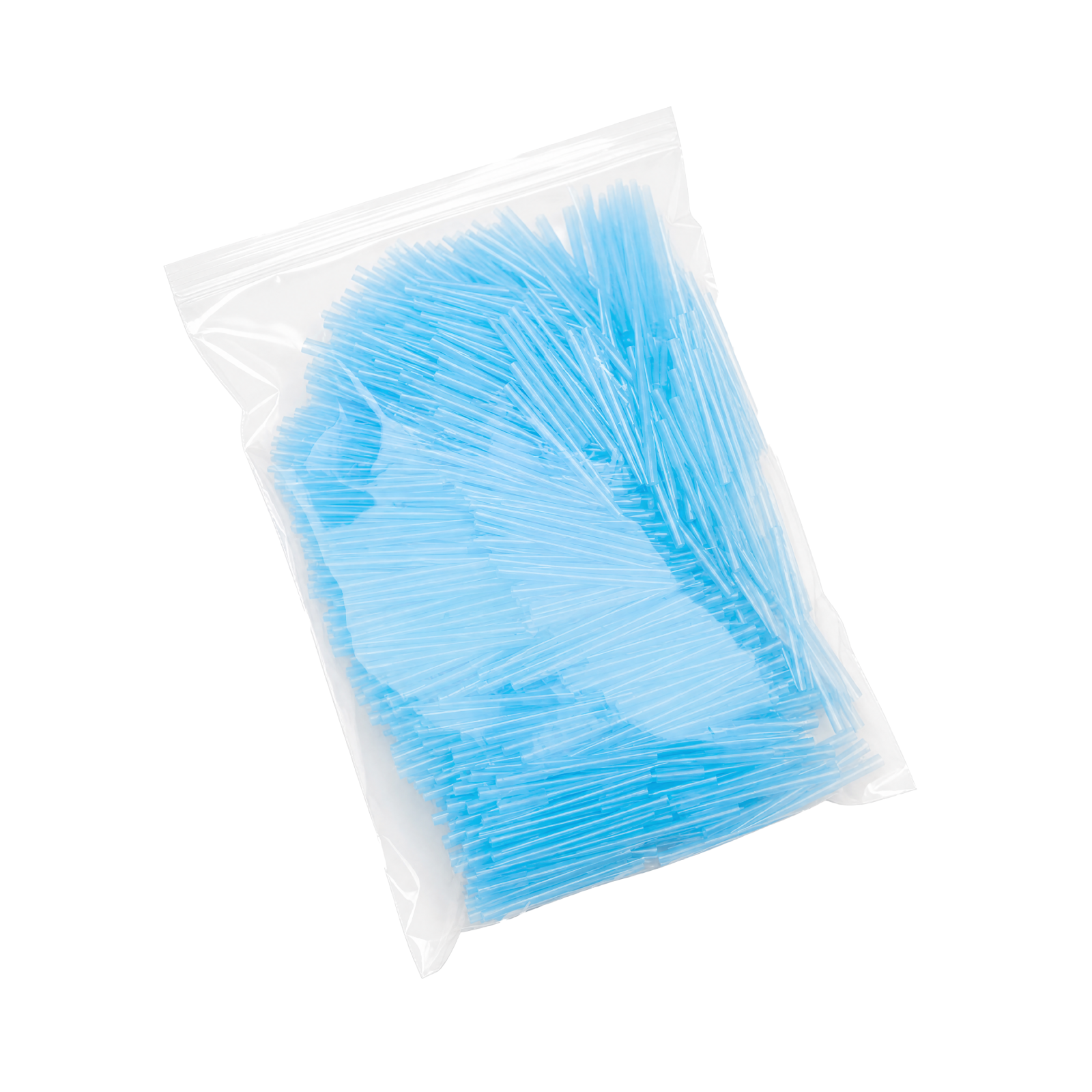
Bulk, Racked, Refill, and Boxed Formats
| Format | Advantage | Best fit |
|---|---|---|
| Bulk bag | Lower packaging cost | Routine work with local racking or non-sterile use |
| Racked box | Ready to load with less handling | Daily bench work |
| Sterile racked box | Controlled packaging and convenient aseptic pickup | PCR, cell culture, microbiology |
| Refill system | Less plastic than complete new boxes | Labs with compatible racks and sustainability goals |
How to Choose Tips for PCR and qPCR
PCR work requires control of both sample-to-sample carryover and environmental nucleic-acid contamination. Filtered, sterile, DNase/RNase-free tips are commonly selected, but the laboratory's contamination-control plan is equally important.
- Separate pre-amplification and post-amplification work areas
- Change tips after every transfer
- Use clean racks and dedicated pipettes
- Do not touch the tip to non-target surfaces
How to Check a New Tip Lot
Before changing supplier or lot, run a simple fit and performance check using representative pipettes and volumes. Inspect attachment, ejection, leakage, retained droplets, and gravimetric delivery where measurement risk justifies it.
Record the tip brand, lot, pipette model, volume, and result. This prevents an apparently minor consumable change from becoming an unexplained method shift.
Tips for Better Accuracy and Lower Waste
- Use the smallest suitable tip and pipette combination
- Pre-wet when the method benefits from it
- Aspirate and dispense consistently
- Store tips closed and protected from dust
- Do not reuse disposable tips
- Buy by verified fit and performance, not color alone
Frequently Asked Questions
Do filtered tips prevent all contamination?
No. They help reduce aerosol and splash transfer into the pipette but do not replace correct workflow separation, tip changing, disinfection, or biological safety controls.
Are sterile tips always DNase- and RNase-free?
Not automatically. Check each stated quality claim and supporting documentation.
When should I use low-retention tips?
Use them when liquids cling to standard tips, especially for proteins, detergents, viscous solutions, and small or valuable samples.
Can tip color identify the volume?
Color conventions can help, but they are not universal. Verify the printed size and compatibility specification.
Final Thoughts
The right tip must seal correctly, match the volume, and address the sample's contamination and retention risks. Treat a new tip type or lot as a measurement-system change, verify it with representative work, and document the choice for critical methods.
Related LifeGloria Resources
Need help choosing laboratory equipment? Contact LifeGloria.
Important: Follow the instrument manual, laboratory SOP, tube and rotor ratings, and local safety requirements.
