


Benchtop centrifuges range from small personal microcentrifuges to large multipurpose units. Floor-standing centrifuges extend capacity, speed, duty cycle, and specialized processing, but require more facility planning.
The right form factor depends on workflow and infrastructure rather than an assumption that a larger machine is automatically better.
Quick Answer
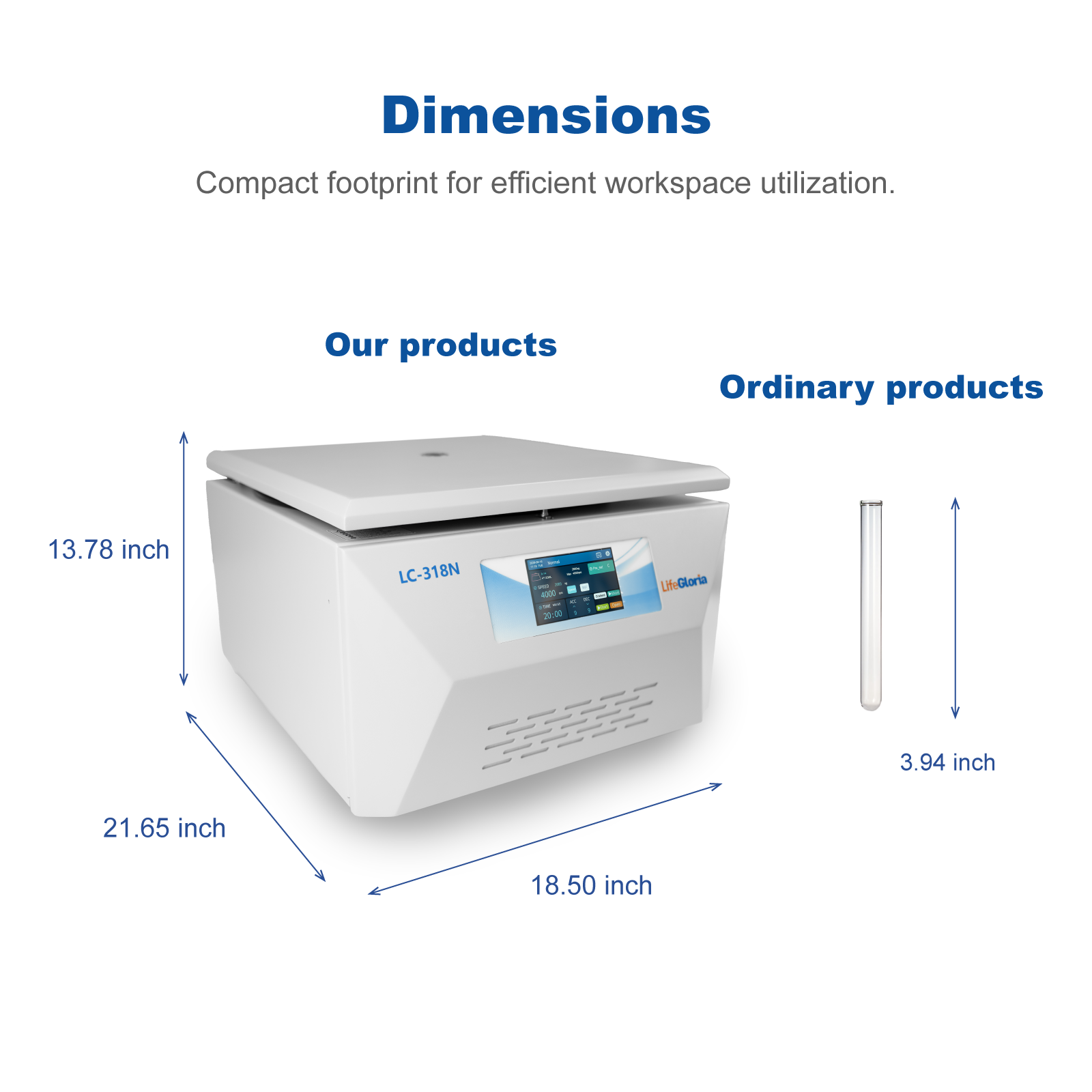
Choose benchtop equipment when space, short runs, microtubes, clinical tubes, moderate capacity, and distributed access are priorities. Choose floor-standing equipment for very high throughput, large bottles or bags, continuous heavy use, superspeed or ultracentrifuge applications, and workflows that justify dedicated installation and service. Compare total throughput and facility cost.
Quick Comparison
| Factor | Benchtop | Floor-standing |
|---|---|---|
| Footprint | Uses bench space | Dedicated floor area |
| Typical workload | Low to medium; some high-capacity models | High-capacity, high-duty or specialized |
| Containers | Microtubes to bottles/plates by model | Larger bottles, bags, batches, specialized rotors |
| Installation | Simpler, but bench and power must be checked | Facility, access, power, clearance, and service planning |
| Mobility | Sometimes relocatable by qualified staff | Usually fixed installation |
| Cost | Generally lower | Higher instrument and facility cost |
When a Benchtop Centrifuge Is the Better Choice
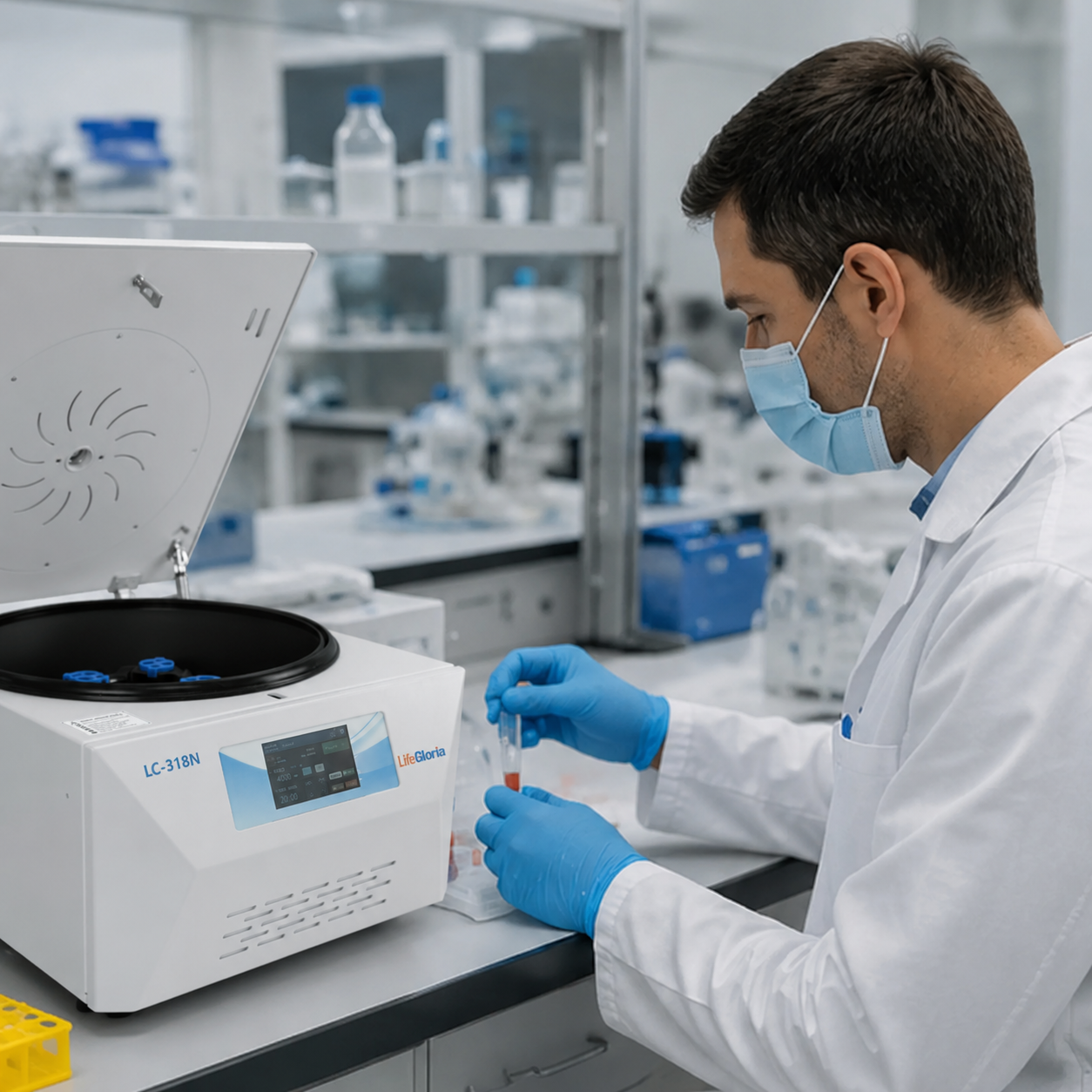
- PCR and molecular biology microtubes
- Routine blood or clinical tubes
- Shared research benches
- Short, frequent spin-downs
- Moderate sample batches
- Laboratories that benefit from two distributed units instead of one queue
When Floor-Standing Equipment Is Justified
- Large-volume harvesting
- High-throughput blood or bioprocessing workflows
- Long or frequent runs with high duty cycle
- Superspeed or ultracentrifuge applications
- Special rotors unavailable in a benchtop platform
- Central facilities with trained operators and service plans
Throughput: Capacity Is Only One Part
Calculate samples per shift, not just liters per run. Include rotor loading, balancing, acceleration, run time, deceleration, unloading, cleaning, and queueing. Multiple benchtop instruments can increase resilience; one floor unit may simplify high-volume standardization.
Facility and Safety Requirements
- Floor strength or bench load rating
- Doorways, lifts, corridors, and delivery access
- Electrical supply, grounding, heat, and ventilation
- Operating clearance and restricted safety zone
- Noise and vibration impact
- Emergency power policy and qualified service access

Rotor and Tube Ecosystem
Form factor does not determine compatibility. Compare exact rotors, buckets, adapters, seals, aerosol containment, tube ratings, and availability. A large centrifuge without the right rotor is less useful than a smaller configured system.
LifeGloria Benchtop Options
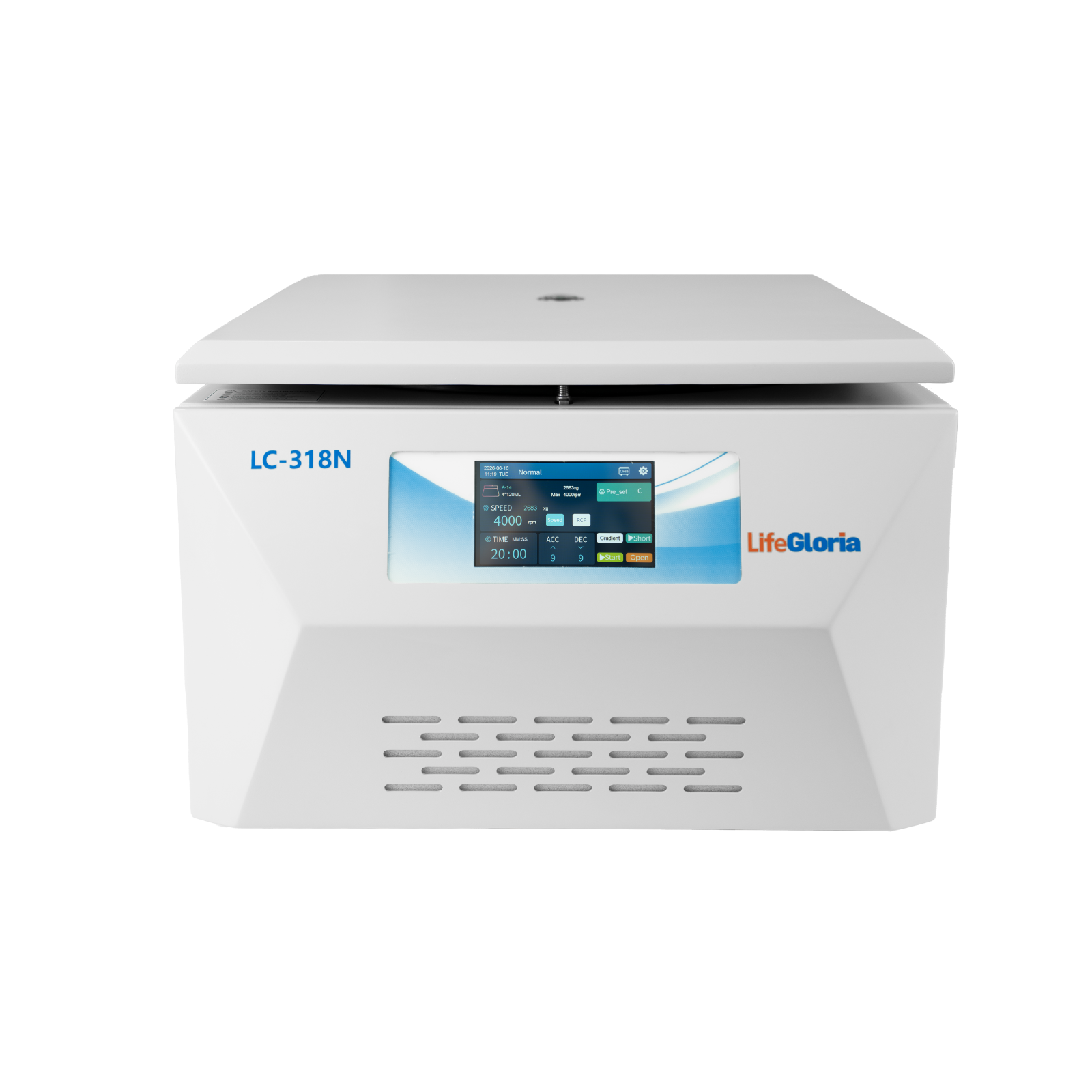
LifeGloria focuses on benchtop equipment: a compact 15,000 RPM microcentrifuge, the multi-rotor LC-318N, and the GC-420N. These suit routine to higher-speed benchtop workflows but do not replace floor-standing superspeed, ultracentrifuge, or high-volume production systems.
Decision Rule
Choose the smallest validated configuration that meets peak throughput with reasonable resilience. If a benchtop unit meets the method, capacity, temperature, and duty cycle, the simpler installation may be advantageous. If the workflow repeatedly exceeds those limits, specify a floor-standing system rather than overloading a smaller platform.
Frequently Asked Questions
Are benchtop centrifuges low speed?
No. Some benchtop models deliver high RCF, although capacity and duty cycle vary widely.
Is a floor centrifuge always higher capacity?
Usually, but large-capacity benchtop models exist. Compare the exact rotor and container configuration.
Can a centrifuge be moved after installation?
Only according to the manufacturer and by qualified personnel. Re-leveling, inspection, and recommissioning may be required.
Which is cheaper to operate?
Benchtop units usually have lower facility and service costs, but throughput, downtime, rotor prices, and staffing determine total cost.
Final Thoughts
Benchtop and floor-standing centrifuges solve different capacity and infrastructure problems. Base the choice on validated throughput, rotor availability, sample protection, facility fit, and support.
Related LifeGloria Resources
Need help choosing equipment? Contact LifeGloria.
Important: Confirm specifications, tube and rotor ratings, chemical compatibility, local service, and your laboratory SOP before purchase or use.
