

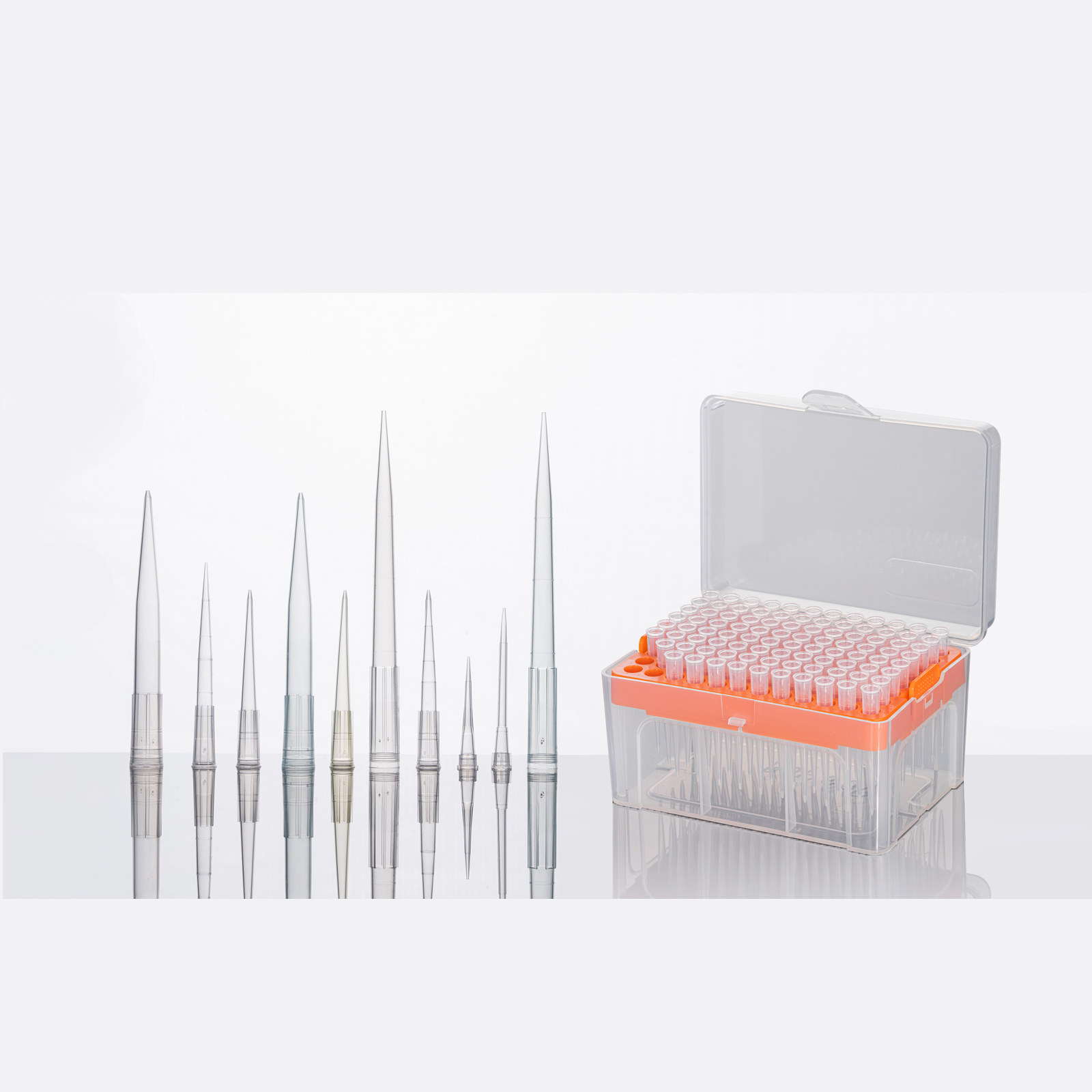
Pipette tips are one of the most frequently used laboratory consumables. Although they appear simple, choosing the correct pipette tip is essential for achieving accurate, reproducible, and contamination-free liquid handling.
In laboratories performing molecular biology, cell culture, PCR, clinical testing, and pharmaceutical research, the quality of pipette tips can directly influence experimental results.
Using the wrong pipette tips may lead to:
- inaccurate volume transfer
- liquid leakage
- sample contamination
- poor pipetting consistency
- increased experimental errors
This guide explains how to choose the right pipette tips based on:
- Pipette compatibility
- Volume range
- Sterility requirements
- Filter design
- Material quality
- Application needs
What Are Pipette Tips?
Pipette tips are disposable plastic attachments placed at the end of micropipettes for transferring liquids.
During pipetting, the tip contacts the sample instead of the pipette itself, helping protect the instrument from contamination.
High-quality pipette tips are designed to provide:
- accurate liquid aspiration
- consistent dispensing
- secure fitting
- minimal sample retention
They are widely used in:
- molecular biology
- microbiology
- biotechnology
- medical laboratories
- pharmaceutical research
- academic research
Why Choosing the Right Pipette Tips Matters
Many laboratories focus on selecting a high-quality pipette but overlook the importance of compatible tips.
However, pipette tips directly affect liquid handling performance.
1. Improve Pipetting Accuracy
A properly matched pipette tip ensures:
- correct sealing between pipette and tip
- stable liquid aspiration
- accurate dispensing volume
Incorrect tips may cause:
- air leakage
- inaccurate measurements
- inconsistent results
2. Prevent Sample Contamination
For sensitive applications such as PCR and molecular biology, contamination control is critical.
Sterile and filter pipette tips help reduce the risk of:
- aerosol contamination
- cross-contamination
- sample carryover
3. Reduce Sample Loss
Premium pipette tips often use low-retention materials that minimize liquid remaining inside the tip.
This is especially important for:
- expensive reagents
- protein solutions
- DNA/RNA samples
- biological samples
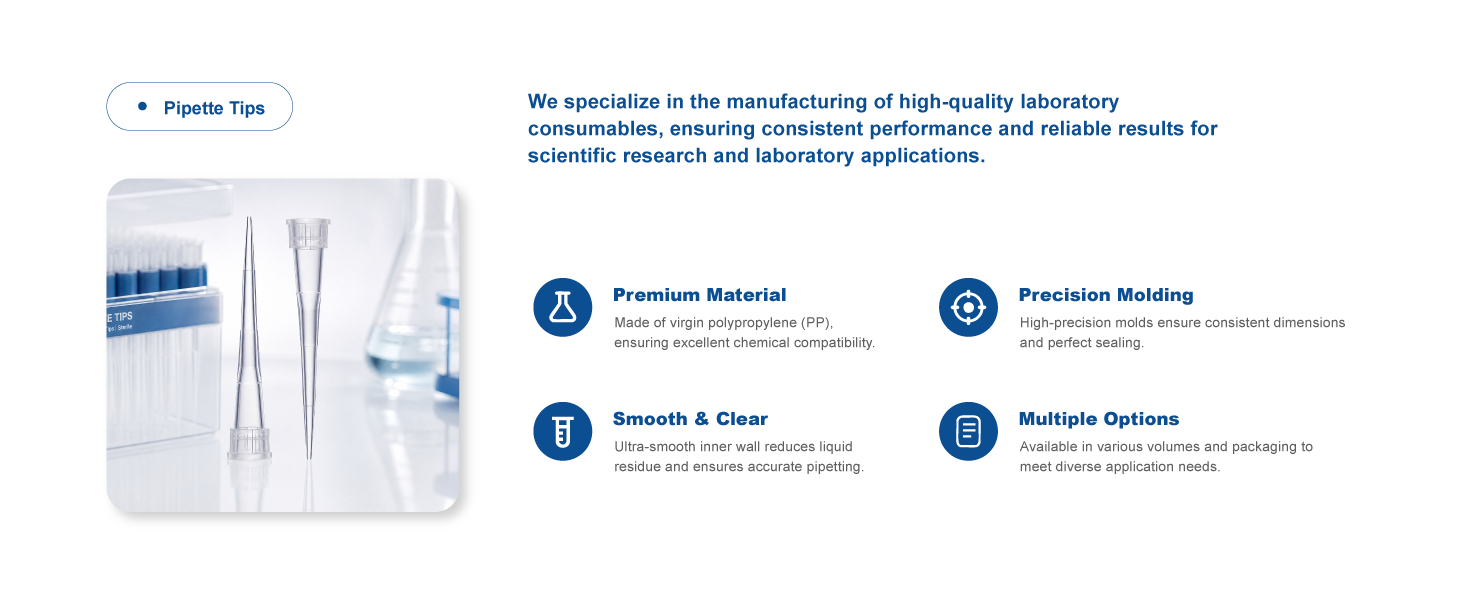
How to Choose Compatible Pipette Tips
1. Check Pipette Compatibility
Not all pipette tips fit every pipette model.
Before purchasing, confirm:
- pipette brand compatibility
- tip cone design
- sealing performance
- volume range
A properly fitted tip should:
- attach securely
- avoid leakage
- eject smoothly
Poor compatibility may result in:
- loose fitting
- difficult tip attachment
- inaccurate volume delivery
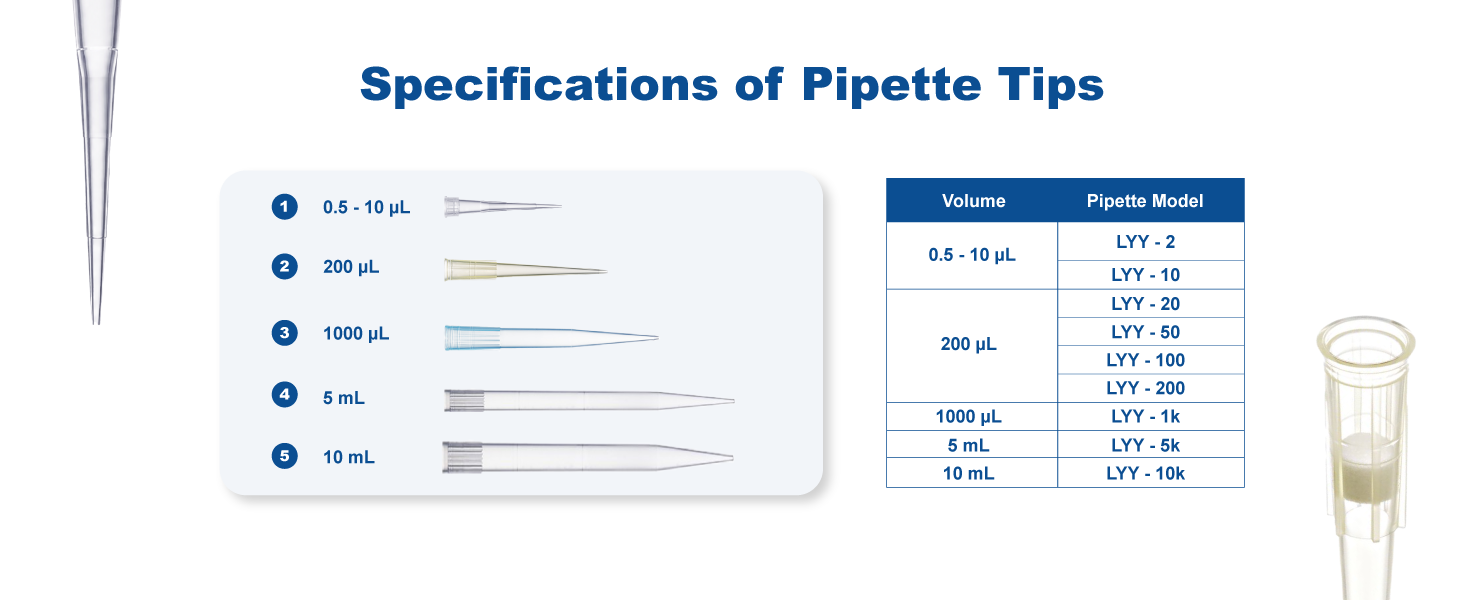
2. Choose the Correct Volume Range
Pipette tips are designed for specific volume ranges.
Common sizes include:
Low Volume Tips
Range:
0.1–10 μL
Applications:
- PCR setup
- DNA preparation
- molecular experiments
Standard Volume Tips
Range:
10–200 μL
Applications:
- reagent transfer
- biological sample preparation
- general laboratory work
High Volume Tips
Range:
200–1000 μL
Applications:
- buffer preparation
- media transfer
- larger liquid handling tasks
Using an incorrect tip size may reduce accuracy.
For example:
Using a 1000 μL tip for a 10 μL sample may create unnecessary measurement errors.
Filter Pipette Tips vs Standard Pipette Tips
One of the most common purchasing decisions is choosing between standard tips and filter tips.
What Are Filter Pipette Tips?
Filter pipette tips contain a small filter barrier inside the tip.
The filter helps prevent aerosols and liquid contamination from entering the pipette shaft.
Advantages:
- improved contamination protection
- suitable for sensitive samples
- reduces cross-contamination risk
Common applications:
- PCR
- molecular biology
- microbiology
- clinical testing
When Should You Use Filter Tips?
Filter tips are recommended when working with:
- DNA/RNA samples
- infectious materials
- low-volume biological samples
- contamination-sensitive experiments
For routine buffer transfer or non-sensitive applications, standard tips may be sufficient.
Sterile Pipette Tips: When Are They Necessary?
Sterile pipette tips are processed to remove microorganisms and are commonly used in applications requiring contamination control.
They are widely used in:
- cell culture
- microbiology
- tissue culture
- clinical laboratories
Sterile tips are usually supplied:
- individually wrapped
- rack packaged
- certified sterile
For cell culture and molecular biology workflows, sterile pipette tips help maintain a controlled experimental environment.
What Are Low Retention Pipette Tips?
Low retention pipette tips are specially designed to reduce liquid adhesion to the inner surface of the tip.
Traditional plastic materials may cause small amounts of liquid to remain inside the tip.
Low retention tips help improve:
- sample recovery
- pipetting consistency
- reagent utilization
They are especially useful for:
- protein solutions
- enzymes
- viscous liquids
- valuable samples
Factors to Consider When Buying Pipette Tips
1. Material Quality
High-quality tips are usually manufactured using medical-grade polypropylene.
Important characteristics include:
- chemical resistance
- low extractables
- consistent molding quality
2. Tip Accuracy and Consistency
Good pipette tips should have:
- uniform shape
- precise dimensions
- reliable sealing
Manufacturing variation can affect pipetting performance.
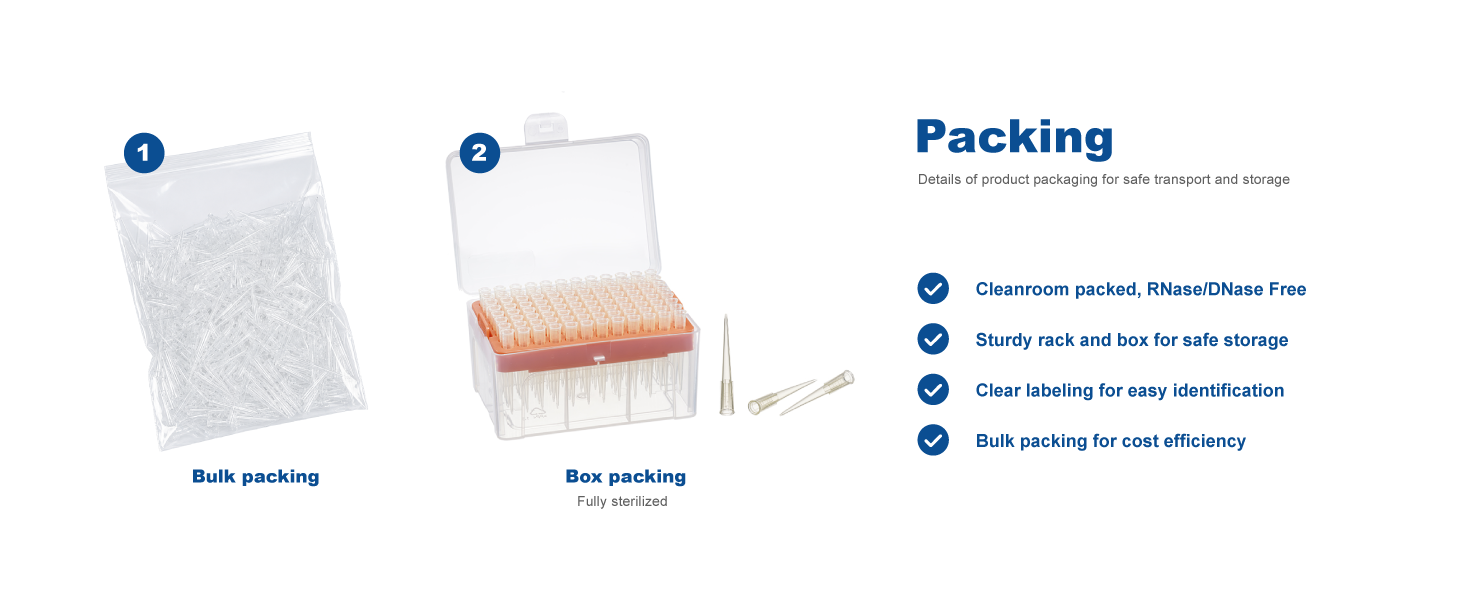
3. Packaging Options
Common packaging formats include:
Bagged Tips
Advantages:
- economical
- suitable for routine use
Rack Tips
Advantages:
- convenient operation
- reduced contamination risk
Filter Rack Tips
Advantages:
- maximum contamination protection

Common Pipette Tip Selection Mistakes
Using Incompatible Tips
A tip that does not fit properly may cause inaccurate results.
Always verify compatibility before bulk purchasing.
Choosing Price Over Quality
Low-cost tips may have:
- inconsistent dimensions
- poor sealing
- higher sample retention
For critical experiments, reliability is more important than the initial purchase price.
Ignoring Application Requirements
Different workflows require different tip designs.
For example:
PCR experiments often require filter tips, while general liquid transfer may only require standard tips.
Pipette Tips for Different Laboratory Applications
| Application | Recommended Tip Type |
|---|---|
| PCR preparation | Filter pipette tips |
| Cell culture | Sterile tips |
| DNA/RNA extraction | Filter tips |
| Protein research | Low retention tips |
| Routine reagent transfer | Standard tips |
| High-throughput screening | Rack tips |
LifeGloria Pipette Tips: Reliable Consumables for Laboratory Workflows
LifeGloria provides high-quality laboratory consumables designed for accurate and reliable liquid handling.
Our pipette tips are suitable for:
- research laboratories
- biotechnology companies
- universities
- healthcare facilities
Key advantages include:
- Reliable pipette compatibility
- Consistent molding quality
- Sterile options available
- Filter tip solutions
- Low retention options
- Suitable for molecular biology and routine laboratory applications
Selecting the right pipette tips can improve laboratory efficiency, reduce contamination risks, and ensure more reliable experimental results.
Whether you need standard tips, filter tips, or specialized consumables, choosing the correct solution is essential for accurate liquid handling.
Explore LifeGloria laboratory consumables for dependable pipetting performance and laboratory efficiency.
