

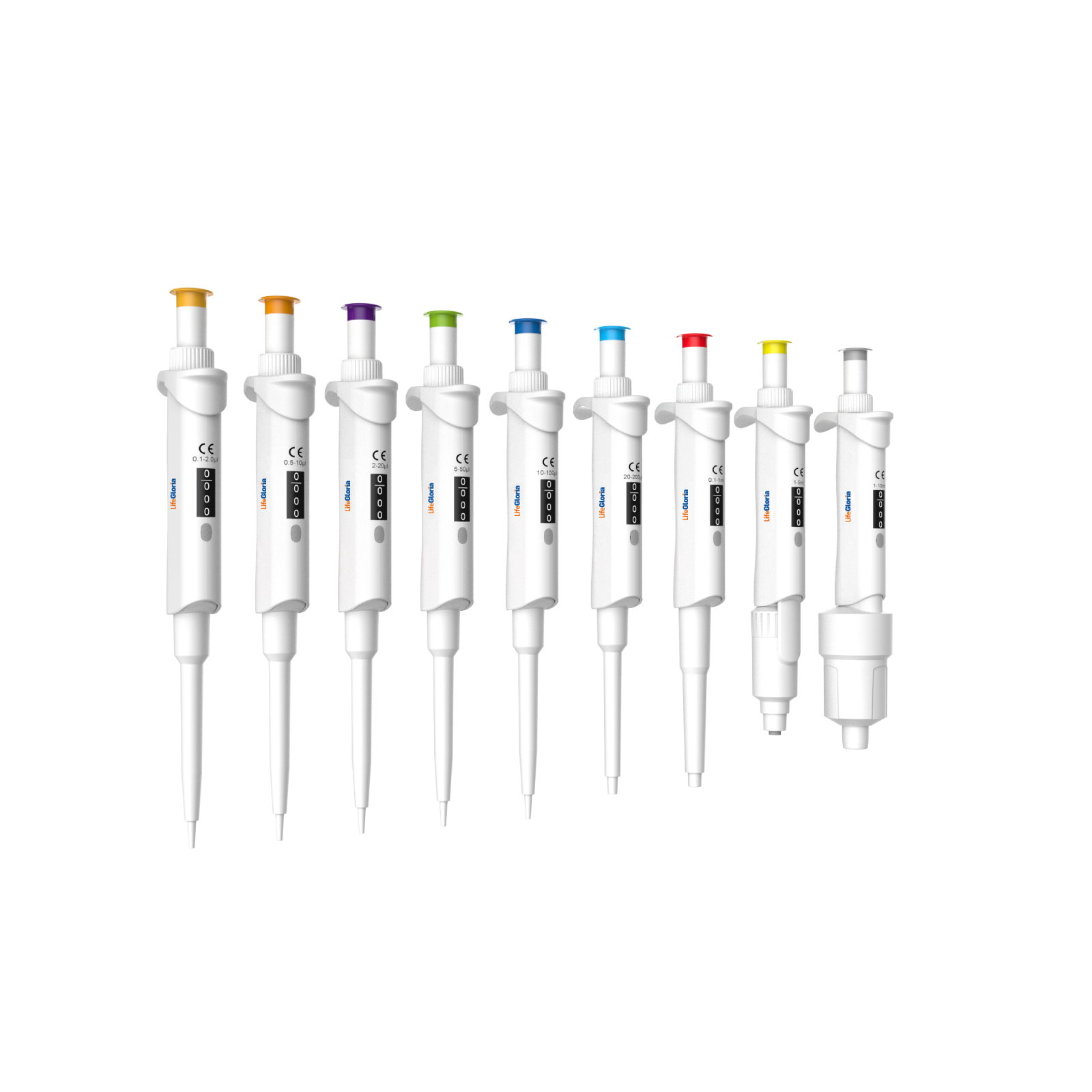
Pipette and micropipette are often used as interchangeable terms, but laboratories use several different liquid-transfer tools. The practical difference is usually the volume range, operating mechanism, required accuracy, and application.
Understanding the terms helps laboratories choose the right instrument, tip, and technique instead of expecting one device to handle every liquid and volume.
Quick Answer
A pipette is a broad category of liquid-transfer tools, including serological, volumetric, transfer, and mechanical piston pipettes. A micropipette is a precision piston-operated pipette designed mainly for microliter-scale work, although some models extend to milliliter volumes. Use micropipettes for controlled small-volume delivery and serological or volumetric pipettes for larger-volume workflows.
What Is a Pipette?
Pipette is the general term for laboratory instruments that measure or transfer liquid. Some are calibrated for a single volume, some have graduations, and others use a piston and disposable tip.
- Volumetric pipettes for one defined volume
- Graduated pipettes for several marked volumes
- Serological pipettes used with a controller
- Pasteur or transfer pipettes for non-quantitative transfer
- Mechanical and electronic piston pipettes
What Is a Micropipette?
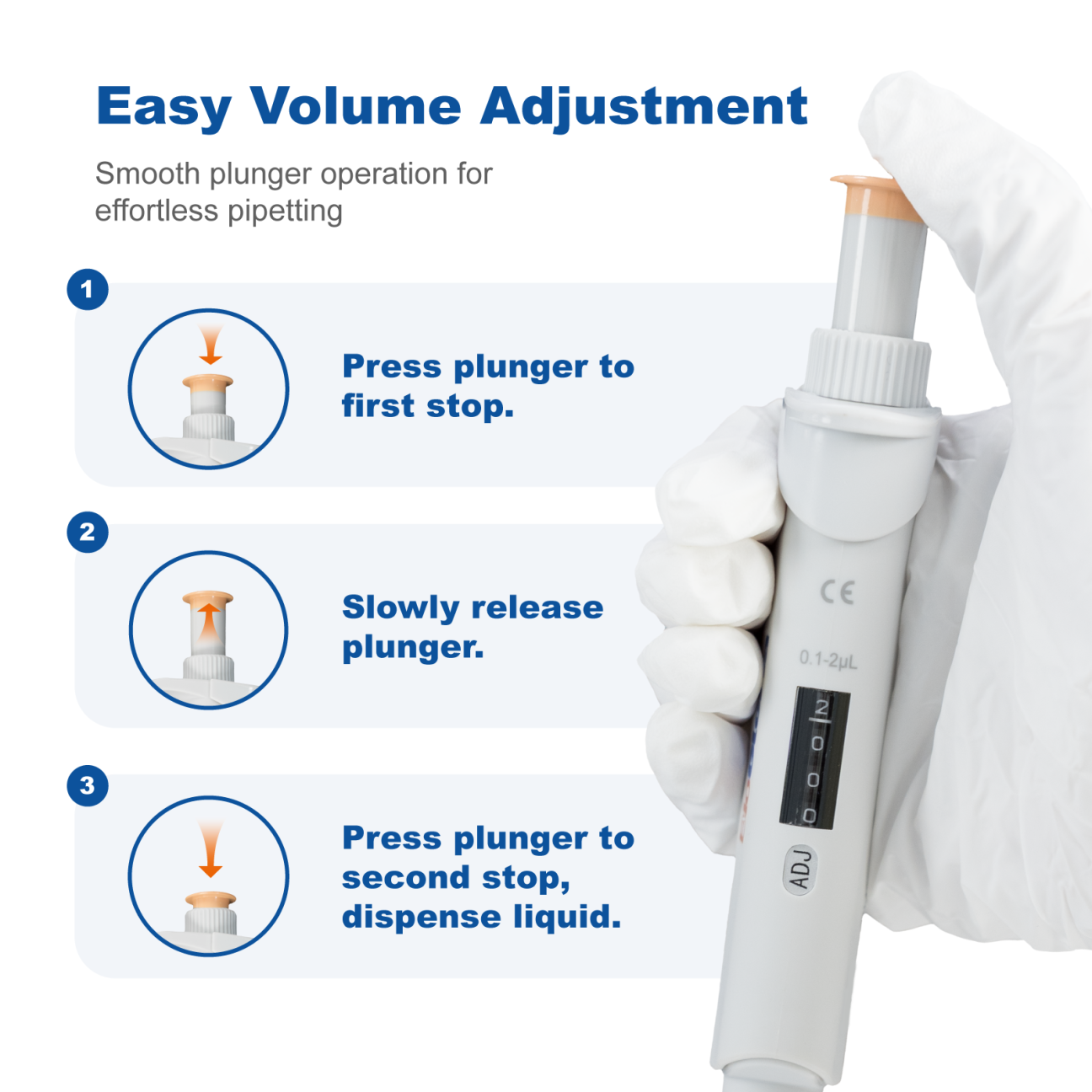
A micropipette is a precision piston-operated instrument used for small-volume liquid handling. Most laboratory models use an air-displacement mechanism and a disposable plastic tip. Read the Complete Guide to Micropipettes for a full explanation of operation, types, accuracy, and maintenance.
Pipette vs Micropipette at a Glance
| Factor | Pipette (broad category) | Micropipette |
|---|---|---|
| Typical volume | From drops to tens of milliliters, depending on type | Usually microliter-scale; some models reach milliliters |
| Mechanism | Glass, plastic, bulb, controller, or piston | Mechanical or electronic piston |
| Volume setting | Fixed, graduated, or adjustable | Fixed or adjustable digital setting |
| Consumable | May be reusable or disposable | Usually disposable tips |
| Best use | General or larger-volume transfer | Precise small-volume transfer |
Common Types of Pipettes
Volumetric pipette
Designed to deliver one calibrated volume with high accuracy when used correctly.
Serological pipette
Graduated and commonly used with a pipette controller for cell culture media and other milliliter-scale transfers.
Transfer pipette
Useful for moving liquid when exact measurement is not required.
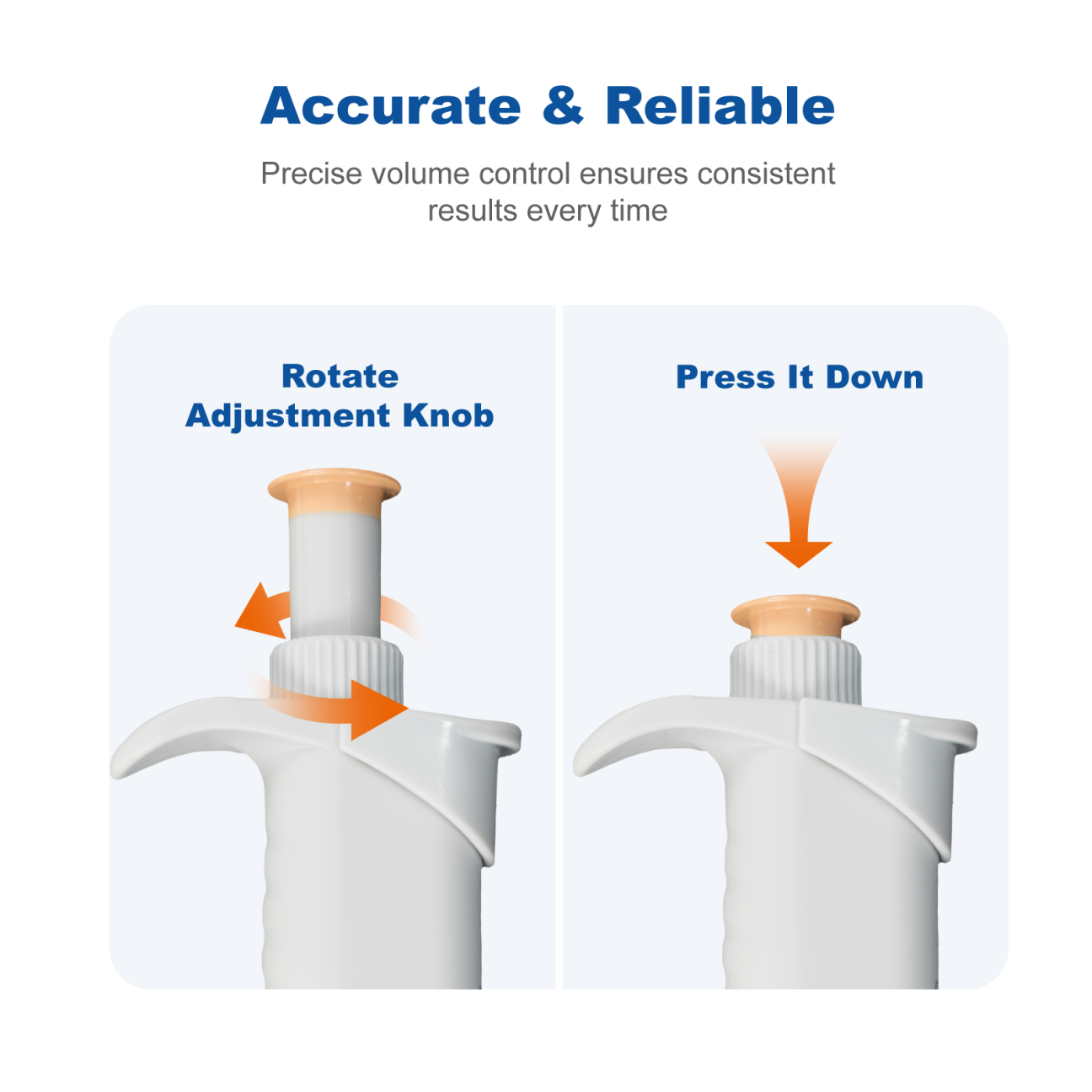
Single-channel micropipette
Transfers one sample at a time and offers flexibility across many laboratory tasks.
Multichannel micropipette
Transfers multiple wells simultaneously and is useful for plates, ELISA, and higher-throughput work.
Which Tool Is Best for PCR, Cell Culture, and General Lab Work?
| Task | Typical choice | Why |
|---|---|---|
| PCR master mix and primers | Micropipette | Accurate microliter delivery |
| 96-well plate loading | Multichannel micropipette | Faster repetitive transfer |
| Adding 10-25 mL culture medium | Serological pipette | Convenient sterile milliliter transfer |
| Preparing a defined standard solution | Volumetric pipette | Calibrated fixed-volume measurement |
| Moving wash solution where volume is not critical | Transfer pipette | Simple, low-cost transfer |
Accuracy, Precision, and Resolution
Accuracy describes closeness to the target; precision describes repeatability; resolution is the smallest displayed or adjustable increment. A micropipette may display a fine increment, but technique, tip fit, temperature, and maintenance still determine the delivered result.
Choose the smallest suitable range rather than focusing only on the total range. A model that can display a volume is not automatically the best model for that transfer.
Disposable Tips and Contamination Control
Micropipettes normally require a correctly fitting disposable tip. Filtered, sterile, and low-retention options solve different problems and should not be treated as interchangeable labels.
Serological pipettes are commonly supplied sterile and individually wrapped for aseptic work. Reusable glass pipettes require an approved cleaning, decontamination, and inspection process.
How to Choose Between Them
- Define the smallest and largest routine volume
- Decide whether exact measurement or simple transfer is required
- Consider sterile technique and aerosol risk
- Estimate repetitions and operator fatigue
- Confirm consumable availability and compatibility
- Check calibration and maintenance requirements
LifeGloria Micropipette Range
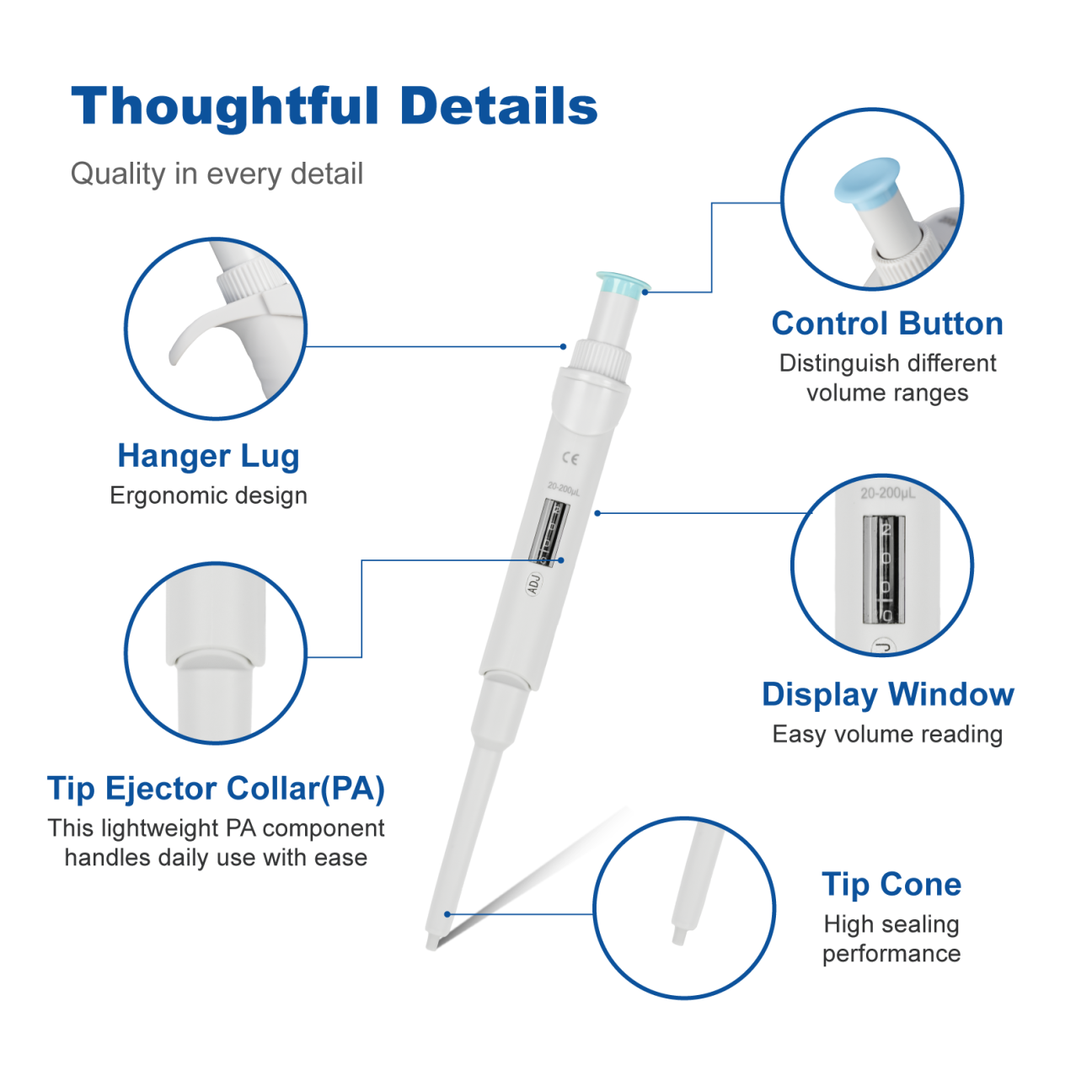
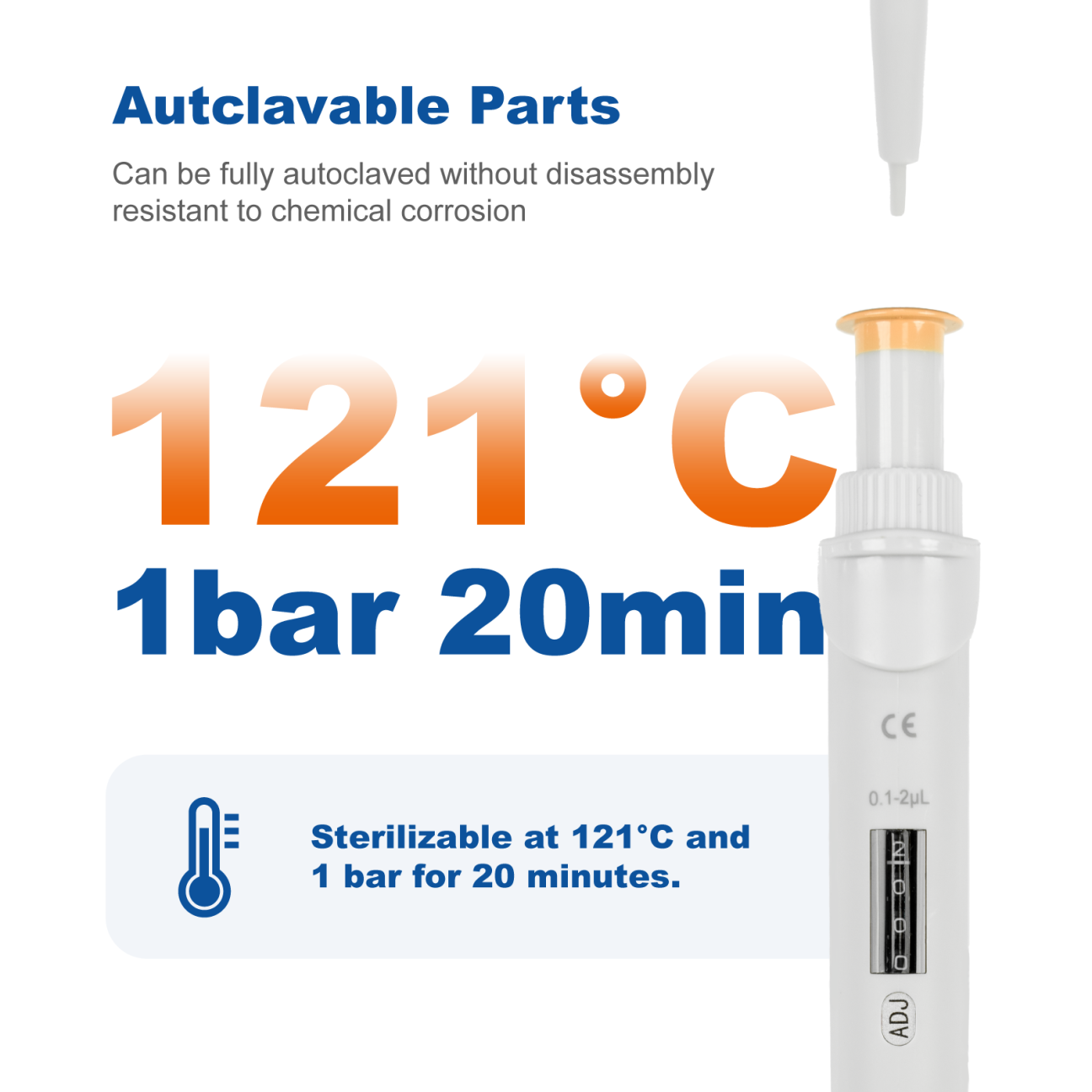
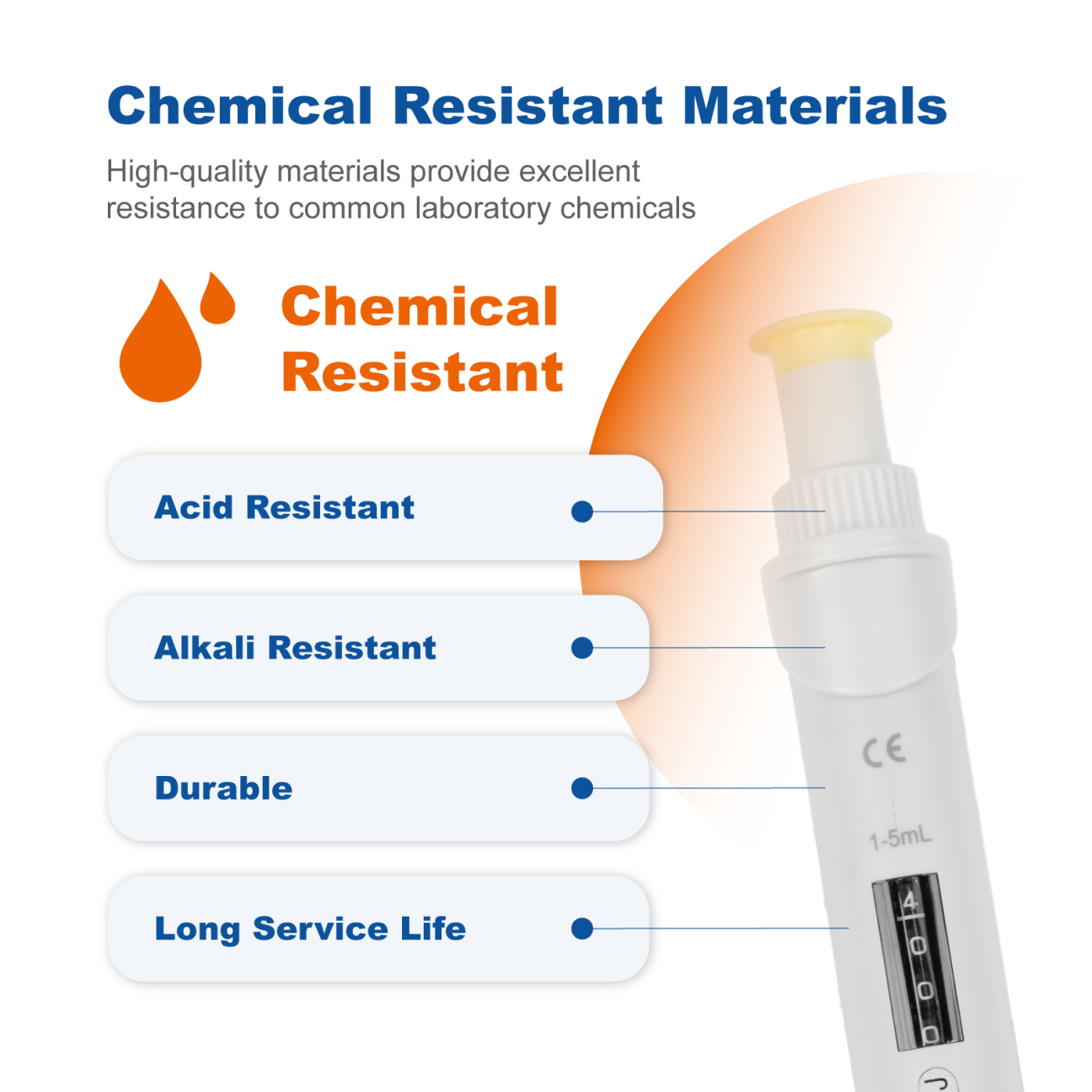
The LifeGloria adjustable single-channel micropipette covers nine ranges from 0.1 µL to 10 mL, includes a four-digit display and volume lock, and is designed for full autoclaving according to its manual. It is intended for precision liquid handling rather than replacing every serological or volumetric pipette task.
Frequently Asked Questions
Is a micropipette the same as a pipette?
A micropipette is one type of pipette. The word pipette also includes serological, volumetric, graduated, and transfer pipettes.
Can a micropipette measure milliliters?
Some models can. The LifeGloria range includes 0.5-5 mL and 1-10 mL models, but smaller models are intended for microliter volumes.
Which is more accurate?
The answer depends on the instrument type, target volume, calibration, and technique. Use a tool designed and calibrated for the required range.
Can I use a serological pipette for PCR reagents?
It is generally unsuitable for small PCR volumes. A correctly ranged micropipette provides better control at microliter scale.
Final Thoughts
Micropipettes are precision members of the larger pipette family. Choose by volume, required measurement quality, sterility, throughput, and liquid behavior. A well-matched tool is safer and more repeatable than trying to stretch one pipette across every task.
Related LifeGloria Resources
Need help choosing laboratory equipment? Contact LifeGloria.
Important: Follow the instrument manual, laboratory SOP, tube and rotor ratings, and local safety requirements.
