

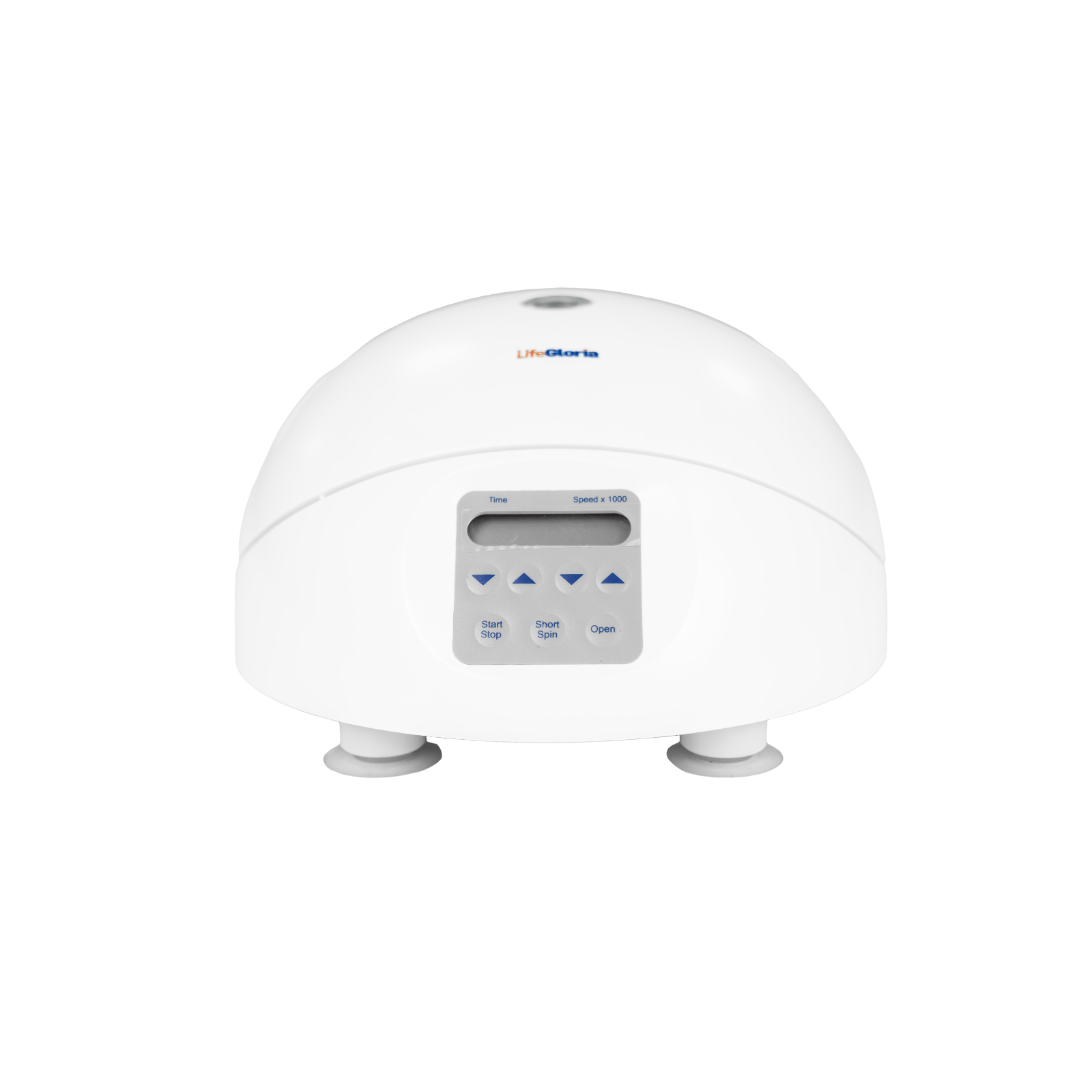
Mini centrifuge and microcentrifuge are sometimes used as if they mean the same thing. Both are compact and often accept microtubes, but their controls, speed, RCF, run repeatability, and intended applications can differ substantially.
The label alone is not enough. Compare the actual rotor, tube format, speed range, timer, safety functions, and protocol requirements.
Quick Answer
A basic mini centrifuge is best for quick spin-downs and simple droplet collection. A microcentrifuge normally provides adjustable speed, time, and higher RCF for defined small-volume separation protocols. Some compact products combine both descriptions; judge them by specifications rather than name.
What Is a Mini Centrifuge?
A mini centrifuge is a small-footprint instrument for rapid, low-volume work. Many basic models use simple lid-activated operation and a fixed speed. They are convenient for bringing droplets to the bottom of PCR tubes after mixing or transport.
What Is a Microcentrifuge?
A microcentrifuge is designed around microtubes, typically 0.2-2.0 mL. It usually offers controlled speed, time, and higher force for repeatable molecular biology or biochemistry methods.
A compact digital microcentrifuge may still be marketed as a mini centrifuge. Specifications define capability more reliably than product category names.
Mini Centrifuge vs Microcentrifuge Comparison
| Factor | Basic mini centrifuge | Microcentrifuge |
|---|---|---|
| Primary job | Quick spin-down | Defined small-volume separation |
| Speed | Often fixed or limited | Usually adjustable; can be high speed |
| RCF display | Often unavailable | Common on digital models |
| Timer | Simple or lid-controlled | Programmable timing and short-spin |
| Rotor | PCR strips or small microtube rotor | Fixed-angle microtube rotor, often 12-24 places |
| Best fit | Droplet collection | DNA/RNA, protein, cells, precipitation |
When a Basic Mini Centrifuge Is Enough
- Collecting droplets from tube walls and caps
- Brief spin after vortex mixing
- PCR strip preparation when only a quick spin is required
- Teaching demonstrations and light personal-bench work
- Workflows without a defined high RCF requirement
When You Need a Microcentrifuge
- The protocol specifies RCF and time
- Pelleting cells or precipitated material
- DNA, RNA, or protein extraction
- Repeatable processing across operators
- Adjustable acceleration, time, or short-spin control is required
Speed Is Not the Same as Force
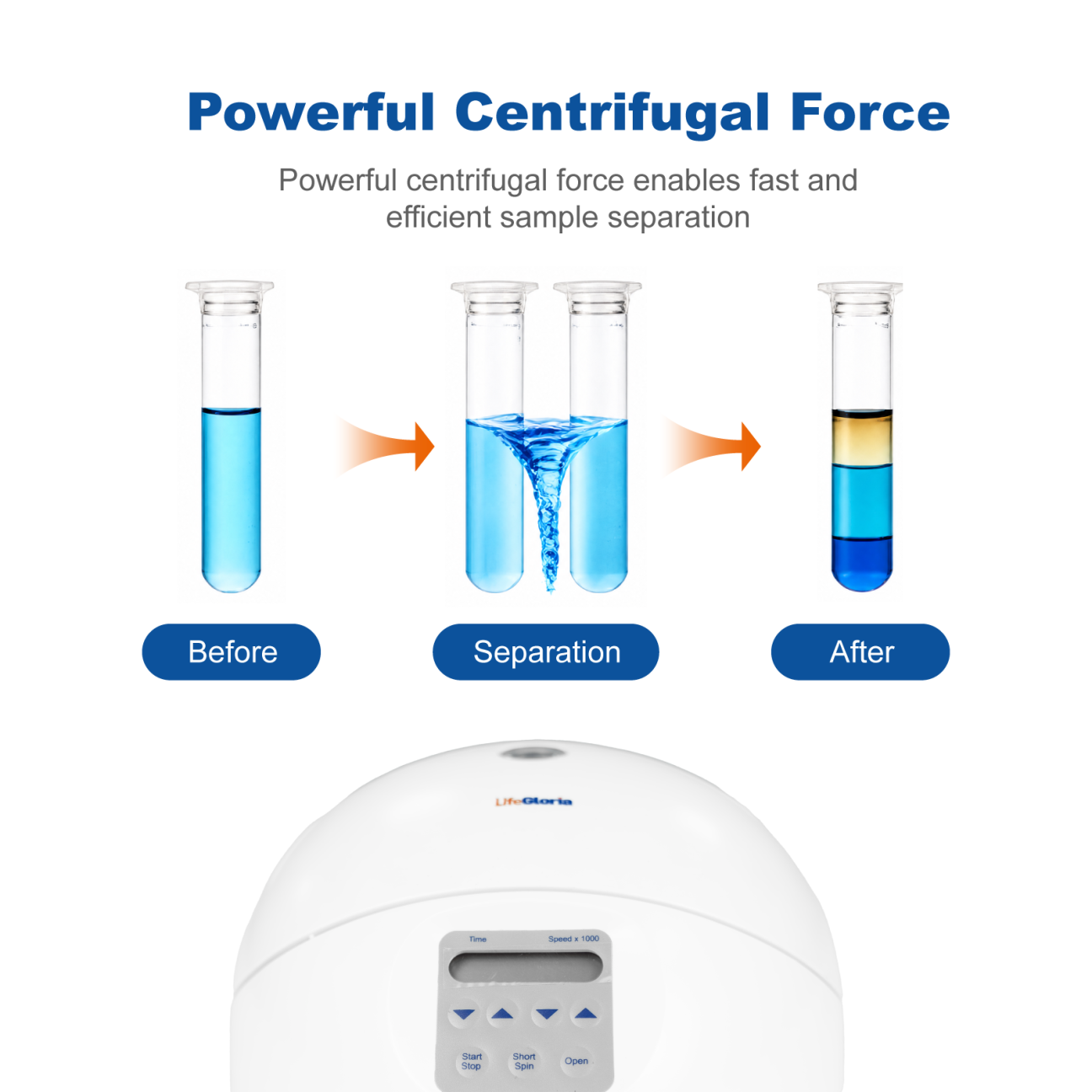
RPM describes rotor speed; RCF describes force at a defined radius. Two compact centrifuges at the same RPM may produce different RCF. When a protocol specifies ×g, choose a centrifuge and rotor capable of that RCF without exceeding tube or rotor limits.
Tube, Rotor, and Adapter Compatibility
Do not assume every 0.2, 0.5, 1.5, or 2.0 mL tube can be placed directly into the same rotor cavity. Use the correct adapters and load tubes symmetrically.
The LifeGloria mini centrifuge manual states that different tube volumes should not be mixed in the 12 × 1.5 mL rotor during a run. Follow the manual for the supplied rotor and adapters.
LifeGloria 15,000 RPM Digital Microcentrifuge
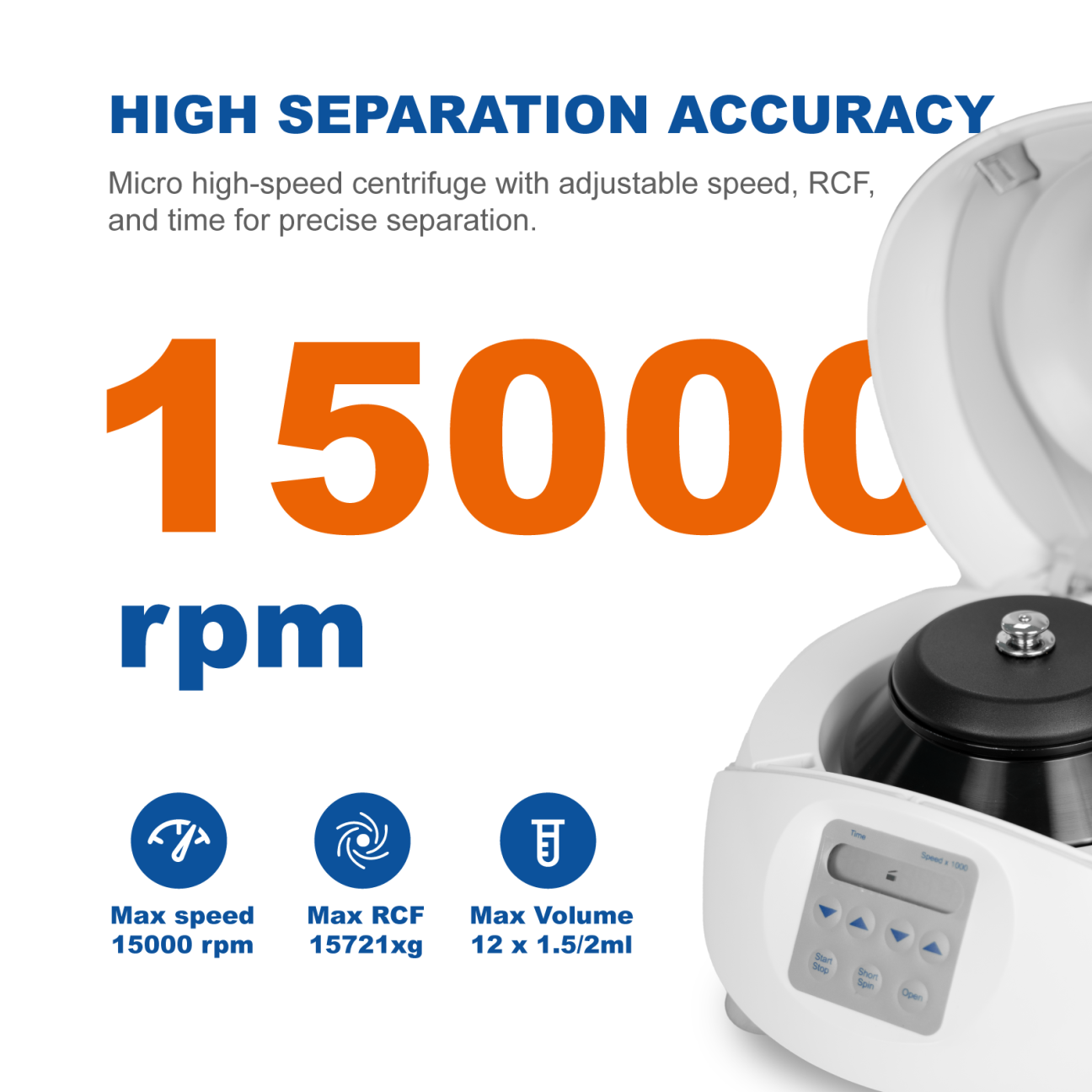
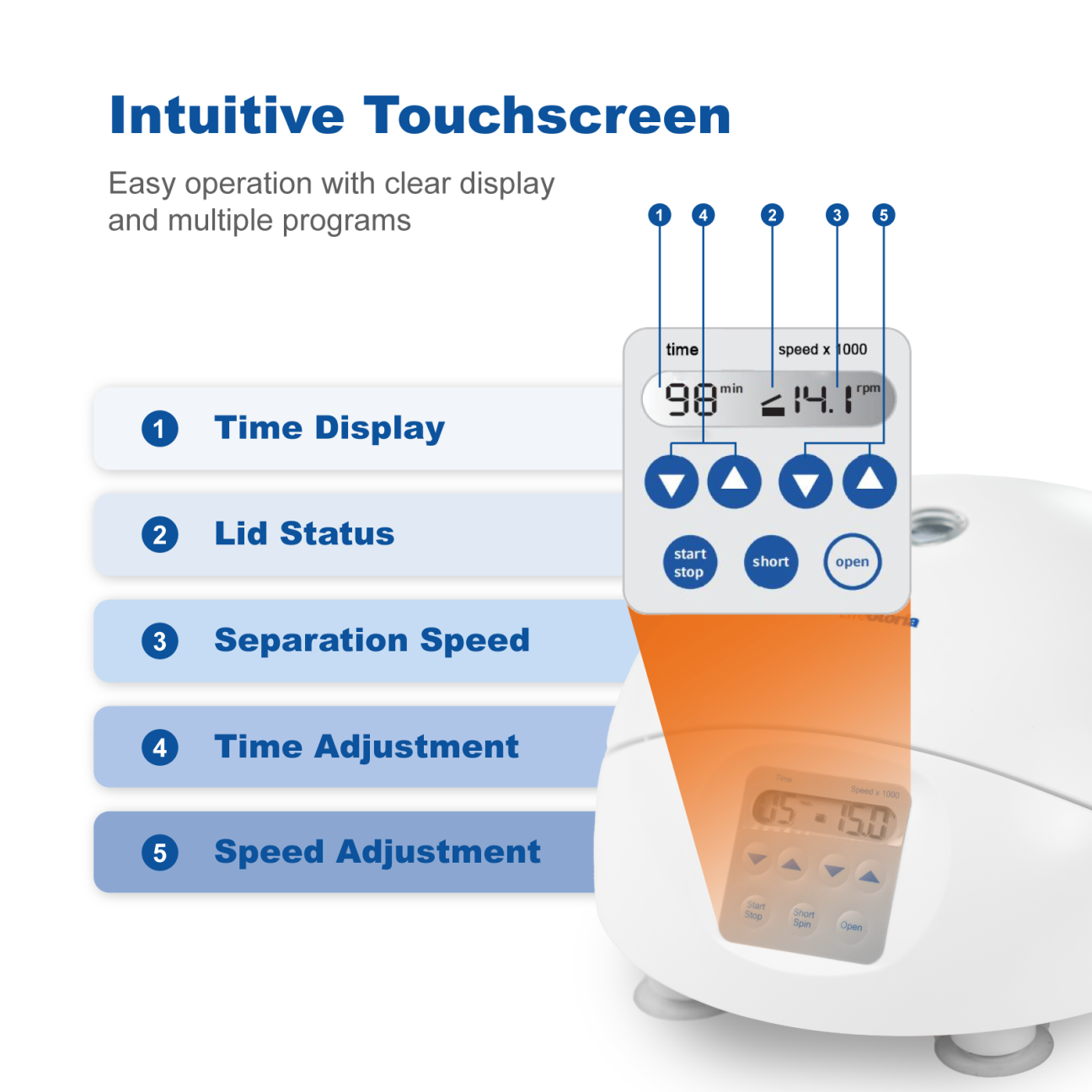
The LifeGloria compact digital microcentrifuge combines a small 230 × 240 × 120 mm footprint with adjustable 100-15,000 RPM operation, up to 15,721 × g, a 12-place aluminum rotor, speed/RCF display switching, timed runs, and short-spin control.
- 12 × 1.5/2.0 mL primary rotor capacity
- Adapters for smaller tube formats according to configuration
- Brushless motor
- Noise level ≤56 dB(A)
- Airflow design limiting temperature rise to ambient +10°C under stated conditions
Buying Checklist
- Required RCF and run time
- Tube type and number per batch
- Adjustable vs fixed speed
- Timer and short-spin function
- Lid lock and abnormal-operation protection
- Noise and footprint
- Rotor and adapter availability
- Cleaning and service support
Frequently Asked Questions
Can a mini centrifuge replace a microcentrifuge?
Only when its actual speed, RCF, rotor, timing, and safety specifications meet the method. A basic quick-spin model cannot replace a controlled high-force protocol.
Is 15,000 RPM enough for DNA and RNA work?
Many microvolume protocols operate within this class, but follow the method's specified RCF and time rather than choosing by RPM alone.
Can PCR strips go in every microcentrifuge?
No. A compatible PCR-strip rotor or approved adapter is required.
Why is short-spin useful?
It lets the operator collect droplets or briefly pellet material without programming a full timed run.
Final Thoughts
Use a basic mini centrifuge for convenient spin-downs and a controlled microcentrifuge when the protocol depends on defined force and time. Because product names overlap, compare the rotor, RCF, controls, tube compatibility, and safety features before buying.
Related LifeGloria Resources
Need help choosing laboratory equipment? Contact LifeGloria.
Important: Follow the instrument manual, laboratory SOP, tube and rotor ratings, and local safety requirements.
