

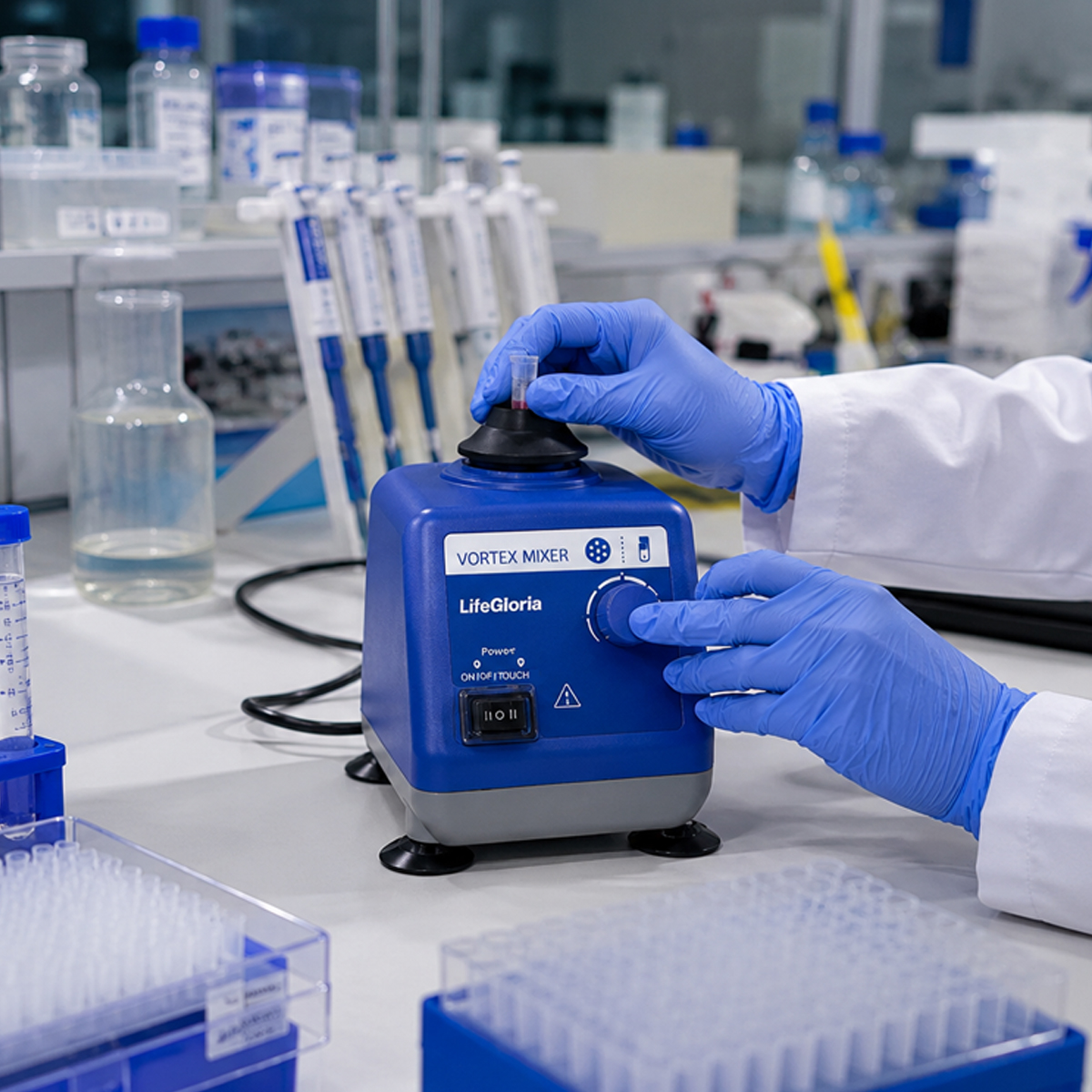
What Is a Vortex Mixer?
A vortex mixer is a common laboratory instrument used to quickly mix small volumes of liquid in tubes, vials, or microplates. It works by creating a rapid circular motion that forms a vortex inside the container, ensuring efficient and uniform mixing of samples.
Unlike manual shaking, a vortex mixer provides consistent, repeatable, and controlled mixing, which is essential for modern laboratory workflows in molecular biology, chemistry, and clinical diagnostics.
It is widely used in research laboratories, hospitals, universities, and biotechnology companies for routine sample preparation.
How Does a Vortex Mixer Work?
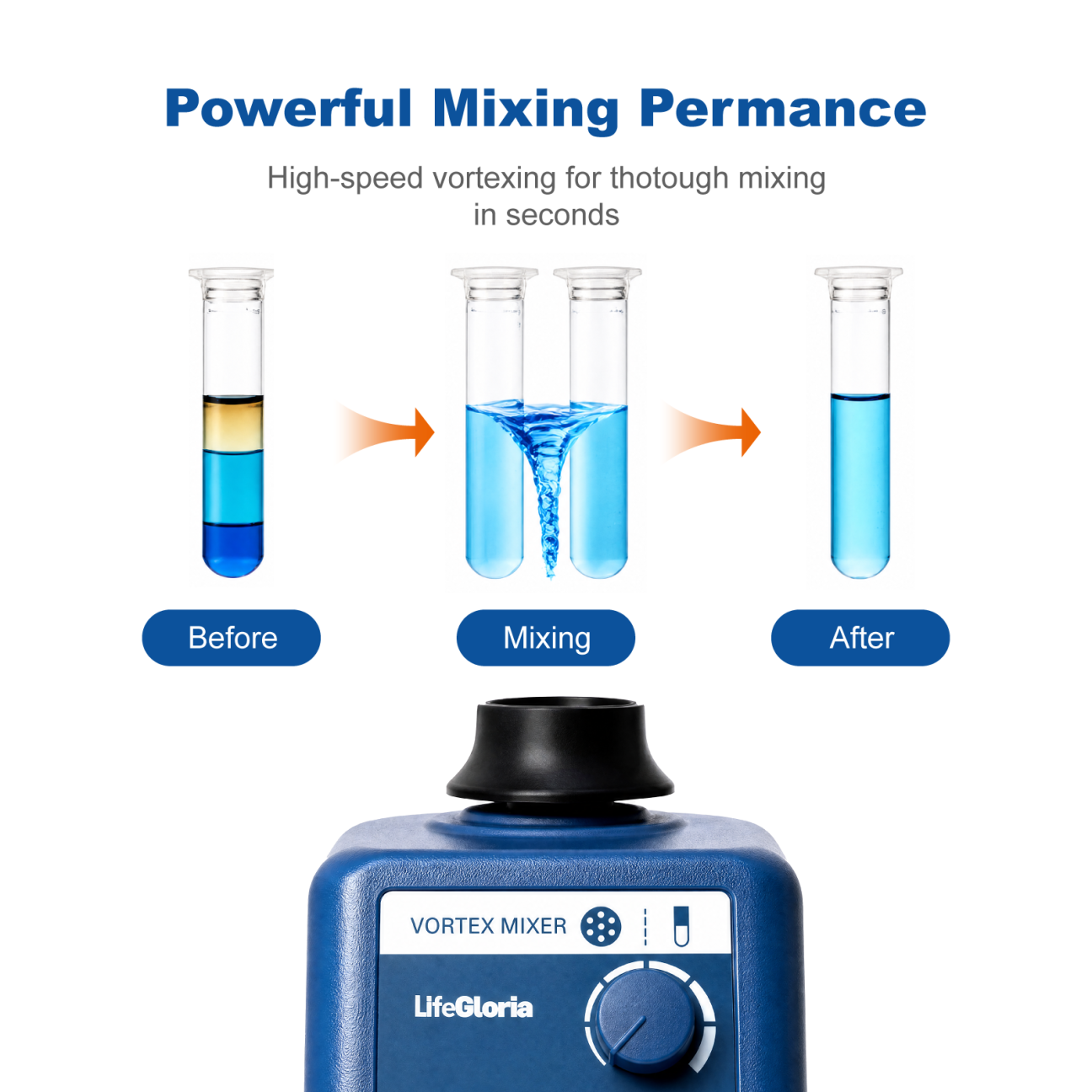
A vortex mixer operates using an electric motor that drives a rubber or oscillating platform. When a tube is pressed against the head of the device, the circular motion is transferred to the liquid inside.
This motion creates a vortex effect that rapidly mixes the contents within seconds.
Most modern vortex mixers offer:
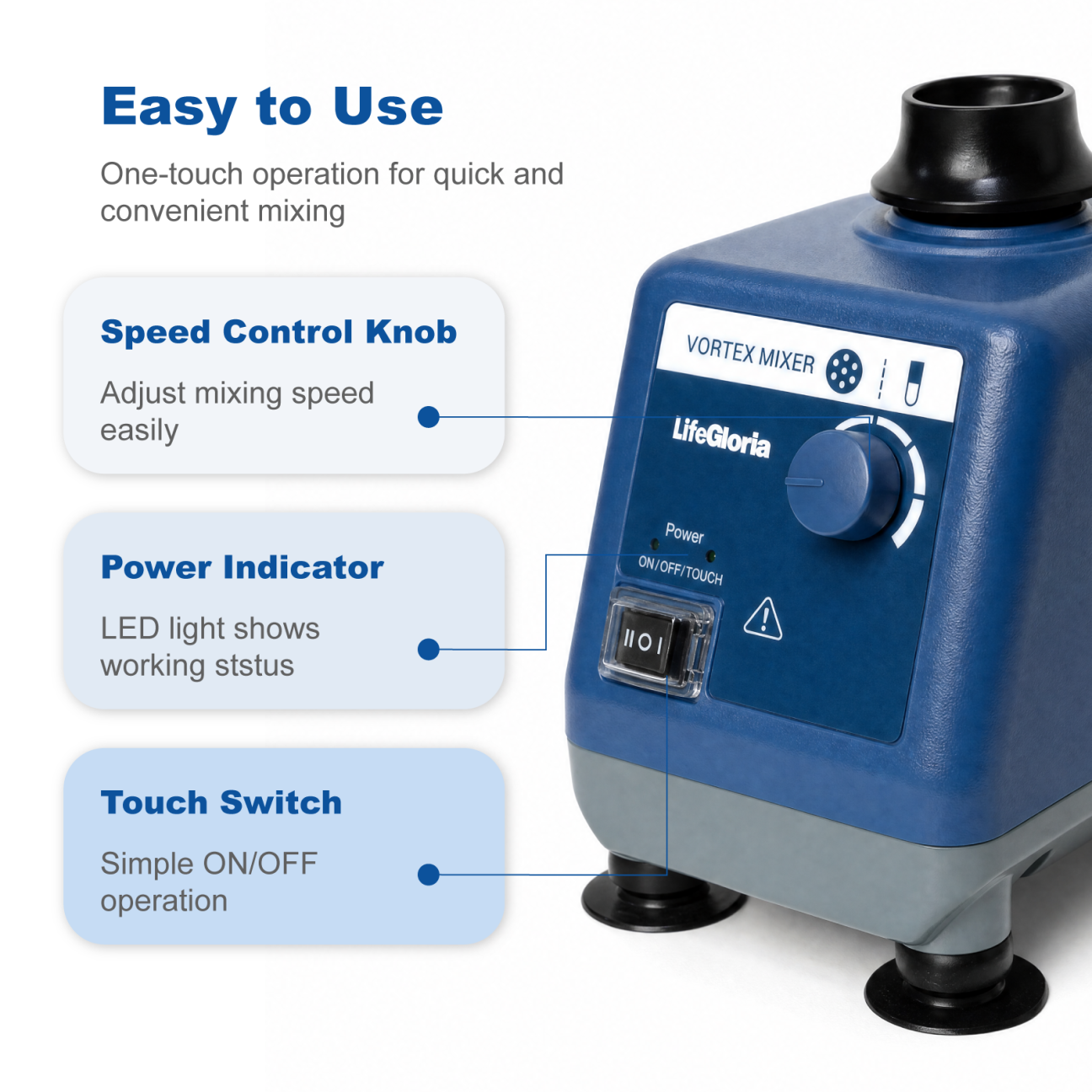
- Touch mode (activated when tube is pressed down)
- Continuous mode (runs without holding the tube)
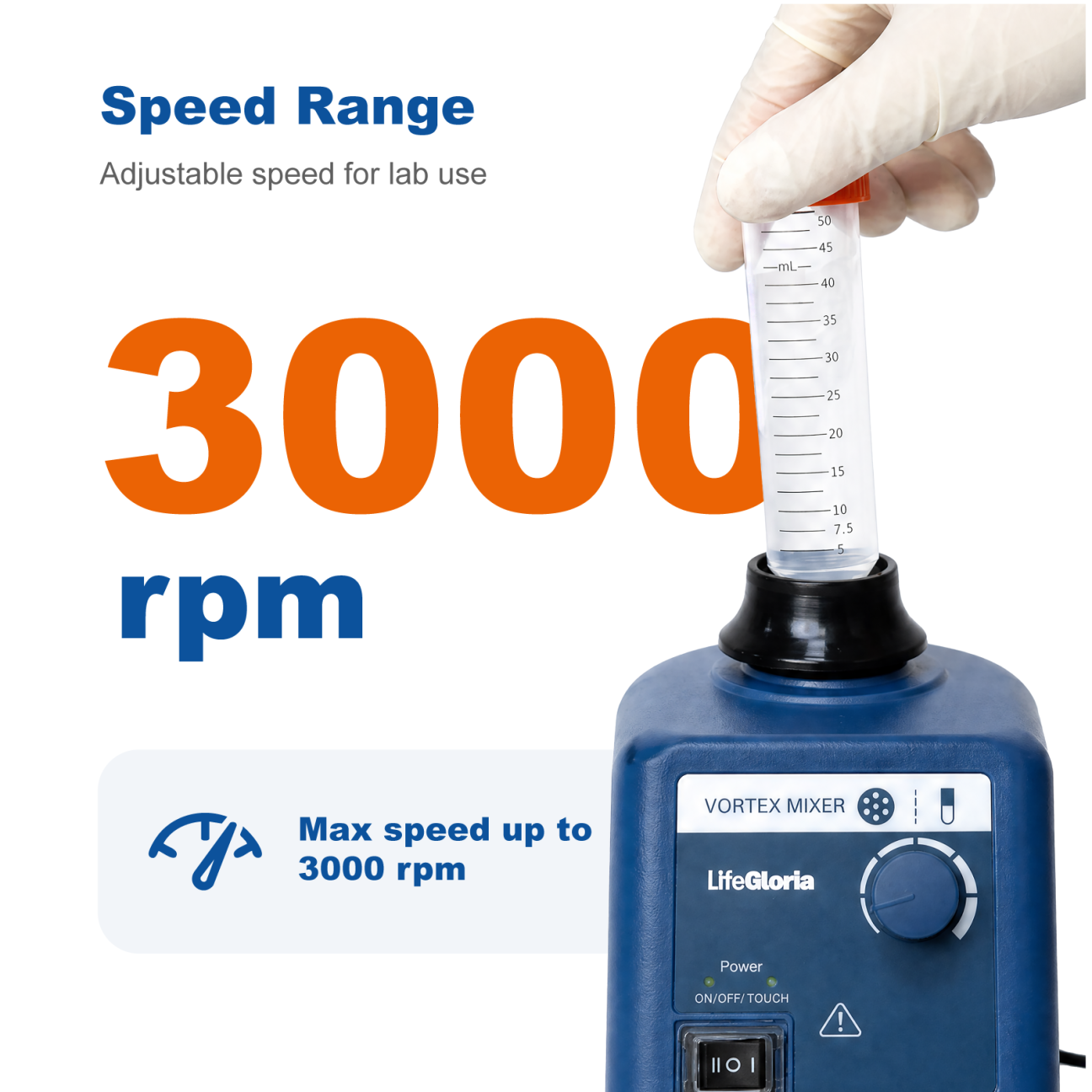
- Adjustable speed control (low to high RPM range)
This allows researchers to choose different mixing intensities depending on sample type.
Common Laboratory Applications
A vortex mixer is used in almost every biological or chemical laboratory. Common applications include:
Molecular Biology
- DNA and RNA sample mixing
- PCR reaction preparation
- Enzyme and buffer mixing
Cell Biology
- Cell suspension resuspension
- Media preparation
- Pellet mixing after centrifugation
Clinical Diagnostics
- Blood sample mixing
- Reagent preparation
- Test tube homogenization
Chemistry & Biochemistry
- Solution mixing
- Chemical reaction preparation
- Dissolving solids into liquids
Because of its speed and efficiency, the vortex mixer is considered an essential bench-top laboratory tool.
Types of Vortex Mixers
Different laboratory needs require different mixer configurations:
1. Touch Vortex Mixer
Activated only when the tube is pressed against the head. Ideal for quick, intermittent mixing.
2. Continuous Vortex Mixer
Runs continuously for longer mixing tasks or multiple samples.
3. Variable Speed Vortex Mixer
Allows precise control of mixing intensity, suitable for sensitive biological samples.
4. Multi-Tube Vortex Mixer
Designed for higher throughput workflows.
How to Choose the Right Vortex Mixer
When selecting a laboratory vortex mixer, consider the following factors:
Speed Range (RPM)
Higher RPM provides stronger mixing, but sensitive samples may require lower speeds.
Mode Options
Touch mode is useful for quick tasks, while continuous mode is better for batch processing.
Stability & Vibration
A good vortex mixer should remain stable during high-speed operation.
Noise Level
Low-noise motors improve laboratory working conditions.
Orbital Diameter
Typical ranges (e.g., 4–6 mm) affect mixing intensity.
Voltage Compatibility
Wide voltage (100–240V) is ideal for global laboratory environments.
Why Vortex Mixing Matters in Laboratories
Proper mixing is critical for experimental accuracy. Incomplete mixing can lead to:
- Inconsistent PCR results
- Uneven reagent distribution
- Experimental variability
- Reduced reproducibility
A vortex mixer ensures that all components are evenly distributed, improving data reliability and experimental success rates.
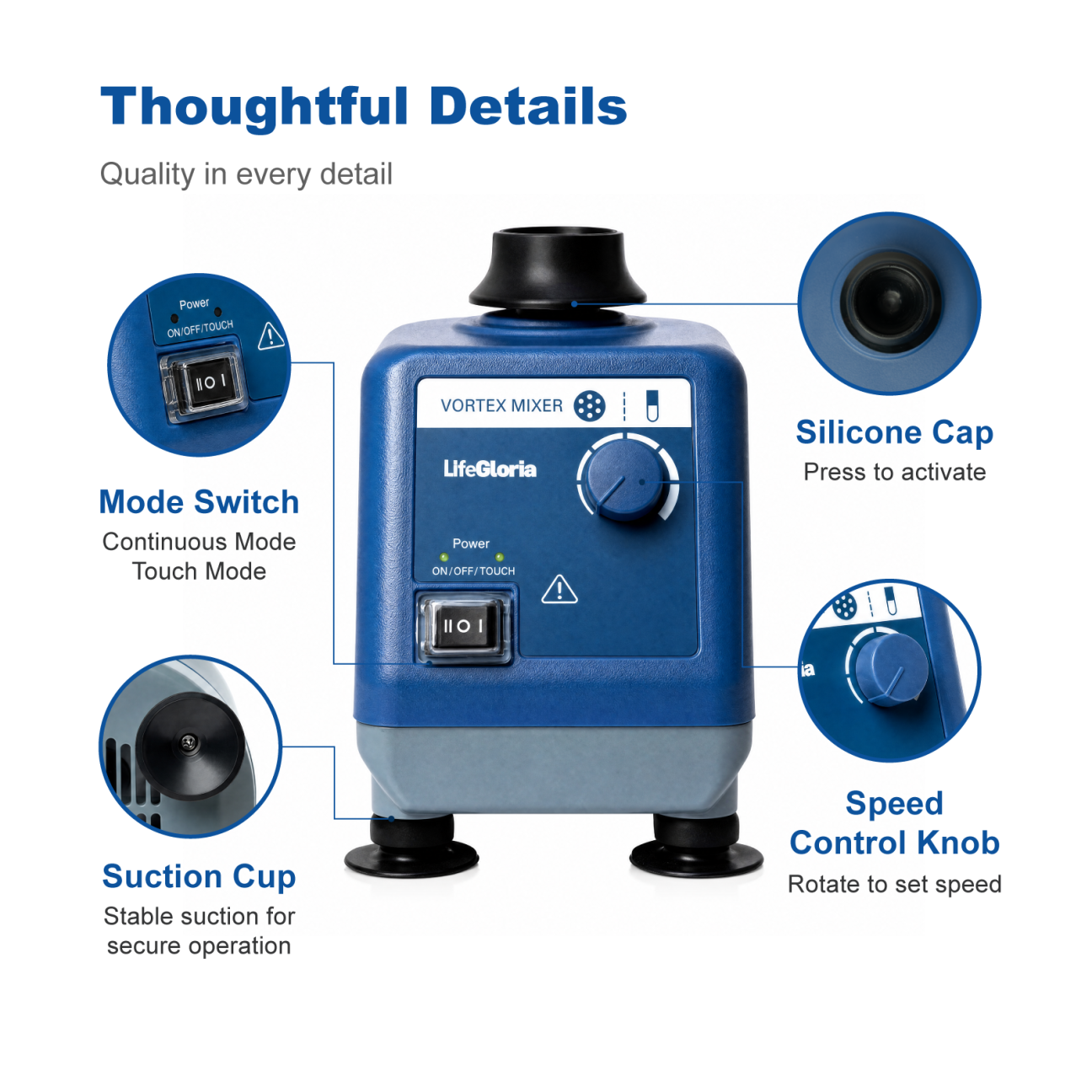
LifeGloria Laboratory Vortex Mixer
The LifeGloria Vortex Mixer (3000 RPM) is designed for daily laboratory use, combining reliability, simplicity, and stable performance.
Key advantages include:
- Adjustable speed up to 3000 RPM
- Touch and continuous operation modes
- 6 mm orbital mixing motion
- Low vibration and stable structure
- Wide voltage support (100–240V)
- Compact design for limited bench space
It is suitable for molecular biology, clinical laboratories, pharmaceutical research, and academic institutions.
FAQ
What is a vortex mixer used for?
It is used to rapidly mix small volumes of liquid in laboratory tubes, ensuring uniform sample preparation.
Can vortex mixers damage DNA samples?
When used properly at appropriate speed settings, vortex mixers do not damage DNA samples for standard laboratory workflows.
What tubes can be used with a vortex mixer?
Microcentrifuge tubes, PCR tubes, and small test tubes are commonly used.
Is vortex mixing better than manual shaking?
Yes. It provides more consistent, faster, and reproducible results.
