

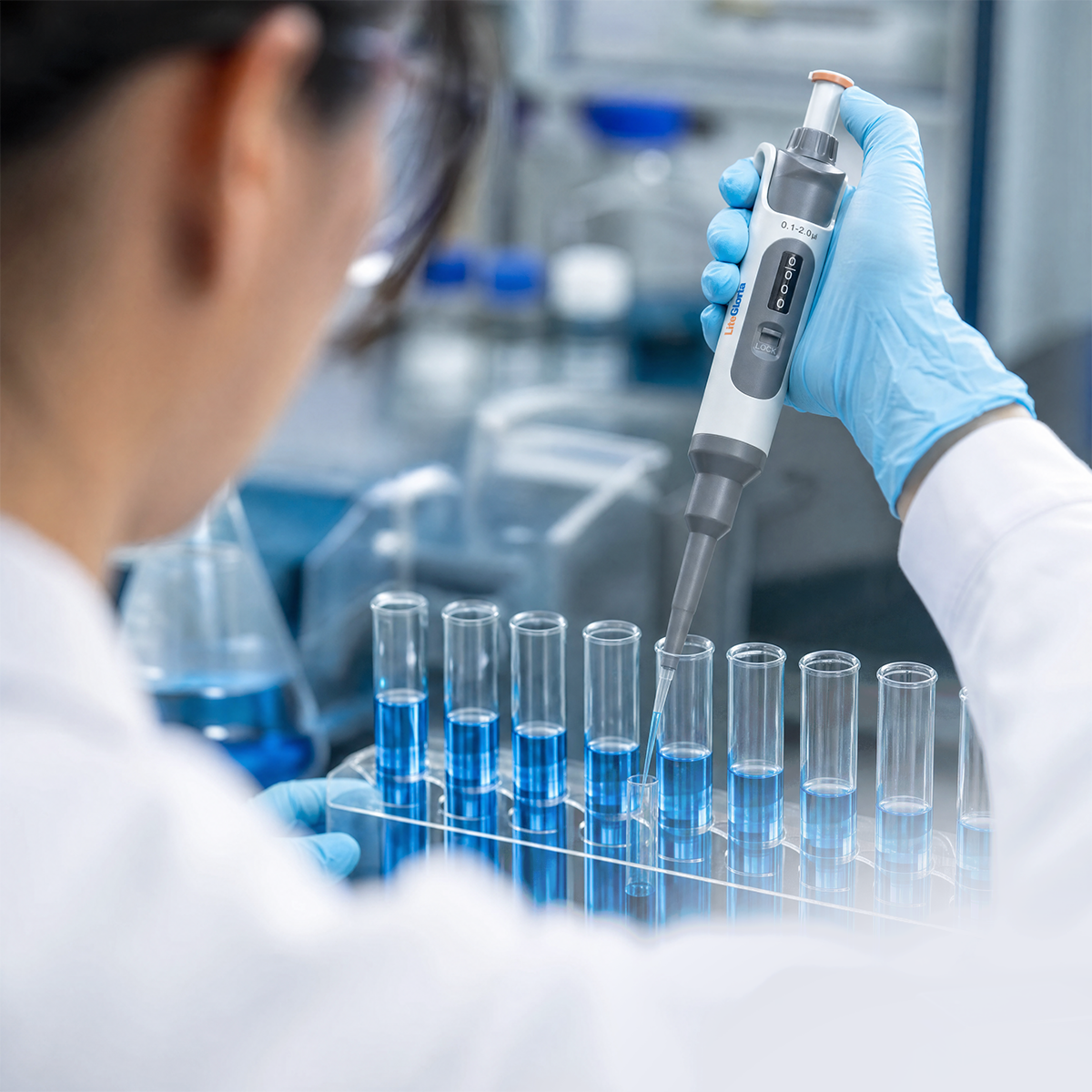
What Is a Micropipette?
A micropipette is a precision laboratory instrument used to accurately measure and transfer very small volumes of liquid, typically ranging from 0.1 μL to 10 mL. It is one of the most essential tools in molecular biology, chemistry, clinical diagnostics, and pharmaceutical research.
Unlike basic droppers or glass pipettes, micropipettes are designed for high accuracy, repeatability, and contamination-free liquid handling, making them indispensable in modern laboratories.
They are widely used in PCR, DNA/RNA analysis, enzyme reactions, and cell culture workflows.
Why Accuracy Matters in Micropipetting
In laboratory experiments, even small volume errors can significantly affect results. For example, incorrect pipetting in PCR can lead to:
- Failed amplification
- Weak or inconsistent bands
- Contaminated reactions
- Poor reproducibility
A high-quality micropipette ensures consistent and reliable liquid transfer, which is critical for experimental success.
Types of Micropipettes
1. Single-Channel Micropipette
The most common type, used for transferring liquid one sample at a time. Ideal for routine laboratory work.
2. Multi-Channel Micropipette
Used in high-throughput workflows such as ELISA or microplate assays, allowing simultaneous pipetting of multiple wells.
3. Adjustable Volume Micropipette
Allows users to set different volume ranges, offering flexibility across multiple applications.
4. Fixed Volume Micropipette
Designed for repetitive tasks requiring the same volume, improving consistency.
How to Choose the Right Micropipette
When selecting a micropipette for laboratory use, consider the following factors:
Volume Range
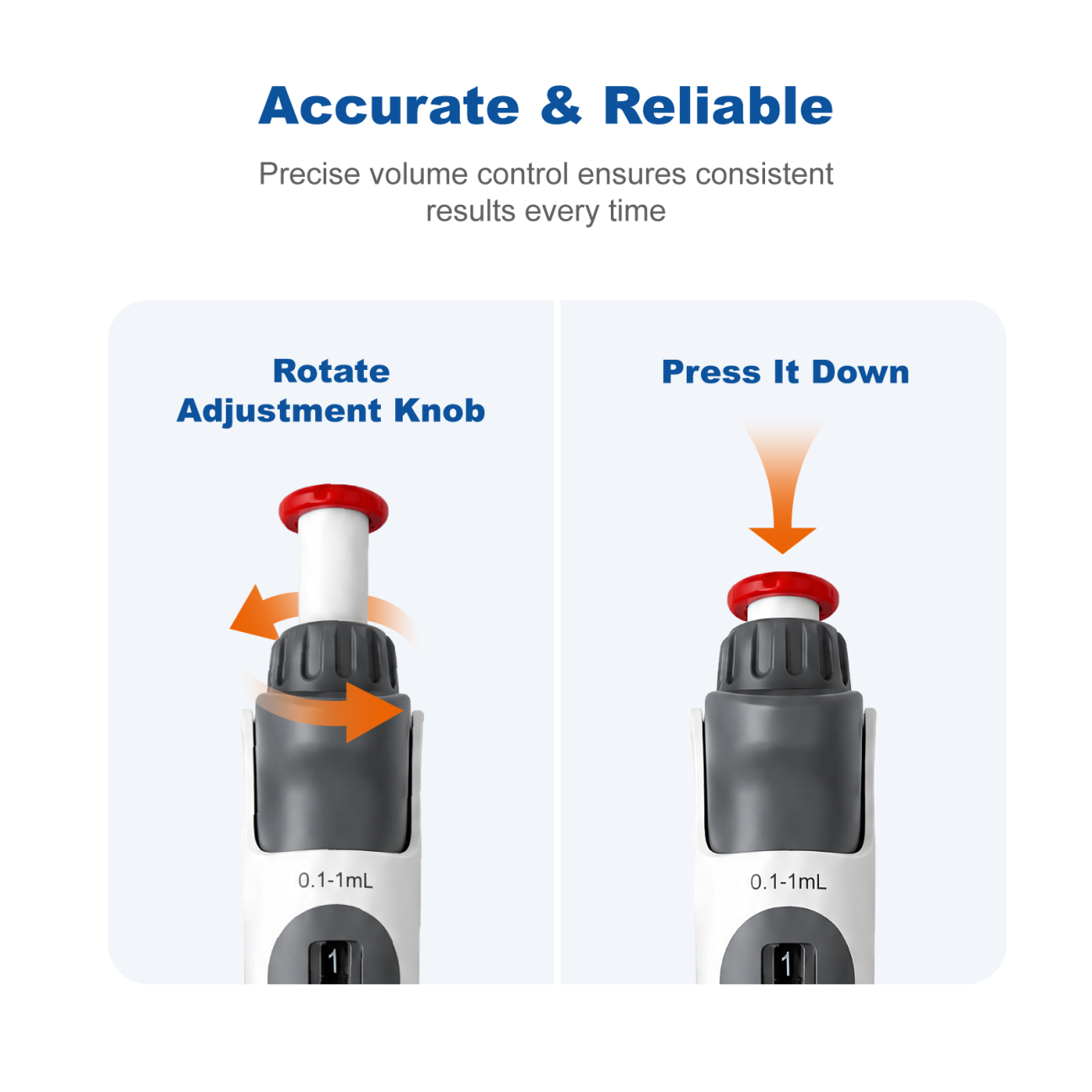
Choose a pipette that matches your most common experimental volumes. Using a pipette near its maximum or minimum limit reduces accuracy.
Accuracy and Precision
- Accuracy refers to how close the pipette is to the actual volume
- Precision refers to repeatability across multiple uses
Both are essential for reliable experimental results.
Ergonomics
Long pipetting sessions can cause hand fatigue. Ergonomic designs reduce strain and improve workflow efficiency.
Material and Durability
High-quality micropipettes are made from chemical-resistant and autoclavable materials for long-term use.
Calibration Capability
Regular calibration ensures consistent performance and compliance with laboratory standards.
How Micropipettes Work
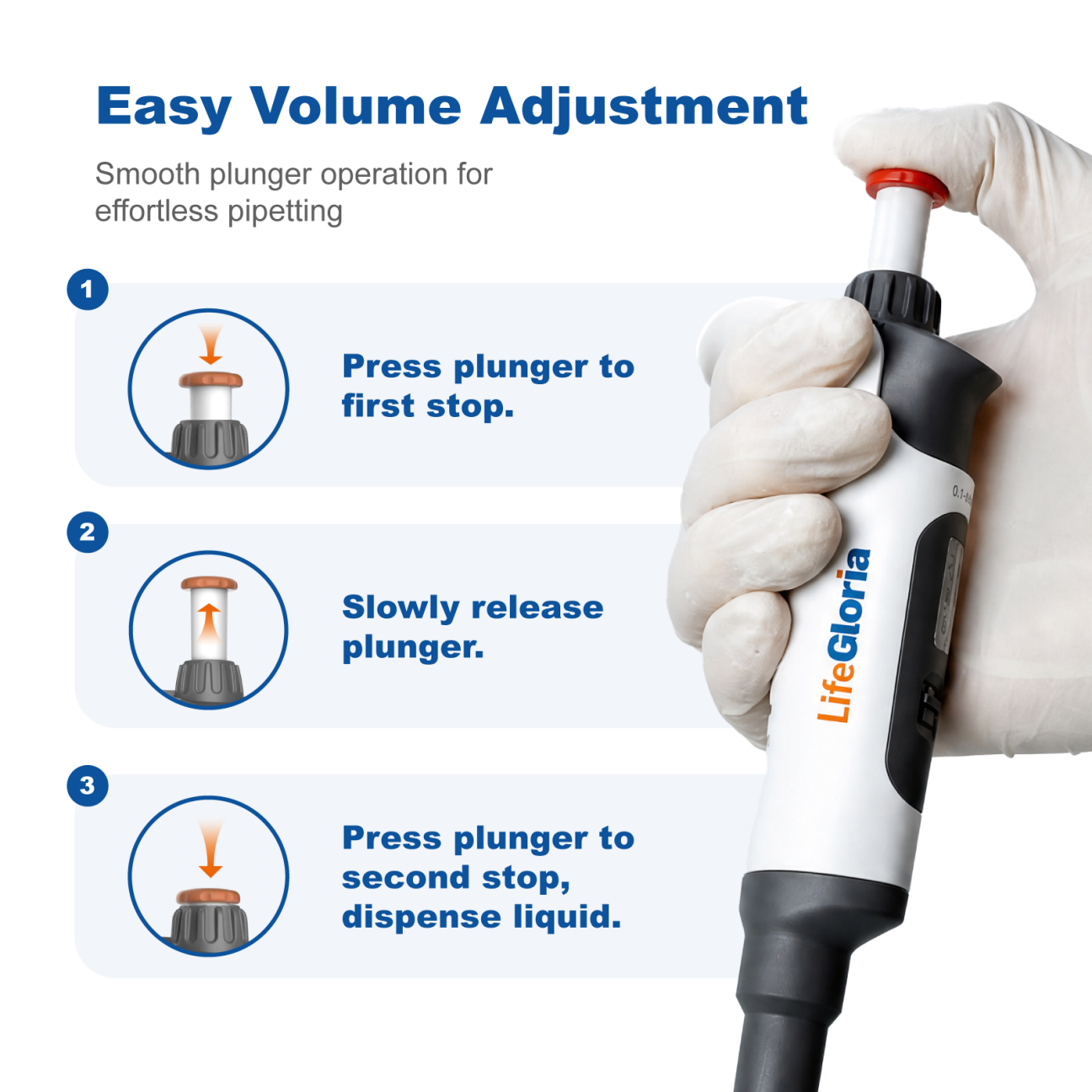
Micropipettes operate using an air displacement system. When the plunger is pressed, air is expelled; when released, a vacuum draws liquid into the disposable tip.
The liquid is then dispensed by pressing the plunger again, ensuring controlled and accurate transfer.
Proper technique is essential to avoid errors such as:
- Inconsistent aspiration speed
- Air bubbles
- Incomplete dispensing
Calibration and Maintenance
Regular calibration is necessary to maintain accuracy. Most laboratories calibrate pipettes:
- Monthly (high-precision labs)
- Quarterly (standard labs)
- After heavy use or accidental drops
Basic maintenance includes:
- Cleaning external surfaces
- Autoclaving compatible parts
- Replacing worn seals
- Checking volume accuracy with gravimetric testing
Common Mistakes in Pipetting
Even experienced researchers make errors such as:
- Using the wrong pipette for volume range
- Reusing tips
- Pipetting too fast or too slowly
- Ignoring calibration schedules
- Not pre-wetting tips
These mistakes can reduce experimental reliability and increase variability.
Applications of Micropipettes
Micropipettes are used in a wide range of scientific fields:
- Molecular biology (PCR, cloning, sequencing)
- Cell culture (media preparation, seeding)
- Clinical diagnostics (sample preparation)
- Biochemistry (enzyme assays)
- Pharmaceutical research
- Environmental testing
They are essential tools in nearly every modern laboratory.
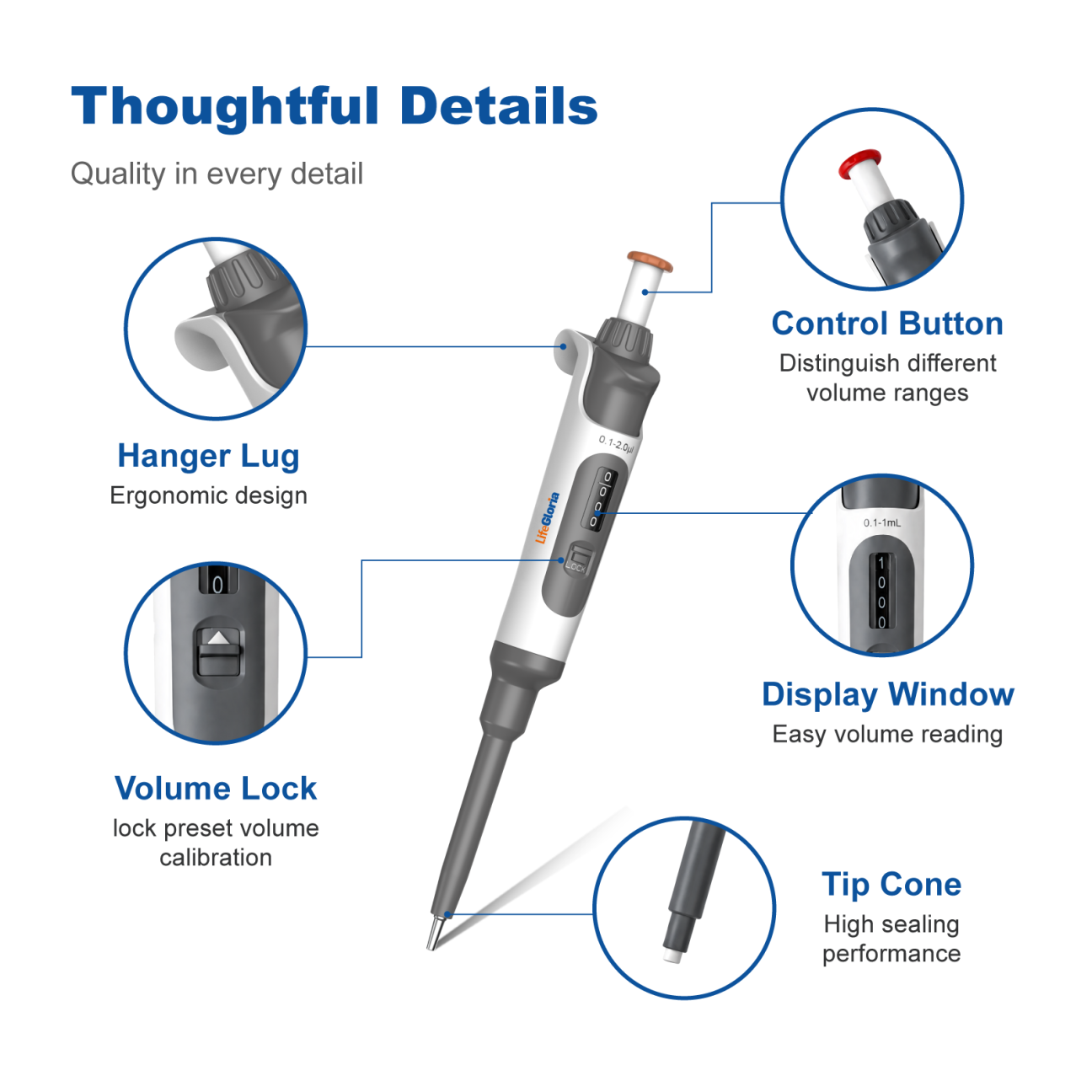
LifeGloria Adjustable Micropipette
The LifeGloria Single-Channel Adjustable Micropipette is designed for precise and reliable liquid handling across multiple laboratory applications.
Key features include:
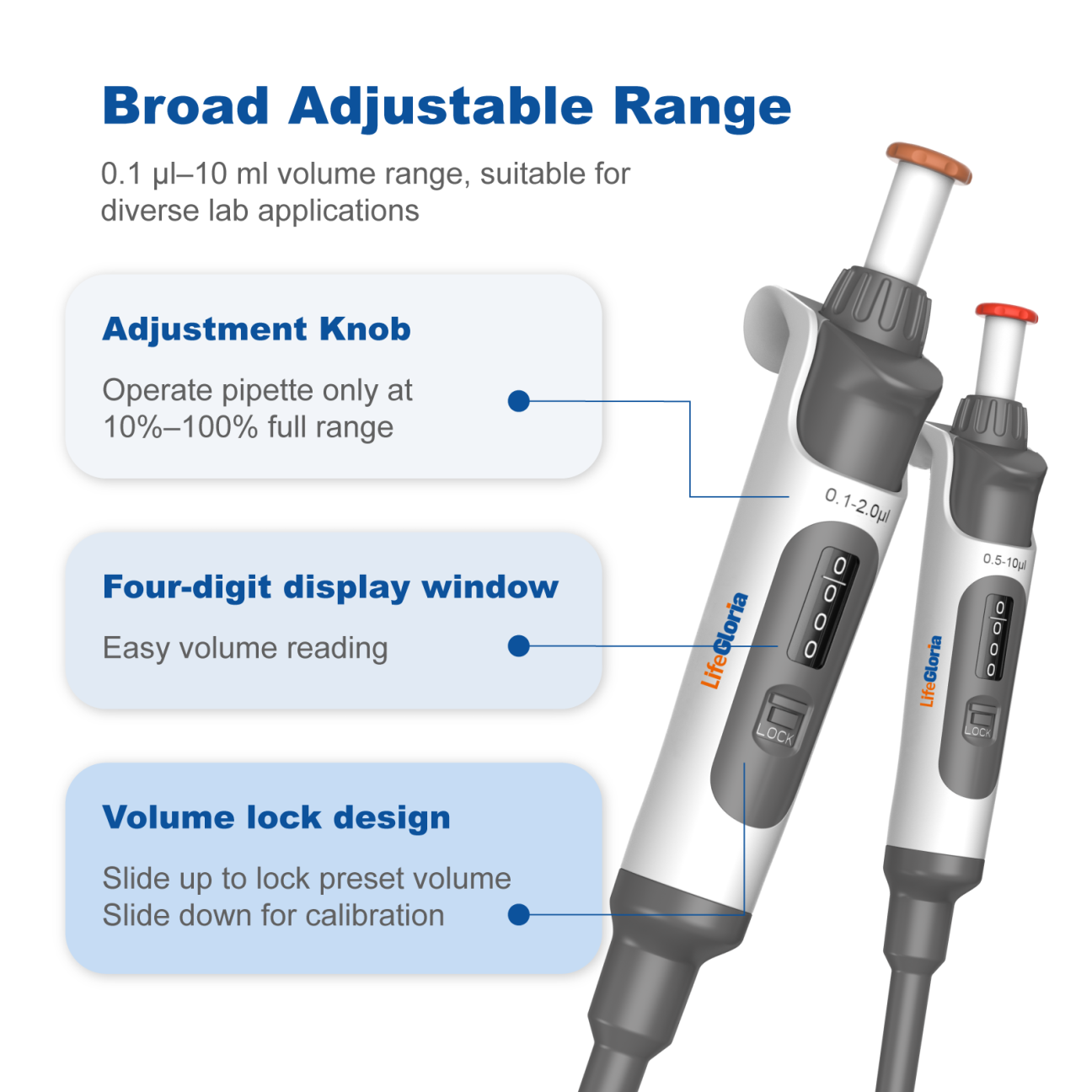
- Wide volume range from 0.1 μL to 10 mL
- High accuracy and repeatability
- Fully autoclavable construction
- Ergonomic lightweight design
- Smooth plunger operation for reduced fatigue
It is suitable for research institutions, universities, hospitals, and biotechnology laboratories.
FAQ
What is a micropipette used for?
It is used to measure and transfer very small volumes of liquid accurately in laboratory experiments.
How often should a micropipette be calibrated?
Depending on usage, it should be calibrated monthly to quarterly to ensure accuracy.
What is the difference between accuracy and precision?
Accuracy is how close the measurement is to the true value, while precision refers to consistency across repeated measurements.
Can micropipettes be autoclaved?
Yes, many modern micropipettes are fully or partially autoclavable.
