

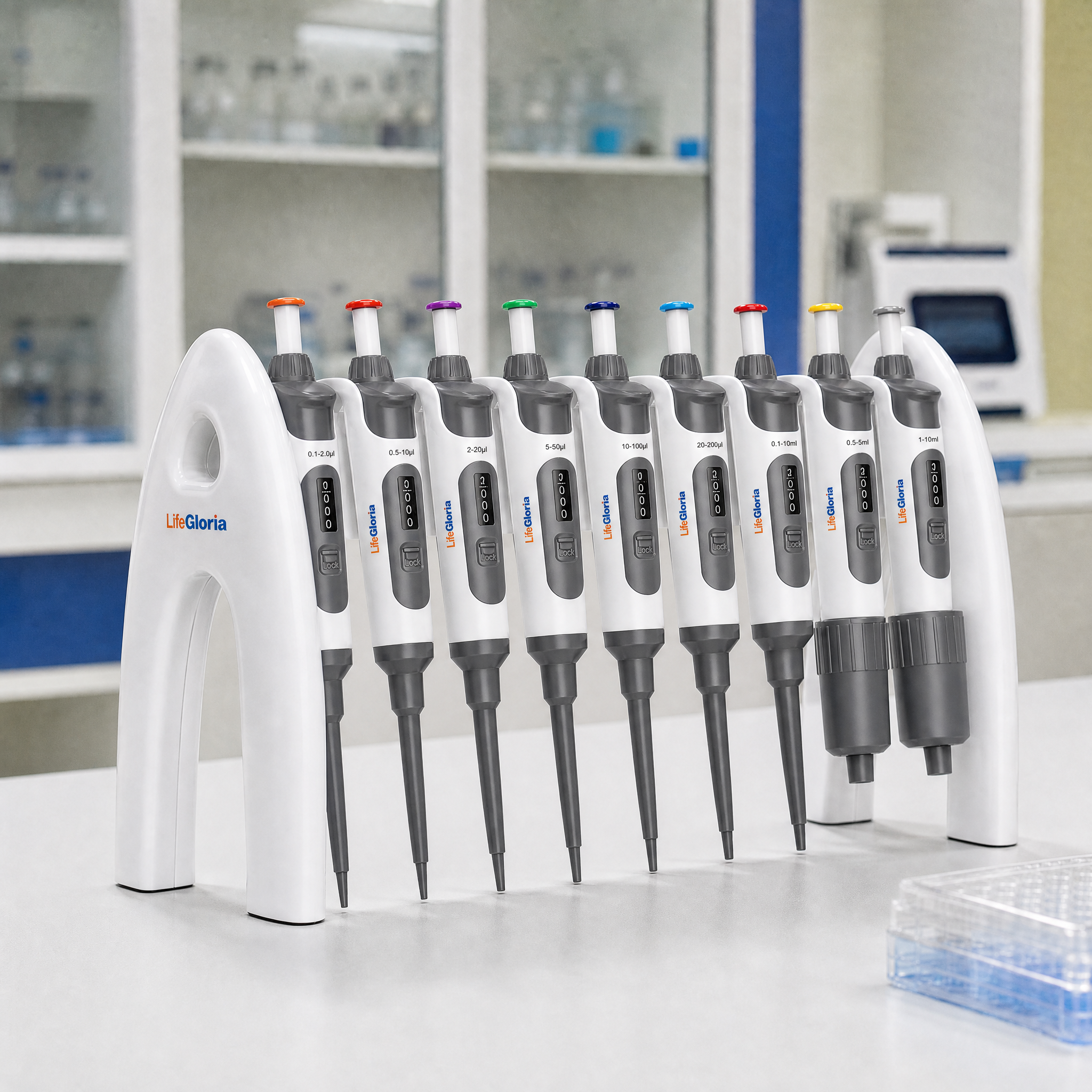
Accurate liquid handling is one of the foundations of reliable laboratory research. Whether performing PCR, cell culture, ELISA, microbiology, or pharmaceutical testing, researchers depend on laboratory micropipettes to transfer precise volumes of liquid with consistency. Even a small pipetting error can affect experimental accuracy, waste valuable reagents, and reduce reproducibility.
This guide explains how laboratory micropipettes work, their common applications, best pipetting practices, and how to choose the right pipette for your laboratory.
What Is a Laboratory Micropipette?
A laboratory micropipette is a precision instrument designed to measure and dispense small volumes of liquid, typically ranging from 0.1 μL to 10 mL. Unlike traditional glass pipettes, adjustable micropipettes provide highly accurate and repeatable liquid handling through a mechanical piston system.
Modern laboratories use micropipettes daily for molecular biology, clinical diagnostics, biotechnology, environmental analysis, pharmaceutical research, and academic education. Choosing the correct pipette and using proper technique are essential for obtaining reliable results.
How Does a Micropipette Work?
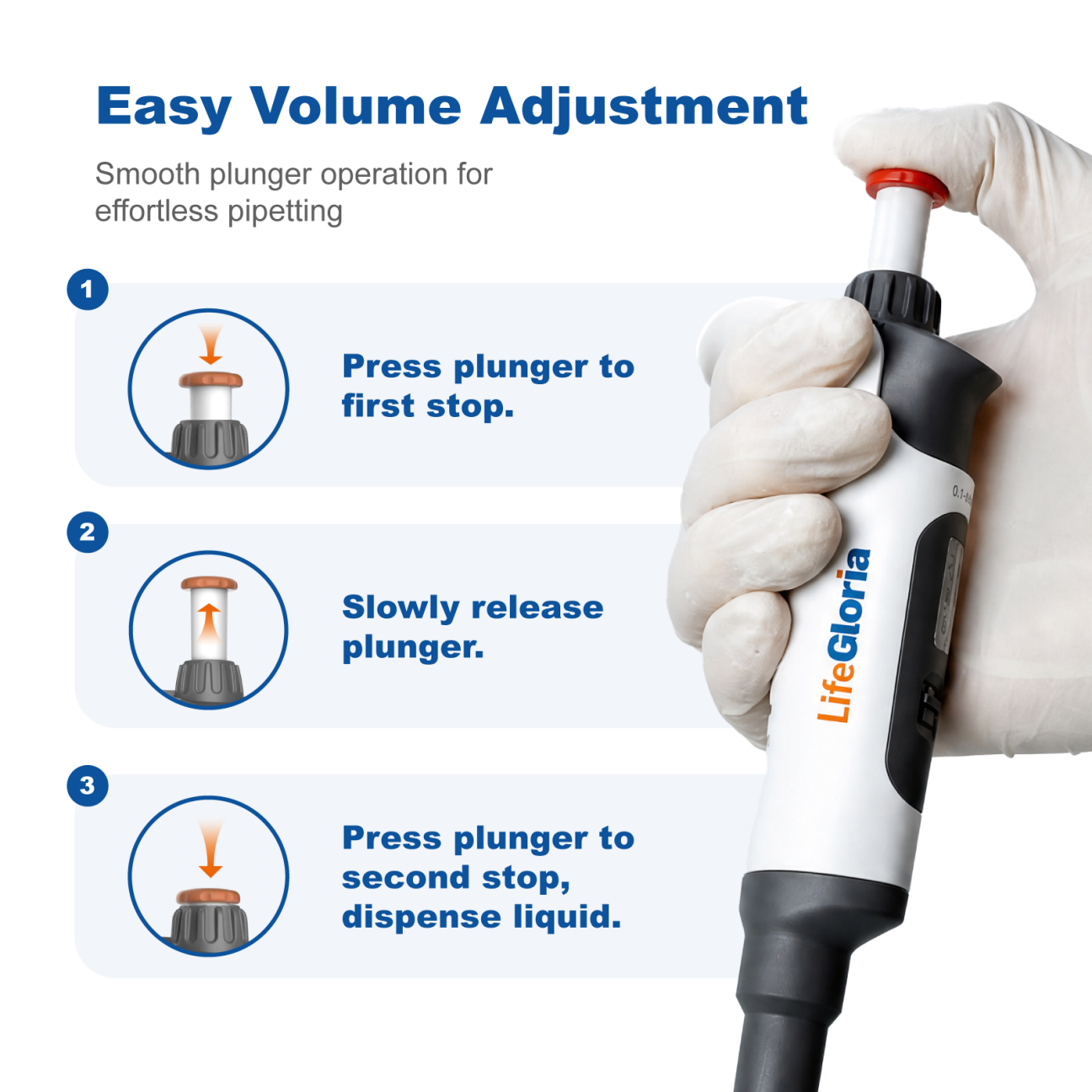
Most laboratory micropipettes operate using the air displacement principle. When the plunger is pressed and released, a piston creates an air cushion that draws liquid into a disposable pipette tip. Pressing the plunger again dispenses the liquid with high precision.
The accuracy of liquid transfer depends on several factors, including proper pipette calibration, high-quality disposable tips, correct aspiration speed, and consistent operating technique.
Common Applications
Laboratory micropipettes are widely used in scientific research and quality control laboratories, including:
-
PCR and qPCR sample preparation
-
DNA and RNA extraction
-
Cell culture media transfer
-
ELISA and immunoassays
-
Microbiology experiments
-
Pharmaceutical formulation
-
Clinical diagnostic testing
-
Food and environmental analysis
Because many of these applications involve expensive samples or sensitive reagents, precision liquid handling is critical for achieving reproducible experimental results.
Best Practices for Accurate Pipetting
Even high-quality pipettes require proper operation to maintain accuracy. Researchers should follow several best practices:
-
Select a pipette whose working range closely matches the required volume.
-
Attach a compatible pipette tip securely before use.
-
Pre-wet the tip when working with very small liquid volumes.
-
Hold the pipette vertically during aspiration.
-
Immerse the tip only a few millimeters below the liquid surface.
-
Aspirate and dispense slowly to minimize bubbles.
-
Replace the tip after every sample to prevent cross-contamination.
-
Store the pipette upright on a pipette stand after use.
Following these simple practices helps improve repeatability while reducing experimental errors.
Common Pipetting Mistakes
Many liquid handling errors result from incorrect technique rather than equipment failure.
Common mistakes include selecting the wrong volume range, releasing the plunger too quickly, reusing disposable tips, holding the pipette at an angle during aspiration, or delaying liquid dispensing after aspiration. These habits may introduce air bubbles, inconsistent sample volumes, or contamination between samples.
Routine training and proper pipette maintenance significantly reduce these risks.
Calibration and Maintenance
Regular calibration ensures that a micropipette continues to deliver accurate volumes over time. Most laboratories perform calibration every six to twelve months, although laboratories handling critical applications may verify performance more frequently.
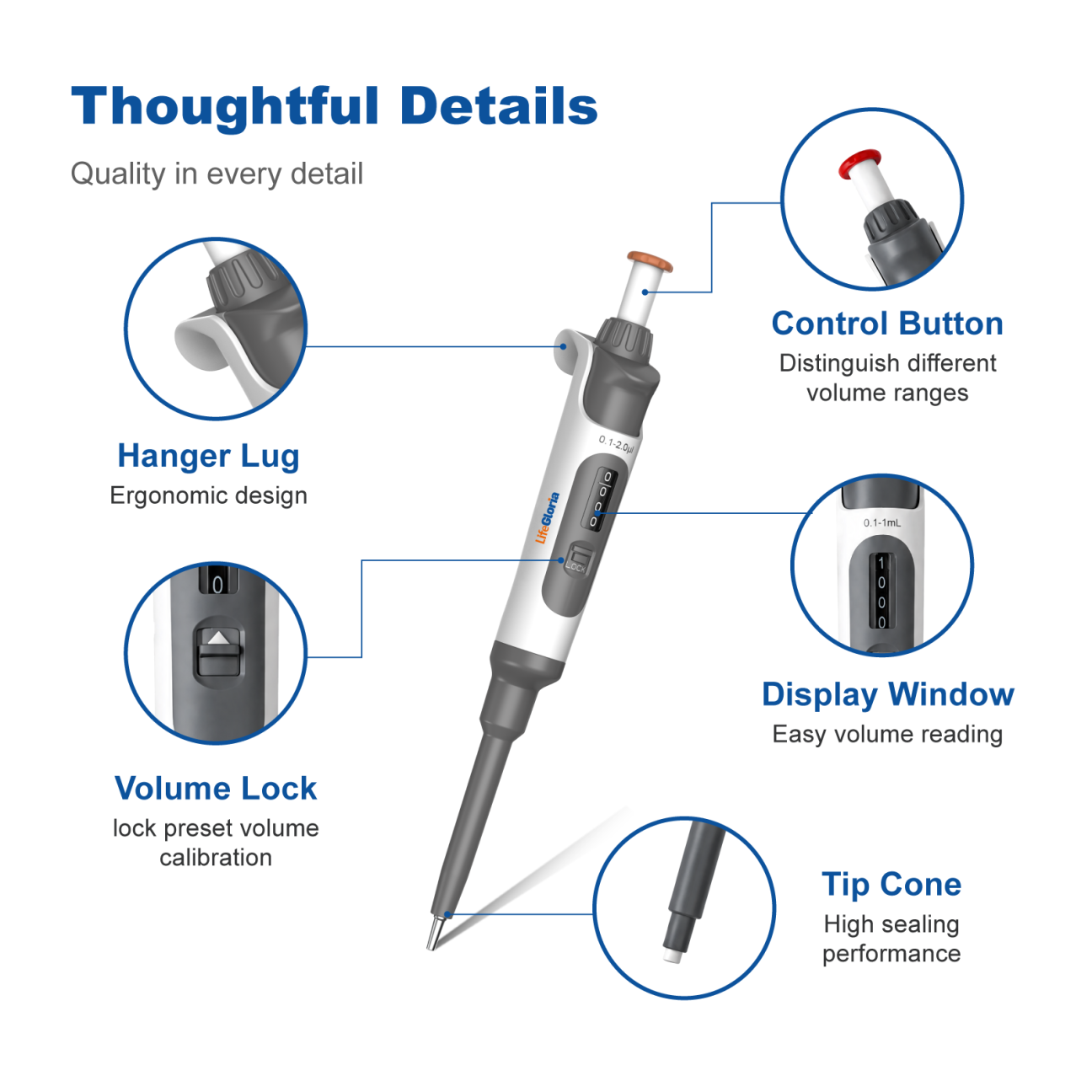
Daily maintenance should include cleaning the exterior with laboratory-approved disinfectants and inspecting the tip cone for contamination. Periodic servicing may include replacing seals, lubricating internal components, and verifying accuracy according to laboratory quality procedures.
Proper maintenance extends instrument lifespan while protecting experimental integrity.
How to Choose the Right Micropipette
When selecting a laboratory micropipette, consider the following factors:
-
Volume range required for your experiments
-
Accuracy and repeatability specifications
-
Ergonomic design for comfortable long-term use
-
Fully autoclavable components for contamination control
-
Durable materials resistant to common laboratory chemicals
-
Easy calibration and maintenance
A well-designed micropipette not only improves accuracy but also reduces user fatigue during repetitive pipetting tasks.
Why Choose LifeGloria Micropipettes?
LifeGloria adjustable single-channel micropipettes are designed for reliable and precise liquid handling across a wide range of laboratory applications. Available in volume ranges from 0.1 μL to 10 mL, they provide excellent accuracy, ergonomic operation, and fully autoclavable construction for convenient sterilization.
Suitable for research laboratories, universities, hospitals, biotechnology companies, and quality control laboratories, LifeGloria micropipettes help researchers achieve consistent and reproducible results while maintaining efficient daily workflows.
Conclusion
Precision pipetting plays a vital role in every laboratory workflow. Selecting the appropriate micropipette, using correct pipetting techniques, and maintaining regular calibration all contribute to higher experimental accuracy and improved reproducibility. Whether your laboratory performs molecular biology, clinical diagnostics, or routine sample preparation, investing in a reliable laboratory micropipette is an important step toward dependable scientific results.
