

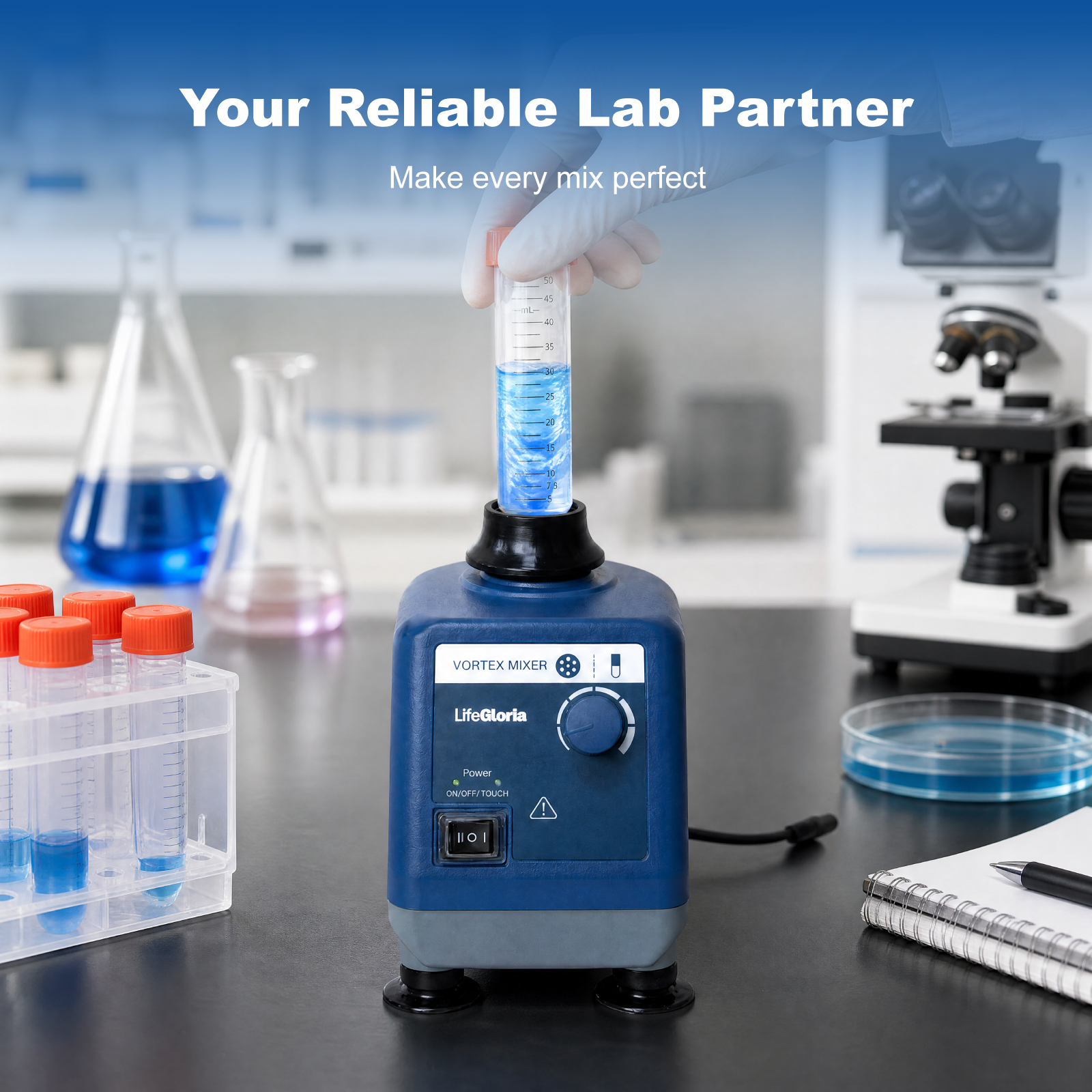
Mixing is one of the most common operations performed in laboratories. From preparing biological samples to dissolving chemical solutions, proper mixing ensures consistent results and improves experimental reliability.
Two commonly used laboratory mixing instruments are vortex mixers and magnetic stirrers.
Although both devices are designed to mix liquids, they work in completely different ways and are suitable for different applications.
Choosing the wrong mixer can lead to inefficient sample preparation, incomplete mixing, or unnecessary equipment costs.
This guide explains the key differences between vortex mixers and magnetic stirrers and helps researchers select the right solution for their laboratory.
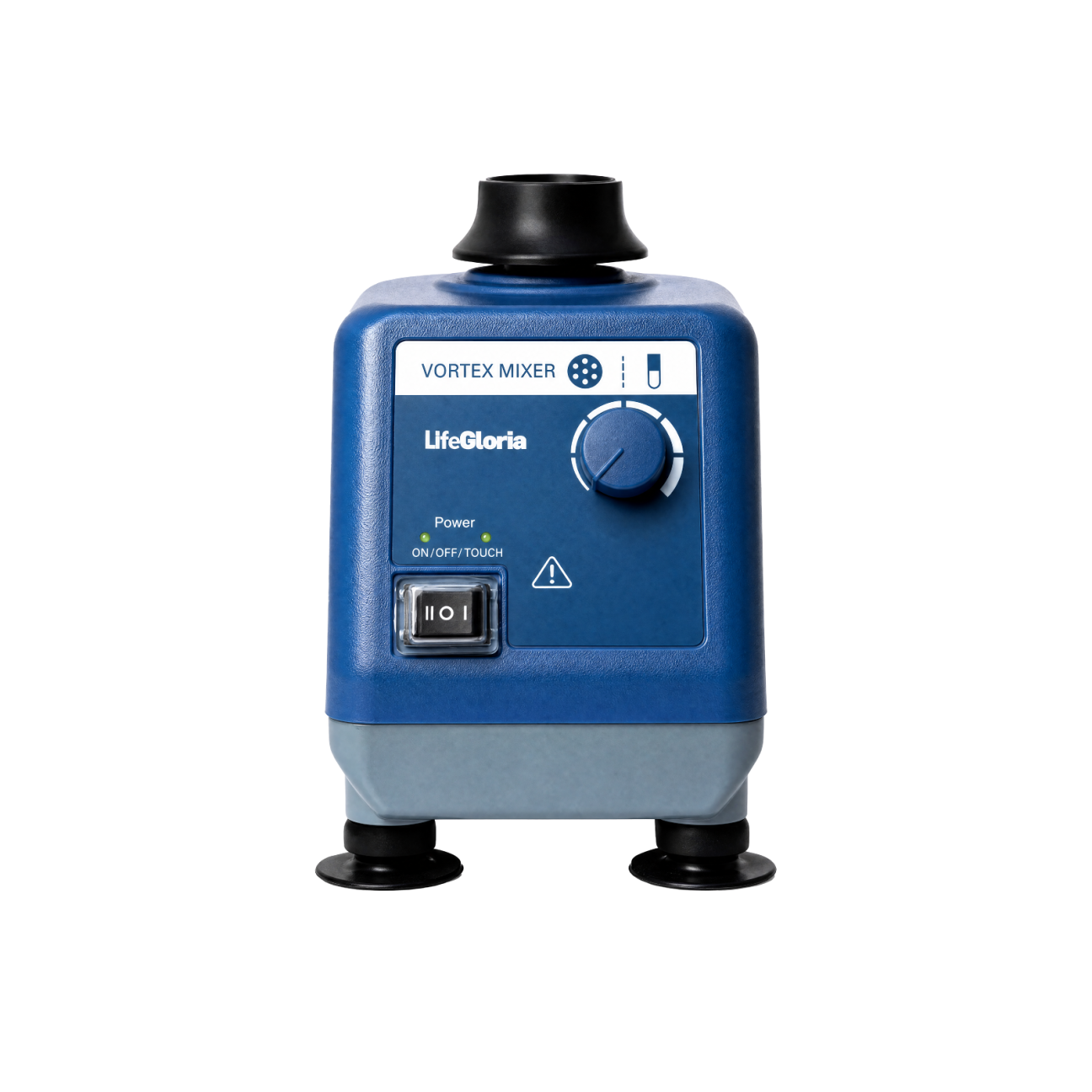
What Is a Vortex Mixer?
A vortex mixer is a laboratory instrument that rapidly mixes liquid samples through orbital shaking motion.
The device creates a circular movement that transfers energy directly into the sample, producing a vortex inside the tube.
Vortex mixers are commonly used for:
- Test tubes
- Microcentrifuge tubes
- PCR tubes
- Small sample containers
- Biological samples
Typical applications include:
- Cell suspension
- DNA/RNA preparation
- Reagent mixing
- Protein sample preparation
- Laboratory sample homogenization
What Is a Magnetic Stirrer?
A magnetic stirrer uses a rotating magnetic field to spin a small magnetic bar placed inside a liquid container.
The rotating stir bar creates continuous mixing throughout the solution.
Magnetic stirrers are commonly used for:
- Beakers
- Flasks
- Chemical solutions
- Buffer preparation
- Media preparation
Typical applications include:
- Dissolving chemicals
- Preparing laboratory solutions
- Maintaining uniform mixtures
- Long-duration mixing
Vortex Mixer vs Magnetic Stirrer: Key Differences
| Feature | Vortex Mixer | Magnetic Stirrer |
|---|---|---|
| Mixing Method | Orbital vibration | Magnetic rotation |
| Sample Type | Tubes and small containers | Beakers and flasks |
| Mixing Speed | High-speed short mixing | Continuous slow mixing |
| Best For | Quick sample mixing | Solution preparation |
| Sample Volume | Small volume | Medium to large volume |
| Operation | Touch or continuous mode | Continuous operation |
| Contact With Sample | No direct contact | Requires magnetic stir bar |
Working Principle Comparison
How Does a Vortex Mixer Work?
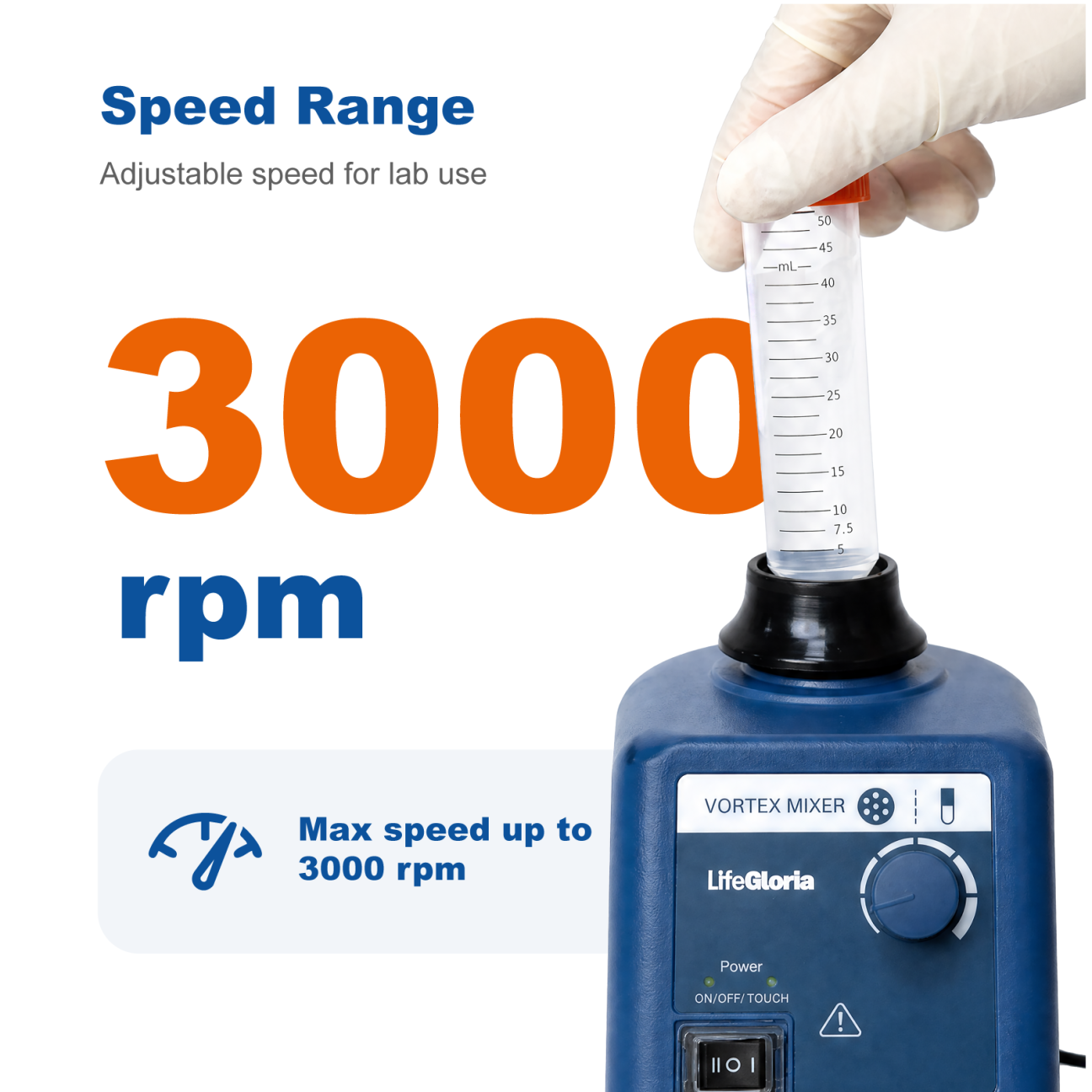
A vortex mixer uses an eccentric motor to create orbital movement.
When a tube contacts the mixing head:
- The motor generates vibration
- The sample moves in a circular pattern
- A vortex forms inside the liquid
- Components become evenly distributed
This process is extremely fast and efficient for small samples.
How Does a Magnetic Stirrer Work?
A magnetic stirrer uses rotating magnets underneath the working surface.
The process:
- A magnetic stir bar is placed inside the container
- The internal magnet rotates
- The stir bar spins with the magnetic field
- The liquid is continuously mixed
This method is ideal for longer mixing periods.
When Should You Use a Vortex Mixer?
A vortex mixer is the better choice when you need:
Fast Sample Mixing
For example:
- Mixing reagents before experiments
- Resuspending pellets
- Combining biological samples
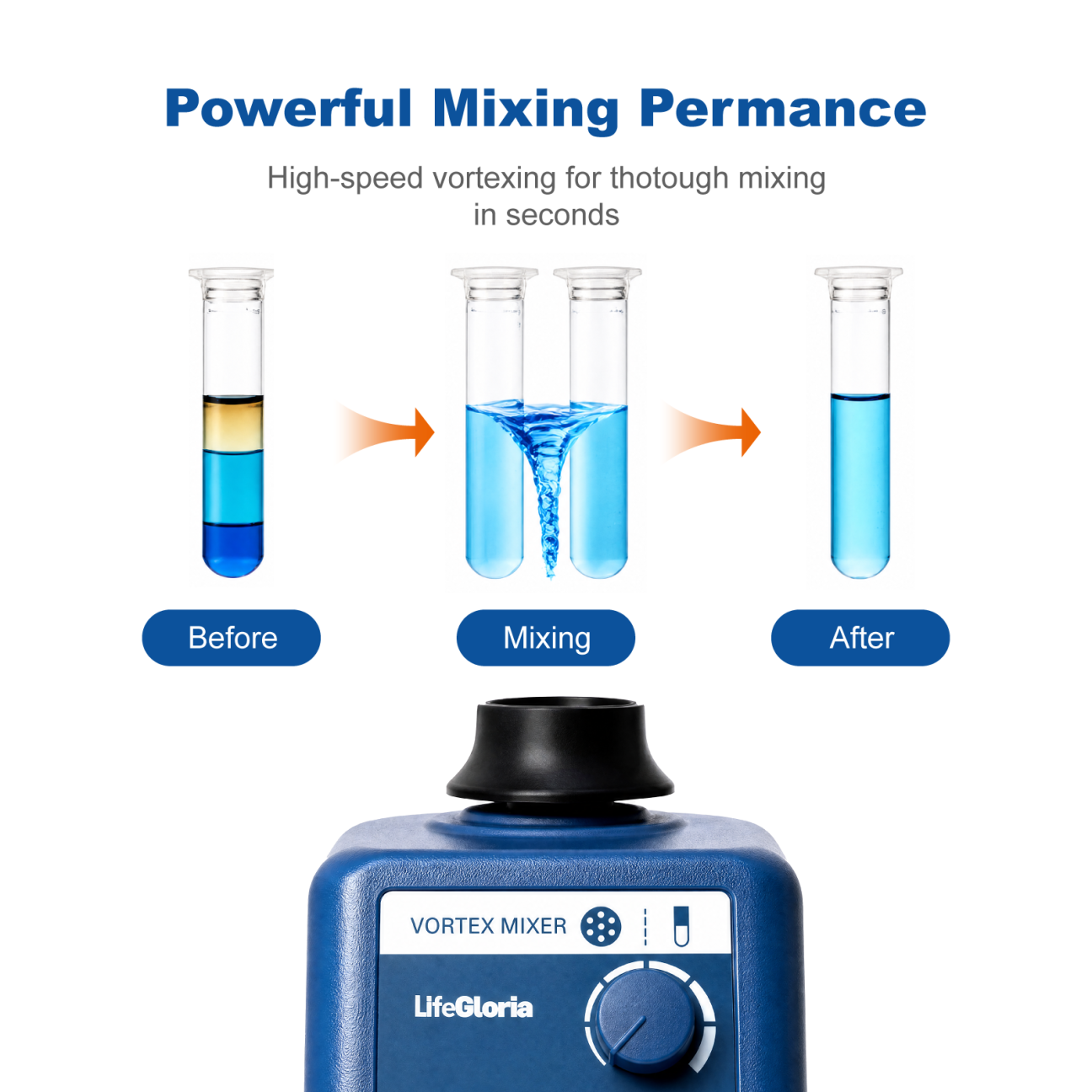
A vortex mixer can complete many mixing tasks within seconds.
Small Volume Samples
Vortex mixers are especially useful for:
- 0.2 mL PCR tubes
- 1.5 mL microcentrifuge tubes
- 15 mL and 50 mL centrifuge tubes
Biological Research Applications
Common uses include:
- Molecular biology
- Microbiology
- Cell biology
- Biochemistry
- Clinical research
When Should You Use a Magnetic Stirrer?
A magnetic stirrer is more suitable for:
Large Volume Solutions
Examples:
- Buffer preparation
- Chemical solutions
- Laboratory media
Long-Term Mixing
Magnetic stirrers are designed for continuous operation.
Examples:
- Several-hour mixing processes
- Solution preparation
- Chemical reactions
Can a Vortex Mixer Replace a Magnetic Stirrer?
Usually, no.
Although both instruments mix liquids, they are designed for different purposes.
A vortex mixer provides:
- Fast
- Powerful
- Short-duration mixing
A magnetic stirrer provides:
- Continuous
- Gentle
- Large-volume mixing
Many professional laboratories use both instruments because they solve different workflow requirements.
How to Choose the Right Laboratory Mixer?
Before purchasing, consider the following factors:
1. Sample Volume
Ask:
- Are you mixing tubes or containers?
- What is the typical sample volume?
- Do you need high-throughput processing?
For tube-based workflows:
→ Choose a vortex mixer.
For flask-based workflows:
→ Choose a magnetic stirrer.
2. Mixing Time
Short mixing:
→ Vortex mixer
Long mixing:
→ Magnetic stirrer
3. Sample Type
Biological samples:
→ Usually vortex mixer
Chemical solutions:
→ Usually magnetic stirrer
4. Laboratory Workflow
Consider:
- Daily sample number
- Required speed
- Available workspace
- Future applications
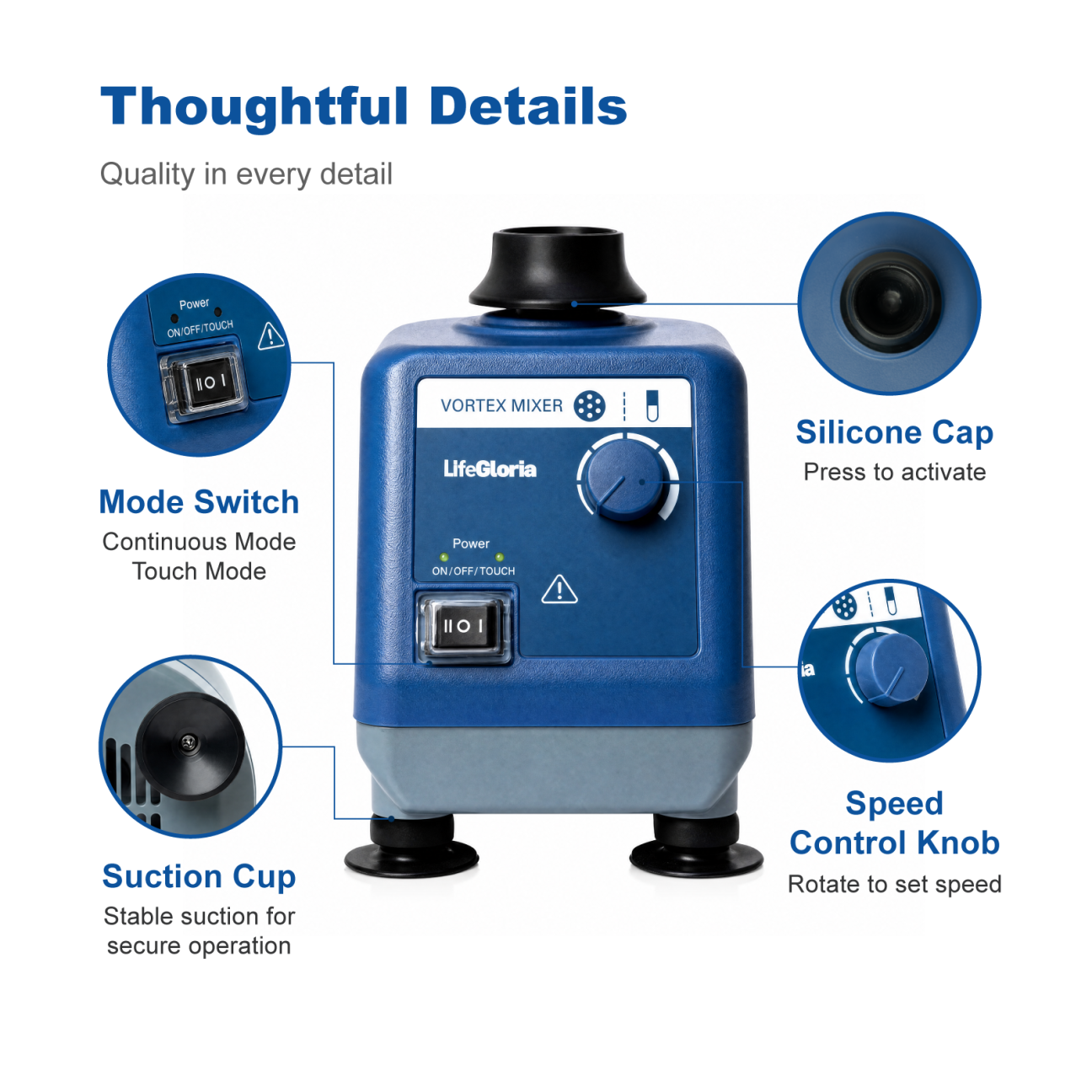
Important Features When Buying a Vortex Mixer
A professional laboratory vortex mixer should include:
Variable Speed Control
Adjustable speed allows researchers to optimize mixing conditions for different samples.
Touch and Continuous Operation
Touch mode provides quick mixing.
Continuous mode supports longer procedures.
Low Noise and Low Vibration
Stable operation improves laboratory comfort and reduces disturbance.
Compact Design
A small footprint makes vortex mixers suitable for crowded laboratory benches.
Why Choose LifeGloria Laboratory Vortex Mixer?
LifeGloria provides reliable laboratory mixing solutions designed for modern research environments.
The LifeGloria vortex mixer offers:
- Variable speed control
- Stable orbital mixing performance
- Touch and continuous operation modes
- Low noise operation
- Compact benchtop design
- Reliable daily laboratory performance
It is suitable for:
- Universities
- Biotechnology laboratories
- Research institutes
- Clinical laboratories
- Pharmaceutical applications
Frequently Asked Questions
Is a vortex mixer the same as a shaker?
No. A vortex mixer creates a circular vortex motion mainly for small sample containers, while laboratory shakers usually move larger platforms or containers.
Can a vortex mixer mix large volumes?
Vortex mixers are mainly designed for small-volume samples. Large-volume solutions are usually better handled with magnetic stirrers or overhead mixers.
Which is faster: vortex mixer or magnetic stirrer?
A vortex mixer is generally faster for small samples because it creates strong mixing within seconds.
Do I need both a vortex mixer and a magnetic stirrer?
Many laboratories use both because they serve different applications. A vortex mixer handles quick sample preparation, while a magnetic stirrer supports continuous solution mixing.
Conclusion
Vortex mixers and magnetic stirrers are both essential laboratory tools, but they serve different purposes.
Choose a vortex mixer when you need rapid mixing of small samples, tubes, and biological materials.
Choose a magnetic stirrer when you need continuous mixing of larger liquid volumes.
Understanding your workflow requirements will help you select the right laboratory equipment and improve experimental efficiency.
LifeGloria provides professional laboratory equipment solutions designed to support researchers worldwide with reliable, practical, and efficient instruments.
